TEACHING WITH ARCHAEOLOGY: AN ARIZONA PROGRAM

A.E. (Gene) Rogge


Introduction

As we enter the last decade of this century, archaeologists find themselves in a crisis. The archaeological sites we study are disappearing because of intentional looting and vandalism, myriad types of development, inadvertent damage, and benign neglect. Although the parameters of the crisis are not easy to specify, it is clear that we must enlist the aid of many nonprofessionals if we are to stem the loss of our primary database. We need large, vocal, archaeology advocacy groups analogous to the many environmental groups that have organized over concern about threats to our natural environment. That means we need to educate more people about the values of archaeological research and the perspective it provides on our modern lives.

Coincidentally, the schools of our nation also find themselves in a crisis of performance, public confidence, and relevance to students (National Commission on Excellence in Education 1983). Public perception of the significance of the educational crisis far outweighs concerns over vanishing archaeological resources, which are not widely appreciated. When a third of the students in your state's public school system are not graduating from high school and more than 50 percent of the teachers will burnout and leave the profession within five years, it is difficult to get much concern focused on the values of archaeology. But by casting our archaeological curriculum materials in a format that is relevant to the educational crisis, we clearly enhance our chances of introducing some archaeological concepts to a broader audience of precollege students, who in turn can help us address our own archaeological crisis. If the current generation of school-age children grows up with a truer sense of what archaeology is all about and comes to appreciate the informational and heritage values embodied in archaeological resources, they are bound to be stronger advocates for preservation of archaeological sites in years to come.

Precollege teaching of archaeology, and more generally anthropology (its mother discipline in the United States), has been an area of research and development for at least three decades. Interest continues today (see for example, Holms and Higgins 1985, Selig and Higgins 1986) and is the focus of a 4-year task force formed by the American Anthropological Association in 1988 (Erickson 1989). However, the major efforts of the 1960's left no lasting results when the federal funding for such programs disappeared in the 1970's. The valuable curriculum materials developed by those efforts have been characterized as "curious remains from another time" (Rice 1986:6).

Injecting some anthropology and archaeology into precollege classrooms faces numerous challenges. In this article I describe how one group of volunteers, the Archaeology for the Schools Committee of the Arizona Archaeological Council has addressed this challenge. The Council is a group of about 150 professional, student, and avocational archaeologists with active interests in public archaeology. The Schools Committee has been in existence about 5 years and has averaged about 10 active members (about 10 additional sympathetic corresponding members have promoted our goals in their individual corners of the state but have not been able to participate actively in committee meetings and projects). Committee members include professional archaeologists working for universities, museums, federal and state agencies, and private consulting firms. More importantly, classroom teachers and museum educators have been recruited to serve on the committee. For more specific information about the goals of the committee and the history of its activities see Rogge and Bell (1988).

Our experience reflects both what dedicated volunteers can and cannot accomplish. Our efforts are small scale and not at all comparable to the major curriculum development projects of the 1960's. Rather than promoting the teaching of full-blown courses in archaeology and anthropology, we characterize our more modest goal as encouraging teachers to teach with archaeology rather than teaching archaeology per se. We promote the introduction of some archaeological concepts through the use of supplemental materials that can be used to support, reinforce, and extend the required curriculum.


The Classroom Context

The first requirement for promoting archaeology in precollege classrooms is the acknowledgment that this is a worthwhile goal. This may seem simple but the fact that elementary and secondary schools have been largely ignored by archaeologists suggests otherwise. Undoubtedly, this stems in part from the lack of professional rewards for anyone teaching archaeology at the precollege level. There are also concerns on the part of both teachers and archaeologists that somehow archaeology is not quite appropriate at the precollege level. It is, after all, a rather marginal, arcane discipline and can be a source of conflict with the Eurocentric perspective on American history that is typically taught as part of the core curriculum in our schools (see Kehoe 1989). Some archaeologists also worry that a little information can be dangerous and could create a new generation of looters and vandals. So the decision to promote archaeology at the precollege level should be made in conscious recognition of the contextual challenges of the precollege classroom.

Once a decision has been made to become involved with school systems, there are basically two strategies for working toward that goal:

- a grass roots, bottom-up approach, or

- a top-down imposition of new requirements

Our committee has explored both. One of our first activities was to prepare an eight-page packet for teachers. It included a number of short supplemental classroom activities and a summary of the state's prehistory. We raised funds for mailing a copy to almost every one of the almost one thousand schools in the state. The mailing was coordinated with the statewide celebration of Archaeology Week in 1986 and we expected a substantial return of the mail-back form we included for comments, suggestions, and requests for further information. To say the least, we were disappointed that our brightly colored packet generated only about a dozen inquiries.

Our analysis of the experience taught us that:

  1. teachers are typically overwhelmed with mandated curriculum requirements
  2. the best curriculum material in the world will not sell itself and teachers receive lots of unsolicited supplemental educational materials
  3. personal contact is an essential ingredient for successful outreach

Our response was probably predictable and not particularly well thought out. We initiated contacts with the state Department of Education to explore the possibility of mandating the teaching of some archaeology, perhaps in conjunction with the course on state history that is required for all fourth graders. We received encouragement, help in identifying other groups with similar interests, and a polite refusal to impose any more top down requirements. Clearly the Department has more pressing priorities such as basic literacy, drug prevention programs, and sex education. We concluded that archaeology would have to be adopted on its own merits.

Many of our committee members regularly make presentations to classrooms, but we were not satisfied with the scope of this strategy, It would never get our message through to more than a minuscule percentage of the more than half a million elementary and secondary students in the Arizona public school system. We decided that an alternative strategy worth pursuing was to enlist the assistance of classroom teachers who could multiply our efforts by each spreading the archaeological message to perhaps 25 to 30 or more students per year.


Working with Teachers

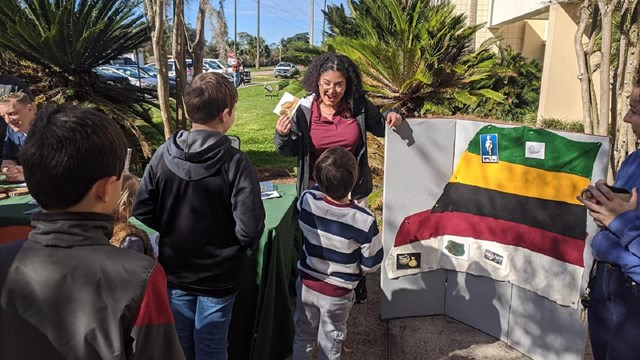
With the advice and assistance of the teachers and educators on our committee, we developed a weekend workshop for teachers. The workshop includes a fast-paced 40-minute slide lecture that introduces archaeology as a scientific, anthropologically based study of the past, and summarizes the culture history of the American Southwest (the presentation has subsequently been converted to videotape format to facilitate broader use in other contexts). Teachers are then divided into small work groups that spend one-half to one-hour blocks of time participating in various types of hands-on activities that we developed or adapted from other curriculum materials we had identified. Lesson plans have been prepared in formats that teachers are used to and the workshop participants are encouraged to adapt the activities for presentation in their own classrooms. The activities include:

  • Trowel It - a dig-in-a-box activity
  • Garbage Can Archaeology - an activity for exploring the concept of stratigraphy, artifact interpretation, and hypothesis testing
  • Culture History Mystery - an examination of how artifacts reflect changing adaptations and lifestyles
  • Culture Universals - an exploration of the concept of culture and commonalities among all cultural groups
  • Dating Methods - a review of relative and chronometric techniques for determining how old something is
  • Simulating Prehistoric Pottery - an investigation of ceramic technology and the implications of ceramic variability

Our workshops typically close with a session focused on preservation legislation and discussion of some aspect of local on-going research projects.

We have presented our workshop five times during the last three years and it has also stimulated a couple of similar spin-off programs. Through these efforts approximately two hundred teachers have been introduced to supplemental archaeology curriculum materials. This is on the order of only one percent of all the precollege teachers in the state. Although we have yet to meet the challenge of spreading our message very far and fast, we have learned several things through this experience.

Few teachers have ever been exposed to archaeology courses and most will not be interested in or feel qualified to teach archeology per se. Our challenge is to quickly educate them to some basic concepts so that they feel comfortable in presenting our materials as supplemental augmentations and extensions of aspects of the mandated curriculum.

Teachers must perceive the archaeology materials to be relevant. Archaeology is almost inherently intriguing and can often stimulate the interests of unmotivated students. Additionally, archaeology is very amenable to hands-on activities that encourage student participation and retention of information well beyond the 10 percent rate typical of text book driven presentations (see Bruner 1963, Clark 1986, Wonder and Donovan 1984). Archaeology is also ideally suited for integrating artificially compartmentalized subjects, and encouraging cooperative learning--both of which are currently recognized as educational goals. A California high school teacher argues that some of the spin-off benefits of archaeological activities include realistic exposure to scientific methods, encouragement of personal involvement and social interaction, and maturation of reflective thinking (Onderdonk 1986). One Tucson teacher has told us that an archaeology unit involving gridding and plotting of artifacts has improved her students' scores on standard skills tests. These types of reactions from their peers and testimonials from other teachers who have experimented with archaeology (for example, Carroll 1987, Catalina 1983, Cotter 1979, Dyer 1983, Passe and Passe 1985, Watts 1985) influence teachers more than any pitch made by archaeologists.

Teachers operate within their own reward system and are unlikely to participate in our workshops unless they perceive some direct benefits. We work with local school districts to make arrangements for in-service credit because such credits are relevant rewards for teachers in maintaining and advancing their careers. Nevertheless, we are experiencing difficulty in filling our workshops and obviously have to become more effective at marketing our workshops. Personal contacts with teachers seems to be essential to effective recruitment.

Through small workshop fees and proceeds from sale of books, our workshops are paying for themselves as long as the volunteer efforts of the presenters continue. But the workshops take substantial effort and clearly a group of 10 volunteers can never hope to present workshops to more than a small fraction of the teachers in our state. We must also realize that most archaeologists are only avocational educators at best and need the expertise and experience of trained curriculum developers and teachers. Institutional support in terms of full-time personnel and funding, such as the program developed by the Toronto School Board, is essential if any outreach effort to the schools is ever going to have a broad impact (Smardz and Hooge 1989, also see Smartz this volume for further discussion of the Toronto program).


Archaeological Literacy

The current educational crisis has been recognized as a challenge and opportunity by several special interest groups. "Literacy" has become a theme of the crisis since Eric Hirsch (1987) first challenged schools to produce culturally literate citizens. At first glance this seems like a goal remarkably compatible with archaeology and its mother discipline anthropology, but a reading of Hirsch's book quickly reveals that his goal is to simply enculturate students into our own culture. The American Association for the Advancement of Science (1989) has echoed Hirsch's theme by initiating a program to achieve a "scientifically literate" population by 2061, the year Comet Halley will return. Recently historians, have launched a new program to produce "historically literate" students (Gagnon 1989). The challenge of producing "archaeologically literate" citizens thus faces stiff competition for teacher interest and time.

Historians have recently benefitted from Billy Joel's hit song (We Didn't Start the Fire), which promotes the relevance of their discipline. Scholastic, Inc. and CBS records are distributing 40,000 free copies of a tape of the song along with an interview with Joel and other materials for classroom use. Science education has also received considerable attention by the media, including a recent cover story for Newsweek (April 9, 1990). We archaeologists have the singularly popular Indiana Jones movies to promote interest in our discipline, but the image portrayed in those movies is off-base.

We have come to realize that our committee's activities in Arizona are not an isolated case. Other groups in numerous states (such as Colorado, Florida, Georgia, Kentucky, Louisiana, Maine, Missouri, Ohio, South Dakota, South Carolina, Texas, Vermont, Virginia, and Utah) and in Canada have produced a variety of curriculum materials and are pursuing a variety of approaches. (see Rogge and Bell 1989 for a listing of some of the materials prepared by these groups, also see McNutt, Hawkins this volume for further discussion of school curriculum materials). It seems clear that the level of interest in archaeological education outreach is growing across the country, and an archaeologically literate citizenry is an achievable goal.


Conclusion

My basic conclusion is that we must recognize the perceived marginality of our discipline, hone our themes for archaeological literacy to the essential core implications of our research, and develop an effective delivery system that combines local personal contact with locally relevant material and national coordination. In our current enthusiasm, we could work to prepare top quality curriculum materials, such as those prepared in the 1960s, but unless we implement an on-going system to effectively promote and deliver these materials, they will soon be forgotten.

The best model we have identified for developing and delivering supplemental materials is that provided by environmental protection proponents, who are far ahead of archaeologists. The level of their activities is such that it has led to the creation of a Journal of Environmental Education. We are still at the newsletter stage (for example, Anthro Notes produced by the Smithsonian Institution, Teaching Anthropology Newsletter published by Saint Mary's University in Halifax, Heritage Education Quarterly from the Preservation and Library Resource Center in Madison, Georgia, Archaeology and Education that was recently launched by the Toronto Board of Education, and the new Archaeology and Public Education newsletter of the Society for American Archaeology, Committee on Public Education.

One of the best models for outreach that we have identified is Project Wild, a program of supplemental elementary and secondary environmental curriculum that is disseminated through workshops in almost every state in the nation, parts of Canada, and is being introduced into India (Western Regional Environmental Education Council 1988). The initial materials (a volume of activities for elementary use and another for secondary levels) were developed over a three year period in the early 1980's with funding (on the order of a quarter million dollars) and cooperation of state game and fish agencies and departments of education throughout the western United States (Charles 1988). Today, a self-sustaining organization with a national director continues to guide a nationwide network of cooperating organizations and promote the program. The materials are made available to teachers through weekend workshops, which are promoted by various local organizations in each state. Approximately five percent of all the teachers in the country have participated to date (Project Wild 1988). This is an enviable record archaeologist should work to emulate.

Our Archaeology for the Schools Committee demonstrates that volunteers can accomplish a great deal working at the state level, but I suggest the efforts in Arizona and other parts of the country need to be substantially increased. We need some existing or new organization to take on the challenge of national coordination. If other disciplines can do it, so can archaeologists. Nevertheless, I realize that a nationally coordinated program is not likely to happen very soon. In the meantime, I urge all archaeologists to pursue, or at least support, some form of local or regional public education outreach. Even individual archaeologists working with one teacher or one classroom should not be daunted by the challenge. Individual classroom presentations are still one of our most effective grassroots approaches to outreach.


References Cited

American Association for the Advancement of Science (1989) Science for All Americans, 1-217. Washington, D.C.

Bruner, J. (1963) The Process of Education. Vintage, New York.

Carroll, R.F. (1987) Schoolyard Archaeology. Social Studies 78:69.

Catalina, L.S. (1983) Digging into Hometown History. Cobblestone Magazine 4(Jun):10.

Charles, C. (1988) Summary of Research Findings on Project Wild. North American Wildlife and Natural Resources Conference Transactions.

Clark, B. (1986) Optimizing Learning: The Integrative Education Model in the Classroom. Merrill, Columbus, Ohio.

Cotter, J.L (1979) Archaeologists of the Future: High Schools Discover Archaeology. Archaeology Jan/Feb:29.

Dyer, J. (1983) Teaching Archaeology in Schools. Shire, United Kingdom.

Erickson, P.A. (1989) AAA on the Way to Precollege Anthropology. Teaching Anthropology Newsletter 15(fall):4.

Gagnon, P., Editor (1989) Historical Literacy, 1-338. Macmillan, New York.

Hirsch, Jr., E.D. (1987) Cultural Literacy, 1-251. Houghton Mifflin, Boston.

Holms, K.A. and Higgins, P.J., Editors (1985) Archeology and Education: A Successful Combination for PreCollegiate Students. Anthropology Curriculum Project, University of Georgia, Athens.

Kehoe, A.B. (1989) In Fourteen Hundred and Ninety-Two, Columbus Sailed . . .: The Primacy of the National Myth in American Schools. In The Excluded Past: Archaeology in Education. Eds. P. Stone and R. MacKenzie, Unwin Hyman, London.

National Commission on Excellence in Education (1983) A Nation at Risk: The Imperative of Educational Reform. U.S. Department of Education, Washington, D.C.

Onderdonk, R. (1986) Piaget and Archaeology. Archaeology Nov/Dec:80.

Passe, J. and Passe, M. (1985) Archaeology: A Unit to Promote Thinking Skills. Social Studies 76:238.

Project Wild (1988) Report of Program Activities from a National Perspective, Summer, 1988. Boulder, CO.

Rice, M.J. (1986) Curriculum Artifacts: The Remains of Three Anthropology Projects. Practicing Anthropology 8(3-4):6.

Rogge, A.E. and Bell, P. (1988) Teaching Teachers to Teach with Archaeology. In Fighting Indiana Jones in Arizona. Ed. A.E. Rogge, American Society for Conservation Archaeology, 1988 Proceedings. Agency for Conservation Archaeology, Eastern New Mexico University, Portales.

Rogge, A.E. and Bell, P. (1989) Archaeology in the Classroom: A Case Study from Arizona. Archaeological Assistance Program Technical Brief No. 4. National Park Service, Washington, D.C.

Selig, R.O. and Higgins, P.J., Guest Editors (1986) Practicing Anthropology in Precollege Education. Practicing Anthropology 8(3-4).

Smardz, K. and Hooge, P. (1989) Teaching People to Touch the Past: Archaeology and Education in Toronto and Ohio. Paper presented at third annual Presenting the Past Conference, Minneapolis, MN.

Watts, L.E. (1985) They Dig Archaeology. Science and Children 23 (Sep): 5.

Western Regional Environmental Education Council (1988) An Introduction to Project Wild. Project Wild, Boulder, CO.

Wonder, J. and Donovan, P. (1984) Whole Brain Thinking. Morrow, New York.


Return to the Table of Contents

Open the Microsoft Word Version of this Article