THE TEAM APPROACH TO ARCHAEOLOGICAL RESOURCES PROTECTION
Sherry Hutt
Introduction
While the court house presents a new domain for the archaeologist in the context of a typical function of site protection, those who find the turf familiar, such as lawyers and law enforcement agents, may be equally unaccustomed to including archaeologists as an integral component. Yet it is essential that the players brought together by the Archaeological Resources Protection Act of l979 (ARPA), become comfortable working as a team in site protection efforts.
Basis of the Team Approach
The team approach to ARPA enforcement is not merely an option, but is a necessity. The added options and responsibilities within the law make teamwork practical if the goal of effective use of the court process is to be achieved. The statutory provisions of ARPA (Public Law 96-95 found in Title 16 of the United States Code, section aa, et seq) set forth the requirements to pursue a criminal case in court. Every crime is composed of easily identifiable elements, which a law enforcement agent will satisfy with accumulated evidence before presenting the matter to an Assistant United States Attorney who will prosecute the case. ARPA cases are unique in that not all elements may be obtained through traditional criminal investigation. Proof that the site or item affected is an archaeological resource is an element that requires input from an expert. Thus the law has created the need for a forensic archaeologist. "Archaeological Resource" is defined (Title 16 United States Code section 470 bb) as "any material remains of past human life or activities which are of archaeological interest," and are "at least l00 years of age." Therefore, by statutory mandate, the archaeologist is thrust into the litigation arena to provide essential expert information. No ARPA case may proceed without an analysis of age, interest and human involvement which, must be made by a qualified scientist. The Archaeological Resources Protection Act made available a number of new tools to utilize in site protection and strengthened the grasp of law enforcement, all of which created a heightened interest in site protection beyond the archaeological community. As a potential felony ARPA added another substantial crime to the agenda of law enforcement agents. The spectrum of stiff penalties made the transgressors worth pursuing. The prospect of asset forfeiture made ARPA cases truly attractive. Another facet of ARPA, however, was the new responsibilities placed on land managing and enforcement agencies to involve Indian tribes in site access decisions and protection. There are requirements for intergovernmental coordination and cooperation with private individuals throughout the Act. Of course, the cost of all this attention must be satisfied through the expenditure of resources, and a law which becomes too costly, given its relative priority, is a law which is soon abandoned. It is axiomatic that no agency has sufficient resources to give quality attention to all of its charges. Therefore, if ARPA is to be a viable tool, it must find life within existing resources. As a matter of practicality, a team operation provides a salient option. If one assumes that the quintessential ARPA case will be brought to court with little preparation, which is an unrealistic assumption in any criminal case, and that an archaeologist working alone may submit credible testimony to satisfy the appropriate legal elements, the case may still falter in the legal process before it is resolved. It would be appropriate to assume that the purpose of an investment in ARPA prosecution is to realize success in court and to achieve through successful resolution the deterrence of site destruction, or at the least, retribution. Preparation is key to the successful litigation of any case. Therefore, if the goal of effective court presentation is to be achieved, there must be communication between those involved on the team that will enhance the performance of each team member.
Role of Each Team Member
There are three members of the ARPA prosecution team; the attorney, the archaeologist, and the law enforcement agent. Each player must be knowledgeable not only in the unique skill they bring to the team, but also in the role they play within the team. Court cases can be jeopardized and a team may become dysfunctional when the members are unclear as to how their piece operates in the overall scheme. Each member may have an ongoing role in site protection but the focus here is on the part each team member assumes in the preparation of an ARPA case for trial. The respective functions begin with the reporting of a violation and continue through the investigation, preparation for court, and trial.
Archaeologist
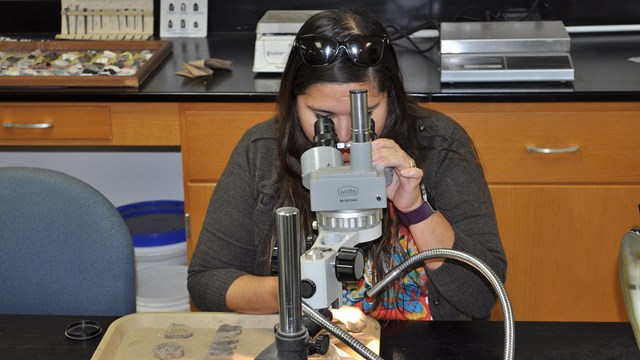
Archaeologists, a prime moving force in the creation of ARPA legislation, have often had firsthand experience with looted sites. As such, they most likely will be involved in the reporting of violations when involved in field work. It is their obligation to know of the law enforcement agency having responsibility for a site regardless of whether a disturbance has occurred. Hopefully, over time, a personal contact will emerge and the foundation of a team will begin. Once a disturbance is observed and reported, the role of the archaeologist remains centered on the site. Site stabilization or curation of artifacts and later a damage assessment all fall within the scope of the archaeologist's domain. Confrontation with suspected ARPA violators is appropriately to be referred to law enforcement personnel. An archaeologist should not become involved in the "who did it" aspect of the investigation, except under circumstances where they personally observed an offense during the commission and are later needed to identify a perpetrator. At all other times, the archaeologist serves the team by focusing on "what occurred." As a case is readied for trial, the reason for the rigid separation of function becomes apparent. An archaeologist who has been asked to prepare a site damage assessment for trial will find their credibility sullied to the point of rendering their testimony useless if they are perceived to have become zealously involved in nabbing the defendant. Jury perception, properly based on common sense, will grant little weight to the best scientific rendering if they feel the witness has lost the appropriate perspective. At trial, those people who have observed the acts in progress may testify as "fact" witnesses. Facts are to be related without speculation or embellishment. Such testimony might not go beyond statements as originally given to investigating agents. It is not until the archaeologist testifies in the capacity of an "expert" witness that one can venture opinions. Experts are allowed to give opinions to be considered as evidence in a trial, based on their specialized training and expertise. It is the obligation of the scientist to project their sense of professionalism in work product as well as demeanor. One may be passionate about the occurrence at a site and the loss of information, or the mutilation of human remains, but they must stop short of visiting vengeance upon the defendant. In the federal system, the archaeologist will always gain access to the prosecuting attorney through the law enforcement agent. Again, the personal contacts that are created may cement the team and allow a more open flow of communication. Though the lawyer may be a skilled litigator, their background on the site or the protected item may be limited. One potentially fulfilling aspect of team involvement for the archaeologist may arise from the educational interaction with the lawyer. The archaeologist will add two vital aspects to the mounting of a trial beyond the fact or expert testimony previously discussed. First, they may prepare the lawyer with recent treatises on site protection and assist the lawyer in evaluating the background of government and defense experts. Second, in the course of providing background on the site to satisfy the archaeological interest element that is mandated in an ARPA case, they can give the lawyer much non-technical information that will make the case meaningful and even enjoyable for a jury. The lawyer is then able to build on the experiences of their team member to create a captivating open statement at trial.
Law Enforcement Agent
It is the law enforcement agent, designated by their agency in each individual case to be the lead agent, who has the responsibility to determine what may occur at a site once a violation has occurred. It is the nature of such "reactive" law enforcement that causes the agent to be primarily concerned with "who" committed the act. Therefore, having an archaeologist, with whom a working relationship is established, to respond immediately to a site to augment investigative efforts maximizes evidence accumulation. Where mutual respect between agents and archaeologists is established they can develop "proactive" protection strategies by identifying sites most vulnerable to attack in the future. The agent is the team member with direct access to the prosecutor. In a reactive situation a report will be submitted to the Assistant United States Attorney for action. Here again, with the development of a working relationship, the agent may seek legal guidance for proactive investigations. At the time of trial the agent will remain in the courtroom with the lawyer to assist in technical details. Also, the agent is responsible for the handling of all evidence from the scene until the items are admitted into evidence at trial. After a trial, all three team members should have input as to the disposition of former items of evidence with deference to the agency policies of each as well as the tribal considerations required by ARPA.
Attorney
The decision of whether to prosecute, for what and under what statutes, civil or criminal, is the unique responsibility of the attorney. A number of considerations and policies will enter into the decision, some of which go beyond the realm of ARPA and are more the result of competing demands on the attorney's time. Over time prosecution policy with regard to ARPA will become more defined although the policies will vary between districts. The law allows for such flexibility. Ideally, in the furtherance of site protection, the well-informed attorney, supported by the team, will be able to offer knowledgeable and workable prototypes for policy that will gauge how the various violations are to be addressed within their district. A case of first impression requires an inordinate amount of attorney time because a pervasive perspective is lacking. The attorney's resources will be better spent preparing for trial or giving ongoing legal advice once the team is fully functional.
Joint Accountability
In addition to the separate functions of each team member, there are areas of joint accountability which must be acknowledged and coordinated. These areas include, at a minimum, a concern for the disposition of the site, the care to be given to artifacts or human remains, the need to serve the public, and a recognition of appropriate interaction with the media.
To The Site
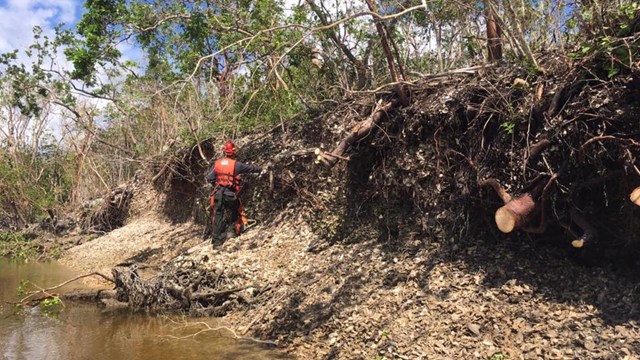
During the pendency of an investigation, the archaeologist may determine that a looted excavated site should be back filled to preserve the remainder from erosion. However, the attorney may need to allow time for the defense to examine a site prior to restoration. Each circumstance has attendant variables which will affect anyone's judgment of what is appropriate. It is possible that the needs of information preservation and evidence collection will be in conflict. While there are no absolute correct procedures, a rational basis for the action taken is almost always defensible in court. On this point, it is essential that team members promptly communicate their respective positions and needs. The ARPA uniform regulations (36 CFR 296.1, Agriculture; 32 CFR 229.1, Defense; 43 CFR 7.1, Interior; and 18 CFR 1312.1, Tennessee Valley Authroity) specify who may have custody of excavated items. Very simply, items taken from Indian lands become the property of the tribe having rights of ownership over the land and items taken from public land belong to the United States. The law and regulations do not address the sensitive cultural and religious factors involved regardless of ownership. This void is left to the team to resolve so the need for information, for educational tools and for respect for ancient peoples, may be addressed. It should be recognized by the team that just as evidence collection is necessary for prosecution of a case, the eventual disposition of evidence may impact future deference efforts.
To The Public
All three team members are public servants. The statutes and regulations make repeated reference to working with private individuals. If the short-term focus of convicting a violator is allowed to obliterate the impact on the greater public, the intended beneficiaries of the knowledge and cultural preservation to be wrought from site protection will act ungrateful. Jurors as reflections of the public may express their displeasure by rendering unfavorable verdicts. Unpopular laws are not well enforced. The team members must temper their expectations with the reality that the public as a whole does not always share their fervor for preservation. Not every violation is a felony or deserving of criminal resolution. Not every case should be treated to the full barrage of possibility under ARPA. While the attorney makes prosecutorial determinations, each member of the team must remember their actions create an opportunity for heightened public awareness or for public reproach. Every encounter with the public whether at a site or in front of a jury may be utilized by each team member as a positive educational experience. Each team member has an obligation to step beyond their basic job function to educate the public.
To The Media
The team cannot control the media, but they can interact with the media to maximize positive results. Press releases may educate the public in ARPA and utilize convictions for further deterrence. However, ill-timed releases may compromise investigations. Also, comments to the press by a government agent during the course of a case that discuss the case are prohibited by court rule in most districts. Archaeologists are included as agents in this regard. Failure to adhere to the rule may be seen as an attempt to try the case in the media and may result in its dismissal. It is imperative that the team act in consort when dealing with the media.
Conclusion
The experienced team will enjoy a more efficient, predictable and successful venture in using the law and the legal system for site protection than will any potential member acting alone. If the goal underlying all legislative, judicial and agency efforts is the protection of archaeological sites from destruction, then cooperation is the critical tool to achieve those ends. The team approach is quite simply a practical device.
References Cited
Public Law 96-95 sec. 6, Oct 31, 1979, 93 Stat. 724
Title 16 United States Code sec. 470 aa-470 11.
36 CFR 296.1 et seq (Deptartment of Agriculture)
32 CFR 229.1 et seq. (Department of Defense)
43 CFR 7.1 et seq (Department of Interior)
18 CFR 1312.1 et seq (Tennessee Valley Authority).
Return to the Table of Contents Open the Microsoft Word Version of this Article
|