Conclusions

.
Contents

 Introduction 

 Geography and  Environmental Conditions  

 Chronological  Considerations 

 Initial Human Occupation 

 Widespread Settlement 

 Terminal Paleoindian  Occupations 

 Initial Holocene Early  Archaic Assemblages 

 Property Types 

 Resource Distribution 

 Research Needs and  Questions 

 Evaluation Criteria 

 Possible NHLs in the  Southeast 

 Conclusions 

 Annotated References 

 References Cited 


Reliable data on the nature and occurrence of Paleoindian assemblages is crucial to effective management and research. Compiling information about Paleoindian assemblages in the Southeast is a major task, and typically requires that at least one person in each state conscientiously reviews and compiles information about these occupations. Typically, such projects start out as artifact recording projects, of which "fluted point surveys" are the best known. Every state in the Southeast except Louisiana currently has an active fluted point recording project. In some states these encompass other types of Paleoindian points, although this is less common. Only in Georgia (Anderson et al. 1990, 1994), Florida (Carter et al. 1998), Mississippi (McGahey 1996), and Tennessee (Broster 1989; Broster and Norton 1991, 1996) at present do the ongoing surveys attempt to record information about all known Paleoindian projectile point types. In no southeastern state at present, however, is information about other Paleoindian artifact categories systematically recorded. Such work is crucial, however, and must be incorporated into the state site files.

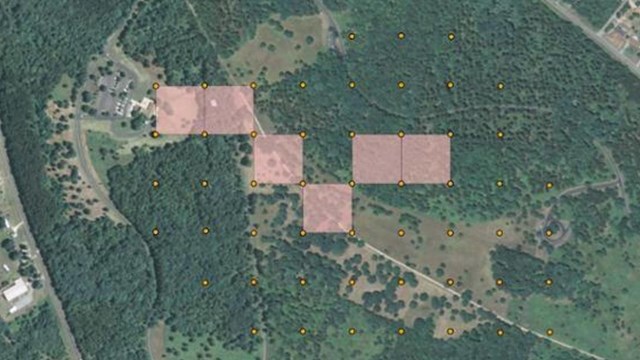
Information about Paleoindian site locations is routinely compiled by state site file managers. When coupled with detailed information about the kinds of artifacts found at each site, and particularly the periods of occupation represented by these artifacts, site file data can be used to generate distributional maps. When site locational data is incorporated into a GIS with a range of data layers, encompassing natural resources, hydrology, geology, and so on, this information can be further used to develop and test various models of site location and prehistoric settlement. The finest example of this type of data compilation and analysis effort to date in the region has been conducted in northeast Arkansas. There, in a test of existing Paleoindian settlement models, Gillam (1995, 1996a, 1996b, 1999) plotted the distribution of fluted point and Dalton sites on the landscape. This research has generated a wealth of new insight into the kinds of resources that appear to have been targeted by these early peoples, and how settlement changed over time.

At present, in addition to Arkansas, comparable GIS-based analyses of Paleoindian site data can be conducted in Alabama, Florida, Georgia, South Carolina, and Tennessee, and should be possible in every state in the Southeast within another few years. Critical to such analyses, however, will be having accurate data on the nature of the Paleoindian assemblages present on sites. While site file records are computerized in most southeastern states, the quality of these data varies appreciably (Anderson and Horak, eds., 1995). To produce useful overviews of Paleoindian resources in the region, greater effort directed to data collection and standardization will be needed. Thus, while at present it is simply not possible to easily generate regionwide distribution maps for Paleoindian sites or artifact categories, beyond the examples noted here, it is possible to generate such maps in a number of states. As site file records improve, however, producing regionwide maps should prove increasingly feasible, and should serve as a major focus for research.

Acknowledgments
Portions of the sections on Research Needs and Questions, and Eligibility Criteria come from earlier Paleoindian Historic Contexts prepared from across the Southeast, albeit these have been substantially revised and updated here. In addition, in the summer of 2000 a draft of this manuscript was sent to every SHPO office in the Southeast by Mark Barnes of NPS's Southeast Regional Office. I thank him, and Cecil McKithan, for their support in the review process. The author would like to thank the following people for advice and assistance in reviewing earlier drafts of this manuscript, or for advice on possible NHL candidates: Mark Barnes, David S. Brose, John Broster, Steven R. Claggett, David C. Crass, Dena F. Dincauze, Boyce Driskell, Jim Dunbar, Tom Eubanks, Michael K. Faught, Stuart Fiedel, Donna L. Freid, Eugene Futato, John Gifford, R. Christopher Gillam, Albert C. Goodyear, III, Bill Green, Robert Grumet, C. Vance Haynes, Neal Lopinot, Thomas Maher, Jerry McDonald, Samuel O. McGahey, Jack Ray, Tom Sanders, Louis Tesar, and Richard C. Waldbauer. Louis Tesar deserves particular thanks for providing 30 pages of detailed commentary on the manuscript, as part of a valuable summary on Florida's Paleoindian resources. Specific calibrated radiocarbon ages reported here were obtained using the on-line version of the Calib 4.3 program (Stuiver et al. 1998).

Return to the Top