|
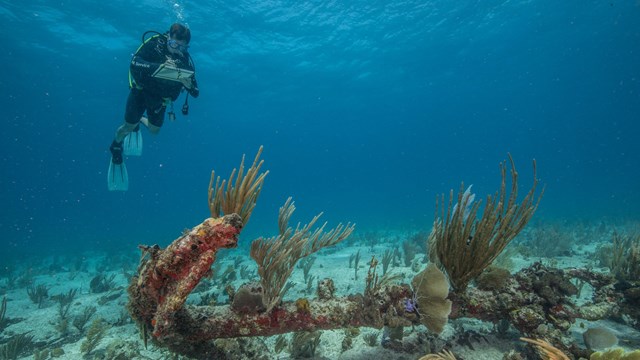
At present, three Paleoindian sites within the Southeast have been designated NHLs by the Secretary of the Interior. These are the Thunderbird District, in Virginia, designated on May 5, 1977, the Hardaway site, in North Carolina, proclaimed on June 21, 1990, and the Hester site, in Mississippi, designated on January 3, 2001. Warm Mineral Springs, in Florida, while not formally designated an NHL, due to owner objections, was determined to be nationally significant by the Secretary of the Interior in 1988. In the preparation of this regional context, the author had the opportunity to examine the literature and site records for Paleoindian sites from across the region. A number of properties have yielded outstanding information, and in the author's opinion warrant nomination for NHL status. These properties, by specific type, are listed in Table 3. Individual sites that are believed to be strong NHL candidates include Avery Island, Cactus Hill, Carson-Conn-Short, Dust Cave, John Pearce, Little Salt Spring, Manning, Nipper Creek, Quad, Sloan, Stanfield-Worley, Taylor, Taylor Hill, Wakulla Springs Lodge, Wells Creek Crater, and Williamson. Candidates for NHL district status include the Allendale Quarries in Allendale County, South Carolina, the Aucilla River area of northern Florida, the Little River/Adams Paleoindian site complex in Christian County, Kentucky, and some or all of the sites in the Nottoway River area of southern Virginia, including Williamson. An effort to assess the condition and present integrity of the above sites, prior to the development of NHL nominations should be accomplished. It goes without saying that these sites and localities need to be protected from looting. Some of these sites, such as Stanfield Worley, have been extensively looted, and the condition of their archaeological deposits is unknown. Some sites or localities are currently under reservoirs and hence inaccessible, such as the Parrish Village site in Kentucky, the Haw River sites in North Carolina, or Rucker's Bottom in Georgia. These properties may be worthy of NHL status, for their contributions to the history of archaeology in the region. If these sites ever become accessible, the condition of their archaeological deposits should be carefully evaluated. Additional data collection at such sites, even if they remain submerged, is also possible (Anderson et al. 1994; Faught 1996). |