|

Fort Pulaski National Monument |
Module 440: Effective Interpretation of Archeological Resources Workshop
Fort Pulaski National Monument, Georgia
March 10-14, 2008
updated 2/27/08 by JHJ
|
|
|
|
Training Announcement/Nomination Form (.doc file)
An
on-site, hands-on interdisciplinary workshop "fostering opportunities for emotional
and intellectual
connections to resource meanings through archaeology" |
Class photo goes here
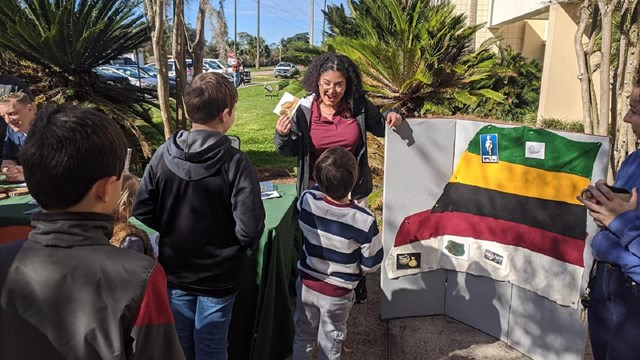
Selected Class Images
|
- Participant Survey
- PRE-WORKSHOP ASSIGNMENT:
- Information on lodging:
- The workshop begins at 8:00 am on Monday. Participants should plan to arrive by Sunday night, March 9. Direct lodging questions to June Devisfruto, Chief Ranger, Fort Pulaski NM, 912-786-5787, June_Devisfruto@nps.go
- General Course Goals and Objectives
- Agenda (.doc file)
- Notes on supplied and referenced texts and further reading books made available during the workshop
- Class
Roster (.doc file)
- Internet
Resources
- Course Facilitators:
- John Jameson,
Program Manager, Archeology Education and Interpretation,
Southeast Archeological Center (SEAC)
Voice: 850-580-3011, ext 243; Cell: 850-322-5636
E-Mail: john_jameson@nps.gov; cc to jhjameson@yahoo.com
- Ginger Cox, Park Ranger (Interpretation), Cumberland Island National Seashore, Ginger_Hollingsworth-Cox@nps.gov
- June Devisfruto, Chief Ranger, Fort Pulaski NM, June_Devisfruto@nps.gov
- Della Scott-Ireton, Marine Archaeologist, Florida Public Archeology Network
- John P. McCarthy, Sr. Archaeologist/Historian,
S&ME, Inc.
Training
Goals and Objectives:
Goals:
The
overall goals of this training are to strengthen the
relationship between archeology and public interpretation
and to improve how archeology is presented to the public.
Participants will gain a general introduction to effective
methods and procedures in the field of public interpretation
of archeological sites. Interpreters and educators will
gain knowledge about fundamental principles and professional
standards in archeology as well as knowledge and skills
for developing presentations and media about archeological
resources. Archeologists will gain knowledge about standards
for interpretation as well as knowledge and skills for
developing effective interpretive presentations and
media about archeological resources.
Objectives:
Upon completing the training, participants will gain
knowledge and skills to:
- Develop
and implement a mission-driven approach to interpretation
of archeological resources that incorporates both
park management outcomes and audience revelation,
both of which lead to enhanced stewardship.
- Through
knowledge gained of professional standards of archaeological
practice and interpretive purpose and techniques,
develop a personal foundation of knowledge and skills
to use in creating programs that effectively interpret
archeological resources.
- Identify
and appropriately present multiple perspectives,
or direct audiences to sources for discovering multiple
perspectives.
- Explain
the importance of interdisciplinary teamwork, including
the interpreter's and archeologist's respective
roles, in developing programs and texts about archeological
subjects.
The
course draws from the NPS's Module 440 Shared Competency
Course of Study: "Effective Interpretation of Archeological
Resources." Case study examples demonstrate interpretive
approaches and techniques that have been effective in
the past. Participants are assigned to interdisciplinary
focus groups that examine local interpretation and education
efforts and provide group critiques of programs and
projects. Field trips are scheduled to local archeological
sites and museums with existing and planned public interpretation
programs.
Internet Resources/Links:
- Echoes from the Past: Archeology at Fort Pulaski
- History of Savannah (PDF)
- Historical Periods in Southeast North America
- Information on Savannah, Georgia
- Tybee Island Online
WORKSHOP LINKS:
- Background to shared competency
training module
- Module 440: Effective Interpretation
of Archeological Resources
- Module
101. Fulfilling the NPS Mission: The Process of Interpretation
- The NPS Interpretive
Development Program
- "Archeology
for Interpreters" knowledge guide
- "Interpretation
for Archeologists" knowledge guide
- 'An
Inspiring Guide online course (University
of Maryland Center for Heritage Resource Studies)
- NPS
Archeology essential competencies
- Laws,
regulations, and standards affecting archeological resources
- SEAC's
Public Interpretation Initiative
- SEAC's
Interpretive Arts Initiative
- NPS
Harper's Ferry Center onMedia Newsletter
- Other literary and
web resources
Training
Opportunities Home
|
|
|