PRESERVATION IS A USE: SITES CAN BE PROTECTEDRobert Thorne
Abstract
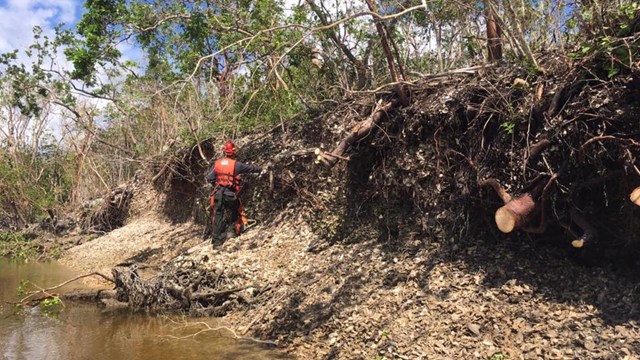
Loss of archeological data is an ongoing problem that we must come to terms with. Natural erosion, culturally stimulated erosion from agriculture, agricultural practices themselves, construction practices, and looting and vandalism are a few of the forces that have caught our attention. We have identified ways to deal with some kinds of site loss, while other kinds have been more difficult to cope with. Even though excavation and data recovery has been the most frequently used means of data protection, site protection has an almost equally long history. Thomas Jefferson began organized excavations in 1784. Four years later the Ohio Land Company was moving to stabilize a mound and earthworks at Marietta, Ohio. In 1887, Professor Frederic Ward Putnam of Harvard University was successful in having state-level legislation passed to protect the Serpent Mound complex in Adam County, Ohio from taxation. Congress enacted legislation in 1890 to protect the archeological site at Casa Grande, and in 1916 the Organic Act was passed establishing the National Park Service (NPS). The legislative charge to the NPS reads in part "to conserve...historic object(s)...." More recent protectionist directives may be found in Corps of Engineers Regulation ER1130-2-438, 33CFR305 Section 6e (April 1978), and the NPS Management Policy (1988: chapter 5, page 5). While these various documents address preservation and stabilization, 33CFR305-6e specifically sets preservation as the preferred management approach. In 1983, the Cultural Resources Program of the Tennessee Valley Authority (TVA) and the Center for Archaeological Research at the University of Mississippi began an experimental program of site stabilization in the TVA service area. In 1987, as a result of these earlier efforts, the National Clearinghouse for Archaeological Site Stabilization was created through a three-way cooperative agreement between the University, the TVA, and the office of the Consulting Archeologist of the National Park Service. Part of the agreement requires that appropriate stabilization techniques be identified and that technical briefs describing these techniques be prepared and distributed. The Clearinghouse, with its headquarters at the University of Mississippi, also serves as a source for technical information in the design of archeological site stabilization projects. It does not deal with standing structures, although some bibliographic data is available. This division of responsibility is by design since the collection of data for both subject areas would be an overwhelming task. The initial work completed by the University and the TVA addressed a fairly broad range of site loss mechanisms including riverine and lacustrine erosion, as well as vandalism and looting. A basic assumption on which we have always operated is that lands in the public sector will provide the best and most appropriate setting for the preservation and protection of archeological resources, affording the broadest possible range of sites types, ages and data classes. Consequently, directed work completed by the Center has principally been on publicly held lands. Both natural and synthetic materials have been tested, austere warning signs have been placed at some sites, and a small interpretive park displaying information-bearing signs has been developed.
The Sanders site near Kentucky Dam, Tennessee is a badly looted Mississippian period stonebox cemetery. The treatment selected for its protection was to convert it to an interpretive park. Mock-ups of the subsurface graves were constructed above ground, landscaping timbers were laid around the perimeter of the cemetery, and the burial area was overplanted with Vinca minor (periwinkle). The park is served by a paved trail, and small interpretive signs have been strategically placed to explain the prehistoric use of the site. Warning signs indicating that the site is protected under federal statute have also been posted. As professional archeologists, we all agree on the immorality of site looting, but this is not a broad-based publicly held view. When the attitudes of archeologists and those of the general public come into conflict, we (archeologists) must carefully guard against losing touch with the reality of the world as other people see it. Since the beginning of the experimental program, I have had the opportunity to work with both the public and private sector on site protection and stabilization projects. On the basis of this experience, I offer the following observations that may be of some use in solving problems of looting, vandalism, and general site loss. Some of these are based on first contact with land managers at the initiation of stabilization efforts. Some are based on experiences with law enforcement officers who have had unpleasant dealings with archeologists in the past, and whose consequent attitudes toward archeology have made my job harder. (1) Never yell at the people who are charged with site protection and tell them that an archeological site is the most important thing in the world. Do not tell them that they are not doing their job; they may not know that site protection is one of their responsibilities. They will not like being yelled at; will not believe you about the value of cultural resources; and most firmly believe that they are doing a good job, at least by the definition that counts-their own. (2) The "good old boy" system is out there and it works. Take time to find out the interests of the people on whom you will count for support and talk with them about what matters to them. This is particularly important with people in the local community. Be honest with them about why you believe archeological resources are important; as uneducated as they might appear, they frequently will understand. Even non-college trained people understand systems theory-just not in those terms. (3) Be observant of the physiographic and topographic setting of problem areas and design your "erosion of looting" solutions to emulate nearby areas where problems do not exist. This may require that some knowledge beyond archeology be acquired in a hurry so that you can find the right person to cooperate with you, and help put your ideas and design into place. The more a protectionist effort looks like it belongs, the more widespread its acceptance. If it will protect or enhance other aspects of the environment while protecting a cultural resource, all the better. (4) Be innovative in creating ways to protect sites and if your suggestions fail to meet ASTM or other engineering standards, do not give up. Look for ways to help make your suggestions fit the needs of the resource. Our training dictates that we repeatedly ask why of our interpretive data bases; politely ask engineers and planners to explain why your ideas will not work and why theirs are better. In the final analysis, you probably will not design anything new but, rather, simply adapt a technique that is already used for something else. (5) Continue to work toward protection of sites by trying to have looters and vandals arrested and convicted for destroying our national heritage. After an arrest is made, try to get a restraining order, an injunctive relief, or both until the case can be developed and brought to trail. If you have a restraining order and the looter or vandal persists, at least they can be cited for contempt of court. As a final note, I think one major hurdle that must be overcome if we are going to protect our cultural resources, lies in how we, as Americans, perceive archeological sites. Sites and artifacts do not seem to be viewed as a part of a broader heritage package that belongs to everyone equally, regardless of where or how these remains are scattered. Unlike our sister countries in Middle America, we have no national patrimony, in part because we have ceased to teach this concept in the public school systems. If we are to have pride in and take a protectionist view of our heritage, we must begin to instill this concept in our children. Such an educational approach must begin at the elementary school level and be continually reinforced throughout the succeeding school years. This means archeologists need to be on textbook review panels, and schools of higher education should either require or encourage their students to take coursework in anthropology/archeology. Even if such programs were initiated today, several generations of looters and vandals would continue to be active until they are replaced by a more appreciative population. This, of course, means that we cannot relax our vigil. If every member of the Society for American Archaeology would work to save two significant sites on a yearly basis, consider the impact this would have on our national data reserve. I encourage you to be persistent. Sites and concomitant data can be protected and preserved.
Read Return to the Table of Contents
|