VANDALISM BEHAVIOR IN THE SOUTHEAST NATIONAL PARKS: DIAGNOSES AND TREATMENTThomas DesJean and Robert Wilson
Abstract
IntroductionFor many years we have heard reports of vandalism to archeological resources worldwide. There are reports of looting in the Southwest, in the Northwest, and other parts of the United States. However, only recently has there been any outcry from the Southeast. With the passage of the Archaeological Resources Protection Act of 1979 (ARPA), many archeologists felt that the rate of vandalism and the destruction of our nation's non-renewable archeological resources had decreased. This apparently has not been the case. However, one of the results of the passage of ARPA has been the increased awareness of law enforcement officers to this type of offense. For the National Park Service in the Southeast, this has resulted in the reporting of vandalism by park rangers, the development of several training programs, the development of a number of park archeological resources protection plans, and the draft report for the Southeast parks entitled Guidelines for Monitoring Archeological Resources. SymptomsSince the establishment of ARPA, the Southeast Archeological Center has received sporadic Case Incident Records dealing with vandalism from a number of parks in this region. Those parks reporting vandalism are:
These reports range from a Natchez Trace ranger observing a SCUBA diver in the Tennessee River working on an area of a submerged Indian mound and village and later removing artifacts from the diver's boat, to another ranger at Stones River observing two individuals, one with a pick axe, the other with a metal detector who, upon being questioned, stated that they were not aware that they were on federal property and that they were in the field looking for golf balls. The individual with the metal detector added that he did not want to leave it behind in the car. Other reports deal with people on Cumberland Island digging in historic dumps for bottles; people sawing up wood from an exposed shipwreck on the beach at Cape Hatteras; and rangers pursuing two individuals at Cumberland Gap who dropped their backpacks which, besides clothing, contained notes about digging and Civil War artifacts. Out of the 62 incidents reported to the center, only nine (14 percent) occurred prior to 1986. For many years the Center staff had recognized that vandalism was a problem in the Southeast. For example: Tesar (1973a and 1973b) reported vandalism at Gulf Island National Seashore; Wilson and Finch (1980) and Ferguson et al. (1986) reported evidence of vandalism at the Big South Fork National River and Recreation Area; Griffin (1988), Ehrenhard et al. (1978, 1979, 1980, and 1982), Taylor and Komara (1983), and Taylor (1984 and 1985) reported evidence of vandalism at Big Cypress National Preserve and Everglades National Park; and Carstens and Jenings (1977), Watson and Carstens (1982), and Prentice (Personal Communication 1989) have reported vandalism at Mammoth Cave National Park. The first question is, How do we know the extent and frequency of vandalism that is currently taking place within the National Parks of the Southeast Region? The second question is, What can be done to decrease or stop the vandalism? In an effort to help train park staff in recognizing and in reporting vandalism of archeological resources, the Southeast Archeological Center, in 1986, began to implement a Park Technical Assistance Program (PTA) in archeology. In 1986, the Center's Chief, Richard Faust, addressed the status of the archeological resources at the Big South Fork National River and Recreation Area (BISO) and outlined the various programs needed for resource preservation and protection (Faust 1986). One program outlined in this status report was the development of an archeological resources monitoring program. Later in 1986, at a meeting at BISO with park staff, Nashville District COE, and representatives from the State Historic Preservation Offices of Tennessee and Kentucky, the concerns on vandalism along the trail system at BISO were addressed. At this meeting the Center proposed to develop a monitoring program that would:
This monitoring program was agreed upon at the meeting. Center and park staff developed a project statement and cost estimate for this monitoring program to be included in the park's revised Resources Management Plan. The Nashville District COE provided two years of funding for this pilot project, and an archeologist was hired to develop the monitoring program (DesJean 1986 and 1988). DiagnosesMonitoring archeological site impacts at the Big South Fork was initially conducted on three stratified zones defined by accessibility. These zones included site locations on trails; site locations within 100 meters on either side of horse or jeep trails; and remote sites hundreds of meters from any access. However, early on in the project, the monitoring program recognized that sites located at some distance from a jeep or horse trail are not afforded any protection from vandalism. A point also observed in a vandalism study in northeastern Kentucky (Ison et al. 1981:29). Most archeological sites here were vandalized regardless of their location. It was also observed that sites that are easily accessed, highly visible, and already exhibit a lot of looting, suffer a higher frequency of vandalism. Impacts take the form of limited scratching and small shallow holes; deeply dug unsifted craters; trenching and sifting; and mining for artifacts, even to the extent of moving large boulders and roof fall in rockshelter sites. The character of the vandals may correspond to the types of impacts observed. For example, hunters, groups, or families may account for the scratching or opportunistic digging (one family even sent us a complimentary vacation video which included scenes of them scratching around for relics in a rockshelter along one of the trails). The other pre-meditated types of digging and sifting are probably associated with rabid relic collecting and commercial looting. This same pattern of opportunists, rabid relic hunters and commercial looters, has been described in other studies (Ison et al. 1981:29; Rippeteau 1979:90). Discussion with approximately 24 individuals indicates that about 80 percent (or more) of observed vandalism is directly related to the latter two types of collecting. Monitoring vandalism has resulted in the determination that there is a seasonal pattern to looting activity. The greatest percentage of vandalism (45 percent) occurs during the hunting season which is from late November until the end of February. The first and last weeks of this time period are when the real impacts are occurring. TreatmentsBased upon the results of this monitoring program, park and Center staff developed a three-year Archeological Resources Protection Plan (DesJean and Wilson, 1988). The purpose of this plan was to provide management with an integrated approach towards archeological resources protection involving all divisions of park operation (i.e. Resource Management, Law Enforcement, Interpretation, and Maintenance). This plan addressed issues outlined in the park's Long Term Management Objectives, its Statement for Management, the first three cultural resource priorities of the Resource Management Plan, and the current "Take Pride in America" Programs. The plan calls for the park to:
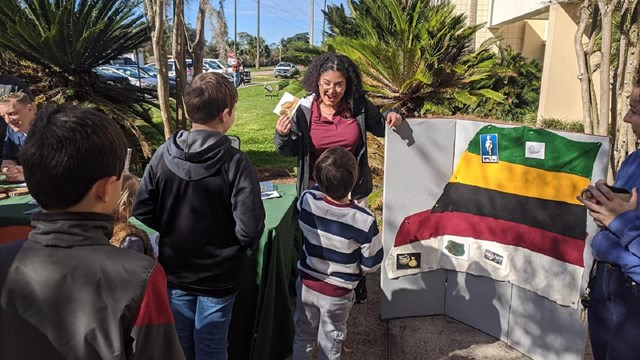
ConclusionsThe results of the Archeological Resources Protection Plan have been rewarding, informative, and perhaps precedent-setting. The results also illustrate the value and necessity of such programs throughout the National Park Service and in other federal land management agencies charged with cultural resources management. The Big South Fork staff is continuing the monitoring program with refined goals and measures to gauge the effectiveness of various educational and enforcement solutions. The identification of sensitive archeological sites, the installation of electronic surveillance at selected sites, and increased ARPA patrolling have all recently come to fruition. The use of results from the monitoring program has been effective for enforcement activities. In particular, one site and the pattern of seasonality defined by monitoring activities were instrumental in the placement of a remote, ferrous metal detector. This surveillance technique led to the arrest of three vandals illegally excavating a rockshelter site. The road above this site had also been signed with an ARPA notice. This case will be the first brought to trial under the new ARPA amendments. The use of remote sensing equipment is necessary due to staff limitations and the 103,000 acre size of the Recreation Area. The 40-hour Federal Law Enforcement Training Center's (FLETC) Archeological Resources Protection Training Program was conducted in the summer of 1988 at Big South Fork. That and other regional training and assistance programs throughout the year enabled the Enforcement Division to acquire and modify the remote sensing equipment and to conduct operations with a view towards a possible ARPA prosecution. Educational programs were mandated in the recent October 1988 amendments to the ARPA legislation. Big South Fork has had public outreach programs in place for the past year as a secondary objective to the monitoring program. These educational efforts include a "hands on" archeology dig box experience for visitors, "chalk and talk" and slide programs at local schools, activity handouts and puzzles relating to cultural resources, an artifact touch table, and a self-guided or ranger tour incorporating a severely looted rockshelter site as its focus. Other attempts to protect archeological resources include rerouting trails and restricting access. Both of these measures have been tried and found to work. However, the numerous (4,000 estimated) visible rockshelter sites in this area and the cost of rerouting trails do not ensure protection. Closing many of the jeep trails throughout the area will do much more but may create many political problems. It has been determined that "difficulty of access is not a deterrent to a serious collector, pothunter, or commercial scavenger unless restrictions of motorized vehicles can be enforced" (Lyneis et al. 1980:152). Attempts to educate the public about cultural resources laws have been made by placing on roads and jeep trails throughout the area, weatherproof signs identifying the protection afforded archeological sites and the penalties of violation. Monitoring for archeological site impacts is an, "ad infinitum" process which may be conducted with less frequency if public awareness measures are successful. Currently though, many sectors of the public still need to be educated, especially U.S. attorneys, federal judges, and other law enforcement professionals. The final success or failure of our efforts to educate the public may come back to haunt us in the form of uninformed jurors. One way to begin changing perceptions is to develop grade school and high school programs which re-direct interests in prehistory into suitable channels at an early age. Other educational programs involve cooperative projects and programs with junior colleges, community colleges, and universities. These types of activities allow the park unit to gain from low-cost individual research studies or grant topics. Currently, a prehistoric Native American video or film series, tailored to this area of the Upper Cumberland Plateau, is being developed through a humanities grant at Roane State Community College. Public education and awareness will help eliminate the uninformed visitor who inadvertently degrades or vandalizes cultural resources. It will also help educate the public who will be sitting as jurors in future ARPA cases. This will help make enforcement of and prosecution under ARPA more effective.
Read Return to the Table of Contents
|