Figures


Introduction

  1. Map of Fort Benning, Historic Preservation Plan, Daniel Elliott & Jeffrey Holland
  2. Hubert G. Mehaffey Sr., Sharyn Kane & Richard Keeton, photographers

Chapter 1: Days of Giants and Ice

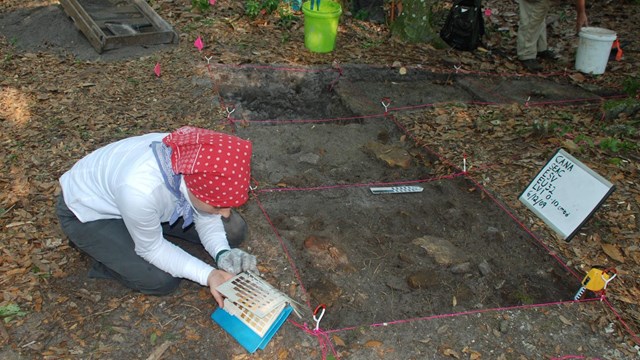
  1. Archeologists at work, The Carmouche Site, Dean Wood & Thomas Gresham
  2. Clovis spear points, Archaeological Survey of Selected Areas, Erwin Roemer
  3. PaleoIndian migrations, PaleoIndian Period Archaeology of Georgia, David Anderson
  4. Archeologists at work, The Carmouche Site, Dean Wood & Thomas Gresham
  5. Clovis spear points, PaleoIndian Period Archaeology of Georgia, David Anderson
  6. Dalton spear points, Ibid
  7. Dalton spear points, Ibid

Chapter 2: Stories Rocks Tell

  1. Fall line map, Russell Papers, Moundville, Alabama
  2. Fall line and Fort Benning, Historic Preservation Plan, Daniel Elliott & Jeffrey Holland
  3. Upatoi Creek at an excavation, The Carmouche Site, Dean Wood & Thomas Gresham
  4. Archaic spear points at Fort Benning, Archaeological Survey of Selected Areas, Erwin Roemer
  5. A graver, provided by John Jameson
  6. Unifacial stone tools, The Carmouche Site, Dean Wood & Thomas Gresham
  7. Pitted stone and other prehistoric tools, Archaeological Survey of Selected Areas, Erwin Roemer
  8. A scraper, The Gregg Shoals and Clyde Gully Sites, Ann Tippitt & William Marquardt
  9. Aerial photograph of an excavation, The Carmouche Site, Dean Wood & Thomas Gresham

Chapter 3: An Unforgiving Climate

  1. Excavating a feature, Ibid
  2. Morrow Mountain and other spear points, Russell Papers, Moundville, Alabama
  3. Drawing of an atlatl, Julie Barnes Smith, artist, Beneath These Waters, Sharyn Kane & Richard Keeton
  4. Drawing of Watson Brake Mounds, Martin Pate, artist, Prehistoric Mounds in the Lower Mississippi Valley

Chapter 4: Shapting the Earth

  1. An excavation trench, The Carmouche Site, Dean Wood & Thomas Gresham
  2. An awl, Gisela Weis-Gresham, artist, The Carmouche Site, Dean Wood & Thomas Gresham
  3. Sketch of a posthole, The Carmouche Site, Dean Wood & Thomas Gresham
  4. Prehistoric bowl embedded in soapstone, Georgia Department of Industry, Trade, and Tourism
  5. Late Archaic spear point found on Fort Benning, Archaeological Survey of Selected Areas, Erwin Roemer
  6. Spear points found on Fort Benning, Ibid

Chapter 5: Rituals and Commerce

  1. Kolomoki mound center, Georgia Department of Industry, Trade, and Tourism
  2. Staff Sergeant David Chase at work on a dig, provided by Frank Schnell Jr.
  3. Sketches of prehistoric pottery found on Fort Benning, Archaeological Survey of Selected Areas, Erwin Roemer
  4. Woodland-era projectile points, Ibid
  5. Platform smoking pipe, The Tunacunnhee Site: Hopewell in Northwest Georgia, Richard Jeffries
  6. Woodland-era jar from the Halloca Creek site, provided by Frank Schnell Jr
  7. Reconstruction of a Swift Creek pot, Historic Preservation Plan, Daniel Elliott & Jeffrey Holland
  8. Photograph of the Quartermaster site, provided by Frank Schnell Jr
  9. Weeden Island pottery sherds from Fort Benning, Ibid
  10. Late Swift Creek designs, Historic Preservation Plan, Daniel Elliott & Jeffrey Holland
  11. Swift Creek design elements, Prehistory in the Richard B. Russell Reservoir, Dean Wood
  12. Kolomoki visitor center, Georgia Department of Industry, Trade, and Tourism

Chapter 6: Seeds of Change

  1. Drawing of a mound center, Martin Pate, artists, Prehistoric Mounds in the Lower Mississippi Valley
  2. Averett pot drawings, The Carmouche Site, Dean Wood & Thomas Gresham
  3. Mississippian shell beads, Twelfth Annual Report of the Bureau of Ethnology
  4. Theodore De Bry engraving, Ibid
  5. Drawing of gorget design, Ibid
  6. Marble statues at Etowah, Georgia Department of Industry, Trade, and Tourism
  7. Earthlodge at Ocmulgee National Monument, National Park Service
  8. Drawing of Rood's Creek pottery, The Carmouche Site, Dean Wood & Thomas Gresham
  9. The museum at Etowah mounds, Georgia Department of Industry, Trade, and Tourism
  10. Bull Creek pottery designs, Historic Preservation Plan, Daniel Elliott & Jeffrey Holland
  11. Dog effigy pot, provided by Frank Schnell Jr.

Chapter 7: Invasion and Devastation

  1. Drawing of Hernando de Soto, National Park Service
  2. De Soto's route, provided by David Anderson
  3. Le Moyne de Morgues drawing of Indians mourning, Twelfth Annual Report of the Bureau of Ethnology
  4. Mississippian-era smoking pipes, Ibid
  5. Drawing of Fort Apalachicola, Columbus Museum

Chapter 8: A Brave Journey

  1. Historic map of Fort Benning area, Historic Preservation Plan, Daniel Elliott & Jeffrey Holland
  2. James Edward Oglethorpe, Georgia Department of Archives and History
  3. Indians drinking the black drink, Smithsonian Institution
  4. Drawing of early Savannah, University of Georgia Library

Chapter 9: The Flower Hunter

  1. William Bartram, Charles Willson Peale, artist, Columbus, Georgia's Fall Line 'Trading Town'
  2. Yuchi Town painting, Martin Pate, artist
  3. Archeologist with the tools of his profession, The Carmouche Site, Dean Wood & Thomas Gresham
  4. Remnants of a house at Yuchi Town, Yuchi Town Site, Chad Braley
  5. Diagram of pot hunter holes at Yuchi Town, Ibid

Chapter 10: A Sacred Fire Flickers

  1. Silver artifacts found on Fort Benning, Up on the Upatoi, Danial & Rita Elliott and Karen & Dean Wood
  2. Drawing of Menawa, an Upper Creek leader, Columbus Museum
  3. Map of Horseshoe Bend, National Park Service
  4. Creek land cessions, Ibid

Chapter 11: As Long as Grass Grows

  1. Hambly settlement site, Cultural Resources Sample Survey Mechanized Infantry Training, Eric Poplin
  2. Drawing of William McIntosh, Charles Bird King, artist, Columbus, Georgia's Fall Line 'Trading Town'
  3. Drawing of Apothleyoholo, Upper Creek leader, Ibid
  4. Creek house prior to removal, Archaeological Assessment of 1RU135, Christopher Espenshade
  5. Site map of Fort Mitchell, Historic Preservation Plan, Daniel Elliott & Jeffrey Holland

Chapter 12: A Forgotten Church

  1. The cotton gin, University of Georgia Library
  2. Erosion problems, Russell Papers, Moundville, Alabama
  3. Location of Mt. Gilead Baptist Church, The Mt. Gilead Cemetery Study, Dean Wood
  4. Cemetery on Oswitchee Creek, Archaeological Survey of Selected Areas, Erwin Roemer

Chapter 13: Prosperity for a Few

  1. The Pactolus steamboat, Georgia Department of Archives and History
  2. Slave ships, University of Georgia Library

Chapter 14: Henry Benning's War

  1. Henry Benning, the Infantry Museum, Fort Benning
  2. Union cavalryman, The Civil War Times Photographic History of the Civil War, William Davis & Bell Wiley

Chapter 15: Hard Times

  1. Confederate cavalryman, Ibid
  2. Apalachicola location, The Atlanta Constitution
  3. Eagle Mill and other Columbus industries, Columbus Museum
  4. Union soldiers attack a salt factory, Harper's Weekly

Chapter 16: Word Comes Too Late

  1. General William Tecumseh Sherman, The Civil War Times Photographic History of the Civil War, William Davis & Bell Wiley
  2. The Columbus Navy Yard, Harper's Weekly
  3. Spencer Carbine rifle, The Civil War Times Photographic History of the Civil War, William Davis & Bell Wiley

Chapter 17: Freedom's High Price

  1. Former slaves vote, Harper's Weekly
  2. Columbus after the Civil War, Harper's Weekly
  3. Teaching former slaves, Harper's Weekly

Chapter 18: Wheel-Spun Memories

  1. Charlie McCardel and Laura Mehaffey McCardel, provided by Hubert G. Mehaffey Sr.
  2. Hubert G. Mehaffey Sr., Sharyn Kane & Richard Keeton, photographers
  3. Eelbeck dam, provided by Hubert G. Mehaffey Sr.
  4. Eelbeck label, The Historic Eelbeck Community, Julie Barnes Smith

Chapter 19: All the Time in the World

  1. C.R. and Rosa Mehaffey, provided by Hubert G. Mehaffey Sr.
  2. Mehaffey family home, Ibid
  3. C.R. Mehaffey with his Model T, Ibid
  4. The Mehaffey children, Ibid
  5. Painting of the Eelbeck mill, Martin Pate, artist
  6. Sulphur Springs Grade School, provided by Hubert G. Mehaffey Sr.
  7. Julia George Schnell's memories of the layout of Eelbeck, The Historic Eelbeck Community, Julie Barnes Smith
  8. C.R. Mehaffey and his dog Smokey, provided by Hubert G. Mehaffey Sr.

Chapter 20: The Infantry's Story

  1. Downtown Columbus, Georgia Department of Archives and History
  2. Early days at Camp Benning, Ibid
  3. The Riverside mansion, Ibid

Chapter 21: Politics and Persistence

  1. The Fort Benning train, Ibid
  2. Early housing at Fort Benning, Ibid
  3. President Warren G. Harding visits Fort Benning, Ibid
  4. Doughboy Stadium, Ibid

Chapter 22: A Place in History

  1. The post chapel, Ibid
  2. Early paratroopers, Ibid
  3. Dwight David Eisenhower at Fort Benning, Ibid
  4. Parachute jump towers, Ibid

Return to the Table of Contents