22 - A Place in History

(Click images to enlarge)

Lucky coincidence had nothing to do with the campus-like atmosphere of Fort Benning's main post or the neighborhood feel of the officers' quarters. The appealing architecture, manicured landscaping, and stately trees trace to the late 1920's when leaders in the United States Army concluded that soldiers learn best in pleasant environments.

A newspaper article of the time in the Benning Herald explained: "The depressive influence of bare or squalid surroundings is well known to psychologists and other observant people. Army officers have observed that soldiers, as a class, are much affected by the environment in which they are quartered. It is definitely established that unbeautiful surroundings affect adversely important aspects of military life, such as morale...."

This thinking prompted the Army in the 1920's to hire George B. Ford, a pacesetter in the emerging field of city planning. Cities across America had sprawled without forethought, spawning the new planning profession whose practitioners hoped to prevent similar mistakes. Military leaders decided that if forethought could help beautify cities, then Fort Benning could also benefit.

A great deal of construction had already occurred on Fort Benning before Ford formulated his plan for the post. Already in place were one of the massive cuartels for housing soldiers, a heating plant, nurses' quarters, the library (now the telecommunications center), and various other buildings. Many of these buildings were in Fort Benning's hub, the academic and civic area, known as the Main Post Cantonment. Cantonment means temporary camp. The name stemmed from Fort Benning's early days when many soldiers and officers were quartered in temporary buildings and tents.

"Fort Benning...just grew, like Topsy," wrote Ford. "The permanent buildings seem to be scattered at random all over the post. At first glance, it seemed to be hopeless to try to work out any orderly arrangement."

Nonetheless, the planner envisioned a grouping of buildings and open spaces that was eventually realized and largely still exists. Ford completed his grand scheme for the post in 1929. His work reflects the influence of the City Beautiful Movement, then in vogue. The movement's aim was to create aesthetically pleasing designs with open spaces, straight avenues, and appealing architecture. The planner incorporated all of these into his vision for Fort Benning's main complex. Ford also proposed that existing structures and future buildings should be coordinated to match in color and form.

He avoided austere, monotonous patterns. In Ford's design, the appearances of buildings were pleasingly harmonious with one another, without distracting from their military purpose, according to W. Robinson Fisher. Fisher led a team of researchers in the 1980's who studied Fort Benning's buildings and layout.

Most elements of Ford's plan became reality between 1930 and 1935 when Depression-era public works programs for the unemployed pumped $10 million into post construction and helped provide workers. The result was a building boom at Fort Benning. Structures that resulted include the post Chapel, the Officers' Club, and the original Infantry School Building, now headquarters for the School of the Americas where Latin American military officers are trained.

This original Infantry School Building dominates the Main Post Cantonment. The structure's appeal comes, in part, from its massive curves and expert details, including the central tower, and the large, arched window of numerous panes above the rear entrance. The building is symmetrical with four wings spreading out from the center, two on each side of the rear entrance. The center bows outward toward the front, creating a horseshoe pattern. The main entrance features three massive arches. Designed by nationally acclaimed New York architects, McKim, Mead, and White, the structure is a prime example of Second Renaissance Revival, a style made famous by the firm.

The walls of stucco, veneered over hollow clay tiles, and the red terra cotta roof tiles are typical of many Fort Benning buildings, creating a sense of continuity. Ashlar limestone was carefully shaped and implanted in parts of the walls to add definition and artistic details.

Figure 112: The Chapel (41.8 KB).The architects who designed various Fort Benning buildings in the 1930's employed a number of classical elements reminiscent of early Greek or Roman buildings.

These included pilasters - rectangular columns imbedded in the surrounding wall, entablatures - long, horizontal decorative patterns placed just beneath the roofs - and arcades, a series of arches.

Like most of the 1930's structures, the original Infantry School Building is placed some distance back from the street, enhancing its appeal. The building's grandeur is further emphasized by five large triangles of open space deliberately left around the structure.

Other distinctive 1930's buildings include:

· The Chapel. Built to accommodate Catholic, Protestant, and Jewish worship, this structure reflects an architectural style called Georgian Colonial Revival. The design is noted for understated elegance. The 100-foot-tall steeple is divided into six sections or tiers. Arched windows are outlined with decorative pieces of ashlar limestone.

· The Officers' Club. The Spanish Colonial Revival style of architecture was a major influence in the structure design, as it was for many Fort Benning buildings. The Second Renaissance Revival style, used nearby at the original Infantry School Building, also influenced the Officers' Club appearance. The building is symmetrical, with two identical wings. The main entrance forms an arch, as do the windows along both wings. The building center opens into a room two-stories tall, featuring a wooden beam ceiling, two curving staircases, five iron chandeliers, and a massive fireplace.

· The 24th Infantry Theater. The 24th Infantry was an African-American regiment stationed at Fort Benning beginning in 1922. The theater was built in 1933 specifically for black troops who were segregated from white soldiers throughout the Army at the time. The brick theater has two arched entrance ways. Metal chains still suspend a wooden awning over the old wooden ticket booth.

· The Air Corps Double Hanger. Lawson Army Airfield began operation in 1931 on the site of the former Creek Indian village, Kasita. The double hanger is the first permanent airplane shelter on the post and is framed by four rectangular towers at the corners, reflecting influence of the Art Deco architectural style. Long, narrow windows in the towers contrast with broad banks of windows across the front and back of the hanger.

· The Cuartels. Cuartel is a Spanish word meaning barracks for soldiers. The Army completed two of these massive buildings between 1930 and 1939. The cuartels, built in U-shapes, were constructed around a large open space, a design similar to one used at the Pentagon building near Washington, D.C. Long, porch-like galleries span the length of the cuartels, capturing breezes and providing shade.


Various work-related buildings occupy areas near the cuartels. Some of these, including the old tank shops, display classical design elements. Built in 1932 when the tank school, stationed at Fort Mead, Maryland was transferred to Fort Benning, these buildings, with their broad banks of multipaned windows, reflect a mixing of modern commercial and Art Deco styles.

When Ford conceived his plan for Fort Benning, zoning laws had become popular as a way to keep commercial buildings from impinging on residential neighborhoods. The planner chose a similar strategy. Ford segregated training, administration, and recreation buildings in one area of the Main Post Cantonment and placed warehouses and residences in separate locations on the periphery.

There are seven neighborhoods for officer housing on the edges of the Main Post Cantonment. Ford's ideas about how these neighborhoods should look were influenced by the Garden City movement, which emphasized ample open space. Houses were built far enough apart for privacy, but close enough to create a neighborhood atmosphere. An average of two houses was built per acre in most neighborhoods. Many of the dwellings face a central commons or open area, with the rear of the buildings toward the street. The houses have white stuccoed walls and red terra cotta tile roofs. A number have two stories, full basements, large interior rooms, a sleeping porch, and a sun room.

Figure 113: Early Paratroopers at Fort Benning (35.4 KB).The pleasant environment at Fort Benning in the late 1930's didn't obscure the fact that the world had turned ominously dangerous. Japan invaded large parts of China, and in the process bombed an American gunboat, the Panay. The Japanese claimed the bombing was accidental, but tensions mounted between the United States and Japan. Then, in September 1939, Nazi Germany, led by Adolph Hitler, attacked and conquered Poland. World War II had begun, with Britain and France declaring war against Germany.

In the Spring of 1940, German troops stormed into Denmark, Norway, Holland, Belgium, and deep into France in a furious assault, the blitzkrieg. In June, Italy, under dictator Benito Mussolini, joined the fight against France. President Franklin Roosevelt blistered the Italians, saying, "The hand that held the dagger has struck it into the back of its neighbor."

Twelve days later, the French army surrendered. The only forces in all of western Europe opposing powerful Nazi armies were shattered remnants of British troops that had managed to escape across the English Channel from Dunkirk. The odds of Great Britain surviving against the expected German onslaught seemed slim. The American public was stunned by the fall of France. Nearly 70 percent told pollsters that if Germany conquered Great Britain, the existence of the United States would be threatened. Most vehemently disapproved of the totalitarian regimes and their aggression, but nonetheless did not want the United States to enter the war.

But involvement appeared inevitable. Under the direction of President Roosevelt, the United States transported more and more supplies and war materiel to Great Britain. After June 1941, supplies were also shipped to aid Russia which Germany had invaded. The United States also began building up its own military capacities, just in case. So much materiel was going overseas to the British, however, that some American troops were forced to train with telephone poles substituting as artillery pieces.

The influx of new troops quickened the pace at Fort Benning where the population skyrocketed to 100,000. George S. Patton arrived in 1940 to begin training and reorganizing the Second Armored Division, based in temporary quarters at Sand Hill. It was at Sand Hill that Patton gained his nickname, "Blood and Guts," because of his graphic descriptions to his troops of war's horrors and the sacrifices required to win.

Stationed for about a year at Fort Benning, Patton used his headquarters building to catnap between appointments when his work schedule ran long. The ability to sleep for short stretches later served him well when he commanded American forces in Africa and Europe. He was one of several Fort Benning alumni who played crucial roles in World War II. General Omar Bradley was Fort Benning commandant in 1941. He was spending a relaxed moment in the garden at the Riverside mansion when an aide approached with devastating news on December 7, 1941. The Japanese had made a surprise attack on the United States' naval station at Pearl Harbor in Hawaii.

"Not in his wildest dreams did he ever think he would reach the highest ranks of the U.S. military," explains Frank Hanner, director of the Infantry Museum. "He hadn't even fought in World War I. The closest he had ever come to fighting was helping to police a copper mine strike in Montana. Before World War II was over, Bradley would command the largest field army ever assembled by the United States."

The bombing of Pearl Harbor caught the United States completely off guard, devastating the Pacific Ocean fleet. The first wave of Japanese fighter planes flew in at 7:55 on Sunday morning. Within two hours, they destroyed or crippled eight battleships, three cruisers, and four other ships. Almost 200 American military planes were also ravaged, most bombed before they could get off the ground. There were 3,435 American casualties.

The raid united Americans as never before in favor of armed conflict. On Monday, December 8, the United States declared war on Japan. Within three days, Japan's allies, Germany and Italy, retaliated by declaring war on the United States. The biggest, most widespread conflict in history was now fully engaged.

The war transformed Fort Benning into a beehive of activity, as it became a major staging area for sending troops overseas. The Army erected hundreds of temporary buildings on post. There was also an officers' candidate school established and a new parachute school opened. More than 100,000 troops passed through the parachute school, including the country's first African-American parachute unit. In all, more than 600,000 World War II soldiers trained at Fort Benning.

General Dwight David Eisenhower, shortly after Pearl Harbor, was called to Washington, D.C. to serve as a Far East expert. Eisenhower had earlier spent time at Fort Benning, living with his wife, Mamie, in building 418 of the Austin Loop, part of the Main Post Cantonment. He helped coach the post's 1926 All-Army Football Team.

Figure 114: Dwight D. Eisenhower While Stationed at Fort Benning.Eisenhower went to Washington after catching the eye of General George C. Marshall, Army chief of staff. Earlier at Fort Benning, Marshall had shown a penchant for singling out talented leaders, often before others saw their potential. The more he observed Eisenhower at work, the more impressed he became. Eisenhower showed a keen grasp of global strategy, which is what this war, unlike any before it, required. Soon Eisenhower was appointed to the critical position of assistant chief of the war plans division.

Many Americans, outraged by the attack on Pearl Harbor, argued that the United States should throw all the military power it could muster against Japan. Eisenhower, carefully and skillfully argued that the country should not scatter its forces here and there, piecemeal. Rather, he urged, the United States should concentrate firepower on one primary goal - crushing Nazi Germany. His arguments helped shape American strategy for the rest of the war.

In late 1942, Eisenhower directed the joint American and British invasion into western North Africa. His troops eventually collided against the battle-hardened German Afrika Corps, led by the skillful Field Marshal Erwin Rommel, who came to be known as the "Desert Fox." Green American troops initially faltered, suffering heavy losses, but eventually they triumphed. Eisenhower's forces raced east across North Africa while British soldiers pushed west from their base on the Suez Canal, catching the German and Italian forces in a tightening vice. By May 1943, the last German soldiers in North Africa surrendered, and the tide, for the first time, seemed to be turning against the Nazis.

Next came the bloody Sicilian and Italian campaigns as the Allies slowly fought their way toward Rome. Meanwhile, the entire world waited for an expected invasion into German-occupied France. The Germans had amassed a heavy wall of defenses, and Hitler boasted, "No power on earth can drive us out of this region against our will."

The Americans struggled to gather enough men and supplies to launch the biggest military landing in history. Particularly vexing was the gargantuan effort to assemble enough landing craft. General George Marshall lamented, "Prior to the present war, I never heard of any landing craft except a rubber boat. Now I think about little else."

Eisenhower was named Supreme Commander of the Allied Forces in Europe. He was placed in charge of the invasion, called D-Day, and faced the daunting task of deciding when to begin the attack. He first scheduled the massive movement of troops and supplies across the English Channel for early May 1944. The date had to be postponed, however, to give American industry more time to produce supplies, equipment, and landing craft. The postponement proved risky because the weather worsened in the interim.

There were only three days early the following month when tides favored an invasion, June 5, 6 or 7. Eisenhower selected the 5th, but on Sunday, June 4, a brisk gale blew across the English Channel, and the invasion had to be halted once again. He now had to decide whether to try again on Tuesday, June 6. Weather forecasters said there would be a brief period of relative clearing, but predicted that within 24 hours the coast would experience more stormy conditions.

The general agonized over what to do, knowing that so many lives were at stake. Could he move enough soldiers ashore before the weather turned bad again? Were the weather forecasters right? Should he wait, postpone the invasion again, and possibly lose the potential for surprise? As he would later write, "I went to my tent alone and sat down to think."

He gambled on moving forward. Not long after midnight on June 6, British flyers began dropping bombs on German shore batteries. At about 1:30 in the morning, British and American paratroopers swooped silently downward, dropping into enemy territory.

By dawn, United States airplanes blanketed the sky, dropping some 3,000 tons of explosives on German block houses and other shore defenses. American fighter planes dove at the beaches, spitting out bullets at the fortifications.

As the morning light increased, a huge fleet became visible, spread out across the ocean, facing 60 miles of Normandy coast. Six battleships and other war vessels began unlimbering their heavy guns at German gun emplacements above the beaches. Yellow bursts of flames exploded on the shores. The Nazi gun batteries returned fire, belching shells, smoke, and flames.

Then some 4,000 vessels, stretching as far as the eye could see, began pouring soldiers, tanks, and other equipment toward shores named Omaha, Utah, and Point du Hoc. The British, Canadian, and American troops began wading onto the beaches. The Americans at Omaha Beach faced the most peril. A choppy sea and treacherous currents made the landing craft difficult to navigate. Many soldiers drowned; others reached the beach exhausted and were immediately pinned down by gunfire from well-prepared German troops.

The noise was deafening. Mines exploded, artillery shells crashed into the sand, hot pieces of shrapnel shot through the air, and everywhere there seemed to be rapid fire from machine guns. Casualties were heavy. Gradually, however, the American soldiers pushed forward. By the end of the day, the Allies held all the beaches, but the cost was enormous. There were 7,300 Americans killed.

In the following two weeks, the Allies funneled ashore more than one million soldiers and tons of equipment and supplies. Moving beyond the beachhead, however, proved difficult, and excruciatingly slow. Troops commanded by Omar Bradley edged forward, trying to capture the strategic village of St. Lo. The combat was grueling. The Germans fought tenaciously in an area filled with natural defenses. Fields, roads, and lanes were lined with tall hedges and trees. A few feet at a time, mile by mile, and under heavy fire, the American troops crept forward.

One officer remembered the battle for St. Lo this way: "The artillery fire and the tank explosions kept repeating, over and over, day and night. Gunfire was everywhere. We were dirty and exhausted. One moment you had a buddy on your right. The next moment, he was dead. It was the closest thing to hell I ever saw."

On July 19, 1944, the Americans captured St. Lo. The awful beginning of the invasion was over. Now the spotlight turned on General George S. Patton, one of America's most flamboyant military leaders. Known for his eccentricities, Patton sometimes rode atop tanks, brandishing a pearl-handled revolver. His unguarded statements to newspaper reporters, among others, landed him in hot water more than once. His remarks sometimes zigzagged from the pious, to the crude, to the inflammatory, but his troops, by and large, were devoted to him, and he was a fierce warrior.

Earlier in the war, Patton nearly jeopardized his career when he struck a wounded soldier whom he mistakenly suspected of faking an injury. American public opinion soured on Patton, but Eisenhower stood by him, keeping him on active duty after severely chastising him. Patton, in turn, apologized to the entire Army.

Now, with the Allies finally breaking out of their enclaves around the Normandy beaches, his troops smashed south through the German lines in late July 1944. Deploying his tanks the way Civil War generals used cavalry, Patton's fast-moving legions swept around the German flank, forcing the enemy army into retreat. Within a month, on August 25, French forces, commanded by General Charles De Gaulle, were able to ride into Paris to boisterous celebration.

By mid-September, the Allies had driven the Nazi army out of most of Belgium and France. They now faced stout defenses, just inside Germany, and their advance began to stall. The Allies had charged ahead so rapidly that they had outrun their supplies. Once supply problems were solved, heavy rains and tenacious German resistance continued to hinder progress.

Then, on December 16, under cover of a cold, thick fog, the Germans instigated a desperate counter attack through the Ardennes Forest region of Belgium. The enemy tanks were pouring through an area some 75 miles wide.

The Americans were caught off guard. Their forces were scattered and initially disorganized in face of the onslaught. Casualties were heavy. The Nazi army drove some 50 miles into American-held territory, creating a bulge behind American lines. During this Battle of the Bulge, the fast-moving Germans captured some 7,000 soldiers. Other Americans in small groups were stranded behind enemy lines, but refused to surrender despite running short on ammunition and food. They waited and shivered in the snow-covered forests.

The 101st Airborne and remnants of the 10th Armored Division at Bastogne were quickly surrounded and teetered on the edge of annihilation. The Germans demanded the Americans surrender. Defiantly, Brigadier General Anthony McAuliffe sent back his one-word reply: "Nuts." Now, the American soldiers had no choice but to hold out, hoping that somehow they would be rescued.

In this moment of crisis, Eisenhower assembled his key advisers at Verdun, not far from the Bulge and near where so much heavy fighting occurred during World War I. Hours passed as they discussed the likely intentions of the German military leader, Field Marshall Gerd von Rundstedt.

Eisenhower's chief of staff, Bedell Smith, told the British General Bernard Law Montgomery that he would have to contain the Germans in the northern portion of the Bulge. Then Smith turned to Patton and asked if he could hold and attack the southern portion of the Bulge. It was not an idle question because Patton's troops were some miles south of the German onslaught and involved in heavy fighting. Patton stood, looked around the room, then barked: "Hold them! Why, I'll take [Field Marshall] von Rundstedt and ram him right down... [a part of Montgomery's anatomy]!"

It was typical bluster, but Patton and his soldiers performed brilliantly over the next few days during the deepening crisis. His troops disengaged from one battle, wheeled around, and began moving rapidly. A large portion of Patton's army traveled 90 miles within 24 hours and immediately began attacking the Germans, driving directly toward the trapped American soldiers at Bastogne.

In the midst of the desperate battle, Patton never seemed disheartened. Somehow he even found time to hold a news briefing for reporters. One of them, Larry Newman, recalled that the reporters were tense and depressed about the war's sudden reversal. But "when Patton strode into the room, smiling, confident, the atmosphere changed within seconds."

Patton demanded of the journalists, "What the hell is all the mourning about? This is the end of the beginning. We've been batting our brains out trying to get the Hun [the Nazi army] out in the open. Now he is out. And with the help of God we'll finish him off this time - and for good."

Patton's prediction was uncannily accurate. His troops fought all the way to the beleaguered 101st Airborne at Bastogne, helping end the last major threat to American forces in Europe. Within about a month, the original American lines were reestablished and the attack into Germany began again in earnest.

When Patton learned his troops had suffered more casualties in the Battle of the Bulge than the airborne paratroopers he had rescued, he told reporters, "It's a helluva lot easier to sit on your rear end and wait than it is to fight into a place like this. Try to remember that when you write your books about this campaign."

Not long after, troops commanded by Omar Bradley punched into central Germany where they encircled and trapped 300,000 enemy soldiers. The Americans, British, and other allies then fought their way to Germany's Elbe River where they met Russian soldiers battling from the other direction through east Germany.

Finally, the war in Europe ended. The Nazis surrendered in May 1945. A few months later, Patton was dead, killed in an automobile accident in occupied Germany.

The war against the Japanese had been gaining momentum since 1942, as the Americans, suffering heavy casualties, participated in fierce naval battles and captured a series of islands.

Then, on September 2, 1945, the Japanese also surrendered. The formal ceremony took place aboard the battleship Missouri, presided over by General Douglas MacArthur.

Never before or since has war had such global impact. Worldwide, some 14 million soldiers were killed. Countless millions of civilians were also slain. In all, about 322,000 Americans were killed or were missing in action.

After World War II, Fort Benning continued to play a vital role in schooling soldiers for every conflict involving the United States. Ranger training, initiated at the post in 1950, supplied key personnel in the Korean War. The officer candidate school also reopened.

During America's longest conflict, the Vietnam War, Fort Benning trained thousands of officers who participated in the combat. During this era, soldiers at Fort Benning helped pioneer a whole new concept of warfare, using helicopters to transport troops for large-scale assaults. The post also hosted basic training centers at the Sand Hill and Harmony Church areas. The facilities, before closing in 1970, trained 129,000 new soldiers.

Fort Benning also served as a major staging ground for troops sent to the Middle East to fight Iraq after its invasion of Kuwait in 1990. Training and tactics developed at Fort Benning played a major role in the United States victory. The 100-hour war liberated Kuwait and its valuable oil resources from Iraq.

Figure 115: The Parachute Jump Tower at Fort Benning.Fort Benning has also helped foster changes in the role of women in the military. In November 1973, Privates Joyce Kutsch and Rita Johnson became the first women to undergo airborne training. They completed the rigorous course and became parachute riggers.

The Bayonet, the post newspaper, reported in February 1974 that Sylvia Campos was the first woman named soldier of the month in the 36th Engineer Group. Fort Benning's first officer candidate school class to include women graduated in 1977. In August of the same year, Private Grace Hammack became the first woman named Fort Benning soldier of the year.

As it has since its beginning, Fort Benning has continued to mold officers for the highest levels of command. General William J. Livsey, born in the small town of Clarkston, Georgia, served as the Infantry School commandant between 1977 to 1979. Later, he became commander-in-chief of the United Nations command in Korea.

General Colin Powell spent two tours of duty at Fort Benning before moving to Washington, D.C., and serving in several prominent posts. His advancement demonstrates the Army's resolve to provide equal opportunities for its soldiers, regardless of race. In 1989, Colin Powell became the first African-American to serve as chairman of the Joint Chiefs of Staff, the closest military advisors to the President of the United States.

In 1973, the 197th infantry at Fort Benning became the Army's first all-volunteer brigade-sized unit. At the time, there was a common belief that a volunteer Army would prove incapable of performing its duties, according to post historian, Charles White. This myth, he says, has been destroyed. Indeed, Fort Benning was named the best U.S. military installation in the world for two consecutive years.

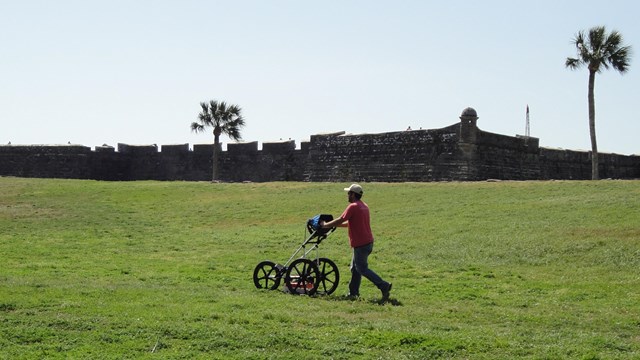
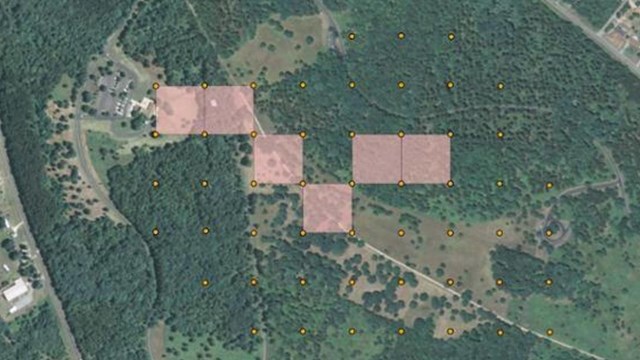
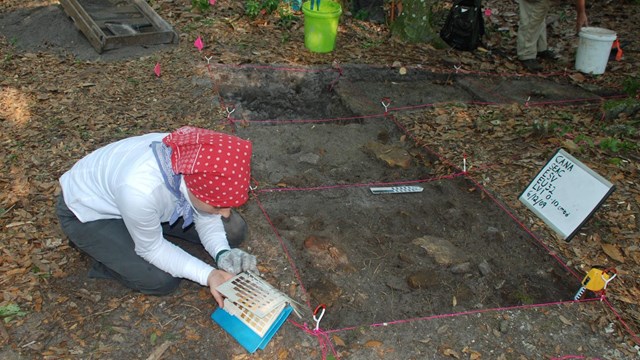
The leaders of Fort Benning continue to demonstrate an eagerness to support and promote historical research and preservation. Each year, archeologists and historians uncover more information about Fort Benning's past and the people who once lived there. They continue to delve into important human occupation sites, such as the Native American community, Yuchi Town, to learn more about this nation's earliest existence. Each year the scientists also find new places worthy of research.

Historians, archeologists, and other researchers have also assembled important details about Fort Benning's significant buildings. Their work has resulted in the entire Main Post Cantonment's nomination to the National Register of Historic Places. Riverside, the commandant's residence, is already listed on the National Register.

A cluster of structures recently relocated behind the Infantry Museum includes the 1940's Fort Benning headquarters for General Patton. The buildings were moved so they could be preserved and shown to the public.

Frank Hanner, museum director, hopes to accumulate enough funds to refurbish the buildings and to recreate how they appeared when Patton was at Fort Benning. Hanner emphasizes that Patton's crucial role in World War II makes these buildings important components in Fort Benning's cultural resources.

"There are no more World War I temporary structures left on base. Not one has survived to this day. The same thing is going to happen to World War II structures if we are not careful. We are tearing them down very rapidly."

History is fragile and can easily be lost. That is why the Army has sought, with this book, to educate the public about the discoveries being made on post. Frank Hanner explained, "We need to remember the sacrifices people have made and the past lessons that have been learned and pass that information on to the next generation as best we can."

As Charles White, Fort Benning's historian, remarked, "If you don't have any understanding of the past, how can you deal with your present? Without an understanding of history, you're like a horse with blinders on. History takes the blinders off."

Return to the Table of Contents