|
Introduction
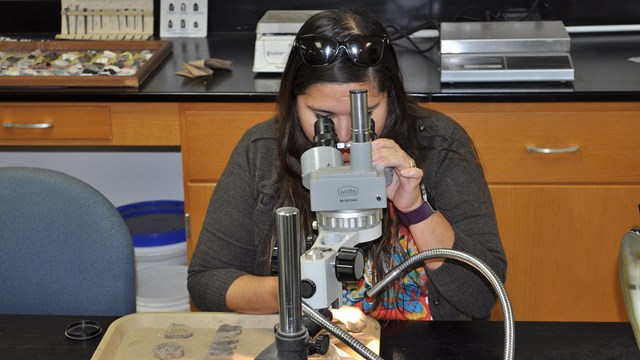
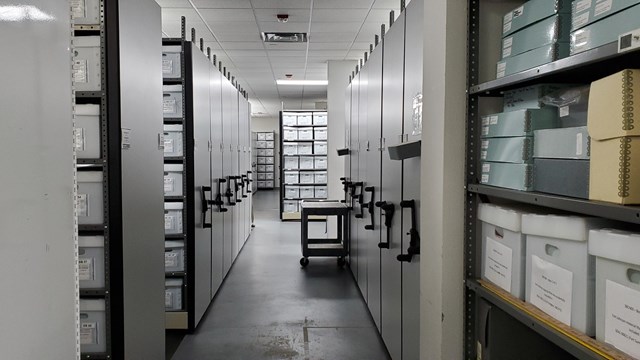
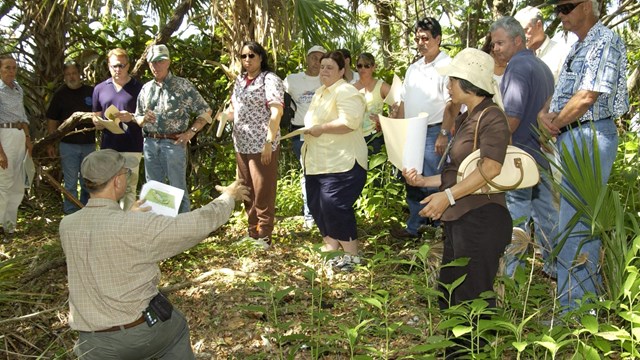
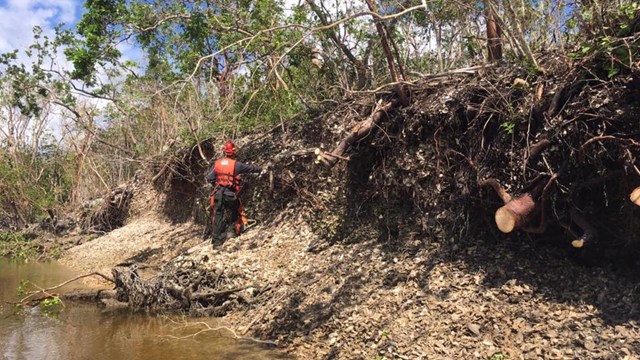
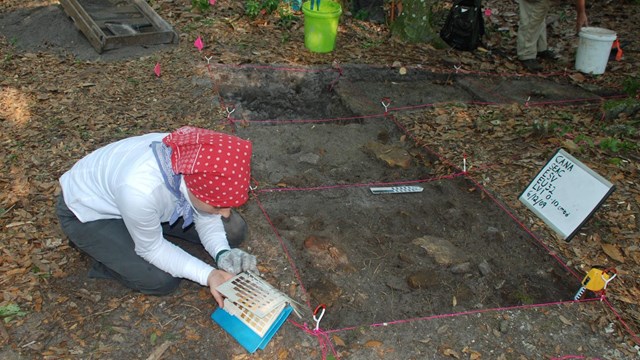
In the following pages, you will find the story of a place and the people who lived there over the past 11,500 years. The many intricate and fascinating details were gathered by experts in an archeological and historic study with few equals in the eastern United States. The findings, however, of this scientific undertaking far surpass regional significance and have much broader importance because they chronicle human development and events significant in our national heritage. The setting is along a 28-mile stretch of the Savannah River, extending into Elbert and Hart Counties in Georgia, and Abbeville and Anderson Counties in South Carolina. This area, encompassing 52,000 acres, was chosen for investigation by the United States Army Corps of Engineers Savannah District because it would be most affected by the Corps' construction of the Richard B. Russell Dam and Lake, named in honor of Georgia's late U.S. senator. The dam, which began operation in 1984, was built in Elbert and Abbeville Counties, about 65 miles north of Augusta, Georgia. But before construction began, archeologists, historians, architects, geologists, botanists, and other experts began studying prehistoric and historic sites within the vicinity. Their investigations probed human lifeways from the ancient PaleoIndians until modern times. These efforts to interpret the region's past were prompted by a federal law, the Archaeological and Historic Preservation Act, and a Presidential Executive Order, which mandate study of the cultural history where federal construction projects are planned. The intent of these requirements is to preserve and interpret knowledge "for the inspiration and benefit of the people," information that otherwise might be permanently lost. There was a special urgency in the case of the Russell investigations because water backed up by the dam would eventually submerge much of the landscape. Altogether some 730 historical and prehistorical sites were located and examined. Thirty locations were chosen for more thorough research because they contained better preserved remains or more representative samples of certain time periods or cultural epochs. The Atlanta-based Interagency Archeological Services Division of the National Park Service agreed to work with the Corps of Engineers Savannah District to oversee the massive project, called the Richard B. Russell Cultural Resource Mitigation Program. Among the two agencies many duties was the selection of the 30 sites for more intensive study, after consultation with the Georgia and South Carolina State Historic Preservation Offices. Corps of Engineers and National Park Service employees then cooperated in writing and awarding contracts to experts to conduct the investigations. Representatives from the two agencies then supervised the subsequent scientific work in the field and follow-up laboratory research. The Russell project serves as a model of how cooperating agencies managed one of the most complete regional investigations ever. Research spanned nearly 20 years, and hundreds of specialists from many different parts of the country were involved. Their techniques included the time-honored archeological practice of digging in the ground, as well as poring over historical documents, analyzing specimens in laboratories, and interviewing local residents. Professionals collected and interpreted data about the people who once occupied the land and the world they had inhabited, and compiled the results in more than 20 extensive reports and many other monographs that comprise the Russell Papers. These writings form an invaluable record for those scientists who in coming years will seek to build on the wealth of information already accumulated. But the Russell Project serves a broader audience than just scientists. There is now a museum and visitor's center near the dam on the Georgia side of the river, for example, with exhibits highlighting aspects of what was learned about earlier life. And this publication, the final step in the long journey of research and documentation, is written to explain the findings so that everyone can share the wide range of knowledge gained. Consequently, the information is condensed and presented free of many scientific and technical terms that might be unfamiliar to most readers. Yet, no significant findings are neglected, and every effort has been made to present material accurately and to demonstrate its importance. Where appropriate, explanations are also given describing the methods used to gather and decipher data, steps often of such complexity and difficulty that they reveal the great skill and dedication researchers brought to their tasks. Primary sources for this publication were the researchers' own accounts in the Russell Papers. These documents contain extensive discussion of techniques used and expert interpretations of what was found. David G. Anderson and J. W. Joseph later condensed the writings of the individual reports into two volumes for a more technical audience, and their work was also especially helpful. Most references to archeological theories come from the Russell Papers and other documents listed in the bibliography, although in several instances the authors interviewed experts directly. And, because the purpose of this volume is not merely to explain what was learned about people near the Savannah River, but to present the inhabitants' experiences within the context of their times, events and findings outside Georgia and South Carolina are described to give a broader perspective. The authors were encouraged to follow such a course, and have included information that did not appear in previous Russell Papers. But those studies, and the work they represent of so many individuals, are the foundation of the story you are about to read. Part I: The Prehistoric People Return to the Table of Contents
|