|
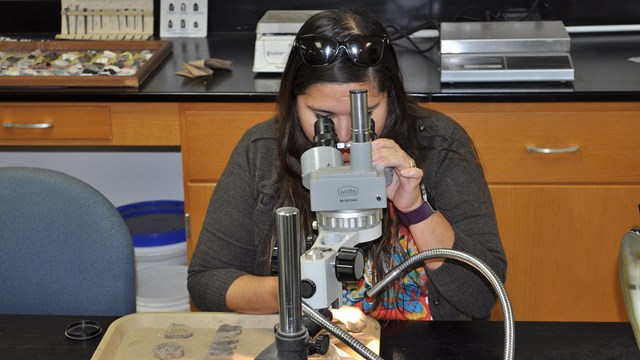
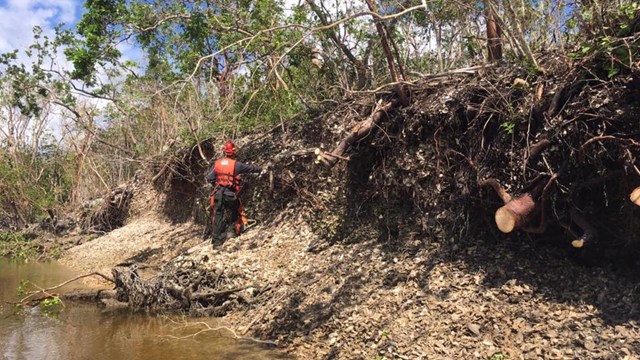
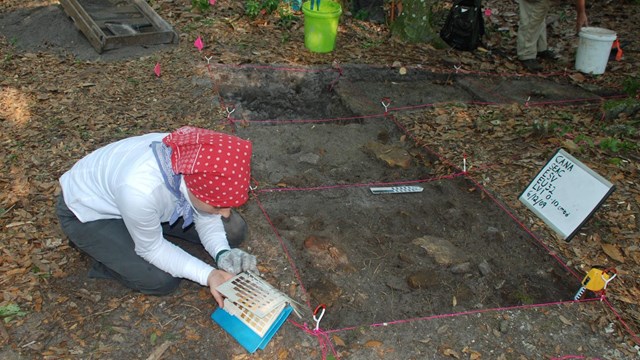
Secrets of the Soil Understanding what an environment was once like is important because of its role in shaping human activities. To learn about the world near the Savannah River years ago, geologists and pedologists examined soils-charting color, texture, depth and composition, which reflect how soils were deposited, the vegetation that once grew in them, and previous climates. Soils develop from a combination of minerals and organic material called humus, derived from decayed plants and animals. A scientist finds clues in the humus to the plants that once grew there. Rocks also contribute to soil type, as do temperature and the amount of rain. Analyzing soils can reveal how they were deposited, whether they were whipped by wind, swept into place by a flood, or eroded from the top of a hill. Rocks and soils can also divulge where ancient rivers ran, the breadth of flood plains, and the height of valley walls. For example, very coarse sediments high above an old river bed suggest strong floods. A soil's chemical makeup is also important. Acidic dirt may result from high humidity, although other causes must be considered, such as chemicals in nearby bedrock. Color is another factor. A pale-green or dark-gray soil could suggest that the iron content was reduced by plant residues. Paleobotanists learn about past environments by examining ancient seeds and microscopic grains of pollen, comparing them with contemporary examples for identifications. Spores from nonflowering plants are similarly identified. By learning the amount of a particular plant's remains compared to those from all plants, scientists can determine how the area once looked-whether there was a lake, fields, or mountains. And by knowing what grew, they deduce what the climate was like. They also compare wild plant remains to those of cultivated plants, gaining insight about the human diet. Seeds and pollen are collected from peat bogs and ancient lakes, or extracted from dirt during archeological excavations. The dirt is sifted through a fine screen into a water tank in a process called flotation. Dirt sinks to the bottom, while seeds and other particles float. The seeds are skimmed away for study. A more sophisticated froth flotation uses a motor on the tank bottom to blow air into the water, similar to a fish tank. A collector agent, like kerosene, is added to the water. When the sifted dirt drops into the water and sinks, seeds, pollen, and other tiny organic particles attach to the rising air bubbles, aided by the kerosene. When the organic materials reach the water's surface, they float through a spout into a sieve. The particles are dried, then analyzed in a laboratory.
|