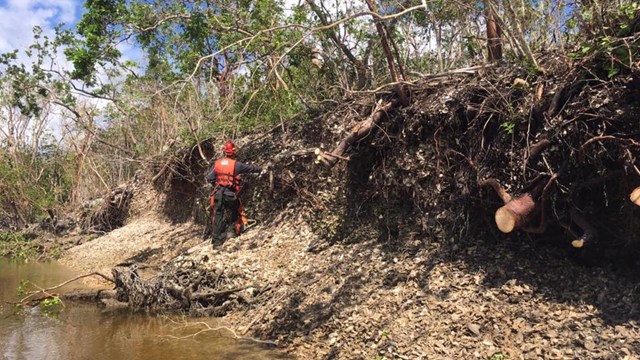
Figure 171: Millwood Plantation Road Near the Savannah River (41.0 KB).
(Click images to enlarge)

CHAPTER 18

The Last of an Era
1865 to 1889


The vastness of Millwood Plantation accentuated a sense of loneliness and quiet as the elderly man and his horse moved slowly down the riverside path. The horse stumbled slightly then righted itself. The rider seemed not to notice. His face was turned towards the river, which sparkled under bright sunlight. James Edward Calhoun, on his daily morning ride, sat ramrod straight in the saddle, still maintaining the military bearing of his youth. His man servant, William, followed a discreet distance behind. The clip-clopping of their horses hooves mixed with the bird calls and squirrels chattering from the woods.

Riding horseback was a good way for the octogenarian to get fresh air, but, more important, this was a way for him to keep an eye on his extensive property. He spurred his horse forward towards one of his mills, for even in old age, Calhoun continued his fervid interest in industry. This was a man, after all, who had named his plantation, Millwood, after a millrace funneling water through a small, dense forest.

Given his fascination with industry, it's not surprising that Calhoun was an early supporter and investor in railroads, or, that before the Civil War he developed a fascination for gold mining, a Figure 172: A Possible Gold Mine Sluice (56.6 KB).preoccupation that continued after the war. A map of his postbellum holdings shows a gold mine and two other spots on both sides of the Savannah River where gold was to he found.

It's hard to know how successful he was with the mine. He leased it out in 1867 in what Charles Orser called a "mineralogical sharecropping scheme." Calhoun required the man who leased the mine to buy all supplies and tools from him, and also to pay him two-ninths of any gold found. But Calhoun voided the contract a year later because the lessee had failed to do the work. Nonetheless, Calhoun found some ore on his land because about two years later he sent what he described as "a lump of pure gold" from his mine as a wedding gift to a friend.

Another enterprise Calhoun tried in an unusually big way, only to be sidetracked, was producing molasses. Characteristically, he used a novel technique. Researchers discovered four brick structures resembling outdoor barbecue pits at Millwood that were apparently used to cook molasses. The four ovens were built over a brick floor and aligned side-by-side. Two of them were shaped like giant keyholes.

Figure 173: A Mule-Driven Rotary Press at Millwood in 1875 (57.6 KB). Figure 174: Remains of Two Boilers, Possibly Used for Molasses-Making (53.5 KB).

Sorghum cane had been introduced to the Piedmont in the 1850's, and by 1855 wide-scale experimenting was underway, with syrup, rum, and other products the result. Usually, the sugary juice was squeezed out of the cane with a rotary press powered by mules. The liquid was then boiled into syrup in long pans sitting over rectangular hearths.

But practices that suited others rarely satisfied Calhoun, who apparently preferred an alternative method called the French Train. This procedure was popular on sugar plantations in Louisiana, coastal Georgia, and the Caribbean; Calhoun may have learned of the process during his naval travels.

However, the procedure apparently didn't live up to its potential at Millwood. Records show that in 1860 Calhoun produced 500 gallons of molasses, but the equipment he had was capable of producing a good deal more if used regularly. The indication that Calhoun didn't use the giant furnaces very often suggests that his sweeping ambitions for mass production had exceeded his reach, a familiar pattern throughout his life.

For all his failures at reaching lofty goals, Calhoun, by 1880, still remained one of the largest landowners in the area. That year his sawmill turned out 20,000 board feet, another indication that he had recovered from the hardships of Reconstruction. He also continued to invest in new construction, contracting in 1877 to build a two-story cotton gin. And while his industrial schemes often floundered, he was wise enough with finances not to get in over his head. He never invested more than he could afford to lose.

Figure 175: The Harper-Featherstone Tenant House. Figure 176: The Tenant House Well Pump.

As Russell investigators examined the lives of other major landowners who lived after the Civil War, they came across the story of John Henry Grogan, owner of Eureka Mill. Grogan was an itinerant Methodist minister who, between 1870 and 1873, built a home adjacent to the mill and Beaverdam Creek. By his death in 1896, which came soon after he returned from a temperance meeting in Royston, Georgia, Grogan owned over 1,600 acres. He had earlier donated two acres to Eureka Church, where he preached. (The church is now called Middleton Methodist Church.)

If he was not the first, Grogan was among the earliest to use locally-quarried granite blocks for his house foundation. As others eventually also recognized granite's worth, it became the economic backbone of Elbert County, producing jobs for many. The sturdy stone piers Grogan chose to use supported a one-and-a-half-story house, and, like most postbellum residences, Grogan's house was built with a wooden frame. The frame was covered with wood siding, a technique that gained popularity after 1850 when there were more saw mills to provide finished wood. Rough logs were no longer the only choice within most peoples' reach and manufactured cut nails also became cheaper.

Figure 179: The Henry Grogan House with Stained Glass around the Front Door (35.5 KB).With so much frame housing around, people found new ways to display social status in the architectural designs and decorations for their residences. Grogan, for instance, used stained glass to outline his front door and painted his house white with green shutters. None of the nearby tenants apparently painted their houses, probably because they didn't own them and didn't have much money.

Investigators from the Historical American Buildings Survey (HABS) examined several tenant residences in the Russell area, including the Harper-Featherstone farm house. Once a one-room,Map 29: Historic Sites Studied in the Russell Reservoir Project Area (69.7 KB). log cabin for slaves, this house was later enlarged to four rooms and covered with board siding. Originally owned by the Harpers, who also ran the local ferry, the house was easily accessible to all visitors.

In contrast, the Grogan House reflected a continuing desire among the well-heeled for privacy, a trend evident in their residences before the Civil War. A protective wall of shrubbery between the house and road, and a front porch, helped screen against intrusions. The house, which was T-shaped with a center hail, had a kitchen and dining room in a rear wing, separated from the main house by a breezeway. Distancing the kitchen from the living quarters in this manner protected residents from the danger of cooking fires.

The Grogan House also had three interior brick fireplaces, another postbellum trend for all economic classes. The chimneys of slave cabins and the poorer White residences fell out of favor because they were made of mud and sticks or clay and were highly susceptible to catching fire.

John Grogan's three daughters ultimately inherited the property, which, after 1914, was occupied by tenant farmers. Among the last of Grogan family members to own the land was Grogan's granddaughter, Elmira. Crippled from childhood because of a bout with polio, she worked as a writer.

As time passed, with tenant farms increasingly spread willy-nilly over plantations, the tight control planters had exerted over their property before the Civil War vanished. The pre-war philosophy that there was a manifest hierarchy with planters on top was giving way to doctrines of business management. But how landlords implemented this new thinking varied widely, as evidenced in housing they provided workers. Some tenant houses, though modest, were comfortable and indistinguishable from those built by many small farm owners. There were also tenants who were able to improve and enlarge their rented homes through their own efforts. But others lived in houses that were little more than hovels. For them, existence was not much better than the life of farm animals.

Archeologists were able to demonstrate status differences among landowners, tenants, and overseers in various ways. Dishes, for example, were important findings at Millwood where ceramic pieces were uncovered in the remains of various houses. Calhoun's house excavation, for instance, yielded more types of dishes and containers than any other structure, and also showed evidence of a greater number of dishes. Also, befitting his standing, there were more elaborate decorations on the ceramics that Calhoun used than on any of the tenant tableware.

Between Calhoun's status and that of his tenants were the plantation overseer and Caroline Walker, Calhoun's personal servant, who was a widow and ex-slave. Walker held an esteemed place in Calhoun's household and lived in a house only a few steps away from his. Some contend she was his mistress, but researchers found no substantiation for that speculation. Walker was, however, one of only two non-relatives named in Calhoun's will. The second item in his will, according to one expert, awarded 150 acres of land "to my faithful servant Caroline Kessler" and her children. Others assert that the will reads "to my faithful servant Caroline Calhoun." All agree, however, that the document refers to Caroline Walker.

Calhoun left another 150 acres to Edward Keiser, one of his overseers for several years. Everything else went to relatives.

A final note of interest about the artifacts from Calhoun's suspected residence was the large quantity of tableware, including plates, bowls, cups, and saucers. However, there was a scarcity of storage vessels. The plentiful tableware suggests that the so-called "Hermit of Millwood" was capable of and accustomed to entertaining groups of visitors, while the dearth of storage vessels indicates his food was probably stored outside the residence, possibly in the smoke and milk houses.

Calhoun died at Millwood October 31, 1889, leaving behind about 3,000 acres of cultivated land, and about 9,000 acres uncultivated. There were 95 tenants on his property, which shows just how big an operation he still owned. In all of South Carolina in 1900, only 8.5 percent of landowners had 20 or more tenants, so, although his personal estate was valued at only $5,128, Calhoun died a very rich man. He had witnessed remarkable change in his 91 years, and had done more than his share to bring some of that change about.


Chapter 19: "Rushing Through the Night"

Return to the Table of Contents