After The Digging Ends

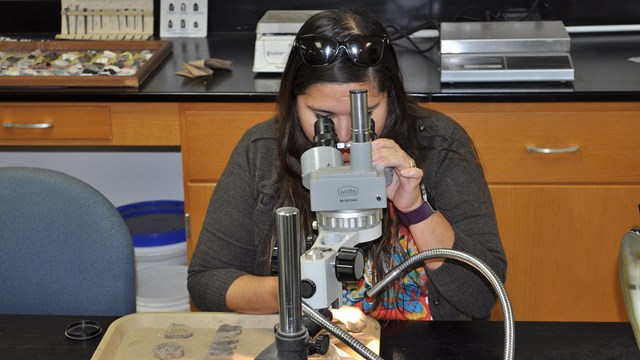
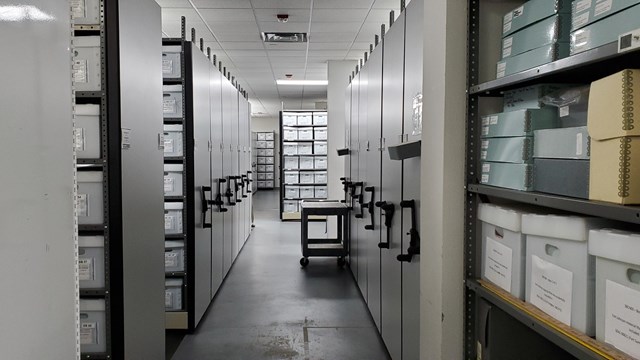
A zooarcheologist picked up a container the size of a shoe box and carried it to a table, where she removed the lid and delicately picked out an animal bone a little bigger than a thumbnail. Tiny black numbers were inked on the bone surface, identifying marks that help keep this particular specimen from being mistakenly filed with thousands of others resting on shelves. The zooarcheologist performs a crucial task determining which animals humans ate in the past and coexisted with, knowledge gained through detailed scientific analysis in a laboratory at the University of Georgia.

The work is frequently overlooked when laurels are distributed for archeological achievement. Yet, without the efforts of people like Elizabeth Reitz, chief zooarcheologist for the Beaverdam Creek Mound excavations and Kay Wood, laboratory director for research at the site, strides in tracking the human past would be much fewer. Reitz, for example, has written many papers for national journals about findings during the Russell investigations.

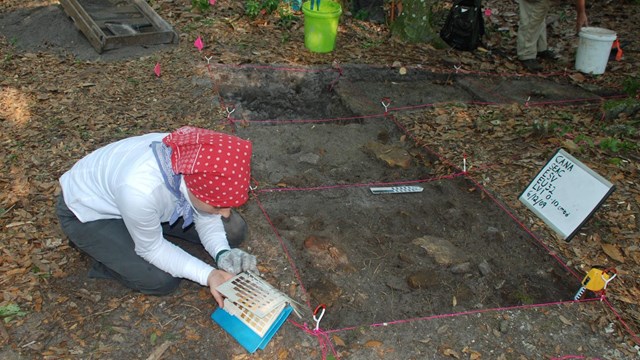
Zooarcheologists do their work after specimens arrive from the field where archeologists have labeled bones and bone fragments so that their locations in excavations won't be forgotten or confused. This data becomes important in determining the years, and even the seasons, sites were occupied. Zooarcheologists use the same identifying numbers in their reports, another measure to ensure the complete accuracy that is the foundation of all good science.

Once they are sorted into classes, genus, and species, bones are compared with others in the lab collection that have already been thoroughly identified. Through such comparisons, an expert can sometimes tell if a bone came from a male or female, or whether it belonged to a juvenile, subadolescent, adolescent, or adult animal. Some bones of mammals fuse with maturity, so the extent of the fusion, or epiphysis, is a sign of the animal's age. Also, immature bone is often porous and spongy. Sex of a chicken can be determined because males have claws or spurs on the tarsometatarsus bone and females don't. But often a zooarcheologist is presented with far less recognizable bones or only small bone fragments. In those cases, many trips to the shelves are necessary for comparison bones before a positive identification can be made.

A sensitive electronic scale capable of measuring to within one-hundredth of a gram is used to gauge quantity of bones from each species in the samples from archeological sites. This information is useful in learning how common one type of animal might have been.

The university's lab collection, while extensive, is being expanded to contain the broadest range of Southeastern species possible. Skeletons from recently deceased animals are enclosed for a time with live beetles, which consume any remaining flesh that might go undetected by the human eye. Among animal skeletons being acquired are those of wild pigs from the Southeastern coast because the bones of domestic hogs are all but unrecognizable from those of long ago. Chickens and cows have undergone similar transformations, apparently caused primarily by forced rapid growth from hormone additives.


Back to Chapter 10