An 'Unvanished' Story:
5,500 Years of History in the Vicinity of
Seventh & Mission Streets, San Francisco


Results of the Archival Study and a Design for Future
Research at Lots 84 and 40, Block 3703 Expansion
[Adapted from ACS (1994: 82-122)]

Research Methods

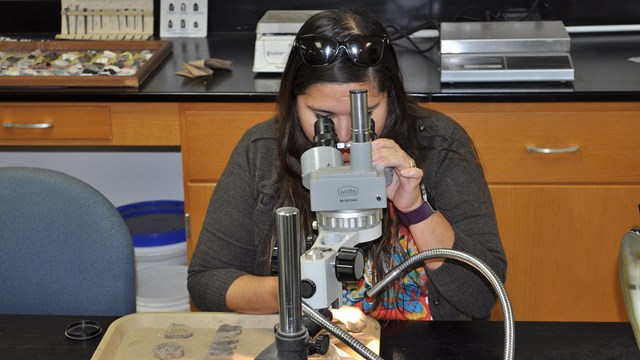
A multi-disciplinary approach was used during this cultural resource management project. Archival documents and cartographic research, oral history interviews, as well as archaeological reconnaissance were all used to locate, define, and provide interpretations for the cultural resources within the Project Area. Furthermore, this data was combined to reconstruct the most accurate picture of the Project Area and surrounding areas. In turn, the research data is useful in the construction of the historic context with which we can evaluate the significance of the sites identified within the Project Area. This section discusses the research methods and strategies.

Archival Research

Historical Resources Records Check

A Historical Resources Records Search was conducted by the Northwest Information Center, Sonoma State University, Rohnert Park, for this project (Hagel 1993). The Records Search indicated that one prehistoric cultural resources site, two historic archaeological sites including the U.S. Post Office and Courthouse were previously recorded within a two block radius of the Project Area. Table 2 contained data on archaeological sites within a one mile radius of Rincon Hill within the Peninsula. A low - moderate number of prehistoric sites and a high number of historic archaeological and/or architectural sites were presented in that table. Thus, the area surrounding the Project Area is highly sensitive regarding historic period cultural resources in particular.

Documentary Research

ACS staff researched primary and secondary sources relating to the Project Area. These documents pertaining to the history of the Project Area were consulted in order to produce the environmental context and cultural historic context for this project, as well as data on potential site loci. Research was conducted prior to fieldwork, concurrent with fieldwork and after fieldwork was completed.

Primary references included cartographic or map documentation, Local, State, and Federal government records, newspaper articles, census records, photographs, patents, aerial photographs and related historic documentation. The maps presented in this text are good examples of historic cartographic or map references.

Secondary sources included general histories written about the Project Area and environs, documents relating to histories of San Francisco, and reports and publications relating to cultural resources within the general proximity of the Project Area. Previous reports on cultural resources investigations were consulted for refinement of the cultural history in the vicinity of the Project Area. Furthermore, the reports were reviewed in order to ascertain the types of cultural resources (i.e., archaeological, ethnographic, historic, and architectural) which may occur in the Project Area.

Federal, State and Local historic preservation standards and guidelines were reviewed to insure legal compliance for the project.

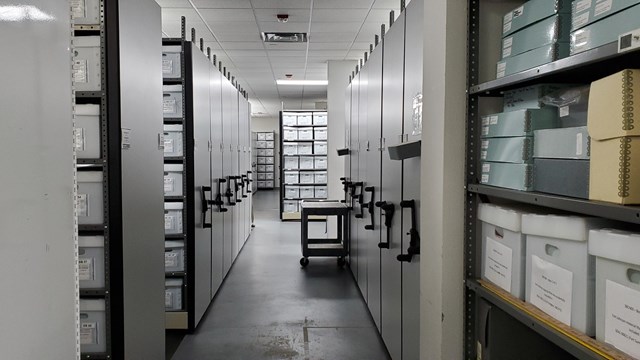
Reference materials were consulted at the following institutions:

- Northwest Information Center, Sonoma State University,
Rohnert Park, CA;
- General Services Administration, Region 9, San Francisco, CA;
- National Park Service, Western Regional Office,
San Francisco, CA;
- National Archives, Pacific Northwest Branch, San Bruno, CA;
- California State University, Northridge, CA;
- Bancroft Library, Berkeley, CA;
- San Francisco Public Library, History Room, San Francisco, CA;
- Monterey Public Library, History Room, Monterey, CA;
- San Francisco Assessors and Recorders Office,
San Francisco, CA;
- San Francisco Planning Department, San Francisco, CA;
- San Francisco Zoning Department, San Francisco, CA;
- San Francisco Department of Health, San Francisco, CA;
- U.S. Court of Appeals, Facilities Manager, San Francisco, CA;
- Geomatrix Consultants, Inc, San Francisco, CA;
- California Office of Historic Preservation, Sacramento, CA.
- library at the Archaeological Consulting Services office, Lytle Creek, CA.

Oral History Interviews

Oral history interviews were conducted with the following individuals:

- Ms. Joan Byrens, Facilities Planner- Regional Historic Preservation Officer, GSA;
- Mr. Don Bednarz, Realty Specialist, GSA;
- Ms. Sarah Delgado, Project Manager, GSA;
- Mr. John Egan, Senior Engineer, Geomatrix Consultants;
- Mr. Gordon Chappell, Historian, NPS-WRO;
- Dr. Roger Kelly, Archaeologist, NPS-WRO;
- Dr. Adrian Praetzellis, Director, Anthropological Studies Center, Sonoma State University;
- Mr. Jack McIlroy, Historical Archaeologist, Anthropological Studies Center, Sonoma State University;
- Mr. Rollins Emerson, Historian, Judge Sneed's Chambers, U.S. Court of Appeals, San Francisco;
- Mr. Bradley Williams, Director, Ninth Judicial Circuit Historical Society, Pasadena;
- Mr. Robert Andreini, Archivist, San Francisco Heritage Foundation;
- Ms. Meredith Blain, Aide to Clerk of the U.S. Court of Appeals, 9th Circuit, San Francisco;
- Dr. Robert Cherney, Historian, author of San Francisco: 1865-1932.
- Mr. Robert Lindell, Facilities Manager, U.S. Court of Appeals, 9th Circuit, San Francisco;
- Mr. Vincent Marsh, Secretary, Landmarks Board, San Francisco Planning Department;
- Mr. David Williams, Historian, author of David C. Broderick, A Political Portrait;
- Ms. Diane Wong, Planning Officer, City of San Francisco;
- Eva Vanek, Project Manager; GEO/RESOURCE Consultants; and
- Mr. Leo Barker, Historical Archaeologist, NPS-WRO.

Field Research

Architectural Reconnaissance

The exteriors of the U.S. Court of Appeals Building at 99 Seventh Street, as well as the two-story brick building at 1068 Mission Street were analyzed by ACS. A Historic Resource Inventory Form for the building at 1068 Mission Street is in preparation (DPR 523). Data on this form was supplemented by 35 mm. black-and-white and color slide photography. This preliminary architectural documentation was conducted in early April, 1993.

Archaeological Reconnaissance

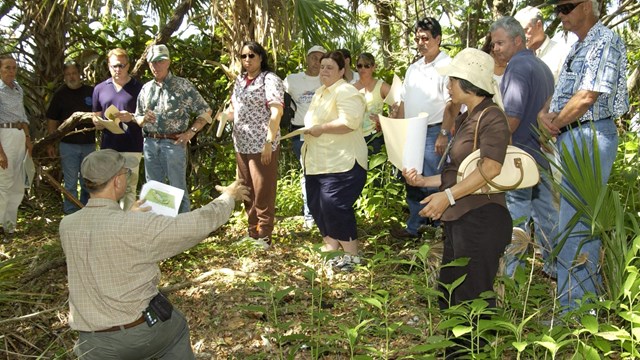
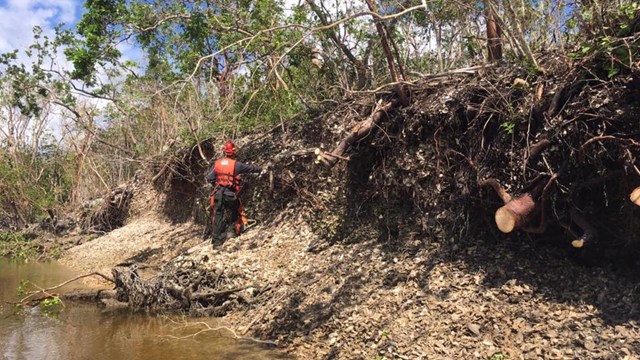
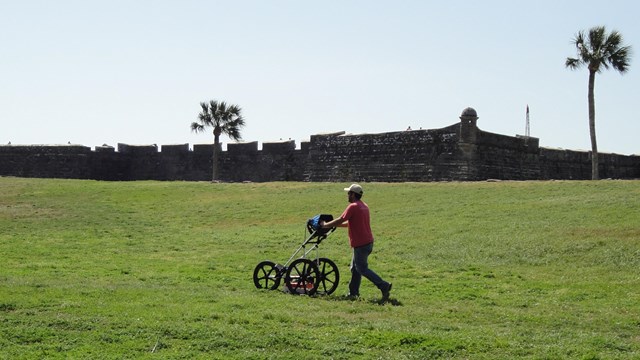
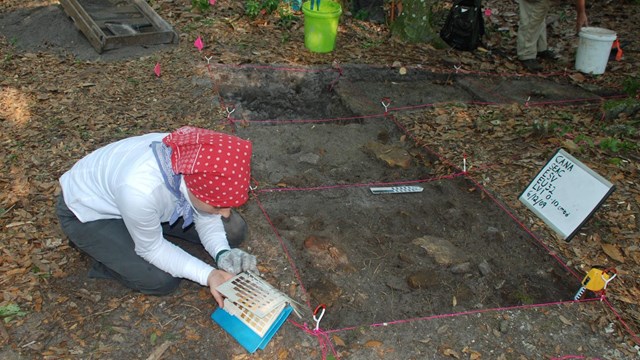
An initial archaeological reconnaissance of the Project Area was conducted by J. Stephen Alexandrowicz on April 12, 1993. The primary mission for the field reconnaissance was to record the extant conditions within the Project Area, as well as ascertain the potential presence of sub-surface cultural resources, based on the visual observation of the urban landscape. Photographs in 35 mm format were taken of the Project Area for future reference. In addition, ACS visited the U.S. Court of Appeals building, where on-going excavations were underway. He collected artifacts from the southwest corner of the building. ACS photographed the trenching operations and observed the stratigraphy in direct proximity of the U.S. Court of Appeals building, situated west and adjacent to the current Project Area.

Summary Results

Geologic and environmental research suggests that the original landscape within the expansion project area is buried approximately 30-35 feet below the ground surface. Geologic core drilling data suggests that this horizon represents a previous marshlands environment. Prehistoric Native American occupation within a similar marshlands environment was documented two blocks southwest at the BART Station, where a circa 4900 BP human burial was excavated. This nearby evidence suggests that the Block 3703 area contains buried deposits of a mudflat marshlands environment that may contain prehistoric and early historic cultural materials.

The Block 3703 area is on the fringe of marshlands that were filled in during the 1850s with dune sands during San Francisco's early development. The filled-in areas were used for the construction of city facilities, residential dwellings, and cottage industries. Historic occupations in the area were traced to ca. 1869. However, undocumented occupations may predate the documented occupations by a few years. Geologic core drilling data reveals a fill zone of rumble and sand representing the remains of the historic period occupation, probably dating to the 1860s. The area was part of a neighborhood with Irish, American, German, Swedish and other ethnic groups represented during the late 19th century. A fairly large percentage of lodgers were Japanese in the late 1890s-1900s. Occupations by members of the same family were traced in several cases for up to 40 years at the same location.

It is interesting to note that many lots retained their ca. 1910s structures between Stevenson and Jessie Streets, including a 1920s-30s building between Jessie and Mission Streets, until the area was cleared for a parking lot prior to 1959. Based on the building permits on file with the city, no large-scale construction has occurred since those dates. This suggests that the ca. 1910s-1930s structures may have had basements, despite the absence of "basement" notations on the Sanborn Map Co. maps. The presence of an intact brick drain under Jessie Street, coupled with the geophysical data, also suggests that the ca. 1910s-1930s building foundations may be present below the ground surface. However, these basements may not have destroyed the archaeological deposits associated with the earlier 19th century occupations within the original lots. The earlier cultural deposits (i.e., prehistoric and/or historic) may also be preserved intact. Possible cultural features buried and preserved in the area include prehistoric sites and burials, as well as dwelling foundations, privies, wells, cisterns, and trash pits from the ca. 1870s -1890s.

Of equal importance is the fact that many occupations at the respective lots of Block 3703 retain the 1931 revised address numbers. These address numbers are directly correlated to the addresses from the earlier Sanborn maps. The size of the lots are designated on Block Book Maps, as well as in the deeds. Thus, the archaeological deposits have the potential to be segregated to discrete occupations within each lot.

Duration of the occupations within the Block 3703 study area vary from about one to forty years. Several families, including the McGarys, and Somerses on Mission Street; the McMenomys on the south side of Jessie Street; the Swedish Church on the north side of Jessie Street; and the Gendars, Creegans, and Ameses on Stevenson Street had occupations within the study area that spanned from about 1870 to 1906. This included several generations within the nuclear families that occupied the dwellings after the passing of their parents. Furthermore, Louis Borie's (or Borle's) occupation at 1038 (now 1066) Mission Street in 1873 testifies to other early, yet more transient occupation.

A review of the 1900 census for the Project Area indicates that this particular South of Market neighborhood was composed of approximately 39% Irish, 37% American, 13% German, 7% Swedish, and 4% unknown. The census data shows a marked increase of Irish residents compared with Burchell's (1980:Table 3) 1880 data which stated that the Irish composed 31.2% of the entire Ward 10 population. Other census data included members from Prussian, Japanese, and Welsh ethnic groups. Members of each ethnic group tended to live together in small enclaves. This is especially true of the Japanese occupants who congregated at two residential loci. It is interesting that African-Americans and Chinese are conspicuously missing from the ethnic register of occupants. The preponderance of Irish citizens in the Project Area leads to additional research questions regarding the social and economic conditions (i.e., potato famines) in Ireland that led to a mass migration of the Irish and resettlement in an Irish neighborhood within the southwest portion of San Francisco.

The original residential setting was upset during the 1906 earthquake and fire. Except for the U.S. Post Office and Court House, the area was completely burned. Several brick buildings along Stevenson and Jessie were built ca. 1910. Another large concrete building was built between Jessie and Mission Streets in the 1920s to 1930s. These buildings were destroyed between 1952 and 1959. A parking lot has existed in the area since that time.

In summary, this archival study has resulted in the identification of approximately 24 residential sites within the Expansion Project Area of Block 3703 dating from at least 1869-1870 until the 1906 Earthquake and Fire. Of these sites, 24 are depicted on the Sanborn Map Company Maps from 1887 and 1899. Most of the sites are residential dwellings, albeit by 1899, a saloon was also in place at 549 Stevenson, and the Swedish Church was located at 538 Jessie Street. The extant (circa 1994) brick structure at 1068 Mission Street is part of the 24th cultural resources site identified within the Expansion Project Area. The building was apparently built during the 1920s or 1930s and it is still standing today; it is the last and only early 20th century structure within the expansion Project Area (Lots 84 and 40, Block 3703).

Recommended Additional Research

The ACS (1994) archival and background literature study has demonstrated that a good potential exists for further research and for the existence of significant archeological remains within Block 3703 and the expansion project area (Lots 84 and 40). In the future, if ground-disurbing actions are proposed in the area, a program of archival, architectural, and archeological recording and testing should be carried out in order to preserve and protect important cultural sites and features.

    Read detailed Research Design, Recommendations, and Bibliography from ACS (1994).
The Dowager Queen of Western Federal Architecture:
             Restoration of the U.S. Court of Appeals Building


An 'Unvanished' History Site Map
South-of-Market History
Restoration of the U.S. 
Court of Appeals Building
Project
Earthquake & Fire
References Cited
Prehistory
Archival Study
Recommended Reading
The Early Days of San Francisco
Additional Internet Sources