MINUTES
NATIVE AMERICAN GRAVES PROTECTION AND REPATRIATION
REVIEW COMMITTEE
THIRTIETH MEETING: NOVEMBER 16-17, 2005
COCHITA/TAOS ROOM, ALBUQUERQUE CONVENTION CENTER
ALBUQUERQUE, NM
TABLE OF CONTENTS
Background . . . 4
The 30th Meeting of the Review Committee . . . 5
Introduction . . . 7
Comments and Review of the Agenda - Designated Federal Official . . . 7
Annual Report on Implementation of NAGPRA for FY2005 . . . 7
Comments from the Deputy Assistant Secretary, Fish and Wildlife and Parks . . . 9
Mr. Paul Hoffman, Deputy Assistant Secretary, Fish and Wildlife and Parks . . . 9
Review Committee . . . 9
Public Comment . . . 10
Review of Status of Past Disputes Considered by the Review Committee and Discussion of
Possible Revision of the Review Committee’s Dispute Procedures . . . 11
Presentation of Issue . . . 11
Review Committee . . . 12
Public Comment Regarding Past Disputes . . . 14
Mr. Edward Halealoha Ayau . . . 14
Review Committee . . . 15
Recommendations Regarding the Review Committee’s 2002-2004 Report to Congress . . . 17
Discussion of Disposition of Unclaimed Cultural Items Excavated or Removed From Federal or Tribal Lands After November 16, 1990 [43 CFR 10.7] . . . 18
Presentation of Issue . . . 18
Public Comment . . . 18
Review Committee . . . 20
Request for Recommendation Regarding Disposition of Culturally Unidentifiable Human Remains from South Dakota . . . 21
South Dakota Archaeological Research Center . . . 21
Review Committee . . . 22
Request for Recommendation Regarding Disposition of Culturally Unidentifiable Human Remains from California . . . 22
California Native American Heritage Commission . . . 22
Review Committee . . . 22
Review Committee Business . . . 23
Review Committee Membership . . . 23
Amendment to the Definition of Native American, 25 U.S.C. 3001 . . . 23
Working Principles for the Advisory Council on Historic Preservation . . . 24
2005 Report to Congress . . . 24
Upcoming Meetings . . . 24
Review Committee Responsibilities . . . 24
Public Comment . . . 25
Ms. Patricia Capone/Ms. Diana Loren . . . 25
Mr. Terry Cole/Ms. Bambi Kraus . . . 25
Mr. Lalo Franco . . . 26
Ms. Loretta Jackson-Kelly . . . 26
Ms. Bambi Kraus . . . 26
Mr. Ricardo Leonard . . . 26
Mr. James Riding In . . . 26
Mr. Christopher Schneider . . . 26
Mr. Elvin Windy Boy . . . 27
Closing Remarks . . . 27
Meeting Adjournment . . . 27
Background
The Native American Graves Protection and Repatriation Review Committee was established under the Native American Graves Protection and Repatriation Act (NAGPRA), 25 U.S.C. 3001 et seq., which was signed into law by President George H.W. Bush on November 16, 1990.
The Review Committee's charter states that -
"The duties of the Committee are solely advisory. Specifically, the Committee will be responsible for:
1. Monitoring and reviewing the implementation of the inventory and identification processes and repatriation activities required under sections 5, 6, and 7 of NAGPRA to ensure a fair and objective consideration and assessment of all available relevant information and evidence;
2. Reviewing and making findings relating to the identity or cultural affiliation of human remains, funerary objects, sacred objects, and objects of cultural patrimony, or the repatriation of such items, upon the request of any affected party;
3. Facilitating the resolution of any disputes among Indian tribes, Native Hawaiian organizations, or lineal descendants, and Federal agencies or museums relating to the repatriation of human remains, funerary objects, sacred objects, and objects of cultural patrimony, including convening the parties to the dispute, if deemed desirable;
4. Compiling an inventory of culturally unidentifiable human remains that are in the possession or control of each Federal agency and museum and recommending specific actions for disposition of such remains;
5. Consulting with Indian tribes, Native Hawaiian organizations, and museums on matters pertaining to the work of the Committee affecting such tribes or organizations;
6. Consulting with the Secretary of the Interior in the development of regulations to carry out NAGPRA;
7. Performing such other related functions as the Secretary of the Interior may assign to the Committee;
8. Making recommendations, if appropriate, regarding future care of human remains, funerary objects, sacred objects, and objects of cultural patrimony which are to be repatriated; and
9. Submitting an annual report to Congress on the progress and any barriers encountered in carrying out the Review Committee's responsibilities during the year.
The Review Committee is organized and administered according to the Federal Advisory Committee Act (FACA), 5 U.S.C. Appendix (1994).
Review Committee members are appointed by the Secretary of the Interior from nominations submitted by Indian tribes, Native Hawaiian organizations, traditional Native American religious leaders, national museum organizations, and scientific organizations.
The Review Committee reports to the Secretary of the Interior. Under the Review Committee's charter, the Manager, National NAGPRA Program, National Park Service or a designee serves as the Designated Federal Officer (DFO), who oversees the activities of the Review Committee and with whom the National Park Service provides administrative and staff support to the Review Committee on behalf of the Secretary of the Interior.
Additional information about the Review Committee - including the Review Committee's charter, membership, meeting protocol, and dispute procedures - is available at the National NAGPRA Website, http://www.cr.nps.gov/nagpra/ (click on "Review Committee").
Notice of this Review Committee meeting was published in the Federal Register on October 7, 2005 (Vol. 70, No. 194, page 58742-58743).
The 30th Meeting of the Review Committee
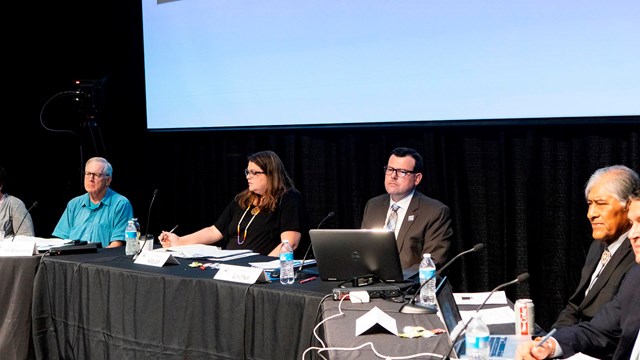
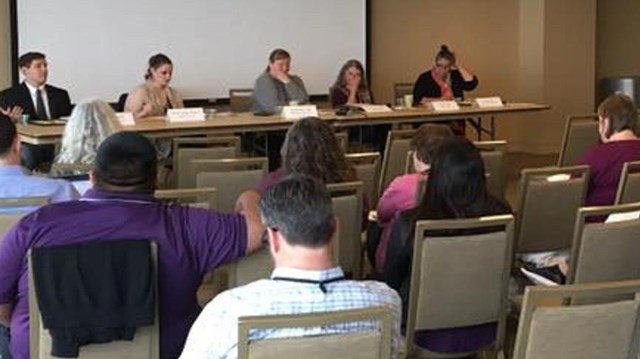
The 30th meeting of the Native American Graves Protection and Repatriation Review Committee was called to order by Ms. Rosita Worl at 8:30 a.m., Wednesday, November 16, 2005, in the Cochiti/Taos Room, Albuquerque Convention Center, Albuquerque, NM.
Review Committee members -
Ms. Rosita Worl - Chair
Mr. Garrick Bailey
Mr. Colin Kippen
Mr. Dan Monroe
Mr. Vincas Steponaitis
Designated Federal Officer -
Mr. Timothy McKeown, Program Officer, National NAGPRA Program
National Park Service/Department of the Interior staff in attendance -
Mr. Paul Hoffman, Deputy Assistant Secretary, Fish and Wildlife and Parks
Ms. Sherry Hutt, Program Manager, National NAGPRA Program, National Park Service
Ms. Cynthia Murdock, Program Officer, National NAGPRA Program, National Park Service
Ms. Robin Coates, Secretary, National NAGPRA Program, National Park Service
Ms. Jaime Lavallee, Contractor, National NAGPRA Program, National Park Service
Ms. Michelle Wilkinson, Contractor, National NAGPRA Program, National Park Service
Mr. Bob Palmer, Staff Ranger, Visitor and Resource Protection, National Park Service
Mr. David Tarler, Contractor, National NAGPRA Program, National Park Service
Ms. Lesa Hagel, Contractor, National NAGPRA Program, National Park Service
Ms. Carla Mattix, Division of Parks and Wildlife, Office of the Solicitor
Mr. Toby Halvarson, Division of Indian Affairs, Office of the Solicitor
Persons in attendance during part or all of the meeting (names and affiliations as provided at the meeting by attendees) -
Mr. Sam Allen, Flandreau Santee Sioux Tribe, Flandreau, SD
Ms. Bridget Ambler, Colorado Historical Society, Denver, CO
Ms. Evalyn Andrews, Salt River Pima Maricopa Indian Community, Scottsdale, AZ
Mr. Shane Anton, Salt River Pima Maricopa Indian Community, Scottsdale, AZ
Ms. Risa Arbolino, Smithsonian Institution, National Museum of Natural History, Washington, DC
Mr. Clarence E. Atwell, Sr., Santa Rosa Rancheria, Lemoore, CA
Mr. Edward Halealoha Ayau, Hui Malama I Na Kupuna O Hawaii Nei, Hoolehua, HI
Ms. Jenny Barton, University of Florida, Museum Studies Program, Gainesville, FL
Mr. Richard Begay, Agua Caliente Band of Cahuilla Indians, Palm Springs, CA
Ms. Rose Berens, Bois Forte Ojibwe, Tower, MN
Mr. Martin Bernard, Flandreau Santee Sioux, Flandreau, SD
Ms. Ellyn Big Rope, Mescalero Apache Tribe, Mescalero, NM
Mr. Bill Billeck, Smithsonian Institute, National Museum of Natural History, Washington, DC
Ms. Renee Boen, South Dakota State Historical Society, Rapid City, SD
Ms. Tamara Bray, Santa Fe, NM
Ms. Lori Breslauer, Field Museum, Chicago, IL
Ms. Susan Bruning, Society for American Archaeology, Southlake, TX
Mr. Tony Burrell, San Xavier District, Tohono O’odham, Tucson, AZ
Ms. Patricia Capone, Peabody Museum, Harvard University, Cambridge, MA
Mr. Antonio Chavarria, Museum of Indian Arts and Culture/ Lab. of Anthropology, Santa Fe, NM
Mr. Terry Cole, Choctaw Nation of Oklahoma, Durant, OK
Mr. Anthony E. Collins, Salt River Pima-Maricopa, Scottsdale, AZ
Ms. Jacqueline M. Cook, Colville Confederated, Nespelem, WA
Ms. Cindy Darcy, Senate Indian Affairs Committee, Washington, DC
Mr. Cal Dupree, Cheyenne River Sioux Tribe, Eagle Butte, SD
Ms. Stacey Espenlaub, University of Pennsylvania Museum, Philadelphia, PA
Mr. Lee Foster, U.S. Department of Army HQ, Pentagon, Washington, DC
Mr. Lalo Franco, Santa Rosa Rancheria Tachi Yokut Tribe, Lemoore, CA
Mr. John Fryar, Bureau of Indian Affairs Law Enforcement, Albuquerque, NM
Mr. Myron Gonzales, San Ildefonso Pueblo, Santa Fe, NM
Ms. Martha Graham
Mr. Dell Greek, U.S. Army Reserve Command, Sparta, WI
Mr. John Grimes, Institute of American Indian Arts Museum, Santa Fe
Ms. Stacey Halfmoon, Caddo Heritage Museum, Binger, OK
Ms. Suzanne Harris, U.S. Army Corps of Engineers, St. Louis District, St. Louis, MO
Ms. Roberta Hayworth, U.S. Army Corps of Engineers, St. Louis District, St. Louis, MO
Mr. Michael Holloman, Northwest Museum of Arts and Culture, Spokane, WA
Mr. Joseph T. Joaquin, Tohono O’odham Nation, Sells, AZ
Mr. Greg Johnson, University of Colorado, Boulder, CO
Mr. John Johnson, Chugach, Smithsonian Institute, AK
Ms. Rachel Johnson, Museum of Indian Arts and Culture, Lab of Anthropology, Santa Fe, NM
Ms. Karen Kaniatobe, Absentee Shawnee Tribe, Shawnee, OK
Ms. Brenda Keller, Oregon State University, Horner Collection, Corvallis, OR
Ms. Loretta Jackson-Kelly, Havasupai Tribe, Dept. of Cultural Resources, Peach Springs, AZ
Mr. Keith Kintigh, Society for American Archaeology, Arizona State University, Tempe, AZ
Ms. D. Bambi Kraus, National Association of Tribal Historic Preservation Officers, Washington, DC
Mr. Bill Latady, Bois Forte Ojibwe, Tower, MN
Mr. Ricardo Leonard, Salt River Pima/Maricopa, Scottsdale, AZ
Mr. Richard Lofton, Cheyenne River Sioux Tribe, Eagle Butte, SD
Ms. Gloria Lomahaftewa, Museum of Northern Arizona, Flagstaff, AZ
Ms. Diana Loren, Peabody Museum, Harvard University, Cambridge, MA
Mr. Paul Lumley, Department of Defense, Pentagon, Washington, DC
Ms. Kathryn Lynn, DOI, Office of Collaborative Action and Dispute Resolution, Washington, DC
Ms. Kim Manajek, University of Denver, Museum of Anthropology, Denver, CO
Mr. Clay Mathers, Statistical Research, Inc., Albuquerque, NM
Mr. Roland McCook, Smithsonian Repatriation Committee, Fort Duchesne, UT
Mr. John McClelland, Arizona State Museum, University of Arizona, Tucson, AZ
Ms. Mary Mary McEachron, California Native American Heritage Commission, Larkspur, CA
Ms. Buffy McQuillen, Yurok Tribe, Klamath, CA
Ms. Nell Murphy, American Museum of Natural History, New York, NY
Mr. Larry Myers, Native American Commission, Sacramento, CA
Ms. Virginia Myers, Yurok Tribe, Klamath, CA
Mr. Ed Lee Natay, National Park Service, Intermountain Regional Office, Sante Fe, NM
Ms. Sarah Palmer, U.S. Institute for Environmental Conflict Resolution, Tucson, AZ
Mr. Kirk Perry, Chickasaw Nation, Ada, OK
Ms. Melissa Powell, Museum of Indian Arts and Culture, Lab of Anthropology, Santa Fe, NM
Ms. Linda Preston, San Xavier, Tucson, NM
Ms. Amalia A. M. Reyes, Pascua Yaqui Tribe, Tucson, AZ
Mr. James Riding In, Pawnee Nation, Tempe, AZ
Mr. Ramon Riley, White Mountain Apache Tribe, Fort Apache, AZ
Ms. Helen Robbins, Field Museum, Chicago, IL
Ms. Brooke Rohde, University of Denver, Denver, CO
Mr. Tobin Roop, National Park Service, Salinas Pueblo Missions Nat'l Monument, Mountainair, NM
Mr. Gary Roybel, National Park Service, Bandelier National Monument, Los Alamos, NM
Ms. Wechoni W. Schurz, Salt River Pima-Maricopa Indian Community, Cultural Preservation
Program, Scottsdale, AZ
Mr. Chris Schneider, Northern Arapaho Tribe, Lander, WY
Ms. Alyce Sadongei, Arizona State Museum, Tucson, AZ
Mr. David Siegel, U.S. Fish and Wildlife Service, Albuquerque, NM
Mr. Chuck Smythe, National Park Service, Northeastern Region, Boston, MA
Ms. Sonia Tamez, U.S. Forest Service, Vallejo, CA
Mr. Anthony Thibodeau, Museum of Indian Arts and Culture/Lab. of Anthropology, Santa Fe, NM
Mr. Brice Walters, Cheyenne River Sioux Tribe, Cultural Preservation Office, Eagle Butte, SD
Ms. JoAnn White, Northern Arapaho Tribe, Ft. Washakie, WY
Ms. Sherry White, Stockbridge-Munsee Tribe, Bowler, WI
Ms. Sharon Wilder, Havasupai Tribe Cultural Resources, Peach Springs, Arizona
Mr. Richard Wilshusen, Colorado Historical Society, Colorado History Museum, Denver, CO
Mr. Phil Wilson, National Park Service, Salinas Pueblo Missions Nat'l Monument, Mountainair, NM
Mr. Alvin Windy Boy, Chippewa-Cree Tribal Historic Preservation Office, Box Elder, MT
Mr. Rob Wood, Native American Commission, Sacramento, CA
Mr. Frank Wozniak, U.S. Department of Agriculture, Forest Service, Albuquerque, NM
Mr. Fred York, National Park Service, Pacific West Region, Seattle, WA
Introduction
Mr. McKeown called the role of members and confirmed that the Review Committee had quorum for the meeting. Ms. Worl welcomed Mr. Kippen to the Review Committee. Ms. Worl offered a tribute in the form of a Native Alaskan chant in honor of the late Mr. Vine Deloria. Ms. Worl acknowledged the indigenous people's homelands where the meeting was being held. Mr. Roland McCook offered an invocation the second day of the meeting.
Comments and Review of the Agenda - Designated Federal Official
Mr. McKeown announced that the meeting was a public meeting and a notice had been published in the Federal Register in accordance with the Federal Advisory Committee Act (FACA) procedures. Mr. McKeown gave a brief review of the agenda.
Annual Report on Implementation of NAGPRA for FY2005
Ms. Hutt gave an abbreviated report on the achievements of the National NAGPRA Program for FY2005. Ms. Hutt stated that the Review Committee members had a copy of the full report in their meeting binders. Ms. Hutt stated that the Native American Graves Protection and Repatriation Act was enacted on November 16, 1990 to provide Native Americans with a means to assess their rights to cultural items to the extent of Federal jurisdiction. The law takes two tracts. Federal agency and museum collections are to be assessed in the face of a greater claim of right to possession. When there are new finds on public and Indian land, the historic presumptions of government property no longer apply and a determination of ownership is made in the first instance. The process for collections is repatriation, and the program staff of the National NAGRPA Program are dedicated to that task. Ms. Hutt introduced the members of the National NAGPRA Program staff.
Mr. Tim McKeown identified himself as the Designated Federal Officer (DFO) to the Review Committee, in addition to working on regulations. Ms. Hutt stated that Mr. McKeown has worked with the National NAGPRA Program since March 15, 1992, and presented Mr. McKeown with a Certificate of Recognition for 15 years of service to the NPS. Ms. Hutt then recognized Ms. Robin Coates for her dedicated support of the National NAGPRA Program and presented Ms. Coates with a Certificate of Recognition for 25 years of service to the NPS. Ms. Cynthia Murdock stated that she had worked with the NPS since 1996, including the National NAGPRA Program since 2001. Ms. Murdock stated she works on the culturally unidentifiable human remains database, now available online, in addition to maintaining the National NAGPRA Program Website. Ms. Hutt expressed appreciation for Ms. Murdock's efforts in attaining 100 percent completion of the culturally unidentifiable inventories database. Ms. Michelle Wilkinson stated that she was the grant coordinator for the National NAGPRA Program as of March 2005, in addition to serving as the book review editor for CRM , the cultural resources journal of the NPS. Ms. Hutt commended Ms. Wilkinson's ability to step into the grant program on the day the grants were due for 2005 and successfully complete the grant cycle, as well as work to develop and implement new strategies to improve the grant program. Ms. Jaime Lavallee stated she was from the Muskeg Lake Cree Nation, located in Saskatchewan, Canada, and she works on Notices of Inventory Completion and Notices of Intent to Repatriate. Ms. Hutt explained that Ms. Lavallee made great progress on notice publication, as well as helping to implement new notice policy. Ms. Hutt stated that one recent policy change was to eliminate the category of "on-hold" notices, and currently all notices at the National NAGPRA Program office were actively moving forward through the publication process.
Ms. Hutt stated that on May 23, 2005, Secretary Norton signed a Secretary Order clarifying the obligations and duties of the National NAGPRA Program and its relationship with other programs in the National Park Service and the Department of the Interior. One of these duties was civil penalty enforcement, which will be staffed by Mr. David Tarler as NAGPRA Enforcement Coordinator and Mr. Bob Palmer as NAGPRA Civil Penalties Investigator. Mr. Tarler stated that he was an archaeologist and an attorney and for 12 years had been a consultant in the Archaeology Program of the NPS providing technical assistance to attorneys on case work. Mr. Tarler also coordinated trainings on cultural property law with the Department of Justice and with the U.S. Sentencing Commission on sentencing guidelines for defendants convicted of crimes involving cultural heritage resources. Mr. Bob Palmer stated he was an archaeologist working for the Office of Law Enforcement and Emergency Services currently on detail from Effigy Mounds National Monument as a staff ranger in the Washington Office. Ms. Hutt explained that Mr. Tarler and Mr. Palmer report directly to the Assistant Secretary, who will make decisions regarding museums having difficulty with compliance. Ms. Hutt introduced Ms. Lesa Hagel, transcriptionist. Ms. Hutt then introduced staff members not present at the meeting, Mr. Bob Ruff, who works on the financial aspects of grants for the program, and Ms. Kathleen Murphy and Ms. Jane Fu, who are information technology specialists. Ms. Hutt introduced Ms. Carla Mattix, Department of the Interior (DOI), Solicitor's Office, Division of Parks and Wildlife, and Mr. Toby Halvarson, DOI, Solicitor's Office, Division of Indian Affairs.
Ms. Worl thanked Ms. Hutt for the report and expressed her appreciation for the staff of the National NAGPRA Program. Mr. Steponaitis welcomed the new National NAGPRA staff members and commended the staff for their work. Mr. Steponaitis reiterated his request for an organizational chart of the DOI. Mr. McKeown apologized for the oversight and suggested that the organizational chart be placed in National NAGPRA report. Ms. Worl asked if the "additional statements of no summary required" received from 104 museums and 350 Federal agencies, described on page 2 of the report, were taken at face value by the National NAGPRA staff. Ms. Hutt stated that the National NAGPRA Program does not investigate data, but simply reports information as it is provided to the program. Ms. Worl stated that she was aware of Indian tribes that received these notices but later determined that the institutions did have objects subject to NAGPRA. Ms. Hutt stated that Mr. Tarler would follow up on any concerns of failure to comply and the program staff would be glad to provide assistance and information. Ms. Worl asked about the budget line item of $667,000 for the Bonnichsen case. Ms. Hutt stated that the Federal District Court assessed approximately $3 million in attorneys' fees, which were apportioned between the DOI and the Corps of Engineers. The DOI in turn apportioned its assessment between the Bureau of Indian Affairs and the NPS. Ms. Worl noted that was a large assessment for a program with a small budget of less than $2.5 million.
Ms. Worl referenced the listing of past and present Review Committee members and stated that the Review Committee members had previously agreed not to use titles. Mr. Kippen stated there was one correction on page 15 under the technical assistance section; 70 people attended a training by the National NAGPRA Program held at the request of Senator Inouye in Honolulu, HI. Ms. Worl stated that upon review of the training activities, she would suggest that training for Indian tribes be intensified. Ms. Hutt stated that the National NAGPRA Program did not have a management plan for the past fiscal year, but would have a management plan for the current fiscal year that affirmatively sets program-sponsored training to ensure that the nation was covered regionally, as well as introducing the staff and program to tribes, museums, and Federal agencies. Ms. Worl suggested that comments should be solicited on trainings, and stated that she has received comments that the training should be conveyed in lay terms. Mr. Kippen asked if technical assistance would be available in terms of training for effective use of the culturally unidentifiable database. Ms. Hutt stated that a resolution from the National Association for Tribal Historic Preservation Officers (NATHPO) called for facilitation consultation on the database. The training would be multifaceted, a technical training aspect through assistance on using the database and a contextual training aspect through the NAGPRA training courses. Ms. Hutt stated that the National NAGPRA Program now has law students and interns to work with the data and coalesce it to provide it in various forms. Mr. McKeown stated that the National NAGPRA Program would appreciate the Review Committee's individual comments if each member would log into and use the culturally unidentifiable database. Mr. McKeown added that the National NAGPRA Program was trying to integrate the database into the training presentations. Ms. Hutt stated that the National NAGPRA Program was working with an educational technologist to develop self-training NAGPRA modules and to help make the NAGPRA Website more user-friendly.
Mr. Kippen stated that grant requests total approximately twice as much as the grant appropriations each year and that grant applications seem to be low in comparison to the perceived need. Mr. Kippen asked if the National NAGPRA staff could comment on their perception of the need for grant opportunities in the museum and tribal communities. Ms. Hutt stated that it was a legitimate observation to note that the grant applications have decreased over recent years. One of Ms. Wilkinson's charges is to increase the number of grant applications and enthusiasm in the grant program. Ms. Wilkinson has been attempting to do that through education and individual feedback for each applicant, particularly those who were not successful. Ms. Hutt stated that the grant panel now does the prioritizing of grants, instead of the NPS staff, which was a critical difference. Ms. Hutt explained that this year for the first time, the grant panel will be asked to first prioritize the grants and then consider the request to recommend funding consistent with the amount needed to accomplish the described project. Eliminating auxiliary expenses will allow more projects at the bottom of the list to be funded by the grant program. Ms. Worl noted that Ms. Cindy Darcy from the Senate Indian Affairs Committee was present at the meeting. Mr. Bailey stated that some Indian tribes may not have staff skilled in grant writing and may not get the grant funding that they need. Mr. Bailey asked if it would be possible to analyze how adequate tribal groups were funded relative to need, using inventories as one measure of current need. Mr. McKeown stated that assessment of need to date has been passive, based on who contacts the grant program for information or to apply for grants. Mr. McKeown acknowledged that historically some groups have been better at writing grants and have been very successful in the grant process. Ms. Hutt stated that sometimes museums will write grants for Indian tribes who were unable due to limited resources. Mr. Bailey suggested an analysis by geographic area and focus training in underserved areas. Ms. Worl stated that another consideration for grant funding would be the amount of goods taken from a geographic area and focus on areas where more training is needed.
Mr. Steponaitis stated that with the exception of the suggestions received at the meeting the report was fine. Mr. Kippen stated that a lot of good things were happening with the NAGPRA staff, and added that it would be helpful for the Review Committee to understand the staff's plans for the future. Ms. Hutt stated that the program's midyear report could include the management plan for the Review Committee's consideration. Mr. Steponaitis stated that a management plan was also important in order for the Review Committee to consider future appropriation amounts to include in the report to Congress. Ms. Worl commended the National NAGPRA staff for their ongoing work and progress on old business. Ms. Worl recommended that the report be published with the corrections noted.
Comments from the Deputy Assistant Secretary, Fish and Wildlife and Parks
Mr. Paul Hoffman, Deputy Assistant Secretary, Fish and Wildlife and Parks
Mr. Hoffman stated that the National NAGPRA staff was very well-qualified and commended their efforts in successfully implementing NAGPRA and moving the program forward. Mr. Hoffman addressed the issue of the DOI's position on Senator McCain's amendment to the Native American Omnibus Act, which would have changed the definition of Native American in NAGPRA. The DOI opposed the amendment. After having read the decisions from both the District Court and the 9 th Circuit Court of Appeals, the DOI believed that their construction of the law was indeed appropriate and accurate. Essentially, the 9 th Circuit Court of Appeals said in their decision that to be Native American, there must be a general finding that human remains have a significant relationship to a presently existing Indian tribe, people or culture, and that relationship must go beyond features common to all humanity. The 9 th Circuit Court concluded that it was not reasonable to make a determination of Native American affiliation based on age alone. Mr. Hoffman stated that the DOI felt that this position would not likely have a significant effect on the future repatriation of remains, including the 118,259 culturally unidentified remains in the database. Remains similar in age to Kennewick Man have been repatriated based on affiliation that included cultural artifacts found with the remains.
Review Committee
Mr. Kippen stated he agreed with Mr. Hoffman's characterization of the human remains in the database as culturally unidentified, as opposed to culturally unidentifiable. Mr. Kippen thanked Mr. Hoffman for that characterization.
Mr. Steponaitis stated he was involved in the early process when NAGPRA was moving through Congress and reiterated his strong belief that Congress's intent was that NAGPRA pertain to all pre-Columbian or pre-European human remains. While he recognized that the Court may have a different interpretation, Mr. Steponaitis stated his belief that any ambiguity in the statute was because there was no question in anybody's mind about what NAGPRA was intended to cover. Mr. Steponaitis stated that he coauthored an amicus brief on behalf of the Society for American Archaeology for the Bonnichsen case, in which SAA argued strongly that the law should cover all pre-Columbian remains. Mr. Steponaitis expressed hope that Mr. Hoffman's assessment of the ruling is correct in that the Kennewick decision would not exclude a significant number of remains from coverage by NAGPRA.
Mr. Bailey asked if the Kennewick decision would affect the wording of the regulations and if so, if the regulations need to be rewritten. Ms. Mattix stated that the regulations actually omit the phrase "that is," which was somewhat at odds with the 9 th Circuit's decision. Ms. Mattix stated that the issue was under consideration within the DOI.
Ms. Worl stated she was dismayed and disappointed in the DOI's position when there was no other opposition to the amendment, particularly after so much time was spent trying to defend the case. Ms. Worl stated she accepted the DOI's position, but was at a loss to understand it.
Public Comment
Mr. Keith Kintigh, Society for American Archaeology, asked Mr. Hoffman for clarification of the DOI's position, which opposed changing the 9 th Circuit Court's interpretation by amendment to the law. Mr. Hoffman stated that one of the primary purposes of NAGPRA is to ensure that Native American sensibilities are not compromised in the handling of these remains, that cultural and religious practices are considered, and that remains affiliated with specific Native American groups are repatriated. What was compelling about the decision was the concept of a balance between when remains can be reasonably affiliated and when they cannot, and to consider whether it is appropriate to conduct science in order to further the body of knowledge, with respect to those specific remains and for the benefit of all humanity. Mr. Kintigh agreed that the law is a balance, and stated that the SAA position was that the balance was largely achieved through the application of cultural affiliation, not through the definition of Native American. Mr. Hoffman stated he believes that in practice there will be a high degree of deference to Native Americans and there will not be wholesale change in determining reasonable cultural affiliation with Native Americans.
Mr. James Riding In, Pawnee Nation, stated that the Bonnichsen decision characterized oral tradition as being little more than fairy tales while at the same time it did not critically assess scientific methodology. Mr. Riding In asked if the DOI considered those issues while determining its position. Mr. Hoffman stated that the challenge with NAGPRA was that it is about three parts law, five parts culture, and two parts spiritual. For that reason, NAGPRA was a challenging law to implement. Mr. Hoffman stated that the DOI tries to make justifiable decisions without offending sensibilities. Mr. Riding In asked for the status of the culturally unidentifiable regulations. Mr. Hoffman stated that he was reluctant to put a timeline on the regulations, but that the National NAGPRA Program was in a good position with the right staff to start advancing some of these regulations. Mr. McKeown stated that the Director of the NPS had signed off on the regulations. The National NAGPRA Program worked closely with the Solicitor's Office to resolve outstanding legal issues. As soon as the regulations were signed within the Solicitor's Office, they would go to DOI and then possibly the Office of Management and Budget (OMB) for review. Following that, they will be published as proposed regulations. Mr. Riding In asked if any changes were made to the draft regulations. Mr. Hoffman stated he has not seen the package. Mr. McKeown stated it was fair to say that there had been some changes in terms of resolving issues that were highlighted in the review process.
Ms. Bambi Kraus, National Association of Tribal Historic Preservation Officers (NATHPO), asked if the Bonnichsen decision and the resulting actions by the DOI were about cultural affiliation. Mr. Hoffman agreed, and stated that the DOI's read of the Bonnichsen decision was that age alone was not a reasonable basis to determine cultural affiliation. Another consideration was the balance between when a determination cannot reasonably be made without conducting science necessary to either help make the determination or to add knowledge that benefits all of humanity. Ms. Kraus stated that Mr. Riding In addressed the science issue, but she wanted to add that science was something that Native people don't feel they have to balance out on non-Native terms. Ms. Kraus commented on Mr. Hoffman's recipe for NAGPRA and stated that a determination of whether spirituality overwhelms law could be a large ethics debate. Mr. Hoffman stated that when science or cultural norms or spiritual beliefs come into conflict, it is up to the policy maker to make a determination, although one can disagree or criticize the determination. Ms. Kraus stated that during the tribal consultation held by the National NAGPRA Program prior to the Review Committee meeting, testimony went beyond the intended topic and many Native people had a chance for the first time in 15 years to describe how NAGPRA has affected their lives and whether it was effective in their communities. Ms. Kraus stated that it was important to provide forums to discuss these issues and she hoped Mr. Hoffman would be available to talk with people about NAGPRA at the meeting. Mr. Hoffman stated that NAGPRA had come a long way in helping bring about significant cultural change to respect the cultural norms and the spiritual practices of Native Americans. Further progress on NAGPRA implementation was the goal of the National NAGPRA team. Mr. Hoffman stated that the DOI looks forward to working with all of the involved parties, and particularly Native Americans, in furthering this goal.
Review of Status of Past Disputes Considered by the Review Committee and Discussion of Possible Revision of the Review Committee’s Dispute Procedures
Presentation of Issue
Mr. McKeown stated that this agenda item was included at the Review Committee’s request to discuss the process of assisting in the resolution of disputes. The meeting binder contained reference materials, including the Review Committee’s current Dispute Procedures and Review and Findings Procedures, a listing of all recommendations and findings of the Review Committee since its inception, a copy of each finding, a draft dispute procedure for the Review Committee’s discussion, and a chart that lists all disputes that the Review Committee has heard evidence on and the resolution or current status. Mr. McKeown summarized the dispute status of the eleven disputes heard by the Review Committee. In three cases the museum followed the recommendation provided by the Review Committee and published a finding to that effect; including two disputes between Hui Malama I Na Kupuna O Hawaii Nei and the University of California at Berkeley and a dispute between the Denver Art Museum and the Western Apache. In three cases, the institution declined to follow the Review Committee’s recommendation and subsequently became involved in litigation; including the City of Providence and Hui Malama I Na Kupuna O Hawaii Nei and the Office of Hawaiian Affairs, the Fallon Paiute Indian Tribe and the Bureau of Land Management, and the Royal Hawaiian Academy of Traditional Arts and the Bishop Museum. For the remaining disputes, the institutions declined to follow the recommendations of the Review Committee but there had been no litigation.
Mr. McKeown stated that if the Review Committee’s goal was to resolve disputes, three out of eleven institutions following the recommendations of the Review Committee may not be a good “batting average.” Mr. McKeown added that Hawaii Volcanoes National Park was in the process of following the Review Committee’s recommendations, making the count four out of eleven. Mr. Steponaitis stated that in baseball a batting average of four out of eleven is actually pretty good, and might be the best that can be done under the circumstances, considering that the Review Committee hears the most difficult disputes and that findings were advisory rather than binding in nature. Mr. McKeown withdrew his batting average reference, stating that four resolutions out of eleven disputes considered may not reflect a particularly effective expenditure of Federal funds. Ms. Worl asked for a summary of the duration of each dispute process, which Mr. McKeown agreed to provide.
Mr. McKeown introduced Ms. Kathryn Lynn and Ms. Sarah Palmer, who volunteered to assist the Review Committee in considering possible changes to the current procedures. The binders contained a draft revised version of the Review Committee’s Dispute Procedures and a Dispute Avoidance Flowchart for consideration by the Review Committee, provided by Ms. Lynn and Ms. Palmer.
Ms. Lynn, Native Program Coordinator, DOI Office of Collaborative Action and Dispute Resolution, stated that she had a judicial background having served as Chief Judge of the DOI Board of Indian Appeals for 17 years. Ms. Lynn now works to encourage the use of other means of resolving disputes. Ms. Palmer, Senior Program Manager, U.S. Institute for Environmental Conflict Resolution, stated the institute was part of the Morris K. Udall Foundation in Tucson, AZ, and was an independent Federal agency whose mission was to address public lands, natural resources, and environmental disputes. Ms. Palmer stated that the focus of her work was with Native American, Native Alaskan, and Native Hawaiian environmental issues, to encourage and foster collaborative dispute resolution.
Ms. Lynn stated that the materials provided to the Review Committee were an attempt to include early collaboration in the current dispute procedures and perhaps have the committee strongly encourage or require people to try other types of dispute resolution among themselves before actually coming to the Review Committee. Ms. Lynn stated that the idea was to encourage people to work with a professional if the parties weren’t able to work disputes out themselves, because sometimes having a court or committee recommend that the parties go back and try again leads to resolution. Ms. Lynn stated that the flowchart was included to illustrate the process. Ms. Palmer stated that the collaborative dispute resolution process may be helpful to bring closure to the earlier mentioned unresolved cases.
Review Committee
Mr. Steponaitis stated that it would be good in principle to reduce the number of cases that become so intractable that people feel the only option was to bring the issue to the Review Committee. Mr. Steponaitis asked about the cost of the proposed alternative dispute resolution procedures, and stated he would be concerned about requiring, rather than suggesting, something that might be perceived as an additional burden. Ms. Lynn stated that the draft document was intended to elicit comment. Ms. Lynn stated that normally collaborative action or alternative dispute resolution processes have associated costs, for the facilitator or mediator, usually borne by the parties. These costs can occasionally be lessened by professionals reducing rates and by working with volunteers, although Ms. Lynn stated that working with volunteers might not be a good idea. Ms. Worl stated that she sees the proposed process as the reverse of the current process. Currently the Review Committee accepts a case after evidence of consultation was provided, the dispute then comes before the Review Committee and the Review Committee makes its findings, which sometimes have been to request further consultation. The proposed process requires consultation and then negotiated arbitration, and if those fail the dispute would be brought before the Review Committee. Mr. McKeown stated that the process of bringing a dispute to the Review Committee, sometimes multiple times, could be quite expensive. The goal was to make the process more efficient so when a dispute comes to the Review Committee, the members can pull together their collaborative expertise to resolve issues and help people.
Mr. Monroe asked what the statutory or administrative boundaries were regarding the Review Committee suggesting or insisting that parties go through such a process. Ms. Mattix stated that the Review Committee could suggest, but requiring mediation or arbitration would be beyond the Review Committee’s scope. Mr. McKeown stated that acceptance of a dispute to be heard by the Review Committee was a collaborative decision made between the Chair and the DFO, and any rules about requirements for disputes would be enforced by the Chair and the DFO. Ms. Mattix stated that the Review Committee could choose to decline a dispute and at the same time encourage certain actions like mediation. Mr. Bailey stated he was concerned about the potential expenses involved in the proposed process. For one of the disputes that Mr. McKeown listed as unresolved Mr. Bailey stated that one of the parties did not come to the meeting so the Review Committee didn’t stand a chance of resolving it.
Ms. Worl asked if it was possible to reallocate grant funds for resolution processes. Ms. Hutt stated that museums and Indian tribes ask for grant funds on a per project basis. Grant funding has been utilized to successfully apparent disputes. Ms. Mattix stated that the issue would need to be reviewed to make sure that use of grant funds would follow applicable appropriation laws. Mr. Kippen asked about the current process for hearing disputes. Mr. McKeown stated that when dispute materials come to the National NAGPRA office, he reviews them and tries to fill any informational gaps in the record to provide the Review Committee with adequate information. The decision to hear a dispute is currently between the Chair and the DFO. The draft proposal would add the criteria of using a third-party neutral to assist in the resolution before the Review Committee would hear the dispute. Mr. Kippen stated he was concerned that the draft proposal makes that step mandatory, making the process of coming to the Review Committee more difficult rather than less difficult. Ms. Lynn stated that the draft proposal was purposefully written to push the envelope to see how far the Review Committee would feel comfortable going. Ms. Palmer stated that mediation or facilitated negotiation process could be a question of inquiry by the DFO, so that it is not mandatory but an additional option. Ms. Palmer stated that another option would be for the Review Committee to have a checklist to help determine when an issue is suitable for using a collaborative dispute resolution process.
Mr. Steponaitis stated he was concerned about adding another category of grants without an increase in the budget, and stated that like Mr. Kippen he was uncomfortable making the process mandatory. Mr. Steponaitis suggested using the Review Committee’s current dispute resolution procedures and adding information that would facilitate dispute resolution, as well as being strict about parties following the dispute process before coming to the Review Committee. Mr. Steponaitis highlighted a requirement in the draft proposal that each party submit its understanding of the other side’s position. Mr. Monroe suggested that the Review Committee create a process that is more sophisticated than their present process, capitalizing on the ideas discussed at the meeting. Mr. Monroe stated that the Review Committee could recommend different alternatives for individual situations, and he stated that in many cases it would be preferable for parties to engage in resolution process that they are directly involved with and have a sense of control.
Mr. Bailey asked if the National NAGPRA Program could provide mediation counseling and whether that would be appropriate. Mr. McKeown stated that the program could provide technical information and training. Mr. McKeown stated that NAGPRA training can often help clarify issues. Mr. Bailey asked if the National NAGPRA Program would be able to acquire grant money to pay for third-party negotiations. Ms. Mattix stated that the program was not authorized to augment their appropriations beyond what Congress appropriates.
Ms. Worl stated that the process was worthy of further discussion. Based on the discussion, Ms. Worl stated that the Review Committee would benefit from additional information, such as an assessment of the current dispute procedures by experts in conflict resolution, a further analysis of the dispute findings including a cost analysis, and finally to consider a demonstration project grant. Mr. McKeown stated that as part of its technical assistance help, the program could do an analysis of outside sources of funding. Ms. Hutt stated that the grants pamphlet in development describes sources of funding for cultural resource programs, in addition to NAGPRA grants, and she added that the National NAGPRA Program would like to accumulate good resolution stories to post on the National NAGPRA Website to serve as repatriation models. Mr. Monroe suggested that the Review Committee prepare specific points of agreement before further discussion of the issue. Mr. McKeown stated that the Review Committee could appoint a subcommittee to develop a draft for the Review Committee’s consideration the following day.
As a subcommittee, Ms. Palmer, Mr. Bailey, and Mr. Steponaitis outlined an approach for revision of the Review Committee’s Dispute Procedures for the Review Committee’s discussion. One idea would be to include a preamble in the dispute procedures, similar to the preamble in the draft dispute procedures, within which the idea of alternative dispute resolution would be endorsed as an option but would not be required. The next proposed change would be a new first step in the process, the requirement of a predispute letter sent to the DFO. The predispute letter would briefly outline the nature of the dispute, indicate the disputing party’s opinion of who would be the affected parties, and give a brief history of attempts to resolve the dispute. The next new step would be for the DFO to contact the requesting party, and perhaps the other affected parties, to ascertain the facts, to inform the parties of their options, and if appropriate to suggest alternative paths to resolve the dispute. The final proposed change to the dispute procedures would also be under section IV.A., an inquiry of whether the disputing party would be willing to engage in discussions with other affected parties in attempting to find a jointly crafted solution. Mr. Bailey stated that alternative dispute resolution could be quite expensive. Ms. Palmer stated that they discussed exploring private funding foundations to support a dispute resolution element to help the parties with the costs. Mr. Steponaitis stated that in some cases the Federal agency involved in the situation could bear the cost of alternative dispute resolution.
Mr. Steponaitis read the proposed language for the preamble section. The Review Committee believes that disputes should be resolved at the lowest level and the earliest time possible. It agrees with the principles set forth in Order #75A, “Civic Engagement and Public Involvement,” issued by the Director, NPS, on November 14, 2003. Section VI.A.8 of that Order states in part, “We, the National Park Service, will be particularly mindful to use specialized techniques when dealing with controversial issues in order to minimize potential for conflict and achieve a solution smoothly. As issues arise, managers should already be familiar with a range of alternative dispute resolution techniques and resources, including the use of facilitators or mediators, to help resolve controversial issues.” The Review Committee endorses the use of consensus building and alternative methods of dispute resolution to prevent and resolve disputes under NAGPRA.
Mr. Monroe suggested that the language be simple, such as the Review Committee strongly encourages disputants to enter into either traditional or other forms of mediation and settlement. Mr. Monroe stated that while the Review Committee should be cognizant of the costs of alterative dispute resolution, while recognizing that the costs of other methods may be greater, such as taking an issue to court. Mr. Monroe stated that when issues come before the Review Committee or go to court, the parties no longer have control. Ms. Worl recommended that the Review Committee have a specific predispute process which would occur before the involvement of the National NAGPRA Program or the Review Committee. The process would include a specific consultation process, information to ensure that the parties are knowledgeable of the law and regulations, and a conflict resolution process.
Mr. McKeown stated that the difference between the proposed process and the current process was slight in terms of informational requests. A more significant difference was that at present Mr. McKeown does not try to contact each affected party directly, as noted in the proposed process. Mr. Monroe cautioned against requiring NPS staff to be responsible for contacting all affected parties, as that can be extraordinarily complex, but stated that it made sense to urge disputants to make every effort on their part to contact affected parties. Mr. Monroe stated that the process proposed by Ms. Worl was good, but recommended that it be a suggested process rather than required, keeping in mind that parties could utilize other effective processes. Mr. McKeown stated that while either phone calls or written communications were acceptable, the ultimate record would be written communications. Mr. Steponaitis agreed with Mr. Monroe’s idea of not requiring NPS staff to contact all affected parties, as well as Ms. Worl’s idea of providing a packet of informational materials to requesting parties. Mr. Bailey stated that he liked Ms. Worl’s ideas, but asked if the process could be called a negotiation instead of a predispute process. Ms. Worl agreed.
Mr. Monroe asked for the current status of any unresolved dispute cases to be provided at the next meeting. Mr. Monroe suggested that the Review Committee reconsider the current status of cases where there has not been a resolution and encourage at a minimum that there be some continuing action to resolve these matters through negotiation. The Review Committee asked the National NAGRPA staff to draft a new set of procedures with this discussion in mind, as well as considering a demonstration project or grant information that would help address some of the costs associated with the process of alternative dispute resolution.
Public Comment Regarding Past Disputes
Mr. Edward Halealoha Ayau
Mr. Edward Halealoha Ayau, Hui Malama I Na Kupuna O Hawaii Nei, thanked the Review Committee for the opportunity to speak. Mr. Ayau stated he would comment on three disputes that in his view had been handled improperly, as well as raise a concern about unilateral actions taken by the Bishop Museum. At its St. Paul meeting, the Review Committee heard the dispute between the Royal Hawaiian Academy of Traditional Arts and the Bishop Museum and findings and recommendations and a minority report were published on August 20, 2003. The Review Committee reconsidered the matter in September 2004 in Washington, DC, and and again in March 2005 in Honolulu, HI, and reaffirmed the original Findings and Recommendations. Mr. Ayau quoted Mr. McKeown’s statement at the Honolulu meeting and said that the Review Committee breached their boundaries as an advisory committee in making and then reaffirming these Findings and Recommendations. Hui Malama I Na Kupuna O Hawaii Nei respectfully requested that the Review Committee vacate in its entirety the Findings and Recommendations. Hui Malama I Na Kupuna O Hawaii Nei believed that the appropriate action would have been for the Review Committee to implore the parties to utilize dispute resolution techniques, including the traditional Hawaiian practice of honoponopono, which means to make something absolutely righteous. The Review Committee should not side with one party against others as that does not facilitate informal resolution.
Mr. Ayau stated that regarding the dispute heard at the Honolulu meeting between Hui Malama I Na Kupuna O Hawaii Nei and Hawaii Volcanoes National Park, the specific question posed to the Review Committee in the dispute was whether the five cultural items were unassociated funerary objects as defined by NAGPRA. As published in the Federal Register on June 1, 2005, the Review Committee chose not to come to a finding as to whether the five objects are cultural items as defined by the statute and regulations. Mr. Ayau stated that in this case the Review Committee had the discretion to make a factual finding as to a contested fact but chose not to exercise its mandate. The dispute was unresolved. Mr. Ayau stated that although Superintendent Orlando was doing everything within her power to comply with the Review Committee’s recommendation, Mr. Ayau believes that the park staff was watering down communications. Mr. Ayau stated that he doubts the consultation will be complete by the end of the year as recommended by the Review Committee. Hui Malama I Na Kupuna O Hawaii Nei requested that the Review Committee make an advisory finding that the five cultural items from Forbes Cave qualify as unassociated funerary objects based on the submitted expert testimony and documentation.
Mr. Ayau stated that regarding the dispute between Hui Malama I Na Kupuna O Hawaii Nei and the Bishop Museum regarding the Kalaina Wawae, the Review Committee was asked to determine if the stones known as the Kalaina Wawae were objects of cultural patrimony. This dispute was similar to the previous dispute in that the Review Committee chose not to come to a finding, once again not exercising its mandate. Hui Malama I Na Kupuna O Hawaii Nei respectfully requests that the Review Committee make an advisory finding that the three sandstone blocks known as Kalaina Wawae qualify as cultural patrimony.
Mr. Ayau stated that the final concern he would raise at the meeting had to do with the withdrawal of seven Notices of Intent to Repatriate and one Notice of Inventory Completion by Mr. William Brown of the Bishop Museum in December 2004. Mr. Ayau stated that the withdrawal was done unilaterally, without consultation or notification of the affected parties. Hui Malama I Na Kupuna O Hawaii Nei requested that the Review Committee inquire with Mr. William Brown asking him to explain why the notices were withdrawn and to request the status of each of those cases in terms of ongoing NAGPRA compliance. In conclusion, Mr. Ayau shared a Native Hawaiian chant.
Review Committee
Mr. Steponaitis stated that the Honolulu meeting was a very emotional experience, as well as a learning experience. Some of the issues in dispute were issues for which there seemed to be a wide range of opinions and very significant disagreement within the Native Hawaiian community. Mr. Steponaitis acknowledged the technical and legal arguments about the Review Committee’s role in Mr. Ayau’s presentation, but he stated that what came to mind was a broader thought or message. At past meetings, Mr. Ayau spoke of the need to focus on the technicalities of the law, but also on the spirit of NAGPRA and on the spirit of the process. Mr. Steponaitis stated his personal opinion, which other Review Committee members may share, that the solution to disputes in Hawaii lies with the Native Hawaiian community and were not something that the Review Committee could impose from outside. Mr. Steponaitis stated that the Review Committee’s role was advisory. Mr. Ayau stated that the experience in Honolulu really highlights the effects of Colonialism. Some people who testified don’t work with iwi or care for human remains, don’t follow Native Hawaiian traditions, and are Christians. Mr. Ayau agreed that there was disagreement within the Hawaiian community, and that the request was for the Review Committee to vacate its findings and recommendations so the Hawaiian disputants can deal with the issue. Mr. Ayau stated that while the Review Committee’s role may be advisory, the findings and recommendations of the Review Committee were relied upon by the Federal district court.
Mr. Monroe stated that regarding the dispute between Hui Malama I Na Kupuna O Hawaii Nei and Hawaii Volcanoes National Park, the Review Committee made a recommendation for a course of action but did not reach a finding or refuse to reach a finding with respect to the five items as to whether or not they were associated funerary objects. Mr. McKeown stated that although the document published in the Federal Register was titled “Findings and Recommendations,” it was very explicit that the Review Committee did not reach a finding. Mr. McKeown reviewed the wording of the noticed published June 1, 2005, page 31520. Ms. Worl stated that the issue would come back to the Review Committee after the parties completed the period of consultation requested by the Review Committee.
Regarding the seven notices withdrawn by the Bishop Museum, Mr. Monroe asked if any consultation occurred with Hui Malama I Na Kupuna O Hawaii Nei or any other party prior to the withdrawal. Mr. Ayau stated that no consultation occurred with Hui Malama I Na Kupuna O Hawaii Nei or to his knowledge with any other party. Mr. Bailey asked about the appropriate process of withdrawing notices and whether that issue should be addressed to the National NAGPRA Program directly. Mr. Ayau stated that Hui Malama I Na Kupuna O Hawaii Nei understands that the notices belong to the institutions, but the issue was the withdrawal of the notices without consultation. Mr. Ayau stated that they were notified of the notices being withdrawn after being copied on correspondence between the National NAGPRA Program and the Bishop Museum acknowledging the withdrawal. Ms. Mattix stated that because the issue was in litigation, the appropriateness of analyzing the situation would have to be considered. Mr. Monroe suggested that the Review Committee continue the discussion later during the meeting.
Mr. Steponaitis stated he was uncomfortable with the Review Committee asking substantive questions about a case where only one party was present, as it could lead to distrust. Mr. Steponaitis stated he felt the Review Committee needed to take the information, evaluate it, and revisit the issue at an appropriate time. Ms. Worl stated that the Review Committee would defer further discussion until later in the meeting. Mr. Ayau stated that Hui Malama I Na Kupuna O Hawaii Nei was not raising the issue of the seven withdrawn notices as a dispute, but wanted to have some sort of intervention before the situation reached the dispute level. Mr. Ayau stated he was glad to hear Mr. Steponaitis’s comments regarding the necessity of ensuring all parties are involved, because that was the situation at the St. Paul meeting; Mr. Ayau wished the Review Committee would have postponed discussions so Hui Malama I Na Kupuna O Hawaii Nei could have been present.
Mr. Monroe recommended that the Review Committee issue a more complete statement of their intent at the Honolulu meeting. The statement should stress that the finding that the Bishop Museum’s repatriation of the objects was flawed in no way dictated, implied, or necessitated in and of itself that the objects be removed from their current location, and second, to reiterate that the Review Committee very, very strongly urged the Native Hawaiian community and its representatives to come together through traditional or other mediation methods to resolve the matter. Mr. Monroe stated that he does not recommend that the Review Committee revisit or change the finding, but qualify and correct the statement to adequately reflect the discussions at the meeting. Mr. Steponaitis stated that a number of issues have been raised for the Review Committee’s consideration at the last minute, and the Review Committee should be willing to take issues under advisement to have time to study the issue. Mr. Monroe stated that he appreciated Mr. Steponaitis’s position, but that the Review Committee had a balancing act to weigh critically important due diligence against being responsive to advancing the Act. Mr. Monroe stated he would urge the Review Committee, when appropriate, to be willing to take the experience, knowledge, and information at hand and act in a manner that enables the entire process to move forward. Mr. Steponaitis stated that the Review Committee needs to bend over backwards to appear to be fair to all parties, so that absent parties don’t misconstrue a situation and feel blindsided. Mr. McKeown stated that the meeting procedures indicate that requests to address the Review Committee should be received at least 30 days before the scheduled meeting date. Requests received later than 30 days prior to the scheduled meeting would be considered by the Chair, with the general practice being that anything received prior to the meeting will be given to the Review Committee. The Review Committee could certainly amend the section if desired. Mr. McKeown stated that in this situation, it appeared that Mr. Monroe’s concern was really that the National NAGPRA staff failed to adequately articulate the Review Committee’s recommendations, which was different than another dispute being heard and could be worked out between the Review Committee and the National NAGPRA staff. In response to Mr. Steponaitis, Ms. Worl stated that in her opinion the information presented at the meeting was not a dispute. The public was entitled to make comments to the Review Committee, and the Review Committee would not always know in advance what will be said. Ms. Worl stated that she preferred to act promptly on issues when possible, as the Review Committee only meets twice a year.
Mr. Ayau addressed comments made earlier by Mr. Steponaitis. Mr. Ayau stated that he had not raised his concerns at the last minute. The issue was raised in a letter by the Native Hawaiian Legal Corporation, which was attached to Hui Malama I Na Kupuna O Hawaii Nei’s testimony for the Washington, DC meeting in September 2004, the issue was raised by the DFO in his opening comments on March 13 at the Honolulu meeting, and again at the Albuquerque meeting the previous day by Mr. Ayau. Mr. Ayau stated that the comment that not all parties were present was exactly the argument made by Hui Malama I Na Kupuna O Hawaii Nei when the issue was discussed at the St. Paul meeting in May 2003. Hui Malama I Na Kupuna O Hawaii Nei asked the Review Committee in writing not to consider the matter, but the Review Committee chose to go forward under the advice that Hui Malama I Na Kupuna O Hawaii Nei was not a party to the dispute. Hui Malama I Na Kupuna O Hawaii Nei takes offense to any suggestion that the Review Committee had been blindsided. Mr. Ayau stated that they have a right to participate in the public meeting and a right to request to be put on the agenda to be heard.
Mr. Ayau asked for clarification of Mr. Monroe’s recommended wording; on the one hand the Review Committee reaffirmed the St. Paul finding and recommendation which in effect says to recover the cultural items, and now in the clarification that the Review Committee did not intend the objects to be removed. Mr. Monroe stated that a reading of the transcript from the Honolulu meeting revealed several key points that were not explicitly conveyed to the participants in that dispute and that pertain to the Review Committee’s decision. The Review Committee specifically asked that the points be shared with the participants. Mr. Monroe urged that in the future both the Review Committee members and the National NAGPRA staff take more time to review and ensure that decisions and findings were clearly reflective of the Review Committee’s intent.
Mr. Bailey stated that as a Review Committee member present at the St. Paul meeting, he remembered the focus being on the Bishop Museum and whether the museum had acted responsibly in the repatriation; the focus was not on Hui Malama I Na Kupuna O Hawaii Nei. Mr. Ayau asked if the reaffirmation of the St. Paul findings and recommendations reaffirmed Ms. Worl’s minority report, and asked the National NAGPRA Program if it had a perspective on whether the Review Committee’s consideration of the finality of the repatriation was appropriate. Ms. Worl stated that the Review Committee would respond to the issue in their final letter.
Mr. Monroe stated that in Honolulu the Review Committee reached the following decision regarding the Kawaihae Caves matter. One, the Review Committee reaffirmed the St. Paul decision that the Bishop Museum’s repatriation of these materials was flawed and incomplete; two, the Review Committee instructed the National NAGPRA staff to convey to all parties involved in this matter three specific additional points. The first point was that the Review Committee’s decision and finding in Honolulu in no way implies or requires that the Kawaihae materials be removed from their present location; two, that the Review Committee strongly encourages all parties, particularly and specifically Native Hawaiians who are involved in the dispute, to use traditional or other methods to resolve their differences; and three, that the Review Committee asserted that its decision should in no way be interpreted to mean or support a potential claim by the Bishop Museum that it has a right of ownership or control of these objects. Mr. Monroe proposed that the National NAGPRA staff prepare a draft that adequately and fully reflects these points, that the staff distribute that to the Chair and to the members of the Review Committee via email, that there be opportunity for any refinements to be submitted to the Chair, and that the Chair be given the responsibility to make a final disposition. Mr. McKeown stated that the post meeting process would be okay if limited to technical corrections. Mr. Bailey asked that the transcript be referenced so everyone knows that no changes were made to the original recommendations. Ms. Hutt provided the Review Committee members with a copy of the transcript excerpts which would be included with the letter. Mr. Steponaitis asked that the Review Committee members be provided a copy of the original letter sent after the Honolulu meeting for review. Ms. Mattix stated that the Review Committee members could use past documents for reference, but needed to limit their discussion to very technical corrections. Mr. Kippen recused himself from the discussion of this issue.
Ms. Hutt asked the Review Committee members to review a document with the applicable transcript excerpts and recommended language from the Review Committee’s discussions to ensure that it accurately reflected the sentiments of the Review Committee. Mr. Monroe agreed with the wording and suggested that language be included and referenced in the letter to assure all parties that the Review Committee was not acting in a new manner or changing its viewpoint or interpretation. The Review Committee was following the actions taken in Honolulu and assuring that those actions are implemented.
Recommendations Regarding the Review Committee’s 2002-2004 Report to Congress
Mr. McKeown stated that he included a copy of the 2002-2004 Report to Congress in the Review Committee binders, which included the changes made at the Honolulu meeting. Mr. McKeown stated that he made the changes to the best of his ability but that there was a possible misunderstanding about those changes discussed at the Honolulu meeting. Mr. McKeown explained that if the Review Committee would review the report and make any desired corrections, the National NAGPRA Program would attempt to expeditiously distribute the report to the members of Congress. Mr. McKeown then proposed that the Review Committee begin discussions on the 2005 Report to Congress and possibly form a subcommittee to begin development of text for discussion at the next meeting. Mr. McKeown included a chart listing past recommendations of the Review Committee and the current status of each for reference. One of the past recommendations was the issue of protecting graves on State and private lands. Along those lines, the Advisory Council for Historic Preservation was in the process of considering revision to their 1988 policy regarding the treatment of burial sites and published a notice for public comment on September 1, 2005. The deadline for comment has passed; however, the council agreed to extend the deadline in order to accept comments from the Review Committee. Any comments the Review Committee would choose to make would have to be done by the meeting’s close of business.
Mr. Steponaitis stated that this report has been delayed due to time constraints at a number of previous meetings, and he noted that the time period covered in the report actually predates some of the current Review Committee members’ terms, including Mr. Steponaitis, Mr. Monroe, Mr. Staples, Mr. Jones, and Mr. Kippen. Mr. Steponaitis stated that members commented at past Review Committee meetings, aside from a factual summary of activities, the report needed to be something that would be supported by the current members of the Review Committee, especially the Recommendations section. Mr. Steponaitis stated that upon review of the 2002-2004 Report to Congress in the binder, the only section that differed from his recollection of the discussion at the Honolulu meeting was the Recommendations section.
After discussion, the Review Committee members decided upon the following changes to the Recommendations section. Under section 2, the Review Committee members unanimously agreed to leave the wording the same, except for the last sentence in which FY2007 was changed to FY2008 and now reads, “The Review Committee also recommends that the President request the same amounts listed above in the FY2008 budget proposal.” The Review Committee members agreed to delete section 1, “Costs of Administering NAGPRA,” in its entirety. The Review Committee members agreed to add the change in the language to the definition of Native American voted on at the meeting by the Review Committee as the second section under Recommendations. The initial paragraph under Recommendations, beginning with “Authorized by the Native American Graves Protection and Repatriation Act - ” would remain the same.
Discussion of Disposition of Unclaimed Cultural Items Excavated or Removed From Federal or Tribal Lands After November 16, 1990 [43 CFR 10.7]
Presentation of Issue
Ms. Hutt stated that this consultation with the Review Committee was on a reserved section of the regulations, 43 CFR 10.7, disposition of unclaimed human remains, funerary objects, sacred objects and objects of cultural patrimony. Section 3 of the law lists criteria for determining ownership of Native American cultural items excavated or removed from Federal or tribal lands after November 16, 1990. The order of priority begins with: 1) lineal descendant of the deceased individual; 2) the Indian tribe on whose tribal land the cultural items were excavated, intentionally or inadvertently; 3) the Indian tribe or Native Hawaiian organization that has the closest cultural affiliation with the cultural items; and 4) aboriginal land determinations as recognized by the Indian Claims Commission or United States Court of Claims. If none of the identified individuals or Indian tribes make a claim, or if a determination cannot be made on the priority list, the human remains and object are considered unclaimed.
The National NAGPRA Program conducted consultation on November 15, 2005 separately with Indian tribes and museum and scientific organizations. During the consultation, four questions were presented to elicit guidance: 1) how should the regulations deal with the distinction between cultural items for which ownership has been ascertained pursuant to 43 CFR 10.6 (a) but the identified lineal descendant, Indian tribe, or Native Hawaiian organization has not claimed the cultural items and cultural items for which ownership or control cannot be ascertained pursuant to 43 CFR 10.6 (a)? 2) how long may a cultural item removed from Federal land after November 16, 1990 remain in Federal agency possession before it is considered unclaimed? 3) what are the appropriate dispositions for unclaimed cultural items? 4) how should the regulations deal with the management, preservation, and use of unclaimed cultural items?
Mr. Bailey asked about potential guidance the National NAGPRA Program could provide to help determine aboriginal lands, which could be a complicated issue. Ms. Hutt stated that one way would be to track the documentary decision, either treaties or Court of Claims decisions, which outline the determinations. Mr. Halvarson stated the DOI has reference materials and people can call for information. Mr. McKeown stated that the Native American Consultation Database had adjudicated lands according to the Indian Claims Commission in a searchable format by county. Mr. McKeown stated that the Library of Congress Website has the Royce maps available online, and the National NAGPRA Website could provide a link. Mr. Steponaitis asked for clarification for the second question regarding the length of time before cultural items are considered unclaimed. Ms. Hutt stated that this question references cultural items that are identified as affiliated with a group that might otherwise have an ownership claim but does not exercise their right to claim. Mr. McKeown added that having an established timeline would allow for procedures to happen after a set amount of time passes with no claim.
Public Comment
Mr. Keith Kintigh, Society for American Archaeology (SAA), stated SAA believes that NAGPRA represents a balance between the legitimate interests of science and the public and legitimate interests of lineal descendants, Indian tribes, and Native Hawaiian organizations that are recognized in the law. Mr. Kintigh listed the claim priority in Section 3 (a) for culturally unidentified cultural items, and stated that asserting a claim entitles the authorized party to control the disposition of the cultural items. The goal of NAGPRA was not universal reburial or return, an option Congress explicitly rejected, but was instead to empower descendant individuals and Indian tribes and Native Hawaiian organizations to control the disposition of human remains or objects. Disposition may be in many different forms, ranging from transfer of custody to the legitimate owner for burial, display, or other use deemed appropriate by the owner to maintenance of the cultural items in a repository under mutual agreement between the owner and repository. Mr. Kintigh addressed the four specific questions posed by the National NAGPRA Program. Mr. Kintigh stated that the National NAGPRA Program proposed two different classes of unclaimed cultural items, those for which a legitimate claimant has been ascertained pursuant to Section 3 (a) but has not asserted a claim and those for which no legitimate claimant has been ascertained. SAA believes that cultural items for which a legitimate claimant has been identified but for which no claim has been made should stay under the custody of the Federal government and should be respectfully maintained in a repository meeting Federal standards until such time as they are claimed. This disposition has the advantage of maintaining the rights of the claimant to claim the human remains or cultural items at any future date.
SAA believes that cultural items for which no legitimate claimant has been ascertained may not be subject to regulation under NAGPRA, although treatment and disposition of these human remains and objects are certainly covered under other Federal law. However, should authority for such regulation be found, SAA strongly agrees with the DOI’s position, as stated by Mr. Paul Hoffman, Deputy Assistant Secretary for Fish and Wildlife and Parks, on July 28, 2005, “We believe that NAGPRA should protect the sensibilities of currently existing tribes, cultures, and people, while balancing the need to learn about past cultures and customs. In the situation where remains are not significantly related to any existing tribe, people, or culture, they should be available for appropriate scientific analysis.” If ownership or control of the human remains and cultural items should be determined under Section 3 (a) at a future date, the proposed disposition of maintenance in a Federal repository has the additional virtue of maintaining rights for future claimants that might be identified. To answer question two, SAA’s proposed answers to the foregoing question obviate the question; the objects are simply unclaimed until they are claimed. Mr. Kintigh stated that regarding question four, how should the regulation deal with the management, preservation and use of unclaimed cultural items, SAA believes that these should be consistent with Federal regulations 36 CFR 79 and the curation policies of the custodial repository.
Ms. Susan Bruning, SAA, stated she appreciated the opportunity to attend the meeting and address the Review Committee. Ms. Bruning stated she would focus on the statutory language of Section 3, to the extent that it helps distinguish between the categories of items as unclaimed or otherwise. Ms. Bruning reviewed the Section 3 (a) priority listing of potential claimants who, if identified, may obtain ownership or control over Native American cultural items that are removed from Federal or tribal lands subsequent to NAGPRA’s enactment. The first two, lineal descendants and tribal landowners, are not required to state any claim in order for ownership or control to vest. The remaining categories of potential owners are required to state a claim. If items remain unclaimed following identification of a potential owner and notice to that owner of its right to state a claim, then the item appears to qualify as unclaimed and subject to the regulations to be published at Section 10.7. The curation regulations set forth at 36 CFR 79 provide a structure within which all cultural items removed from Federal lands may be curated and managed until such time, if at all, that an identified party under Section 3 asserts control over the disposition. Items owned or controlled by lineal descendants and tribal landowners constitute federally administered collections while under curation because the descendant or landowner inherently owns or controls those items without the need to assert a claim. Items falling under the remaining categories of Section 3 constitute federally owned collections pursuant to Federal law and would be curated as such. Cultural items removed from Federal lands for which no potential claimant is identified under Section 3 (a) remain the property of the Federal government, unless and until a potential claimant is identified under Section 3 (a) and, if applicable, that party states a claim. Items without an identifiable claimant should not be categorized as unclaimed, but are unclaimable until such time as a potential owner is identified according to the priority list in Section 3 (a). These items would fall outside the scope of Section 10.7 regulations but do remain governed by the curation regulations of 36 CFR 79 and other applicable law. SAA believes this regulatory framework ensures that parties entitled to ownership and control of cultural items under Section 3 have a fair and meaningful opportunity without the imposition of arbitrary time deadlines to determine whether they wish to acquire control over disposition of items.
Mr. Steponaitis asked for clarification of how some unclaimed human remains are subject to the regulations and some are not. Ms. Bruning stated that in order to be unclaimed under Section 3 (a) there has to be a possibility to state a claim, otherwise there is no owner. Until such time as there is an owner or potential owner identified under Section 3 (a) there is no point at which the objects can be claimed and therefore the objects can’t fall in either claimed or unclaimed because they are effectively not claimable. Ms. Worl stated that it sounded like Ms. Bruning was creating another category not written in the law. Ms. Bruning stated that under ARPA, all cultural items removed from Federal land are Federal property and controlled by the Federal government. Under NAGPRA if there is a claimant under Section 3, they take ownership. In order for ownership to vest in a Section 3 party, the Section 3 party has to be identified. If there is no Section 3 party identified, then the process has not reached the point where the items are unclaimed items under Section 3 (b) that need to be disposed of under the new regulations for NAGPRA. Mr. Monroe asked how Ms. Bruning would conclude that the objects are unclaimable. Ms. Bruning stated that until such time as there is a claimant, the objects are not capable of being claimed. At any time a claimant can be identified, and once the identification is made then a claim can be made. If the identified party does not assert a claim, then the objects remain unclaimed and governed by Section 10.7.
Mr. Bailey asked Mr. McKeown to define the scope of the problem. Mr. McKeown stated that the National NAGPRA Program was currently in the process of soliciting information from Federal agencies on the number of cultural items off of Federal or tribal land since 1990 for which no notice has been published in newspapers. Mr. McKeown stated he hoped to have additional information for the Review Committee on the subject by the next meeting and added that from feedback to date the Federal agencies are very concerned on how to deal with this issue and are awaiting regulations. Mr. Kippen stated that the Review Committee was trying to address a situation where the parameters are not truly understood. Understanding the status quo is important as it allows the development of solutions to address the problems. Mr. Kippen stated that these questions are questions of resources. Mr. Kippen stated that he appreciated the comments and he thought a solution could be devised once additional data is provided. Mr. McKeown stated that the Review Committee could have reasonably complete data from the Federal agencies prior to seeing the draft, however it would still be useful to have guidance on some of the questions posed by the National NAGPRA Program. The draft would be a working draft provided for comment by the Review Committee prior to a draft being published in the Federal Register for public comment. Mr. Steponaitis asked how the draft regulations on Section 10.11 relate to the current discussions about drafting regulations for Section 10.7. Mr. McKeown stated that the National NAPGRA Program has a reasonably clean slate on the Section 10.7 regulations and was asking the Review Committee for guidance.
Review Committee
The Review Committee discussed the first question posed by the National NAGPRA Program, “How should the regulations deal with the distinction between cultural items for which ownership has been ascertained pursuant to 43 CFR 10.6 (a) but the identified lineal descendant, Indian tribe, or Native Hawaiian organization has not claimed the cultural items and cultural items for which ownership or control cannot be ascertained pursuant to 43 CFR 10.6 (a)?” Mr. Bailey stated that in the case where ownership has been ascertained but no claim has been made, the owner should be consulted about the management or disposition of the cultural items. Mr. Kippen added that a process needs to be designed that would allow the owner to make a choice or at least receive information regarding the cultural items. Mr. Kippen stated that a wide range of possibilities, from reburial to indefinite curation, were discussed at the consultation with Indian tribes and museum and scientific agencies, and it would be difficult to predetermine a process without knowing who the owner will be. Mr. Steponaitis stated that at a minimum the potential claimant should be informed that they have the right to claim the cultural items at any time, and until such time as a claim is asserted, the cultural items should stay in the Federal repository and be curated under Federal regulations. The potential claimant should be given the option of being apprised of what is happening with the collection. Mr. Kippen stated that there may be parties who decline any involvement in the cultural items, and then there would need to be a determination of what would happen in that instance. Mr. Steponaitis stated that the regulations at 36 CFR 79 may provide a model. Mr. Steponaitis stated that cultural items for which a claimant has not been identified should remain in the care of the Federal agency until such time in the future when a claimant might be identified, and the model for their care might be found in the current Federal regulations previously discussed. Mr. Steponaitis stated that a question was raised earlier in the discussion about whether cultural items that fall into the second category would be covered under the regulations in 10.7 or under a different part of NAGPRA, such as 10.11, and asked if counsel could consider that issue. Mr. Monroe seconded Mr. Steponaitis’s comments.
Ms. Worl stated that she would like to apologize to her brothers and sisters for the offensive language used in the discussion of their ancestors. Ms. Worl stated it was unfortunate that two members of the Review Committee were absent, as each member contributed from his or her unique disciplines, profession, and cultural background to this discussion. Ms. Worl stated that a discussion of spirituality was important, and that many Native Americans believe that spirits reside with human remains. This was very different from some peoples’ belief that when a person dies their spirit goes to heaven, hell, or someplace else. Ms. Worl stated that question one could be divided into two categories; unclaimed with ownership ascertained and unclaimed with ownership undetermined. For those whose ownership is ascertained, some owners will make a claim and the process may move forward. For those who, for whatever reason, do not make a claim, for instance in situations where the spirits are too powerful, Ms. Worl stated that consultation is important. One solution would be to have someone outside of the tribe appointed to help. Ms. Worl stated that additional consultation needs to be done with Indian tribes that do not want to claim because of spirituality issues, which include some on the Northwest coast and in the Southwest. Ms. Worl stated that it was important not to preclude future generations from the process, as views may change from generation to generation. Ms. Worl explained that in Alaska the concept of Haa Shagoon allows them to work with scientists, which will also affect disposition decisions like reburial or the use of protected areas like vaults that would allow for further scientific study. Ms. Worl stated that for question two, she would allow the Federal government two years before making a determination that a cultural item is unclaimed.
Mr. Kippen stated that this discussion was very difficult due to the many values of the people involved. Mr. Kippen stated that he does not have the information he needs and may never get the information, as some things cannot be discussed. Broader consultation was needed, possibly on a regional basis as was suggested earlier. Mr. Bailey stated that many Indian tribes have differences and flexibility was important.
Ms. Hutt asked what the Review Committee members feel should be done when human remains are known to be Native American but a group cannot be identified as a potential claimant. Ms. Worl stated that from her perspective the ultimate goal should be reinterment reburial. Mr. Steponaitis stated that as time goes on people’s opinions may change and new knowledge may be gained; a claimant that was not now identifiable may be identified in the future. Mr. Steponaitis stated that in his opinion nothing should be done that would preclude a potential claimant from making a decision at some point in the future. Mr. Monroe stated that in his opinion there should be no category or process that prevents future generations from making claims and any action that would preclude that capability would be wrong. Ms. Hutt asked if Mr. Monroe agreed with Mr. Steponaitis about the cultural items being available for science and further knowledge and study. Mr. Monroe stated that idea warrants a great deal of discussion and consultation. Mr. Monroe added that he wouldn’t preclude it but recognized there are many viewpoints within the scientific community, the museum community, and the Native American community. Mr. McKeown stated what Mr. Steponaitis and Mr. Monroe were saying for this category is that essentially cultural items would be considered unclaimed from their moment of excavation or discovery until they are claimed. Mr. Steponaitis agreed. Mr. Monroe stated that there is no other category; the cultural items are either claimed or unclaimed. They may be held in stewardship - not ownership or control - by the Federal government until such time as they are claimed, if and when that occurs. Mr. McKeown stated that with this new line of discussion it would be possible to eliminate the categories previously discussed for question one; that remains would be either claimed or unclaimed. Mr. Monroe agreed and stated that even for those remains that have an identified potential claimant who does not make a claim, a claim may be made at some future time. Mr. Monroe stated it was important to be careful about creating categories and possibly precluding the rights of both present and future generations to make claims.
Mr. Steponaitis stated he believes that forensic documentation of unclaimed human remains was very important and should be done as a matter of course. This could help identify the human remains at some point in the future, especially if the human remains are reburied in the meantime. Mr. Steponaitis stated that the process of making cultural affiliation determinations was very important and needs to be emphasized in the National NAGPRA training. Mr. Steponaitis stated that he recognizes the difficulty that State recognized tribes face when dealing with NAGPRA. He stated he would be sympathetic to attempts to take the plight of State recognized tribes into account in the 10.7 regulations. Mr. Steponaitis stated his fourth point was his agreement with the suggestion made earlier that regional consultations would be useful. Mr. Bailey stated that the regulations need to be very flexible to accommodate the varying approaches, ideas and interests of Indian tribes.
Request for Recommendation Regarding Disposition of Culturally Unidentifiable Human Remains from South Dakota
South Dakota Archaeological Research Center
Ms. Renee Boen stated she represented the South Dakota State Historical Society. Mr. Sam Allen stated he represented the Flandreau Santee Sioux Tribe, as their NAGPRA coordinator, as well as a coalition of 17 tribes in the Upper Midwest. Mr. Martin Bernard stated he was the Commander for the Gordon Weston Lodge of the American Indian Veterans and Regional Vice Commander for National Native American Indian Veterans, encompassing North Dakota, South Dakota and Nebraska.
Ms. Boen stated that they were present at the meeting to request the Review Committee recommend repatriation of 70 sets of culturally unidentifiable human remains currently under the control and in the possession of the South Dakota State Historical Society. All of the human remains were reasonably believed to be Native American. Two consultations were held on the issue, with invited representatives from 32 separate tribes from the Great Plains area. The tribes were invited based on information from the Native American Consultation Database, archaeological information for tribes that inhabited South Dakota and the surrounding region, numerous previous consultations with other tribal groups from the Northern Plains, as well as ethnographic information. Among the 32 tribes included in the consultation, 17 provided support for this repatriation request.
Review Committee
At the request of Mr. Bailey, Mr. McKeown gave the statutory background for this request coming to the Review Committee. Mr. Monroe asked if any parties were opposed to the repatriation request during the consultation process. Ms. Boen stated there were not. Mr. Monroe moved that the Review Committee approve the request and recommend to the Secretary that the repatriation be accepted and acted upon expeditiously. Mr. Monroe thanked Ms. Boen, Mr. Allen, and Mr. Bernard for their hard work. Mr. Kippen seconded the motion. Mr. Steponaitis asked if basic forensic work had been completed on the human remains. Ms. Boen stated that a forensic examination was completed for all remains that had sufficient elements for a physical anthropologist to examine. Mr. Steponaitis asked about human remains for which insufficient evidence was present to make a determination that the remains were Native American. Ms. Boen stated that for the instances where only one or two elements were present, those were transferred from the W. H. Over Museum in southeastern South Dakota, which was a museum that only collected Native American remains, and Ms. Boen conducted the NAGPRA inventory. The Review Committee members agreed unanimously to recommend the disposition of the culturally unidentifiable human remains from South Dakota. Mr. McKeown stated he would draft a letter to indicate the Review Committee’s recommendation and include a requirement that the institution post a notice in the Federal Register indicating that the disposition was ongoing.
Request for Recommendation Regarding Disposition of Culturally Unidentifiable Human Remains from California
California Native American Heritage Commission
Mr. Rob Wood, Native American staff, Native American Heritage Commission in California, thanked the Review Committee for the opportunity to present this issue. Mr. Larry Myers, Executive Secretary to the Native American Heritage Commission and Executive Secretary to the California Repatriation Oversight Commission, stated both of those State agencies were created by the legislature with different responsibilities in regard to California Native American human remains. Mr. Myers thanked the Review Committee for considering the proposal being presented at the meeting. The proposal had two parts. The first part deals with culturally unaffiliated materials in the possession or control of agencies receiving Federal funds. The second part of the proposal deals with Native American human remains discovered today on State, county or private lands. The legislation that created the oversight commission closely follows the Federal law, except for culturally unidentifiable human remains. California has a large number of nonfederally recognized groups. The legislature created the term most likely descendant, which is identified by the Native American Heritage Commission for situations involving culturally unidentifiable human remains. The commission includes federally recognized Indian tribes, nonfederally recognized Indian groups, Indian organizations, and individuals. When discussing the treatment and disposition of Native American human remains, the decision making process includes the developers, the landowners, and the most likely descendant. The commission’s duties end at the identification of the most likely descendant. The second part of the proposal was an effort to establish the State law as an appropriate vehicle for the treatment and disposition of Native American human remains found on private land, public land, or State land. The confirmation of this law would allow for the dignified treatment and disposition of human remains found today.
Review Committee
Mr. Steponaitis asked if the scientific and museum communities were included in the process of developing this proposal. Mr. Myers stated that the members of the assembly and senate, which contain representatives from the scientific community and educational institutions, appointed the members of the California Repatriation Oversight Commission. Mr. Myers stated that discussions have begun about opening the dialogue because there are probably areas where there can be some give and take. Mr. Myers stressed the problem of the large number of nonfederally recognized tribes in California, as well as the problem of federally recognized tribes established to provide a home for homeless Indians. In response to a question by Mr. Bailey, Mr. Myers stated that California does not have State recognized tribes similar to other states, although nonfederally recognized groups are aware of the two State agencies and are very vocal in protecting their cultural resources and ancestral remains.
Mr. Steponaitis stated that North Carolina has a large number of State recognized tribes and as policy treats State recognized tribes the same as federally recognized tribes to the extent allowed by law. North Carolina was one of the first states to pass a law protecting Native American burials in 1981. Mr. Steponaitis stated that Federal solutions sometimes make more sense than State solutions, particularly when issues cross state lines. Mr. Steponaitis stated he found it hard to judge how California’s process would match the Federal process for culturally unidentifiable human remains until the NAGPRA regulations are promulgated, and suggested considering this again after promulgation. Mr. Myers stated that would be fine, as he just found out about the proposed regulations at the meeting. Mr. Myers stated that the human remains have been out there for a long time and suggested working together on the law to facilitate the reburial of the human remains. Mr. Myers stated that the most likely descendant process was working very well, with participants at the table within 24 hours. Mr. McKeown stated that regulations take a while to promulgate, and it could be two years or more before the NAGPRA regulations are final. Mr. McKeown stated that currently people in California were precluded from enacting a disposition of culturally unidentifiable human remains without a recommendation from the Secretary of DOI or a court of competent jurisdiction. Mr. Steponaitis stated that this request was fundamentally different from others heard by the Review Committee. Mr. Steponaitis stated that this proposal would constitute a major delegation of authority from the Federal level to the State level. Mr. McKeown stated that after a discussion about the proposal with the gentlemen from California, he believed the Review Committee might find it useful to consider the proposal in two parts. The first part consists of the Cal-NAGPRA law which deals with culturally unidentifiable remains and the State law which is a reburial law. These laws were similar in nature to past recommendations made by the Review Committee to the State of Iowa and the Minnesota Indian Affairs Council that they proceed in accordance with their State laws. The second part of the proposal deals with most likely descendants and ongoing excavations and discoveries, and this part was quite different than anything the Review Committee has considered.
Mr. Kippen stated that he reviewed the proposal and was struck by the request for the Review Committee to basically say that the California proposed law was consistent with NAGPRA and the potential ramifications of such a comparison. Mr. Kippen suggested that the NAGPRA attorneys help prepare information which will provide the certainty needed to help try to make a better process, while not taking away substantive rights and making the process more difficult that it is. Ms. Mattix stated that she appreciated the particular difficulties for California in dealing with non-Federally recognized tribes, but this was an issue of preemption; where Federal law has spoken it trumps State law in the same field. Ms. Mattix stated that this would require a very detailed analysis that the Solicitor’s Office would not likely undertake because it was in the nature of an advisory opinion with no concrete facts or an actual issue in play. Mr. Halvarson stated he agreed, and added that issues of compliance with Federal law were ultimately decided by a court. Mr. Myers stated that although he does not know specifically who trumps who, the process in California was currently working quite well. Mr. Halvarson suggested that, subject to approval back in Washington, the attorneys could provide some thoughts about how the State of California could change its approach to make it more in line with how NAGPRA operates. Mr. Wood reiterated that the proposal was in two parts. Mr. Myers stated that the group really wanted to just get some dialogue started. Ms. Worl stated that the Review Committee appreciated what the group was trying to accomplish. The matter will go to counsel and staff for further review and comment and then can come back before the Review Committee.
Review Committee Business
Review Committee Membership
Ms. Worl stated that the Review Committee was comprised of seven members. The Secretary of the DOI chooses three members from nominations submitted by Native American tribes and organizations, three members from nominations submitted by scientific and museum organizations, and one member from a list of nominations compiled by the remaining six members. Two members were absent from the Albuquerque meeting, Mr. Lee Staples and Mr. Willie Jones. Ms. Worl stated that according to the Review Committee Charter two absences of a member requires action. Ms. Worl requested the Review Committee recommend that the Secretary review the attendance and absence records, and if necessary new nominations would be solicited. Ms. Worl stated that the contributions of the missing members would have been significant and although they had legitimate reasons for being absent, the interests of the Review Committee and the work that needs to be done necessitate this assessment.
Amendment to the Definition of Native American, 25 U.S.C. 3001
Mr. Kippen moved that the Review Committee express its strong support for the Senate Committee on Indian Affairs’ proposal to amend the definition of Native American contained in the definition section of NAGPRA, 25 U.S.C. 3001, by adding the words “or was” so that it reads as follows, “Native American means of, or relating to, a tribe, people, or culture that is or was indigenous to the United States.” Mr. Steponaitis seconded the motion. Mr. Kippen stated that he supports this bill and believes it was consistent with the original intent of the language in the Native American definition section, as well as recognizing the support of many of the parties to the initial passage of NAGPRA and the testimony of the Deputy Assistant Secretary. The Review Committee members unanimously agreed to support the motion. Ms. Worl stated that the Review Committee would include the motion in the 2002-2004 Report to Congress.
Working Principles for the Advisory Council on Historic Preservation
Mr. McKeown stated that the Review Committee had an opportunity to comment on the Working Principles for Revising the Advisory Council on Historic Preservation’s (ACHP) “Policy Statement Regarding Treatment of Human Remains and Grave Goods,” which was included in the Review Committee binder, along with the comments of the Director of the NPS to the ACHP. Ms. Hutt explained that the guidance document would form the parameters of what the final policy will derive from. Ms. Worl expressed appreciation for being allowed to comment but stated that although the Review Committee had quorum, she was concerned that the committee was not well represented with the missing members. Ms. Worl stated she would like the opportunity to comment at a later time. Mr. Bailey asked if this was separate from or overlapping NAGPRA regulations. Ms. Hutt stated that the document was to guide those undertakings under the 106 process under the National Historic Preservation Act, and there was some intersection with NAGPRA.
Mr. Steponaitis stated that he also felt uncomfortable commenting as a committee with three members absent and made his comments individually. Mr. Steponaitis stated that he believes the 1988 policy was a good policy in that it stressed the balance between traditional Native interests and the interests of scholarly work. He stated that NAGPRA could be a useful model for the ACHP as it considers revisions, particularly in NAGPRA’s emphasis on the importance of consultation and determinations of cultural affiliation. Mr. Steponaitis stated that the policy statement should be broad enough to accommodate but not supersede the provisions of state laws in matters of excavation and repatriation, should emphasize the importance of carefully assessing lineal descent and cultural affiliation on a case-by-case basis prior to making decisions on repatriation, and should allow for appropriate forensic documentation of remains recovered under the terms of the policy. Mr. Steponaitis stated that in many states things were working well and he was concerned about disturbing a process that was working. He was glad to hear of the legal analysis of the question of how Federal law intersects with State law. Mr. Steponaitis stated he was concerned about situations where matters of cultural affiliation and identification of human remains were worked out prior to their discovery, especially if minimal study was allowed. Mr. Steponaitis stated an additional problem that can arise was when Federal or State agencies do not take their responsibility to determine cultural affiliation seriously. Ms. Hutt stated that the ACHP was reviewing eight policy areas, human remains being the first, and asked if the Review Committee would like to be informed of their progress and given the opportunity to comment. Ms. Worl stated the Review Committee would and would appreciate early receipt of the material.
2005 Report to Congress
A subcommittee was appointed to draft language for the 2005 report to Congress for consideration at the next Review Committee meeting.
Upcoming Meetings
The Review Committee members recommended that the next meeting would be held in Juneau, AK, in May or June, 2006. Mr. McKeown would work with the members to coordinate available dates.
Review Committee Responsibilities
Ms. Worl stated that her understanding was that the Review Committee members have a fiduciary responsibility to do the tasks outlined in the legislation, recognizing that they are appointed from different constituent or interest groups. Ms. Worl asked for clarification of the Review Committee’s duties and responsibilities, and stated that as new members were appointed the Review Committee could get additional information. Ms. Worl also asked specifically about situations where members were invited to speak individually. Ms. Mattix stated that the actions of the members and the Review Committee as a whole are governed by FACA procedures. Mr. Bailey stated that even though he was nominated by the American Anthropological Society, he speaks individually, not as a representative of that nominating agency, and utilized his knowledge to contribute to the Review Committee. Mr. Steponaitis stated he agreed with Mr. Bailey, that the Review Committee members were representing certain points of view by virtue of each individual’s background and knowledge, and stated that he values the collaborative feeling on the Review Committee.
Public Comment
Ms. Patricia Capone/Ms. Diana Loren
Ms. Patricia Capone, Peabody Museum of Archaeology and Ethnology, Harvard University, recognized Mr. Kippen, the newest member of the Review Committee, and gave a brief review of the Peabody Museum’s NAGPRA implementation over the past year. The Peabody Museum has among the largest collections from North America and was a very active participant in the implementation of NAGPRA. The Peabody Museum’s main activities included 650 consultations with approximately 80 Native American groups, and the museum hosted 6 consultation visits. The Peabody Museum published 6 notices over the past fiscal year, enabling the repatriation of 114 individual human remains and 40 funerary objects. Two physical repatriation events took place, and to date physical repatriations have occurred for almost 80 percent of the Peabody Museum’s culturally affiliated collections. The Peabody Museum also completed inventory reports, implemented co-curation agreements, and responded to approximately 3,500 informational inquiries. With the assistance of a grant from the NPS, the Peabody Museum developed the ability to consult with collections online. The Peabody Museum has been working with the Harvard University Native American Program to work with Native students on internships and developing projects with the museum collections, as well as working with the Native American Program to welcome visitors who come for NAGPRA visits. Ms. Capone stated that the Peabody Museum advocates the grant program and hopes that the grant program will continue at a highly funded level. The Peabody Museum was working with the Peabody Essex Museum and the Institute for American Indian Arts to develop a Website that would share stories of NAGPRA implementation to complement the technical National NAGPRA Website.
Mr. Steponaitis stated that the Peabody Museum faced enormous challenges in implementing NAGPRA due to the size and comprehensiveness of its collections and commended the Peabody Museum for its exemplary NAGPRA implementation. Mr. Steponaitis asked if the Peabody Museum faced any special challenges in implementing the co-curation agreements. Ms. Loren stated that due to the museum storage configuration, handing special requests for care and handling has been a challenge, but they were lucky to have the support of all museum departments. Ms. Capone agreed that logistical challenges have been the most frequent, and they try to address them with creative solutions. Ms. Worl extended her thanks to the Peabody Museum and stated that the museum has an excellent record in Alaska of working with Native people. Ms. Worl asked if the video for the Harriman Expedition was complete. Ms. Loren stated it was complete and they would be happy to supply her with a copy.
Mr. Terry Cole/Ms. Bambi Kraus
Mr. Terry Cole stated he was the NAGPRA Coordinator for the Choctaw Nation of Oklahoma and chairperson for the NAGPRA Committee of the Intertribal Council of the Five Civilized Tribes. Mr. Cole presented a resolution to support the immediate Native American Consultation Process for the NPS National NAGPRA Program culturally unidentified database. Ms. Kraus stated that she was the Executive Director of the NATHPO. Ms. Kraus stated that the resolution was discussed and adopted at the November 15, 2005 national meeting of tribal representatives. Ms. Kraus asked that all members of the audience who were in support of the resolution stand for the Review Committee’s benefit. Ms. Kraus read the resolution, which calls for the National NAGPRA Program to begin immediate Native American consultation on the culturally unidentifiable database to ensure there would be no additional delays in the identification and return of ancestors and sacred and cultural items, and that the National NAGPRA Program annually provide quarterly reports to all Native Americans on the status of the task, as well as its successes and challenges.
Mr. Kippen thanked Mr. Cole, Ms. Kraus, and all who worked on the resolution and stated that the issues identified in the resolution are important. Mr. Kippen stated that he believes the general public was not aware that there are over 118,000 culturally unidentified human remains. Mr. Kippen stated that increased awareness about the status of Native American human remains was important, as well as consultation and technical assistance. Ms. Worl asked about the statement in the resolution that up to 85 percent of the culturally unidentified human remains could be identified. Ms. Hutt explained that was an approximation; some individuals in the database have extensive information but do not have a final determination of affiliation. Ms. Mattix stated that the determinations of cultural affiliation were not made by the NPS but by the institutions. Mr. McKeown stated that of the 118,259 human remains listed as culturally unidentifiable, 7,932 have no provenience information; the only information for them was the determination by the institution that the human remains are Native American.
Mr. Lalo Franco
Mr. Lalo Franco, NAGRPA Coordinator with the Santa Rosa Rancheria Tachi Yokut Tribe, stated his tribe has had difficulty getting inventories from institutions. The National NAGPRA staff is in the process of helping compile that information. Mr. Franco read a statement from Tribal Chairman Clarence Atwell expressing concern for ancestors that may not be returned because they have been labeled culturally unidentifiable. Mr. Atwell stated that the removal of ancestral remains from their sacred places of rest has caused much sadness among his people, and it has left deep wounds as well as been a reminder of the absolute power others have had over their lives. Mr. Atwell asked the Review Committee to look deep within their hearts to find the courage to make the right decisions and break away from the double standards that have existed in this country concerning the burial of his people. Please allow the ancestors the right to return home. Mr. Atwell thanked the Review Committee for their patience, cooperation, and courage.
Ms. Loretta Jackson-Kelly
Ms. Loretta Jackson-Kelly, Hualapai Nation, stated that the discussion at the meeting has been very informational. The discussion on Section 10.7 seems very complicated, and Ms. Jackson-Kelly stated she does not want to see complications from the scientific viewpoint complicating the process for Native Americans. Ms. Jackson-Kelly cautioned the Review Committee to consider Native American values. NAGPRA was written to protect Native American rights to make claims to human remains and cultural items. Tribes across the nation would like to see proactive interactions with National NAGPRA personnel, and the National NAGPRA staff needs to make a great effort to do outreach regarding draft regulations. The draft regulations need to reflect tribal input and view, which would require regional meetings. Ms. Jackson-Kelly stated that smaller forums, with the possible use of a facilitator or mediator, may be a better way to address individual concerns and tribal concerns.
Ms. Bambi Kraus
Ms. Bambi Kraus, NATHPO, extended an invitation to all present to attend the NAGRPA 15th Anniversary Evening Reception at the Indian Pueblo Cultural Center, November 16, 2005.
Mr. Ricardo Leonard
Mr. Ricardo Leonard, Salt River Pima Maricopa Indian Community, stated that he was speaking on behalf of his tribe and the Tohono O’odham. Mr. Leonard stated that within Arizona the four tribes were successfully implementing NAGPRA and the repatriation process. Concerning tribal groups unable to repatriate remains, as in Arizona, perhaps through regional meetings and NAGPRA outreach different tribes can reach agreement, through MOU, with Indian tribes who can assist with their repatriation. Mr. Leonard stated that they would like to have a Review Committee meeting in Phoenix, AZ. Mr. Leonard stated that given the absences of the two Review Committee members who were not at the Albuquerque meeting, they felt it was time to consider getting two different Native Americans for the Review Committee and asked about the procedure for that process. As Mr. Joe Garcia stated at the anniversary reception, there are a number of state and national tribal organizations that would be able to provide assistance to the Review Committee. Mr. Leonard stated that their tribal belief was a duality of spirit; the spirit that resides with the body and the spirit that goes to where the relatives are. So bringing the ancestors back was a way of balancing spirituality in the communities.
Mr. James Riding In
Mr. James Riding In, Pawnee Nation, stated his view was similar to Ms. Jackson-Kelly; that regional coalitions are needed to take part in these discussions and should play a significant role in drafting the draft regulations. These remains were removed through the process of colonial expansionism, and a policy needs to be developed with significant input of indigenous peoples that provide for a speedy repatriation of the ancestors.
Mr. Christopher Schneider
Mr. Christopher Schneider, attorney for the Northern Arapaho Tribe, Wind River Reservation, stated that the cookie-cutter approach does not work well in Indian Country. There are over 500 tribes in the United States with various levels of government. When the Federal government does any regulation or legislation that has to do with Indian people in general, they have to be aware that Indian people are not one group. Mr. Schneider agreed with Mr. Bailey that flexibility in the regulations was essential to their success. Mr. Schneider stated that the Federal government does not owe any fiduciary relationship to museums, archaeologists, or scientists, but the Federal government does owe a fiduciary relationship to Indian tribes. He believed any claimed or unclaimed cultural objects left in the Federal government’s possession need to involve consultation with Indian tribes, and there should be no general disposition of cultural items per Federal regulation. The cultural items should be kept for as long as it takes to have a claim.
Mr. Elvin Windy Boy
Mr. Elvin Windy Boy, Chippewa-Cree Tribe, stated he was chairman of his tribe for 4 years and prior to that was a councilman for 12 years. During that time, he was faced with addressing basic concerns for his tribe. Over the years, much has been lost, including their language. Things happened without their knowledge, such as ancestors being dug up from Fort Assinniboine in northern Montana at the turn of the century. Mr. Windy Boy asked the Review Committee to make sure the tribal people are a part of this process. Mr. Windy Boy stated that the majority of the Review Committee’s work is based on Indian people in Indian country. Mr. Windy Boy asked if any of the Review Committee members were Indian. Ms. Worl stated that she was Tlingit. In response to Ms. Capone and Ms. Loren’s presentation, Mr. Windy Boy stated he would appreciate assistance on co-curation agreements.
Closing Remarks
Mr. Steponaitis expressed his deep appreciation for those attending the NAGPRA meeting and the consultation meeting, and stated that public participation was very important. Mr. Steponaitis also thanked the National NAGPRA staff and the people who organized the anniversary reception.
On behalf of the Secretary, the Department of the Interior, and the National Park Service, Mr. McKeown thanked the Review Committee members for their commitment to the committee, for their careful consideration of what can be contentious issues, and for their help in implementing NAGPRA. Mr. McKeown stated that the spirit of consensus that has developed among the members was very admirable.
Meeting Adjournment
The meeting adjourned at 4:15 p.m., on Thursday, November 17, 2005.
Approved on behalf of the Review Committee –
/s/ Rosita Worl . . . March 3, 2006
Ms. Rosita Worl
Chair, Native American Graves
Protection and Repatriation Review Committee
Certified –
/s/ C. Timothy McKeown . . . March 3, 2006
Mr. Timothy McKeown
Program Officer, National NAGPRA Program
Designated Federal Officer, Native American Graves
Protection and Repatriation Review Committee