Introductory title image for the National Park Service, U.S. Department of Interior and the National Center for Cultural Resources to include the official arrowhead of the National Park ServiceImage of the official National Park Service arrowhead and a link to ParkNet The National NAGPRA title image on a green background with an historic image of native baskets next to water and reed-type river grass - image by Edward S. Curtis, courtesy of NPS Resources for navigation image bar including tribes, museums, agencies, public and press linksimage for tribes linkimage for museums linkimage for agencies linkimage for public linkimage for press link

Native American Graves Protection and

Repatriation Review Committee

Meeting Minutes


Twenty-seventh Meeting

MINUTES
NATIVE AMERICAN GRAVES PROTECTION AND REPATRIATION
REVIEW COMMITTEE
TWENTY-SEVENTH MEETING: SEPTEMBER 17-18 , 2004
SHERATON FOUR POINTS HOTEL, WASHINGTON, DC


Background

The Native American Graves Protection and Repatriation Review Committee was established under the Native American Graves Protection and Repatriation Act (NAGPRA), 25 U.S.C. 3001 et seq., which was signed into law by President George Bush on November 16, 1990.

Per the Review Committee’s charter –

“The duties of the Committee are solely advisory. Specifically, the Committee will be responsible for:
1. Monitoring and reviewing the implementation of the inventory and identification processes and repatriation activities required under sections 5, 6, and 7 of Public Law 101-601 to ensure a fair and objective consideration and assessment of all available relevant information and evidence;
2. Reviewing and making findings relating to the identity or cultural affiliation of human remains, funerary objects, sacred objects, and objects of cultural patrimony, or the repatriation of such items, upon the request of any affected party;
3. Facilitating the resolution of any disputes among Indian tribes, Native Hawaiian organizations, or lineal descendants, and Federal agencies or museums relating to the repatriation of human remains, funerary objects, sacred objects, and objects of cultural patrimony, including convening the parties to the dispute, if deemed desirable;
4. Compiling an inventory of culturally unidentifiable human remains that are in the possession or control of each Federal agency and museum and recommending specific actions for disposition of such remains;
5. Consulting with Indian tribes, Native Hawaiian organizations, and museums on matters pertaining to the work of the Committee affecting such tribes or organizations;
6. Consulting with the Secretary [of the Interior] in the development of regulations to carry out Public Law 101-601;
7. Performing such other related functions as the Secretary [of the Interior] may assign to the Committee;
8. Making recommendations, if appropriate, regarding future care of human remains, funerary objects, sacred objects, and objects of cultural patrimony which are to be repatriated; and
9. Submitting an annual report to Congress on the progress and any barriers encountered in carrying out the Committee responsibilities during the year.”

The Review Committee is organized and administered according to the Federal Advisory Committee Act (FACA), 5 U.S.C. Appendix (1994).

Per NAGPRA, Review Committee members are appointed by the Secretary of the Interior from nominations by Indian tribes, Native Hawaiian organizations, traditional Native American religious leaders, national museum organizations, and scientific organizations.

The Review Committee reports to the Secretary of the Interior. Under the Review Committee’s current charter, the Manager, National NAGPRA Program, National Park Service or, in her absence, a designee serves as the Designated Federal Officer (DFO), who oversees the activities of the Review Committee and with whom the National Park Service provides administrative and staff support to the Review Committee on behalf of the Secretary of the Interior.

Additional information about the Review Committee – including the Review Committee’s charter, membership, meeting protocol, and dispute procedures – is available at the National NAGPRA Website, http://www.cr.nps.gov/nagpra/ (click on “Review Committee”).

Notice of this Review Committee meeting was published in the Federal Register on August 25, 2004 (Vol. 69, No. 164, page 52307-52308).


The 27th Meeting of the Review Committee

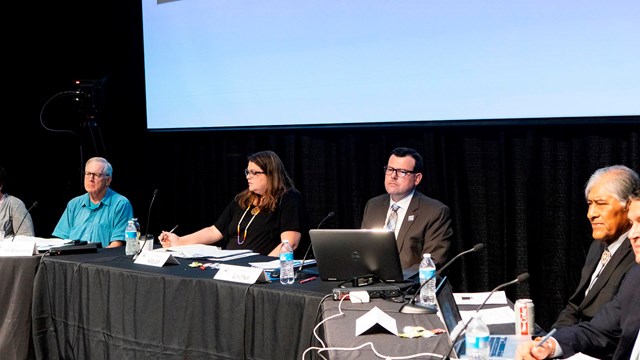
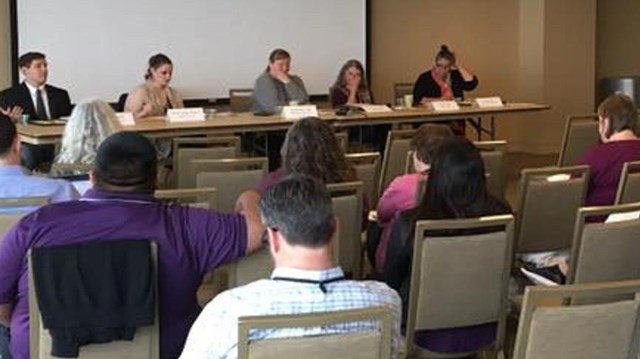
The 27th meeting of the Native American Graves Protection and Repatriation Review Committee was called to order by Ms. Rosita Worl at 8:30 a.m., Friday, September 17, 2004, in the Franklin Ballroom, Four Points Sheraton Hotel, Washington, DC.

Designated Federal Officer –
Mr. Timothy McKeown, Program Officer, National NAGPRA Program

National Park Service/Department of the Interior staff in attendance –
Mr. Craig Manson, Assistant Secretary for Fish and Wildlife and Parks
Mr. Randy Jones, Deputy Director, National Park Service
Ms. Jan Matthews, Associate Director, Cultural Resources, National Park Service
Mr. Patrick Tiller, Deputy Associate Director, Cultural Resources, National Park Service
Ms. Sherry Hutt, Program Manager, National NAGPRA Program, National Park Service
Ms. Robin Coates, Secretary, National NAGPRA Program, National Park Service
Ms. Mary Downs, Program Officer, National NAGPRA Program, National Park Service
Ms. Martha Graham, Program Officer, National NAGPRA Program, National Park Service
Ms. Paula Molloy, Program Officer, National NAGPRA Program, National Park Service
Ms. Karen Mudar, Program Officer, National NAGPRA Program, National Park Service
Ms. Cyndie Murdock, Program Officer, National NAGPRA Program, National Park Service
Ms. Cindy Cafaro, Division of General Law, Office of the Solicitor
Ms. Carla Mattix, Division of Parks and Recreation, Office of the Solicitor
Mr. Tim Murphy, Division of General Law, Office of the Solicitor
Mr. Jason Roberts, Division of Indian Affairs, Office of the Solicitor
Ms. Lesa Hagel, Consultant (contract transcriptionist)

Persons in attendance during part or all of the meeting (names and affiliations as provided at the meeting by attendees) –

Ms. Kehau Abad, Hui Malama I Na Kupuna O Hawaii Nei, Kailua, HI (appearing by teleconference)
Mr. Shane Anton, Scottsdale, AZ
Mr. Roger Anyon, National Museum of Natural History, Washington, DC
Ms. Risa Arbolino, National Museum of Natural History, Washington, DC
Mr. Edward Halealoha Ayau, Hui Malama I Na Kupuna O Hawaii Nei, Kailua, HI
Ms. Cindy Bank, University of Michigan, MI
Ms. Lenore Barbian, National Museum of Health and Medicine, Washington, DC
Ms. Jan Bernstein, Bernstein and Associates, Denver, CO
Mr. Bill Billeck, National Museum of Natural History, Washington, DC
Mr. Milton Bluehouse, Jr., Washington, DC
Ms. Cheri Botic, National Museum of Natural History, Washington, DC
Ms. Tobi Brimsek, Society for American Archaeology, Washington, DC
Mr. William Brown, Bishop Museum, Honolulu, HI
Mr. Jonathan Buffalo, Sac & Fox of Mississippi and Iowa, IA
Ms. Veletta Canouts, Tohono O’odham Nation, Sells, AZ
Mr. Scott Canty, Hopi Tribe (appearing by teleconference)
Ms. Patricia Capone, Peabody Museum, Harvard University, Cambridge, MA
Ms. Mary Carroll, National Park Service, Washington, DC
Mr. Chris Chaney, Office of the Solicitor, Department of the Interior, Washington, DC
Ms. Janet Cohen, National Park Service, Anchorage, AK
Ms. Victoria Cranner, Robert S. Peabody Museum, Phillips Andover, Andover, MA
Ms. Suzanne Day, Federal Relations, Harvard University, Washington, DC
Mr. A. Van Horn Diamond, Van Horn Diamond Ohana, Honolulu, HI
Ms. Kathryn Diamond, Van Horn Diamond Ohana, Honolulu, HI
Mr. Clay Dumont, College of Ethnic Studies, San Francisco State University, San Francisco, CA
Mr. Shawn E. Dumont, Bonanza, OR
Ms. Pauline Echo-Hawk, Native American Rights Fund, Boulder, CO
Mr. Walter Echo-Hawk, Native American Rights Fund, Boulder, CO
Mr. Mike Evans, St. Paul, MN
Mr. Phyllis Ewing, Effigy Mounds National Monument, Hayes Ferry, IA
Ms. Carrie Feldman, National Museum of Natural History, Washington, DC
Ms. Kathleen Fine-Dare, Fort Lewis College, Durango, CO
Ms. Gillian Flyn, Smithsonian Institution, Washington, DC
Mr. Marlon Forsyth, Springfield, VA
Mr. Lance Foster, Office of Hawaiian Affairs, Honolulu, HI
Mr. Lee Foster, US Army, Washington, DC
Ms. Midge Fox, PA Hearst Museum of Anthropology, University of California, Berkeley, CA
Ms. Leslie Freund, Berkeley, CA
Mr. George Garvin, Ho-Chunk Nation
Ms. Lynne Goldstein, Department of Anthropology, Michigan State University, East Lansing, MI
Mr. Dell Greek, US Army, Sparta, WI
Ms. Priscilla Grew, State Museum, University of Nebraska, Lincoln, NE
Ms. Suzan Harjo, Morning Star Institute
Mr. Lawrence Hart, Return to the Earth, Clinton, OK
Ms. Roberta Hayworth, US Army, St. Louis, MO
Ms. Carolyn Henrich, University of California, Washington, DC
Ms. N. Mehanaokala Hind, Honolulu, HI
Mr. R. Eric Hollinger, National Museum of Natural History, Smithsonian Institution, Washington, DC
Mr. Jeff Houser, Fort Sill Apache Tribe (appearing by teleconference call)
Ms. Andrea Hunter, Department of Anthropology, Northern Arizona University,
Mr. Joseph T. Joaquin, Sells, AZ
Mr. Greg Johnson, Franklin and Marshall College, Lancaster, PA
Ms. Lilikala Kame’eleihiwa, Kamakakuokalani Center for Hawaiian Studies, University of Hawaii, Manoa, HI
Ms. Karen Kauffman Wall, Mennonite Central Committee, North Newton, KS
Mr. Guy Kaulukukui, Honolulu, HI
Ms. Carolyn Kenney, Sarasota, FL
Mr. Keith Kintigh, Society for American Archaeology, Arizona State University, Tempe, AZ
Mr. Colin Kippen, Senate Committee on Indian Affairs, Washington, DC
Ms. Bambi Kraus, National Association of Tribal Historic Preservation Officers
Mr. Leigh J. Kuwanwisiwma, Hopi Tribe (appearing by teleconference)
Ms. Christine Landrum, Intermountain Region, National Park Service, Denver, CO
Ms. Mardie Lane, Hawaii Volcanoes National Park, HI
Ms. Jaime Laralee, National Association of Tribal Historic Preservation Officers, Washington, DC
Mr. Ricardo Leonard, Scottsdale, AZ
Mr. David Lindsay, Society for American Archaeology, Washington, DC
Ms. Dorothy Lippert, National Museum of Natural History, Washington, DC
Ms. Gloria Lomahaftewa, Heard Museum, Phoenix, AZ
Ms. Diana Loren, Peabody Museum, Harvard University, Cambridge, MA
Mr. Paul Lumley, Arlington, VA
Mr. Mark Lynott, Midwest Archeological Center, National Park Service, Lincoln, NE
Ms. Laura Mahoney, Institute for Museum and Library Services, Washington, DC
Ms. Cyd Martin, National Park Service, Denver, CO
Ms. Desiree Martinez, Baldwin Park, CA
Mr. Lamar Matthews, Sarasota, FL
Ms. Joyce McCarty, Washington, DC
Ms. Carolyn McClellan, Bureau of Indian Affairs, Washington, DC
Mr. John McClelland, Arizona State Museum, University of Arizona, Tuscon, AZ
Mr. Doug McCoard, Trio Regional Indian Organization, Lucasville, OH
Ms. Jean McCoard, Trio Regional Indian Organization, Lucasville, OH
Mr. Alfred McDonnell, Arnold and Porter (appearing by teleconference)
Ms. Nell Murphy, American Museum of Natural History, New York, NY
Mr. Patt Murphy, Iowa Tribe of Kansas and Nebraska, Abilene, KS
Mr. Ed Lee Natay, Intermountain Region, National Park Service, Santa Fe, NM
Ms. Angela Neller, Wanapum Heritage Center, Beverly, WA
Ms. Nancy Nelson, Maricopa, AZ
Mr. Kunani Nihipali, Hui Malama I Na Kupuna O Hawaii Nei, Kailua , Oahu
Mr. Leon A. Nuvayestewa, Sr., Hopi Tribe, Kykotsmovi, AZ
Ms. Cindy Orlando, Hawaii National Park, National Park Service, HI
Ms. Ho’oipo Pa, Hui Malama I Na Kupuna O Hawaii Nei, Kailua , Oahu
Ms. Janet Pasiuk, National Museum of Natural History, Washington, DC
Mr. Ernie Quintana, Intermountain Region, National Park Service, Omaha, NE
Mr. Miles Reimer, Mennonite Indian Leaders Council, Newton, KS
Mr. Len Richeson, Teewumseh PA, Silver Spring, MD
Ms. Jennifer Richman, Corps of Engineers, Portland, OR
Ms. Helen Robbins, Field Museum, Chicago, IL
Ms. Alyson Rollins, Bellingham, WA
Ms. Molly Ross, Division of Parks and Recreation, Solicitor’s Office, Department of Interior, Washington, DC
Mr. Paul Rubenstein, US Army Corps of Engineers, Washington, DC
Mr. David Ruppert, Intermountain Region, National Park Service, Denver, CO
Ms. Dutchie Kapu Saffery, Keaau, HI
Ms. L.C. Schuster, Hawaii Volcanoes National Park, National Park Service, HI
Mr. Lauren Sieg, Springfield, VA
Ms. Vi Nueyen Smith, American Museum of Natural History, New York, NY
Mr. Chuck Smythe, Northeast Region, National Park Service, Boston, MA
Mr. Bob Stearns, Office of the Chief Information Officer, National Park Service, Washington, DC
Ms. Lorraine Stutzman-Amstutz, Mennonite Central Committee, Akron, PA
Mr. La’akea Suganuma, Royal Hawaiian Academy of Traditional Arts, Honolulu, HI
Mr. Martin Surydstrup, New York, NY
Ms. Vicky Takamiwe, Aieu, HI
Mr. Jack Trope, Association for American Indian Affairs, Rockville, MD
Mr. Richard Waldbauer, Federal Preservation Institute, National Park Service, Washington, DC
Mr. Phil Walker, University of California, Santa Barbara, CA
Ms. Sherry White, Stockbridge Munsee Tribe, WI
Ms. Karenne Wood, Association of American Indian Affairs, Rockville, MD
Mr. Frank Wozniak, Southwest Region, USDA Forest Service, Albuquerque, NM
Mr. Fred York, Pacific West Region, National Park Service, Seattle, WA
Ms. Patricia Zell, Senate Indian Affairs Committee, Washington, DC

Introduction

Mr. Nuvayestewa, Sr., Hopi Tribe, gave the opening invocation. The Review Committee members introduced themselves. Mr. McKeown gave a brief overview of the responsibilities of the Review Committee under the Statute and advised the Review Committee that all Federal Advisory Committee Act (FACA) requirements had been fulfilled in calling the meeting. National NAGPRA Program staff members present at the meeting were introduced.

Review of the Agenda

Ms. Worl reviewed the agenda and noted the audio teleconferencing feature utilized by the National NAGPRA Program, which allowed long-distance public participation in the meeting.

Comments by NPS Associate Director, Cultural Resources

Ms. Janet Matthews, NPS Associate Director, Cultural Resources, expressed gratitude to the Review Committee members for their leadership and willingness to serve. Ms. Matthews was pleased to meet the Review Committee members and thanked them for their warm welcome. Ms. Matthews emphasized the important contributions the Review Committee members make, both individually and corporately, to the implementation of NAGPRA.

Ms. Matthews assumed her current position on January 5, 2004, and was charged by NPS Director Fran Mainella with making effective implementation of NAGPRA a top priority. Ms. Matthews met with Mr. Armand Minthorn, past Chair of the Review Committee, to discuss NAGPRA implementation and the Review Committee. Ms. Matthews summarized recent activities in NAGPRA implementation, including the appointment of Mr. Willie Jones, Mr. Lee Staples, and Mr. Vincas Steponaitis to the Review Committee on May 20, 2004; the delegation of Mr. McKeown as DFO for the Review Committee on June 28, 2004; coordination and successful completion of the July 29, 2004 teleconference, including public participation from ten remote access locations across the nation; and initiation of a two-year Intergovernmental Personnel Act (IPA) assignment for Dr. Sherry Hutt to serve as Team Leader for the National NAGPRA Program.

Ms. Matthews thanked the National NAGPRA Program staff for their hard work in the implementation of NAGPRA and the coordination of the Washington, DC Review Committee meeting. Ms. Matthews honored Ms. Robin Coates and presented her with a recognition award for 20 years of dedicated service to the NPS. Ms. Matthews thanked the Review Committee on behalf of the NPS, the DOI, and NPS Director Mainella for their work on NAGPRA, an Act described by Ms. Matthews as vital to righting the wrongs of 500 years in this country.

Comments by NPS Deputy Director

Mr. Randy Jones, NPS Deputy Director, welcomed the Review Committee members and expressed appreciation for their willingness to serve on the Review Committee and to further the implementation of NAGPRA. Mr. Randy Jones stated that the NPS is absolutely committed to implement NAGPRA in a fair and straightforward manner. Therefore, several organizational changes on the implementation of NAGPRA will be made in the NPS. Mr. Randy Jones explained that management of the Parks NAGPRA Program, with oversight of NAGPRA compliance specifically within the NPS, would be placed under the management of Ms. Cyd Martin, Denver, CO. Location of this function at the Denver office will make in closer to many national park, as well as increasing the likelihood of recruiting Native American employees. The National NAGPRA Program, administered in Washington, DC, would be reorganized and would report directly to Ms. Jan Matthews, allowing direct oversight by Ms. Matthews on NAGPRA issues. In response to a question by Mr. Steponaitis, Mr. Randy Jones explained that both Ms. Matthews and Ms. Martin report directly to Mr. Randy Jones. Mr. Steponaitis requested an organizational chart.

Mr. Randy Jones stated that he is committed to moving the regulations on culturally unidentified human remains forward and apologized for the past delays on its progress. Mr. Randy Jones requested the advice of the Review Committee regarding potential action on issues involving culturally unidentified human remains, and specifically mentioned Effigy Mounds National Park, which would bring a request before the Review Committee later in the meeting. Mr. Randy Jones stated that NPS’s goal for implementation of NAGPRA is to include as many Indian tribes in the identification process while striving expedite repatriation.

Ms. Worl thanked Mr. Randy Jones for his participation and attendance of the meeting. Mr. Randy Jones stated that he was pleased to attend and will make himself available for future Review Committee meetings.

Comments by National NAGPRA Program Manager

Ms. Sherry Hutt welcomed the Review Committee members and stated she was honored to serve as the National NAGPRA Program Manager. Ms. Hutt added that NPS Director Mainella was delighted to welcome the Review Committee members at the reception the previous evening and was appreciative of the Review Committee members’ service. Ms. Hutt thanked the Review Committee members for their generous devotion to further implementation of NAGPRA and added that she was fortunate to have their collective wisdom and advice. Ms. Hutt stated that the Review Committee members would be called upon to facilitate the resolution of disputes, to monitor the inventory and summary process, and to comment on the regulation process. Ms. Hutt will rely on the Review Committee’s direction to the National NAGPRA Program on the accumulation, organization, and distribution of information in furtherance of the implementation of NAGPRA.

Ms. Hutt highlighted the progress of the National NAGPRA Program.
§ Review Committee meetings: Ms. Hutt stated that the National NAGPRA Program would strive to organize two live and two telephonic meetings for the Review Committee in the coming year.
§ Notice publication: Work on the backlog of notices within the office continues with the development of a program to eliminate the backlog and a review of the current practice to put notices on hold at the request of the submitting museum or Federal agency.
§ NAGPRA Grants: Grant requests have declined by almost a third over prior years and the National NAGPRA Program is working toward increased outreach and facilitation of grant requests. Toward that end, National NAGPRA Program staff have developed several new grant themes, including consultation on the disposition of culturally unidentifiable Native American human remains, collaborative consultations regarding the cultural affiliation and repatriation of Federal collections, and expanding NAGPRA consultation through technological innovations.
§ Regulations: Regulations for 43 CFR 10.11, Disposition of Culturally Unidentifiable Human Remains, and 43 CFR 10.13, Future Applicability, are currently under review within the Department as proposed rules for publication. Consultation regarding 43 CFR 10.7, Disposition of Unclaimed Cultural Items, is about to begin. Ms. Karen Mudar will address the Review Committee on the National NAGPRA Program’s consultation efforts in developing these regulations.
§ Database of Culturally Unidentifiable Human remains: Ms. Cynthia Murdock will review the progress of the database, which is vital for the consultation process between Indian tribes and museums and Federal agencies. The database has seen significant progress, and a sample of the live version would be unveiled later in the meeting.

Ms. Metcalf asked about the training courses on NAGPRA implementation previously offered by Ms. Hutt and Mr. McKeown. Ms. Hutt explained that she hopes to develop and begin offering those courses again. Mr. Willie Jones asked about the consultation process involved in the development of regulations. Ms. Hutt explained that NAGPRA requires consultation with the Review Committee, Indian tribes, and the museum and scientific community, which would be ongoing throughout the regulation development process. Ms. Hutt proposed that the Review Committee members receive regular drafts of the regulations as the consultation process continues.

Mr. Steponaitis stated that NAGPRA can be viewed from two different levels. At the grassroots level, with individual museums and agencies dealing with individual tribes, Mr. Steponaitis stated that NAGPRA seems to be working very well and positive relationships are being developed. At the national level, NAGPRA issues are more contentious. Mr. Steponaitis stated that he sees a disconnect between the perceived success of NAGPRA implementation at the grassroots level and the rhetoric at the national level. Mr. Steponaitis explained that he was involved in the initial drafting efforts of NAGPRA and had been involved with NAGPRA issues since its inception. Mr. Steponaitis observed that a great number of NAGPRA disputes were caused by overhasty decisions by one of the involved parties, and cautioned against moving ahead too quickly on implementation issues surrounding the development of regulations and the repatriation process. Ms. Hutt reassured Mr. Steponaitis that the NPS was aware of, and has been considering, the points that he raised. She added that the National NAGPRA Program would strive to move carefully and with deliberation while attempting to keep pace with NAGPRA implementation progress by Indian tribes, museums, and Federal agencies.

Ms. Worl expressed appreciation for the continued work of the National NAGPRA Program and the renewed progress on regulations and stated that the NAGPRA program can achieve balance between good, productive work and timeliness. She was pleased to hear the National NAGPRA Program acknowledge past problems and express a renewed commitment toward NAGPRA implementation. Ms. Worl requested further discussion of the legal definition, as well as the legal and procedural requirements, of consultation.

Overview of NAGPRA and Related Legislation

Native American Graves Protection and Repatriation Act

Ms. Hutt explained that NAGPRA weaves together four strands of Federal law: Indian law, property law, human rights law, and administrative law.
1. Indian law: NAGPRA is Indian law because it is in Title 25 of the code and requires the Federal government to deal with Indian tribes on a government-to-government basis.
2. Property law: NAGPRA is property law because it protects the property rights of items under NAGPRA for Indian tribes. NAGPRA acknowledges the common-law property rights of Native people for human remains, funerary objects, sacred objects, and objects of cultural patrimony. Under common law, human remains and funerary objects could not be owned and descendants have an infinite authority of disposition. Sacred items can be owned individually or by a group and are used for ceremonies by traditional adherents. Cultural patrimony is something so central to the being of the group that it helps define the group. Cultural patrimony is inalienable and is not limited to Native groups.
3. Human rights law: NAGPRA is human rights law in that it gave Native people what they already had, by acknowledging the common law property rights of Native people.
4. Process: NAGPRA has two separate parts, disposition of items found on the ground after November 16, 1990 when the law was passed and repatriation of items in museums and Federal agencies when the law was passed. The repatriation process of NAGPRA includes the completion of summaries (general information about collections) and inventories (item-by-item list of human remains and associated funerary objects). The key to the process of developing summaries and inventories is consultation. The Review Committee becomes involved in the process when a dispute arises between two groups making a competing claim. Items can be claimed by lineal descendants or by being culturally affiliated with the claimant. Otherwise the items are considered culturally unidentifiable and claimants will come before the Review Committee until promulgation of the regulations on culturally unidentifiable human remains.

Ms. Mattix described Section 3 of NAGPRA, the inadvertent discovery and intentional excavation portion of the Act. Under Section 3, the National NAGPRA Program is required to consult with the Review Committee in the development of regulations on unclaimed cultural items. While many aspects of Section 3 and Section 7 are similar, the custody provisions differ. The first priority of custody under Section 3 is to lineal descendants. The next priority is to Indian tribe landowners for objects found on Indian tribal lands. The third priority is to culturally affiliated Indian tribes. The fourth level of priority is to Indian tribes based on aboriginal land as identified by the Indian Claims Commission (ICC) or U.S. Court of Claims. The Review Committee has a role in consideration of unclaimed objects and trying to determine custody.

Ms. Mattix explained that Section 8 outlines the Review Committee’s responsibilities under the statute.
§ Monitoring the inventory and identification process conducted under Sections 5 and 6 to ensure a fair, objective consideration and assessment of all relevant information and evidence.
§ Upon the request of any affected party, reviewing and making findings related to the identity or cultural affiliation of cultural items and the return of such items. Ms. Mattix explained that this responsibility was significant because it differentiates the responsibility of monitoring with respect to these two categories of items. Under the review and findings process, the Review Committee members’ advice should be independent and should consider the facts and evidence, not standards of agency practice.
§ Facilitating the resolution of any disputes among Indian tribes, Native Hawaiian organizations and descendants, and convening the parties to the dispute if necessary.
§ Compiling an inventory of culturally unidentified human remains.
§ Consulting the Secretary of DOI in the development of regulations and performing any other functions for which the Secretary might specifically request advice.
§ Making recommendations regarding the future care of cultural items.

Review Committee Discussion: Mr. Steponaitis clarified that there is often a misunderstanding that the notion of reasonable determination is somehow different from a scientific determination, or that the standard of evidence used by scientists to reach conclusions is different than the standard or preponderance of evidence that’s required by the statute to determine cultural affiliation. Ms. Hutt explained that the concept of reasonable basis is used by museums and Federal agencies to make an initial determination of cultural affiliation and preponderance of evidence is a legal term applicable only in dispute cases following those determinations. Ms. Mattix explained that Federal agencies and private museums have different governing rules, and private museums can use the preponderance of evidence standard as a guide for how to weigh evidence in a situation if a dispute were to arise. Mr. Bailey stated he thought that English common law guaranteed burials for 999 years. Ms. Hutt explained that law was developed when the Crown owned all land, and if a person was buried in the dirt, they were entitled to the rights of the dirt for 999 years, but the human remains and the burial items were not owned by the Crown. Ms. Worl asked about oversight responsibility of Section 3. Ms. Mattix explained that the National NAGPRA Program is responsible for regulations and implementation is the responsibility of the individual land manager where the items were found.

Indian Law and the Federal Acknowledgement Process

Mr. Jason Roberts, Division of Indian Affairs, Branch of Tribal Government and Alaska, Office of the Solicitor, explained that under NAGPRA, lineal descendants, Indian tribes, and Native Hawaiian organizations may request Native American human remains, associated funerary objects, unassociated funerary objects, and sacred objects. Objects of cultural patrimony can only be requested by Indian tribes and Native Hawaiian organizations. Lineal descendants are given priority over Indian tribes and Native Hawaiian organizations for relevant requests. Mr. Roberts reviewed the NAGPRA definitions of lineal descendant, Native Hawaiian organization, and Indian tribe. NAGPRA’s definition for Indian tribe was drawn from the Indian Self-Determination and Education Assistance Act (ISDA), which limits the NAGPRA standing of nonfederally recognized groups, such as those seeking recognition as Indian tribes and groups possessing state or local tribal status.

Two lists useful in determining a group’s NAGPRA standing are the federally recognized Indian tribes list maintained by the Bureau of Indian Affairs (BIA) and the list maintained by NPS. The list maintained by the BIA currently has 562 Indian tribes, which are acknowledged to have immunities and privileges available to federally recognized Indian tribes by virtue of their government-to-government relationship with the United States. The list maintained by the NPS, approximately 774 entities, incorporates all Indian tribes on the BIA list, as well as entities that would likely qualify as tribal organizations under ISDA. Native American human remains that are determined to be culturally affiliated with a nonfederally recognized group are considered culturally unidentifiable under the Act. NAGPRA requires Federal agencies and museums to maintain a list of culturally unidentifiable humans remains for their later disposition by regulation, unless legally required to do otherwise at the recommendation of the Secretary of the Interior. Federal agencies and museums may request the NAGPRA Review Committee to recommend the disposition of such Native American human remains to the appropriate nonfederally recognized group.

Mr. Roberts explained that his cursory review of published notices showed approximately 6 percent of published notices (representing 9 percent of the total repatriated human remains and 15 percent of the total repatriated funerary objects) included the participation of nonfederally recognized groups in some manner, either as a consultant or through a NAGPRA Review Committee recommendation for repatriation. Mr. Bailey asked about the total potential number of federally recognized groups. Mr. Roberts explained that the lists are substantially complete at this point, although there are tribal groups currently seeking Federal recognition. Ms. Worl clarified that although Native corporations do not claim to be federally recognized governments, there are 117 legislative acts that recognize Native corporations as tribes for special statutory purposes.

Federal Advisory Committee Act and Administrative Procedures Act

Ms. Cindy Cafaro, Division of General Law, Office of the Solicitor, explained the role and responsibilities of the Review Committee under the Federal Advisory Committee Act (FACA). FACA was passed by Congress in 1972 to regulate advisory committees through Congressional oversight. FACA committees are established and utilized by the Executive branch of the Federal government for the purpose of attaining advice or recommendations. Ms. Cafaro stated that the Native American Graves Protection and Repatriation Review Committee met all requirements of a FACA committee. The advice provided by the Review Committee is very influential and has become precedent setting.

Ms. Cafaro stated that any advice considered under FACA needs to be consensus advice of the Review Committee and not individual advice put forth under a group setting. This requirement allows FACA committee members to participate individually in other meetings or events. FACA is a procedural statute that details how review committees work through each review committee’s statute, Charter, and advice of their DFO. The Native American Graves Protection and Repatriation Review Committee was created by statute. Its Charter — which details the authority, mission, goals, objectives, and logistics of the Review Committee — is renewable and has been filed with the General Services Administration and later will be placed in the Library of Congress.

FACA committees are required to have public meetings, with 15-day advance notice published in the Federal Register detailing the time, date, and location of the meeting, and inviting public attendance. The public may also file written statements with the Review Committee. FACA requires detailed minutes of each FACA committee meeting. Closed meetings for FACA committees, although allowed with special permission, are rare and not encouraged. The DFO must call each FACA committee meeting to order and be present during the entire meeting.

Subcommittees are an important part of the FACA committee process. Subcommittees report to the full advisory committee and may include noncommittee members. Subcommittees do not have to have public meetings or give notice of their meetings. Subcommittees serve an information-gathering purpose, and no decisions may be reached. FACA committee records and some subcommittee records are public documents, such as handouts provided to the committee as a whole. Private records and papers, such as handwritten notes of the committee members that are not presented to the full committee, are not public documents.

FACA committee members need to be cognizant of potential conflict of interest as representatives of diverse interests. FACA committee members are chosen for their perspectives in order to help provide advice. If a potential conflict arises, FACA committee members can still participate in discussions but need to disclose any individual personal interests that may influence their decisions. Sanctions can be levied for failing to comply with FACA requirements, and Ms. Cafaro urged the Review Committee members to consult with their DFO regarding any questions that may arise. Ms. Cafaro emphasized the important and difficult role of FACA committees and expressed her appreciation for the work of the Native American Graves Protection and Repatriation Review Committee.

In response to a question by Ms. Worl, Ms. Cafaro explained that FACA committee members are allowed to socialize but should notify their DFO if members gather for the purpose of exchanging information relevant to committee issues. Ms. Worl expressed appreciation for Ms. Cafaro’s presentation.

Comments on the Legislative History of the Act

Ms. Patricia Zell
Ms. Patricia Zell, Minority Staff Director and Chief Counsel of the US Senate Indian Affairs Committee, stated she has served on the committee since 1978 and has personal knowledge of the history of NAGPRA legislation. Ms. Zell made note of the opening of the National Museum of the American Indian Museum (NMAI) during the week immediately following the Review Committee meeting. Ms. Zell added that the events which gave rise to the desire to establish the museum arose out of the February 20, 1987 hearing on S. 187, the bill that became the precursor to NAGPRA. The purpose of S. 187 was to provide for the protection of Native American rights for the remains of their dead and sacred artifacts and for the creation of Native American cultural museums. At that first hearing, then Secretary of the Interior Robert McCormick Adams addressed the Senate Committee on Indian Affairs and detailed the number of Native American human remains held by the Smithsonian Institute at that time. His statement led Senator Inouye of Hawaii to meet with the Smithsonian Institute to discuss how many of the Native American human remains could be culturally identified and the appropriateness of establishing a national memorial for those Native American human remains that could not be culturally affiliated. Senator Inouye then began discussions with the Smithsonian Institute regarding the last available site on the National Mall, which had been committed to the Smithsonian Institute for a museum.

The second hearing on S. 187 was held on July 29, 1988. Mr. Michael Fox, representing the American Association of Museums (AAM) explained that the AAM had adopted a repatriation policy. Mr. Fox described the policy and the concerns of the AAM regarding S. 187. Mr. Fox then recommended a year-long dialogue on the identification, use, care, and ownership of Native American materials, which was implemented. The National Museum of the American Indian Act was signed into law in November 1989. Ms. Zell emphasized how discussions for both the NMAI Act and NAGPRA contributed to the final version of each Act. On May 14, 1990, a hearing was held on S. 1020 to provide for the protection of Indian graves and burial grounds and S. 1980 to provide for repatriation of Native Americans. Mr. Paul Bender facilitated the national dialogue and summarized key issues discussed by the panel, including the vital need for increased consultation and communication between the various parties regarding the treatment and disposition of Native American human remains, funerary objects, and items of cultural patrimony.

The Native American Graves Protection and Repatriation Act was passed into law on November 16, 1990, following these discussions. Ms. Zell stated that even though consensus was reached in the national dialogue on the general principles, compromise had to occur due to the many challenging definitions and concepts that had to be dealt with in this legislation. Compromise does not always represent perfection. Ms. Zell added that since 1990, it’s become clear that some issues in NAGPRA need clarification, possibly including amendment of NAGPRA.

Mr. Keith Kintigh
Mr. Keith Kintigh, Chair of the Society for American Archaeology’s (SAA) committee on repatriation during the formation and passing of NAGPRA, provided a personal history and comments on the promulgation of NAGPRA. Mr. Kintigh stated that three constituencies negotiated NAGPRA; a coalition of Native American groups – primarily the Native American Rights Fund, the Association of American Indian Affairs, and the National Congress of American Indians; the scientific community – led primarily by the SAA; and the museum community – led primarily by the AAM. Mr. Kintigh emphasized the role of compromise in the passage of NAGPRA. The issue of cultural affiliation was at the heart of NAGPRA. In discussions about NAGPRA, Congress was concerned about the appropriate return of Native American human remains to the appropriate Native American tribes, and Native Americans convincingly voiced that concern to Congress.

Mr. Kintigh explained that the current NAGPRA definition of cultural affiliation was drafted by Mr. Walter Echo﷓Hawk, Mr. Vincas Steponaitis, Mr. Jack Trope, and Mr. Kintigh. Mr. Kintigh stated that the use of the term cultural affiliation has drifted back toward a less defined notion of cultural relationship, which was the terminology originally used in the draft versions of NAGPRA. While the SAA and Mr. Kintigh firmly support NAGPRA, he expressed concern about the importance of following the definition of cultural affiliation as written. Certain issues were not addressed in NAGPRA. Congress specifically did not deal with nonfederally recognized group, or the issue of culturally unidentifiable human remains, and the application of NAGPRA to private lands.

Mr. Walter Echo-Hawk
Mr. Walter Echo-Hawk, staff attorney with the Native American Rights Fund, expressed appreciation for the opportunity to participate and address the Review Committee. He commended the Review Committee members on their work over the past 14 years in implementing NAGPRA and monitoring its progress. Mr. Echo-Hawk described the role of legislative history in carrying out the functions of implementing NAGPRA. To help answer questions about the statute, it’s important to understand what the law says and Congress’s intentions while promulgating the statute. The first area to consider is the statute itself and the wording. The second area to consider is the interpretation of the statute by the Secretary of the Interior, as the official delegated by Congress to implement the statute. The third area to consider is the legislative history, where a thorough review of committee hearing records, hearing transcripts, committee reports, and floor statements may aid in understanding the statute.

Mr. Echo-Hawk stated that NAGPRA is a Federal Indian law, as indicated in its title, the Native American Graves Protection and Repatriation Act, and its initiation in the Senate and House Indian Affairs committees. The statute is contained in Title 25 and states that NAGPRA is a result of the United States’ trust relationship with Indian tribes and Native Hawaiian organizations. As Indian law, NAGPRA is subject to Indian law canons of construction, which basically state that when unclear or ambiguous, NAGPRA has to be construed liberally in favor of Indians, as the class of people for whom the law was designed to protect. NAGPRA is also a human rights statute, as human rights are a paramount principle, evidenced by Ms. Zell’s description of the history of the development of NAGPRA. Finally, NAGPRA was a compromise statute, wherein the provisions to implement the processes contained in NAGPRA were consciously fashioned to make the statute workable from everyone’s standpoint. However, NAGPRA’s status as compromise legislation does not detract in any fashion from its character as being an Indian statute or human rights law for purposes of statutory construction.

In 1992, Mr. Echo-Hawk and Mr. Trope co-authored an article on the background and legislative history of NAGPRA, which Mr. Echo-Hawk feels is still valid and accurate. Mr. Echo-Hawk thanked the Review Committee and offered his assistance, as well as the assistance of the Native American Rights Fund, to the Review Committee.

Mr. Dan Monroe
Mr. Dan Monroe, Vice-chair and Chair of the AAM during the formation and passage of NAGPRA and a previous member of the NAGPRA Review Committee, stated that he was responsible during the NAGPRA legislative process for overseeing and guiding the advocacy efforts for museums. Mr. Monroe explained that after the national dialogue panel met, there was a small group of representatives of the Native American community, the scientific community, and the museum community wherein there was an increased understanding based on significant dialogue and sharing of issues and potential solutions. However, within the museum community itself there was not a broad-based consensus about how to move forward.

Mr. Monroe described a very difficult process of meetings and discussions to try to reach consensus on an agreement that would bring together the Native American community, universities, the scientific community, and the museum community. At one point just prior to the passage of NAGPRA, the museum community came to an important understanding, that there was more than legal issues involved. There were moral issues in which the museum community had arguably not lived up to the standards to which they aspire. There was a recognition that the museum community had a responsibility to go forward, to engage in good faith negotiation, to listen, and to try to contribute to the creation of landmark human rights legislation, while advocating the museum community’s views.

AAM’s decision to move forward in support of the legislative process was a pivotal point in the history of NAGPRA, following which there was an emerging, broader-based sense of understanding and goodwill and a broadened perspective that recognizes many competing interests. By working together, museums and Native Americans today have a completely different set of relationships than they did 14 years ago. Mr. Monroe concluded that it is critically important to remember that the spirit of NAGPRA and the moral issues involved, not just the law itself, are critical to creating a world based on increased understanding and appreciation for the diversity involved in the NAGPRA process.

Review Committee Discussion
Mr. Steponaitis expressed admiration for the people involved in the development of the NAGPRA legislation. Mr. Willie Jones stated that the legislative history and the statements made by the presenters were very important and he thanked the participants. Ms. Worl thanked the panel and expressed appreciation for the presentations and thanked those involved in the process, particularly recognizing Senator Inouye and his contributions.

Comments by the Assistant Secretary for Fish and Wildlife and Parks

Ms. Janet Matthews briefly reviewed Mr. Manson’s personal and work history and his unique qualifications for the position of Assistant Secretary for Fish and Wildlife and Parks. This included his career in the US Air Force, his service as counsel for California’s Fish and Game Agency, and his appointment as judge on the Superior Court of California.

Mr. Craig Manson
Mr. Craig Manson, Assistant Secretary for Fish and Wildlife and Parks, stated he was pleased to participate in the Review Committee meeting and to have had the opportunity to meet the Review Committee members, both at the meeting and at the NPS Director’s reception the previous evening. Mr. Manson stressed the importance of the respectful treatment of the issues addressed by NAGPRA, both nationally within the NPS and DOI and personally for Mr. Manson, who then detailed his Native American genealogy. Mr. Manson stated that NAGPRA is an opportunity to make reparation for past wrongs and thanked the Review Committee for their essential advice in this process.

Mr. Manson addressed the Hopi Tribe’s request for a review of their concerns regarding Chaco Culture National Historical Park, Mesa Verde National Park, and Aztec Ruins National Monument. Following the Review Committee’s February 10, 2000 recommendation that Chaco Culture National Historical Park redo its cultural affiliation study, the National Park Service reviewed its cultural affiliation procedures service-wide, including an independent assessment of the procedures by the National Park System Advisory Board. Through scrupulous review of the process, the advisory board concluded that the parks have complied with the law in determining cultural affiliation. An internal review by the NPS and DOI confirmed that the parks had followed good procedures and made accurate cultural affiliation determinations. A detailed discussion of the determinations was provided in Director Mainella’s May 13, 2003 letter to Hopi Tribal Chairman Wayne Taylor and Assistant Secretary Manson’s November 28, 2003 letter to Hopi Tribal Chairman Wayne Taylor.

NAGPRA requires that cultural affiliation determinations be based on a preponderance of the evidence from a broad array of sources, and does not privilege any one disciplinary source. In reviewing the issue, Mr. Manson found that the parks complied with both the letter and the spirit of the law. Addressing the Hopi Tribe’s concerns regarding Mesa Verde National Park and Aztec Ruins National Monument, Mr. Manson explained that in substance and in process the two cases are the same as Chaco Culture National Historical Park. The Secretary has previously considered testimony from the Review Committee regarding this issue and is not asking the Review Committee for further advice or guidance. Mr. Manson expressed high regard for the Review Committee’s advice and assistance, and stated that the Review Committee’s recommendation regarding Chaco Culture National Historical Park was very valuable as the catalyst for a thorough review of NPS cultural affiliation determinations. Mr. Manson thanked the Review Committee members for their time and assistance and looks forward to a continuing relationship working together toward NAGPRA implementation.

Comments by the Hopi Tribe
Mr. Leigh Kuwanwisiwma, Director of the Cultural Preservation Office, Hopi Tribe, acknowledged the Review Committee’s time and effort. Mr. Kuwanwisiwma stated that the Hopi Tribe is quite cognizant of NPS’s position regarding the Hopi Tribe’s request for review of the Mesa Verde National Park and Aztec Ruins National Monument Federal Register notices and cultural affiliation determinations. Mr. Kuwanwisiwma expressed concern that five years has passed since the Hopi Tribe requested a review in these two cases. The Hopi Tribe’s position is that the parks are distinct and these cases should be considered individually. The Hopi Tribe feels the Review Committee is a neutral party to make a finding and recommendation in the case.

Review Committee Discussion
Ms. Worl explained that none of the current members were on the Review Committee when the initial recommendation was made, and do not have first-hand knowledge of the details involved in the decision. Although the Review Committee members agreed that it was clear that the Secretary of the Interior was not requesting any further action on the part of the Review Committee, the members discussed the request of the Hopi Tribe extensively. Mr. Steponaitis stated that one of the roles of the Review Committee was to foster dialogue and ending discussions on this issue might not help accomplish that role.

Mr. Manson explained that the NPS initiated efforts to follow the National Park System Advisory Board’s recommendation to improve NPS guidance to parks on cultural affiliation. Mr. Manson committed to find an appropriate forum to discuss cultural affiliation issues and the progress of the improved NPS guidelines on cultural affiliation determinations in an effort to allow the Review Committee to enhance its role in advising the Secretary. The forum would allow people to air their views on the process of making cultural affiliation determinations, without reference to a specific case.

Mr. Alfred McDonnell, counsel for the Hopi Tribe, expressed concern that the Review Committee members have stated they have no information about these particular disputes and yet an opportunity for a hearing has been denied. Mr. Manson clarified that the position of the Secretary is that this matter has been extensively considered and resulted in extensive reviews by the NPS, the DOI, the National Park System Advisory Board, and subsequently a final decision by the Secretary. Further consideration of this matter would not be a productive use of the Review Committee members’ time. In response to a question by Ms. Metcalf, Mr. Kuwanwisiwma stated that the Hopi Tribe was not consulted during the National Park System Advisory Board’s review of the NPS’s process for cultural affiliation determinations.

Mr. Steponaitis stated that he reviewed the National Park System Advisory Board’s recommendations when they were first circulated and agreed that the advisory board did a good job in formulating the recommendation. However, he added that there seemed to be a mixed message that while the NPS had done nothing wrong in the process of making the determinations of cultural affiliation, the NPS could do better. Mr. Willie Jones expressed concern about endorsing or agreeing to a recommendation that was made before the current members’ service on the Review Committee. Mr. Manson agreed with Mr. Steponaitis’s summation of the recommendation. Mr. Manson addressed Mr. Willie Jones’s concern and stated that the Review Committee is not being asked to consider or take any action on this issue, which is considered final by the Secretary. Mr. Monroe stated that in light of the decision of the Secretary that consideration of this issue is final and no further advice is being sought from the Review Committee, that the Review Committee has no legal authority to act on the request of the Hopi Tribe.

Requests for Recommendations Regarding the Disposition of Culturally Unidentifiable Human Remains – Effigy Mounds National Monument

Mr. Ernie Quintana
Mr. Ernie Quintana, Regional Director of the Midwest Region, National Park Service, expressed appreciation for the opportunity to address the Review Committee. Mr. Quintana stated that he was requesting the Review Committee’s support in helping to repatriate culturally unidentified human remains currently in the care of Effigy Mounds National Monument.

Ms. Phyllis Ewing
Ms. Phyllis Ewing, Superintendent, Effigy Mounds National Monument, requested a recommendation of the Review Committee regarding the disposition of culturally unidentifiable human remains held by Effigy Mounds National Monument. The Sac and Fox of the Mississippi and Iowa have written a letter requesting repatriation. It is the desire of the staff of Effigy Mounds National Monument and all members of the affiliated tribes to repatriate these human remains to the Sac and Fox of the Mississippi and Iowa for reburial in their original resting place.

Ms. Ewing summarized the history of Effigy Mounds National Monument, including the area in question, which encompasses 206 prehistoric Indian burial and ceremonial mounds. Excavation of the mounds was primarily through research or construction projects, and resulted in information that has enabled Effigy Mounds National Monument to establish an interpretative program. Ms. Ewing described the excavation history of the mounds, including the history of the human remains included in the request before the Review Committee, which were excavated from Mound 57. Mound 57 was determined to be associated with the Hopewell culture, and the human remains excavated from Mound 57 are considered culturally unidentifiable because they are not affiliated with any current federally recognized Indian tribe. The human remains were in the possession of a private individual from the 1950s until August 3, 2000, when they were returned to Effigy Mounds National Monument. The timing of the return resulted in a misunderstanding that the situation was an inadvertent discovery.

Ms. Ewing stated that on September 20, 2000 a consultation meeting was conducted with 12 affiliated Indian tribes: the Iowa Tribe of Kansas and Nebraska; Iowa Tribe of Oklahoma; Otoe-Missouria Tribe of Indians, Oklahoma; Ho﷓Chunk Nation of Wisconsin; Winnebago Tribe of Nebraska; Upper Sioux Indian Community of the Upper Sioux Reservation, Minnesota; Shakopee Mdewakanton Sioux Community; the Lower Sioux Indian Community; and the Prairie Island Community of Minnesota. Also in attendance was a representative of the Sac and Fox Tribe of the Mississippi and Iowa, who also represented the Sac and Fox Nation of Missouri in Kansas and Nebraska and the Sac and Fox Nation of Oklahoma. Another attendee was from the Minnesota. All tribal representatives agreed that the most important issue was the return of the items to their original resting place.

On March 9, 2001, a Federal Register notice was published concerning these human remains, which contained an error. The correct notice was published on March 20, 2002, regarding the 12 culturally unidentifiable human remains and 3 associated funerary objects recovered from Mound 57. Based on the Review Committee’s June 2001 draft recommendations regarding the disposition of culturally unidentifiable human remains, Ms. Ewing proposed repatriation of these culturally unidentifiable human remains to the Sac and Fox of Mississippi and Iowa, as the Indian tribe aboriginally occupying the area of Effigy Mounds National Monument. Ms. Ewing described her numerous efforts to appear before the Review Committee regarding this situation and the positive support she has received from Mr. Quintana.

Mr. Mark Lynott
Mr. Mark Lynott, manager of NPS Midwest Archaeological Center in Lincoln, Nebraska, explained that the center provides archaeological research and resource management services to 55 parks in the 13-state Midwest region. The center’s staff takes their NAGPRA responsibilities seriously and believes that it is their responsibility to protect and preserve the culturally unidentified human remains in their stewardship until they are associated with lineal descendants or until rules are developed for their disposition. Mr. Lynott described the archaeological history of Effigy Mounds National Monument and explained that at present, it was not possible to identify the descendants of the people buried in Mound 57. He respectfully requested that the NPS be encouraged to act as good stewards of these human remains until they can be either affiliated with historic people or until new rules are issued for their disposition.

Mr. Jonathan Buffalo
Mr. Jonathan Buffalo, Sac and Fox Tribe of the Mississippi and Iowa, stated that the Sac and Fox Tribe of the Mississippi and Iowa understands through their history that they are not culturally affiliated with these human remains. They are claiming them under aboriginal rights as the people who occupied the land, out of a sense of moral obligation and knowledge that they need to be returned to their original resting place.

Mr. George Garvin
Mr. George Garvin, Ho-Chunk Nation, stated that the Ho-Chunk Nation supports the Sac and Fox Tribe of the Mississippi and Iowa in this repatriation and disposition of the human remains from Mound 57.

Mr. Patt Murphy
Mr. Patt Murphy, Iowa Tribe of Kansas and Nebraska, explained that he was at the meeting on behalf of the Iowa Tribe of Kansas and Nebraska, the Otoes, the Missourias, the Ho-Chunk Nation, and the Iowa Tribe of Oklahoma — the Otoe people. The Otoe people have been in the area of the Effigy Mounds for centuries and are related to these human remains through a relationship that is sometimes difficult to understand. It is their belief that all burial grounds should be honored, and when human remains are removed from the earth, they need to be reburied so their spirit journey is not disrupted. The Otoe people have asked the Sac and Fox Tribe of the Mississippi and Iowa to assist in the repatriation of these human remains as the adjudicated Indian tribe to the area of the Effigy Mounds. The Iowa, Otoe-Missouria, and Ho-Chunk Nations are in unanimous support of this claim. Mr. Murphy thanked the Review Committee for their consideration.

Review Committee Discussion
The Review Committee members discussed the request of Superintendent Ewing of Effigy Mounds National Monument. Mr. Steponaitis expressed concern that the Midwest Archaeological Center opposed the repatriation until lineal descendants could be identified or regulations on culturally unidentifiable human remains were promulgated. Ms. Mattix stated that the regulations were currently in draft form and could be in process for some time. Ms. Hutt explained that the Review Committee developed a process to appropriately address issues of repatriation of culturally unidentifiable human remains. Mr. McKeown stated that since 1994, the Review Committee has made recommendations on 28 similar requests. Mr. Monroe explained that NAGPRA does not promote the delay of repatriation until determinations of cultural affiliation can be made, either through identification or regulations, and nothing in NAGPRA prevents the Review Committee members from taking action on this recommendation. Mr. Monroe added that the while the NPS has a variety of views, including the concern expressed by the Midwest Archaeological Center, the primary parties have reached concurrence on this issue.

The Review Committee supported the recommendation of Superintendent Ewing of Effigy Mounds National Monument to repatriate the 12 culturally unidentifiable human remains and associated funerary objects to the Sac and Fox Tribe of Mississippi and Iowa, with the support of 12 affiliated Indian tribes. The Review Committee thanked the participants in this matter for their work and consultation efforts.

Requests for Recommendations Regarding the Disposition of Culturally Unidentifiable Human Remains – Colorado College

Ms. Jan Bernstein
Ms. Jan Bernstein, representing Colorado College, Colorado Springs, Colorado, thanked the Review Committee for considering the request to repatriate three culturally unidentifiable human remains to the Southern Ute Indian Tribe. Ms. Bernstein stated that the Review Committee had a copy of the culturally unidentifiable remains inventory, which was distributed on April 17, 2004, to 29 Indian tribes associated with the area, a copy of the distribution list, and the letter from Colorado College that accompanied the inventory. On May 17, 2004, the Southern Ute Indian Tribe requested repatriation of the three individuals. The Review Committee has a copy of that letter, as well as a copy of the letter from the Colorado College to the 29 Indian tribes associated with the area, and a report on the subsequent consultation between the 29 Indian tribes and Colorado College regarding the repatriation request. Ms. Bernstein stated that several of the 29 Indian tribes gave their blessing to the Southern Ute Indian Tribe for this repatriation and none objected.

Review Committee Discussion
The Review Committee supported the recommendation to repatriate the three culturally unidentifiable human remains to the Southern Ute Indian Tribe.

Database of Culturally Unidentifiable Human Remains

Ms. Cyndie Murdock
Ms. Cyndie Murdock, National NAGPRA Program, described the progress of the development of the database of culturally unidentifiable human remains. She explained that data entry was substantially complete and included entries from 599 museums and Federal agencies, representing a total of over 111,000 human remains. Ms. Murdock stated that after the data was entered from an institution, the institution was requested to confirm the data. After confirmation of the data, the information would be put on the Web for access by Native Americans, museum and Federal agency representatives. Ms. Murdock demonstrated the pilot database and its search capabilities, which currently contains data from the 30 institutions that have been confirmed to date. Ms. Murdock described future plans for the database, including the continued verification of data and use of a new database system possibly as early as spring 2005, which will allow more search capabilities.

Review Committee Discussion
Mr. Steponaitis expressed appreciation for the work of the National NAGPRA Program on the database and emphasized its usefulness. He cautioned against hasty errors, as the database will be heavily relied upon by the Native American community to assist in dealing with repatriation of culturally unidentifiable human remains. Ms. Worl recommended that the National NAGPRA Program require verification of the information by museums and Federal agencies be completed on a timely basis.

Comments on Database of Culturally Unidentifiable Human Remains

Mr. Walter Echo-Hawk
Mr. Walter Echo-Hawk, staff attorney with the Native American Rights Fund, stated that he represented a working group of prominent Native Americans who have been following the issue of proper disposition of culturally unidentifiable human remains under NAGPRA. Members of the working group include Mr. Wallace Coffee, Ms. Suzan Harjo, Mr. James Riding In, Mr. Mervin Wright, Mr. Peter Jemison, and Ms. Ho’oipo Pa. Mr. Echo﷓Hawk stated that two years ago, the NPS was prepared to publish regulations concerning disposition of culturally unidentifiable human remains that was adverse to Native interests. The working group sent a letter to the Secretary of the Interior requesting that no regulations be promulgated in the Federal Register until completion of the inventory and following adequate consultation with Indian tribes. Before consultation can begin, the inventory of culturally unidentifiable human remains needs to be complete and available to Indian tribes, in order for Indian tribes to thoroughly research the inventory and database. The Review Committee will need to conduct serious consultation with Indian country and a highly particularized and searching inquiry about the facts and circumstances of the individuals before any policy can be formulated about their disposition.

Mr. Echo-Hawk voiced a widespread concern among Indian country that the NPS is not the proper, impartial forum to handle this issue. He suggested that another impartial, national dialogue might be necessary in order to develop regulations for culturally unidentifiable human remains, similar to the dialogue that was described during the review of the legislative history of the Act. Mr. Echo-Hawk stated that the inventory will be a very valuable tool and will play a crucial role in this process. He expressed hope that the NPS would look favorably upon grants that will enable Indian tribes to utilize the database information and then participate in informed consultation.

Ms. Suzan Harjo
Ms. Suzan Harjo, President of the Morning Star Institute and member of the working group represented by Mr. Echo-Hawk, explained that the Morning Star Institute negotiated much of NAGPRA and funded all of the cultural activities of the National Congress of American Indians (NCAI) when NCAI led the campaign for repatriation law. Ms. Harjo stated that she agreed with Mr. Echo-Hawk’s comments. She objected completely to the Review Committee’s draft regulations on culturally unidentifiable human remains, as they completely put repatriation law on its head and characterize human beings as the property of the repositories that hold them. For this and other reasons, NCAI has called for the removal of NAGPRA implementation from the NPS, a position also favored by the working group. Regulations are needed that allow for informed consent. Ms. Harjo stressed the importance of considering the human remains as unidentified, not unidentifiable. There are many situations where the designation of culturally unidentifiable can change, such as when human remains are culturally affiliated with one of multiple Indian tribes but an exact determination cannot be made.

Ms. Harjo expressed appreciation for the progress of the National NAGPRA Program on the database of culturally unidentifiable human remains. She then described a situation causing great concern which involved a proposed repatriation of Native American human remains from the School of American Research to the Pueblo people for disposition back to the Arroyo Hondo. The School of American Research has determined that the human remains are culturally unidentifiable, and all of the Pueblos claim a relationship. The NPS has threatened to level sanctions if the reburial occurs. Ms. Harjo presented the Review Committee with letters from Mr. Benny Shendo, Cabinet Secretary for the Indian Affairs Department, State of New Mexico, and Mr. Gil Vigil, Vice-Chairman of the All Indian Pueblo Council in support of the repatriation. Both letters request that the NPS overturn their position. Ms. Harjo encouraged the Review Committee to take measures to ensure informed consultation so that the regulations can move forward, and introduced the possibility of a creative resolution such as the Tomb of the Unknown Indian for those that remain culturally unidentifiable.

Ms. Bambi Kraus
Ms. Bambi Kraus, National Association of Tribal Historic Preservation Officers, thanked Ms. Worl for her dedication to process and explained that the National Association of Tribal Historic Preservation Officers was established in 1998 and works with tribal governments who perform state responsibilities on Indian reservations. Ms. Kraus stated that at previous Review Committee meetings, she has commented on the lack of Native American staff for the National NAGPRA Program, and she was encouraged to hear Mr. Randy Jones’s plan to rectify that problem through reorganization. Ms. Kraus reminded the Review Committee of her previously mentioned concern regarding the American Archaeology’s cooperative agreement with NPS, which she continues to monitor. She recognized that the NAGPRA process is undergoing changes both within the Review Committee membership and in the program, and described her concern that issues are still active that were seemingly resolved in the past. It’s important that the Review Committee members have the ability to make a decision and move forward. Ms. Kraus asked for some clarification of the database of culturally unidentifiable human remains, which Ms. Murdock provided. Ms. Kraus stated that the Review Committee needs to focus on the issue of consultation in order to help Native Americans get back human remains and sacred objects.

Review Committee Discussion
In response to Ms. Harjo’s comments regarding the School of American Research and human remains from Arroyo Hondo, Mr. Steponaitis stated that the Arroyo Hondo site is owned by the Archaeological Conservancy, an organization that exists to preserve and protect ancient sites. Mr. Steponaitis is currently Chair of the Archaeological Conservancy. He explained that in order for such a reburial to take place, the issue would need to come before the board. While the Archaeological Conservancy’s board would probably be supportive of this plan, it still needs to be addressed by the board. Mr. Steponaitis pointed out that this issue is another example of why following procedure is important.

Implications of the Decision in Bonnichsen v. US

Ms. Carla Mattix
Ms. Carla Mattix, Office of the Solicitor, Department of Justice, gave a factual review of the Kennewick Man case and explained that the 9th Circuit Court ruled on the US Government’s appeal, following oral arguments on the appeal on February 4, 2004. The 9th Circuit held that the Secretary erred in defining Native American in the regulations and concluded that NAGPRA requires that human remains bear a “significant relationship” to a presently existing tribe, people, or culture to be considered Native American and that NAGPRA does not apply to the Kennewick remains. This ruling is applicable in the 9th Circuit, which encompasses part of the western United States, including California, Oregon, Washington, Arizona, Montana, Idaho, Nevada, Alaska, Hawaii, Guam, and the Northern Mariana Islands.

The first implication of this ruling is the stringent requirement that human remains have a significant relationship to a presently existing Indian tribe, which might prove difficult for older human remains. The second implication is that human remains found to not be Native American under NAGPRA may be protected and studied under the Archaeological Resources Protection Act (ARPA) if they are in Federal custody or buried on Federal land. In addition, human remains not meeting the definition of Native American in non-Federal museums will no longer be covered by Federal law and will no longer be subject to repatriation requirements or trafficking provisions under the criminal provisions of NAGPRA, but might still be covered by State law. Another implication is that the decision may render NAGPRA provisions concerning culturally unidentifiable human remains meaningless or extremely narrow because in those cases there would be no ability to show a present-day culturally affiliated claimant under NAGPRA. Ms. Mattix explained that part of the reason for the ruling was that while Congress was clear in its definition of Native American, the definition was later changed by the DOI from “that is” Indigenous to just “Indigenous.”

Ms. Jennifer Richman
Ms. Jennifer Richman, assistant division counsel, Northwestern Division, Army Corps of Engineers, explained that she has worked on the Kennewick Man case for two years. She provided an update on the case since the 9th Circuit decision. The Indian tribes who had intervened at the appellate level sought a rehearing from the 9th Circuit, which was denied. Following the decision, the district court retained jurisdiction over the scope of the study plan submitted by the plaintiff scientists to the Corps of Engineers, which is still under litigation and the jurisdiction of the court. The Corps of Engineers is required to provide access to the plaintiffs to study the human remains subject to reasonable terms and conditions. The Corps and the plaintiffs are undergoing discussions to determine the specifics of the study plan. The plaintiffs requested the removal of the Indian tribes as a party to the dispute, which was granted by the courts. On September 8, 2004, the Indian tribes moved to intervene, both as a matter of right or as a permissive intervention, at the district court level, because of their standing under ARPA, the National Historic Preservation Act, and the American Indian Religious Freedom Act, to be involved with decisions regarding the study plan and any determinations on the Corps’ site protection activity. The plaintiffs have requested an extension to October 11, 2004 to respond.

Review Committee Discussion
Mr. Bailey expressed concern about the use of the term culturally unidentifiable in the draft regulations on culturally unidentifiable human remains, and recommended as he has in the past that the term culturally unidentified be used. Ms. Mattix said she would review the draft regulations regarding his suggestion. Mr. Steponaitis asked how the 9th Circuit decision would affect regulations that have been promulgated and are currently being developed. Ms. Mattix explained that the Solicitor’s Office was conducting an internal review of the decision and its implications on interpretation of NAGPRA. Then the Solicitor’s Office will determine the best way to provide clear direction for national compliance with NAGPRA, which could possibly result in a regulatory amendment and require a full rulemaking process with notice and comment. Mr. Willie Jones expressed his concern with the complexity of this issue. He added that although the Lummi Tribe cannot prove it, they are aware of their existence and history back thousands of years, and he stressed the importance of meaningful consultation. Ms. Mattix added that the issues involving the culturally unidentifiable human remains from Effigy Mounds National Monument and Colorado College fall outside of the 9th Circuit and are not required to follow that precedent.

Status of 43 CFR 10.7 Disposition of Unclaimed Cultural Items

Ms. Karen Mudar
Ms. Karen Mudar, National NAGPRA Program, welcomed the Review Committee members and summarized efforts of the National NAGPRA Program on consultations regarding the scope and content of 43 CFR 10.7. Regulation 43 CFR 10.7, Disposition of Unclaimed Cultural Items, will provide a disposition process for unclaimed Native American and Native Hawaiian human remains and objects that are removed from Federal and tribal lands after the passage of NAGPRA. NAGPRA requires that Section 3 be developed in consultation with the Review Committee, with Native American groups, and members of the scientific and museum communities. The National NAGPRA Program is asking the Review Committee for guidance on this consultation process. Ms. Mudar offered two recommendations; an informational briefing outside of the context of a public meeting and/or the formation of a subcommittee. The National NAGPRA Program is developing a discussion paper on 43 CFR 10.7, which will be provided to the consultation participants. This paper could be provided to the Review Committee for discussion.

Review Committee Discussion
The Review Committee members agreed to call an informational meeting where members would be introduced to all issues relating to the proposed regulations, with written materials provided beforehand. At that point, the Review Committee members will decide how to move forward. Mr. Steponaitis requested a copy of the National Park Service Advisory Board report and the draft guidance on culturally unidentifiable human remains.

Status of 43 CFR 10.13 Future Applicability

Mr. Timothy McKeown
Mr. Timothy McKeown, DFO, National NAGPRA Program, stated that the current version of 43 CFR 10.13, Future Applicability rule is under Departmental review and is very close to being approved for publication as a proposed rule in the Federal Register. At two previous meetings, Review Committee members were provided draft versions of the rule, and their comments were fully considered in developing the proposal for publication. Due to restrictions of public access to documents under Departmental review, the Review Committee members were provided with a copy of the draft regulations previously considered by the Review Committee.

Review Committee Discussion
Ms. Worl requested an outline of the regulation development process for informational purposes. Mr. McKeown explained that after draft proposed rules are developed (in this case, with intense involvement of the Review Committee) they are published in the Federal Register as a proposed rule for public comment, with a 90-day public comment period. The Department considers the comments and revises the rule accordingly. The rule is then published in the Federal Register as a final rule and goes into effect 30 days after appearing in the Federal Register.

Discussion of Federal Agency Activity Report

Ms. Mary Downs
Ms. Mary Downs, National NAGPRA Program, stated that the Review Committee members had been provided with a report entitled “Federal Agency and Bureau NAGPRA Activities.” This report was compiled by Ms. Mudar and includes the organization of Federal agencies, the amount of land that the agency manages, and the number of units that potentially are responsible for reporting. Ms. Downs, as database coordinator, and Ms. Mudar are currently working on a format for reporting Federal agency compliance in a meaningful way. Due to the complexities of Federal agency organization, tracking Federal agency compliance with NAGPRA is complicated. Ms. Mudar has attempted to provide a comprehensive list of the status of each Federal agency’s NAGPRA compliance, including summary and inventory submissions. Ms. Downs reviewed the contents of the Federal Agency and Bureau NAGPRA Activities report. Ms. Mudar added that the Review Committee would receive regular updates on the status of Federal agency compliance.

Review Committee Discussion
Mr. Steponaitis commended the National NAGPRA Program for the thorough report, and added that vigilance on Federal Agency reporting is a key issue. Ms. Worl stated that the Review Committee would include Federal agencies that are not in compliance with NAGPRA in the Review Committee’s report to Congress.

Status of Human Remains Attributed to be those of Geronimo

Mr. Timothy McKeown
Mr. McKeown stated that at the July 19, 2004 teleconference, a Review Committee member requested information on the issue of human remains attributed to be Geronimo that might be at Yale University. Mr. McKeown explained that the Review Committee had copies of an excerpt from Ms. Alexandra Robbins’s book about the Skull and Bones Society, Secrets of the Tomb, and excerpts from The Geronimo Campaign by Odie Faulk, that talks about the original burial. Mr. McKeown provided documentation on a civil suit filed in Federal court for the District of Columbia in 1997 by Michael Idrogo, wherein Mr. Idrogo was trying to have the body of Geronimo removed from its burial at Fort Sill and reburied in Oklahoma. That case was ultimately dismissed primarily because Mr. Idrogo does not have standing. In addition, Towana Spivey, museum director, Fort Sill, US Army, gave affidavits in that case and provided a three-page documentation of the case to the Review Committee. Mr. Bailey provided excerpts from a book entitled In Retrospect: A Very Personal Memoir by Knight Wooley, which also deals with the issue.

Mr. Jeff Houser
Mr. Jeff Houser, Chairman of the Apache Tribe, provided background on his personal connections with Geronimo and some of the history of Geronimo’s life. Mr. Houser stated that the Apache Tribe would consent to an effort to determine if the skull at Yale University belongs to Geronimo provided that Geronimo’s remains at Fort Sill were not disturbed in any way.

Review Committee Discussion
Ms. Worl explained that the Review Committee has no action before it for a recommendation on this issue and had solely requested information. Ms. Worl added that the Review Committee would not move forward on this issue without a request or direction from the Apache Tribe. Mr. McKeown agreed to send a letter to the Apache Tribe indicating this position.

Presentation by Return to the Earth

Mr. Lawrence Hart
Mr. Lawrence Hart, Cheyenne Tribe, expressed pleasure at being able to address the Review Committee. Mr. Hart summarized a multi-year national project entitled Return to the Earth. Mr. Hart stated that he was a previous member of the Review Committee during the drafting of the Principles of Agreement for the Disposition of Culturally Unidentifiable Native American Human Remains. Part of Mr. Hart’s contribution included the concept of regionalization of the country and the formation of regional coalitions of federally recognized tribes. Return to the Earth was formed to address funding shortages of Indian tribes in the repatriation process of culturally unidentifiable human remains, as well as to create regional locations for reburials. Mr. Hart has enlisted the aid of over 70 faith-based groups in this endeavor with the understanding that the effort will use the concept of restorative justice and that traditional religious leaders will conduct any ceremonies or final rituals for the burials. Mr. Hart has set aside four to five acres of land to develop a cemetery in the southern tier of the High Plains Region. For each reburial, the faith-based groups will provide a handmade box containing a muslin sheet and 10 dollars to be used for transportation costs for the consultations and burials. Mr. Hart asked for the Review Committee’s guidance in which human remains to rebury in each regional cemetery, for example, by geographical location from where they originated.

Ms. Lorraine Stutzman-Amstutz
Ms. Lorraine Stutzman-Amstutz, Mennonite Central Committee Office on Crime and Justice, expressed honor at being able to work with Mr. Hart over the past year and a half. Ms. Stutzman-Amstutz stated that she works with restorative justice and sees the process as an ongoing learning endeavor, especially when observing the principles and values within the Native community that have been a continuing way of life. The faith-based communities consider the restorative justice process to go beyond providing the burial boxes, muslin clothes, and transportation funding, and consider it an opportunity to develop educational materials and study guides that can be used by other faith-based communities to learn more about Native peoples’ history in relation to this issue. In addition, understanding the history between non-Native people and Native people is important and is a critical part of restorative justice.

Mr. Miles Reimer
Mr. Miles Reimer, Mennonite Indian Leaders Council, expressed gratitude for the opportunity to work with Mr. Hart. Mr. Reimer described the cemetery site at the cultural center developed by Mr. and Mrs. Hart just outside of Clinton, Oklahoma. The cemetery will be entered through an interpretive building, which will contain information regarding the cemetery. The cemetery will be circular and will be designed to allow an anticipated interring of approximately 20,000 human remains. The land will be seeded with buffalo grasses and buffalo will graze the cemetery. Paths will go to the center of the cemetery from the four corners, and a small pavilion will be located in a circle at the center of the cemetery.

Ms. Karen Kauffman Wall
Ms. Karen Kauffman Wall, Mennonite Central Committee, expressed appreciation for sharing this project with the Review Committee. Ms. Kauffman Wall showed a sample burial box and muslin cloth to the Review Committee. The muslin cloth was a 36-inch square with finished edges. The cedar box measured 18 inches wide by 18 inches deep by 9 inches high. The muslin cloth will surround the human remains, and the remaining space in the box will be filled with cedar shavings. Ms. Kauffman Wall distributed brochures on the project to the Review Committee.

Review Committee Discussion
Ms. Worl thanked the panel for their presentation and for their kind and generous offer. Ms. Worl stated that the Review Committee would not be able to make a recommendation on regional reburial of culturally unidentifiable human remains, in light of the regulations on culturally unidentifiable human remains being incomplete. She added that the Review Committee would inform Native Americans of Return to the Earth’s offer and would take direction from the Indian tribes, as outlined in the proposed regulations. Mr. Bailey agreed that reinterment is a tribal issue and commended Mr. Hart and Return to the Earth for their generous offer. Mr. Willie Jones agreed that reinterment was a tribal issue and stated he would be willing to work with Mr. Hart on this issue. Mr. Willie Jones explained that the Lummi Tribe had utilized similar processes and cedar boxes in their reburials.

Bishop Museum’s Interim and Proposed Guidance

Introductory Remarks
Mr. McKeown stated that this issue was brought to the attention of the Review Committee at its July 19, 2004 teleconference and it concerned a proposal by the Bishop Museum on its compliance with NAGPRA. Shortly after the meeting, the DOI received a request from the Bishop Museum to review the document. Prior to the meeting, Mr. McKeown provided the Review Committee members with copies of this letter and the response from Ms. Hutt referring the issue to the Review Committee for its consideration. In addition, members were given copies of a letter from Mr. Guy Kaulukukui and Senator Daniel Inouye of Hawaii.

Mr. Guy Kaulukukui
Mr. Guy Kaulukukui expressed appreciation for the opportunity to address the Review Committee and explained that he worked at the Bishop Museum from 1997 to 2004, the final three years as Vice President for Cultural Studies and overseeing all NAGPRA-related repatriations. Mr. Kaulukukui asked that the Review Committee find that the museum’s new guidance violates both the spirit and the intent of the law on at least four specific points. One, the guidance makes an incorrect assertion that it is a Native Hawaiian organization. Second, it would be difficult for the museum to show that it is culturally affiliated to any cultural objects in Hawaii, with the possible exception of a small collection considered to be the museum’s founding collection. Three, the guidelines assert that the museum has no sacred objects in its collections, which is false and not the museum’s responsibility to determine. Mr. Kaulukukui gave an example of a sacred object in the museum’s collection, a lono staff. Four, the guidelines assert that the museum has the right of possession over all cultural objects currently in its possession, which is false. Mr. Kaulukukui stated he is personally aware of objects in the museum’s collection for which the original alienation was not accomplished legitimately.

Mr. Greg Johnson
Mr. Greg Johnson, Franklin and Marshall College, stated he wrote his dissertation on NAGPRA, part of which looks closely at the legislative history of the law. Mr. Johnson carefully considered the legislative history of NAGPRA in order to gain a clear view of the letter, intent, and spirit of NAGPRA. In short, NAGPRA was designed to loosen institutional claims upon Native things and identities. Mr. Johnson stated that the Bishop Museum’s guidelines undercut the statute and represent a paramount example of colonial collecting, as well as revisionist history, a cynicism towards the law, and ultimately a calculated unwillingness to acknowledge the entitlements, standing, and responsibility of legitimate Native Hawaiian organizations.

Mr. Lance Foster
Mr. Lance Foster, director of Native Rights, Land, and Culture, Office of Hawaiian Affairs (OHA), read a letter from OHA to the Bishop Museum. Traditional Hawaiian religious practice is alive in its homeland, and as part of its constitutional mandate, OHA defends and serves as an advocate for this traditional right. OHA believes that the definition of what should be considered items of cultural patrimony, funerary items, and other issues under NAGPRA need to be part of a community discussion of elders and cultural practitioners. OHA questioned how the Bishop Museum proposes oversight to avoid conflict or the appearance of conflict should it make a claim on any item alleged eligible for repatriation in its collection. And finally, with regard to the museum’s possible status as a Native Hawaiian organization, if the museum is indeed sincere at the deepest level about its true kuleana, OHA would welcome the museum’s intention. OHA anticipates that a revitalization of the museum’s mission should result in many beneficial actions reflecting an intention to serve the interests of the Hawaiian community.

Mr. Bailey asked for a description of OHA. Mr. Foster explained that the OHA was created by Hawaiian constitution to serve as an advocate organization for the Native Hawaiian community. Its organization is the board of trustees, who are elected and set policy for OHA. Trustees are not now required to be Native Hawaiian, although originally they were. Mr. Foster stated that OHA was originally designed something like a state-level BIA, and added that the current chair and her aide are both currently on the Bishop Museum’s board of trustees.

Ms. Kehau Abad
Ms. Kehau Abad, an anthropologist with a Ph.D. in Hawaiian archaeology and ethnohistory and member of Hui Malama I Na Kupuna O Hawai’i Nei, expressed appreciation for the opportunity to testify on this issue. Ms. Abad implored the Review Committee to forward measure to prohibit the Bishop Museum or any similar institution from being considered an NHO for purposes of NAGPRA, due to numerous, serious problems with the interim guidance document. The Bishop Museum fails to meet the first requirement of an NHO, to serve and represent the interests of Native Hawaiians. While the Bishop Museum does serve the interests of Native Hawaiians through their exhibits and educational programs, that is not equivalent to representing the interests of Native Hawaiians. The museum does not meet the second requirement, having a primary and stated purpose of the provision of services to Native Hawaiians. If provision of services to Native Hawaiians, as opposed to the general public, is a primary purpose of the Bishop Museum, then such services should be a focus of a significant portion of the museum’s resources. The Bishop Museum uses faulty interpretations and analyses of the cultural affiliation definition for Native Hawaiian organizations. The core concept in the definition of cultural affiliation involves shared group identity, which in turn involves a set of people who form a group. The Bishop Museum’s identity is not based upon a given membership of people that comprise a group defined as the Bishop Museum. Bona fide Native American organizations have groups that define them and their missions; for example, the OHA, the Department of Hawaiian Homelands, the Kamehameha Schools, Hui Malama I Na Kupuna O Hawai’i Nei and its members, and any Native Hawaiian ohana and its members.

Mr. Edward Halealoha Ayau
Mr. Edward Halealoha Ayau, Hui Malama I Na Kupuna O Hawai’i Nei, explained that Hui Malama I Na Kupuna O Hawai’i Nei submitted testimony on behalf of themselves and 23 other Native Hawaiians in opposition to the interim guidance. Mr. Ayau agreed with Ms. Abad’s testimony. He added that the museum passed the interim guidance, and it is now in effect. The guidance creates an inherent conflict of interest in the museum being both the claimant and the decision-maker for single claims. Ironically, the Bishop Museum removed several parties from deciding NAGPRA-related issues involving the Bishop Museum, such as OHA and the Kamehameha Schools, due to conflict of interest, but do not recognize conflict of interest as applying to the Bishop Museum.

Ms. Lilikala Kame’eleihiwa
Ms. Lilikala Kame’eleihiwa testified on behalf of Mr. Jon Osorio, director of the Kamakakuokalani Center for Hawaiian Studies at the University of Hawaii at Manoa. Ms. Kame’eleihiwa was the previous director for six years and has a Ph.D. in Hawaiian history. Ms. Kame’eleihiwa stated that regarding problems that have existed between Native peoples and their colonizers, that it is important to err on the side of justice. She explained that OHA is a State agency, convened by a State of Hawaii constitution. OHA did not have any hearings on the Bishop Museum proposed guidance before issuing their letter to the Bishop Museum.

Ms. Kame’eleihiwa read a letter from Mr. Osario to the Review Committee. Mr. Osario recommends that the Review Committee members reject the Bishop Museum’s Interim and Proposed Guidance and that the Review Committee members rescind the Findings and Recommendations regarding the dispute between the Royal Hawaiian Academy of Traditional Arts and the Bishop Museum. In his letter, Mr. Osario stated the reasons for rejecting the proposed guidance. One, Bishop Museum’s attempt to be considered a Native Hawaiian organization is not only offensive to Native Hawaiians but undermines the progress of the relationship created by NAGPRA between the United States Federal government, the museum sector, and the Native people. Two, the proposed guidance will send a severe blow to a sensitive relationship between stakeholders of NAGPRA. Three, the Bishop Museum does not serve exclusively the Native Hawaiian people, its leadership is not made up of Native Hawaiians, and it is not grounded in Native Hawaiian practices. Four, the museum fails to pass the test to determine cultural affiliation as defined by NAGPRA and asserts a strange devaluation of current Native Hawaiian organizations to justify itself. Five, the Bishop Museum fails to acknowledge an explicit conflict of interest.

In his letter, Mr. Osario stated he agreed with Hui Malama I Na Kupuna O Hawai’i Nei’s statements regarding its recommendation that the Review Committee rescind its findings regarding Kawaihae Caves, for the following reasons. One, there had not been good faith negotiations that included all 13 interested parties prior to the Review Committee becoming involved in the matter. Two, the consideration by the Review Committee did not include all 13 interested parties. Three, there is no legal authority for a recommendation that the loan of the cultural items by the Bishop Museum to one of the claimants/interested parties should be recalled as such loan terminated upon repatriation. Four, there is no legal authority for the Review Committee to recommend reopening a repatriation case where repatriation has been completed in accordance with NAGPRA and the applicable regulations. Five, the May 2003 recommendations exceed the authority provided by law and therefore should be rescinded in their entirety. Six, the Bishop Museum is not an interested party and has not been since the expiration of the 30-day period announced in the Federal Register. Seven, any removal of the repatriated moepu would amount to a taking of property without just compensation and would violate Hawaiian traditional cultural practices protected under the constitution of the State of Hawaii. The only remedy is for the Review Committee to rescind the May 2003 recommendations in their entirety.

Mr. Osario agreed with the minority opinion of Ms. Worl regarding the recommendation and added that for the Review Committee to endorse this recommendation is tantamount to asserting that Native Hawaiians are unable to determine for themselves their cultural practices. Native Hawaiians have the kuleana, the responsibility, to care for their ancestral bones and funerary objects.

Mr. Van Horn Diamond
Mr. Van Horn Diamond, Van Horn Diamond Ohana, read a letter from Hailama Farden, Fourteenth President of the Honolulu Chapter of the Hale O Na Ali’i O Hawai’i Royal Benevolent Society and Fourth State President of the Hale O Na Ali’i O Hawai’i statewide organization. Although these organizations rarely come forward in public, they felt the need to address the deception surrounding this issue. Hale O Na Ali’i O Hawai’i is the only Hawaiian organization that has written burial rituals and protocols dating back to the time of high ali’i. Hale O Na Ali’i O Hawai’i supports the Bishop Museum to have standing as a Native Hawaiian organization under NAGPRA with regards to claiming cultural affiliation for unassociated funerary objects, sacred objects, and items of cultural patrimony. This is based on the Bishop Museum being created as a repository for Hawaiian artifacts. As the only Native Hawaiian organization which continues its ritualistic practice of burying its deceased, Hale O Na Ali’i O Hawai’i requests to be considered as a Native Hawaiian organization with recognized standing under NAGPRA law. Hale O Na Ali’i O Hawai’i supports the immediate return of all iwi kupuna to be repatriated to the areas from which they were taken.

Mr. Diamond, principle representative and spokesperson, Van Horn Diamond Ohana, stated that the Van Horn Diamond Ohana is a recognized Native Hawaiian organization and spoke based on their NAGPRA experience and represented only themselves. Mr. Diamond described the ohana structure within Hawaii and the history and lineage of the Van Horn Diamond Ohana. The Van Horn Diamond Ohana respectfully recommends that the Review Committee complete its receipt of testimony on the subject of the Bishop Museum’s proposed guidance and then table the subject for the following reasons. One, the policy is interim and subject to change resulting from input from the Hawaiian community and others. Two, the NAGPRA repatriation process requires satisfying the NAGPRA definition of Native Hawaiian organization and showing one’s connections to the items to be repatriated. Absent actual items, there is no way to apprise the situation. Three, the appropriate forum for determination of whether a museum can be a Native Hawaiian organization appears to be Federal court for interpreting existing law or the US Congress for enabling legislation. Four, the Review Committee should give serious thought to setting a precedent in this matter. Five, repatriation is to give responsibility to those deemed qualified to receive such items, and items not directly associated to ancestral remains may not be destined to reinterment as it is possible these items may be made available to teach the future about its past. Six, the Bishop Museum is an institution of the Hawaiian people by virtue of its recognized stewardship of Hawaiian artifacts, as well as its ali’i genesis and legacy. The Bishop Museum predates NAGPRA and is by virtue of its history, its ali’i legacy and connection, and its continuing participation in NAGPRA matters a Native Hawaiian organization. Mr. Diamond added that it would be refreshing and beneficial to have the Bishop Museum as a Native Hawaiian organization.

Regarding the Kawaihae caves matter, the Van Horn Diamond Ohana respectfully requests that the matter be tabled for the following reasons. One, the basic facts of the case have not changed from the May 2003 meeting in which the Review Committee recommendations were developed. Two, Hui Malama I Na Kupuna O Hawai’i Ne publicly confirmed there was never any intention to return the items and has disregarded the request of the Diamond Ohana and other ohanas to return the items. Three, in reports to Federal agencies, Hui Malama I Na Kupuna O Hawai’i Ne projected the repatriation of the Forbes Cave items by February 2000 and encouraged discussions whereby other museums would loan Hawaiian items to the Bishop Museum, which would then follow the same course as the Forbes Cave items with eventual reburial by Hui Malama I Na Kupuna O Hawai’i Ne. Four, Hui Malama I Na Kupuna O Hawai’i Ne filled an important role in the beginning of the NAGPRA process, but now individual families and/or ohana are assuming the role which is properly theirs. Five, since August 2004, the news media has reported the desecration of a burial site at Kanupa Cave, meaning Hui Malama I Na Kupuna O Hawai’i Ne has failed to protect the reburial site. In addition, they failed to inform the State of Hawaii of this newly established burial site pursuant to state law. Mr. Diamond discussed these difficult issues in an effort to provide a candid picture for the Review Committee’s consideration. Despite a difficult history of relations with the Bishop Museum, the Diamond Ohana is working at maintaining a relationship with the administration and personnel at the museum. Mr. Diamond noted Mr. William Brown’s openness to understand and respond to the Hawaiian community and acknowledged Mr. Brown’s efforts to access resources of the community to help guide his efforts.

Ms. Mehanaokala Hind
Ms. Mehanaokala Hind was disturbed by the Bishop Museum’s proposed guidance, which was an attempt by the Bishop Museum to circumvent the intention of NAGPRA law. The Bishop Museum never served the best interests of Native Hawaiians without tremendous sacrifice on the part of Native Hawaiians and instead has furthered the careers of non-Hawaiian scientists who capitalize on Hawaii. While the Bishop Museum does have in its possession collections donated by ali’i and individuals, that cannot mask the illicit behavior of the Bishop Museum to be openly involved with grave robbers. A true Native Hawaiian organization would protect Native Hawaiian cultural sites, but the Bishop Museum has encouraged the desecration of burial sites by promoting itself as the only safe place for items in the hopes that uncivilized people will disturb these sites and prove that Native Hawaiians cannot care for their items. Even though it’s not a requirement of NAGPRA in defining Native Hawaiian organizations, the Native Hawaiian people are concerned that the Bishop Museum is not managed or operated by Native Hawaiians. The Bishop Museum’s proposed guidelines use twisted logic to devalue other Native Hawaiian organizations in the hope of justifying its own cultural affiliation. The only acceptable guidance is for the Bishop Museum to realize that it is no longer needed to oversee the cultural needs of Native Hawaiian people. The Bishop Museum should work on returning all items not willfully donated by its original owners to the Native people. Ms. Hind strongly opposes the Bishop Museum’s guidance.

Mr. William Brown
Mr. William Brown, president and CEO of the Bishop Museum, made himself available to the Review Committee for questions. Mr. Brown explained that the Bishop Museum requested comment on the proposed guidance and was currently in the process of evaluating the comments. Following the review, the Bishop Museum is prepared to revise the guidelines as appropriate, with the revisions being subject to approval of the collections committee and the full board of trustees. Mr. Steponaitis asked how the Bishop Museum could define itself as a modern-day group with connections to past groups for cultural affiliation purposes. Mr. Brown explained that there are currently 130 very diverse Native Hawaiian organizations. The question of interpretation of NAGPRA regarding Hawaii is very complex. There is no Hawaiian government comparable to tribal governments, and for that reason NAGPRA includes a much broader definition for a Native Hawaiian organization than tribal organization. On the question of cultural affiliation, it is very difficult to make a genuine determination on whether a Native Hawaiian organization is culturally affiliated, such as OHA or the Department of Hawaiian Homelands. The Bishop Museum feels that it is more fair and credible to have an attitude of inclusion for allowing participation in the area of cultural affiliation and then hold discussions on the degree of cultural affiliation.

Mr. Monroe disclosed that the Peabody Essex Museum has an ongoing programmatic relationship with the Bishop Museum, unrelated to NAGPRA and this topic. Mr. Monroe asked for the motivation of issuing the guidance. Mr. Brown explained that the reason was fundamentally for clarity and transparency of the Bishop Museum’s processes to the Native Hawaiian community. The guidance provides a clear definition and detailed interpretation of NAGPRA related to the Bishop Museum. Mr. Monroe asked about the Bishop Museum’s relationship to the broad Native Hawaiian community and the motivations for this guidance. Mr. Brown explained that he welcomes discussion on the guidance, including a Congressional hearing, and added that he is doing everything he can to strengthen the commitment and the programmatic expenditures of the Bishop Museum involving Native Hawaiians and Hawaiian issues. Mr. Monroe asked Mr. Brown in considering the Bishop Museum’s mission of the past and of the present, whether it could in both cases be characterized as being to primarily to serve Native Hawaiians. Mr. Brown explained that he could not answer in a historical sense, although the museum obviously had different phases, but at present the Bishop Museum does have that mission.

Mr. Willie Jones expressed concern over some of Mr. Brown’s comments and clarified that Native Americans have always had self-governance, and that was not granted recently or within NAGPRA. Mr. Willie Jones stressed the importance of families within the tribal system, and stated that Mr. Brown’s comments sounded like the Bishop Museum would be taking the place of families in Hawaii. Mr. Brown stated that was not his intention and he was sorry if he gave the impression that families are not important. He added that the guidance recognizes lineal descendants’ claims over all others. Mr. Brown clarified that the guidance does not assert that the Bishop Museum as a Native Hawaiian organization should ultimately be the institution to keep the items that are the subject of repatriation, but that the question of who would be the most closely cultural affiliated would then be addressed. Mr. Willie Jones stated that he needs to be certain of all facts before making any decisions and he is concerned with any issue negatively affecting the positive relationships being created between Native Americans and museums.

Mr. Bailey recognized that Hawaii is a very complex state and asked who recognized the 130 Native Hawaiian organizations. Mr. Brown explained that they were recognized by the Bishop Museum for purposes of NAGPRA. Mr. Bailey explained that tribal museums are controlled by the tribe, which is not the case in the scenario presented by the Bishop Museum. Although there may be some differences in Hawaii, the primary objective in NAGPRA is repatriation to communities. Mr. Brown added that the duty for the Bishop Museum in requests for repatriations is simply to observe whether an organization meets the NAGPRA requirements, which are quite broad. Mr. Bailey asked when NAGPRA was passed, if members were elected to OHA only by Native Americans, which Mr. Brown confirmed.

Ms. Worl asked if rescinding the guidance was a possible action by the Bishop Museum after reviewing comments. Mr. Brown stated that revisions are possible, including revisions to the determination of the Bishop Museum as a Native Hawaiian organization. In response to a question by Mr. Steponaitis regarding conflict of interest, Mr. Brown explained that was an issue that the board of trustees will discuss.

Review Committee Discussion
Mr. Monroe stated that there are several very basic and fundamental concerns with the guidance proposal, including a perceived conflict of interest and potential problems with a museum being both a claimant and a determinant of a claim with respect to sacred objects. Mr. Monroe was happy to hear that the Bishop Museum, the board of trustees, and Mr. Brown are continuing to consider the implications of this proposal. Due to planned review of this guidance by the Bishop Museum and Congress, and potentially other organizations, Mr. Monroe stated it was inappropriate for the Review Committee to make a finding at this point. Mr. Steponaitis agreed that this is a very complex issue and stated that he sees two problematic issues. The first issue was the potential conflict of interest, and the second issue was the history of the Bishop Museum, with some episodes that the museum might not want to repeat. Mr. Steponaitis agreed that the issue was not ripe for the Review Committee’s consideration at this point. Mr. Bailey focussed on the intent of NAGPRA, to return control of certain Native properties to Native ownership. Mr. Bailey stated that he agreed that the Review Committee could not take any action, but wanted to express his strong feelings that the Bishop Museum cannot be defined as a Native organization.

Mr. Willie Jones stated that he agrees with the importance of focussing on the intent of NAGRPRA, and that the guidance creates a conflict of interest. Mr. Willie Jones added that he does not believe that a museum is a Native organization and such a classification would weaken NAGRPA efforts. Ms. Worl summarized Ms. Metcalf’s statement for the record, the Bishop Museum declaring itself a Native organization is not right, and sets a precedent for others that concerns Ms. Metcalf. Ms. Worl agrees with deferring action on the guidance policy, in light of proposed consideration by the Bishop Museum and Congress. Ms. Worl stated that the spirit and intent of the law is very clear; that although legally the Bishop Museum might be able to fit into the definition of the law as currently written, it still violates the spirit and intent of the law. Ms. Worl is concerned with the Bishop Museum’s determination that it does not have any items of cultural patrimony or sacred objects in its collections, a determination that was made without consultation with Native Hawaiian organizations. Ms. Worl stated that the guidance does not have any provisions for religious renewal in the practice of traditional Hawaiian religion by present-day adherents. Ms. Worl added that if the Bishop Museum were to declare itself as a Native American entity that would undermine or diminish the good relationships Native Americans have established with other museums, and suggested the use of memorandums of agreement between the museum and Native organizations.

The Review Committee members agreed to defer action on the guidance policy. The Review Committee members understood that a Congressional hearing would be held on the issue and that Congress intends to take action. In addition, Mr. Brown has indicated that the Bishop Museum’s board of trustees will consider comments received on the guidance from different Native organizations. Mr. Monroe asked that a transcript of the Review Committee members’ comments be forwarded to Mr. Brown and the Bishop Museum’s board of trustees.

Request to Rescind the Review Committee’s Finding Regarding Kawaihae

Introductory Remarks
Ms. Worl explained that the Review Committee was asked to determine if the May 2003 findings and recommendations, which were published in the Federal Register on August 20, 2003, should be rescinded. Due to Ms. Metcalf’s absence, Ms. Worl read Ms. Metcalf’s statement in favor of rehearing the issue into the record, “We were ill-advised by previous NAGRPA staff to hear another party, as all parties should have been notified before, and Bishop miscalculated its good-faith efforts in this case.”

Ms. Ho’oipo Pa
Ms. Ho’oipo Pa is Executive Director and attorney for the Native Hawaiian Advisory Council and Chairwoman of the board of the directors of the Native American Rights Fund. Ms. Pa expressed appreciation for the positive and productive developments occurring in response to concerns, many of which were addressed in the recent NCAI resolution urging NAGPRA compliance, particularly the NPS reorganization, the commitment to promulgating meaningful regulations regarding culturally unidentifiable human remains, and the renewed dedication and commitment regarding full implementation of NAGPRA. The Kawaihae repatriation issue should have remained a private disagreement between the Bishop Museum and Hui Malama I Na Kupuna O Hawai’i Nei but has escalated into a public disagreement with far-reaching ramifications. Hui Malama I Na Kupuna O Hawai’i Nei is dedicated to cultural stewardship of iwi kupuna, ancestral remains, and moepu, funerary objects. The May 2003 recommendations have played an unfortunate role in escalating this private disagreement and have been used as a basis for interference with the work of Hui Malama I Na Kupuna O Hawai’i Nei, including denial of funding and refusal to repatriate to Hui Malama I Na Kupuna O Hawai’i Nei. Ms. Pa urged the Review Committee to rescind the recommendations.

Mr. Kunani Nihipali
Mr. Kunani Nihipali, Po’o of Hui Malama I Na Kupuna O Hawai’i Nei, thanked the Review Committee for the opportunity to speak on this issue. Hui Malama I Na Kupuna O Hawai’i Nei has been on the cutting edge of repatriation efforts for 15 years. Mr. Nihipali stated it was time to go back to the fundamental intent of NAGPRA to heal the pain of Native people and bring closure to these issues through this human rights law. Instead of being appreciated for being at the forefront of this issue, Hui Malama I Na Kupuna O Hawai’i Nei has become the target of lies and slanderous statements. Mr. William Brown, Bishop Museum, has implicated the good works of Hui Malama I Na Kupuna O Hawai’i Nei. The May 2003 recommendations were a result of Mr. Brown’s efforts to undo a repatriation that was completed over two years ago. Hundreds of Native Hawaiians have called for the withdrawal of Bishop Museum’s interim guidance policy and the resignation of Dr. Brown. Hui Malama I Na Kupuna O Hawai’i Nei has been implicated and investigated by the Office of the Inspector General as a result of Mr. Brown’s actions. All of this has resulted in the need for Hui Malama I Na Kupuna O Hawai’i Nei to expend great expense, time, and energy to appeal to the Review Committee to rescind the May 2003 recommendations and follow the lead of the minority opinion statement made by Ms. Worl.

Mr. Edward Halealoha Ayau
Mr. Edward Halealoha Ayau, Hui Malama I Na Kupuna O Hawai’i Nei, presented the Review Committee with his foundation to appear before the committee. Hui Malama I Na Kupuna O Hawai’i Nei was established to fulfill the responsibility to repatriate and rebury iwi kupuna, ancestral remains, and moepu, funerary objects, that were otherwise not being addressed. Its members come from a traditional background. Mr. Ayau summarized Hui Malama I Na Kupuna O Hawai’i Nei’s repatriation resume over the past 15 years.

Hui Malama I Na Kupuna O Hawai’i Nei is requesting that the Review Committee rescind its May 2003 recommendations for the following reasons. The Review Committee’s recommendations have to be consistent with the Act and regulations, which do not contain provisions allowing for a completed repatriation case to be reopened. The regulations require the presence and participation of all interested parties, which did not occur at the St. Paul Review Committee meeting. Because the recommendations exceed the authority of the Review Committee under the statute, Hui Malama I Na Kupuna O Hawai’i Nei requests that the Review Committee rescind all four of the May 2003 recommendations. Mr. Ayau presented signed petitions to the DFO supporting this request and calling for the protection of the reburied iwi kupuna and moepu that are the subject of this issue. Native Hawaiians organized a prayer vigil at the Bishop Museum to pray for the protection of the iwi kupuna and moepu at Kawaihae and to pray that efforts to try to remove them would halt.

Mr. Ayau stated that Hui Malama I Na Kupuna O Hawai’i Nei felt that the recommendations of the Review Committee were advisory in nature and did not feel an imperative need to react, until agents from the Office of the Inspector General (OIG) came to Mr. Ayau’s home to question him about the theft of the moepu. The recommendations are now being treated as a directive by the OIG, which is still attempting to get into Kawaihae Cave. Mr. Ayau described a letter from Chairman Micah Kane of the Department of Hawaiian Homelands to Special Agent Kevin Shimoda of the OIG, denying the OIG access into the Kawaihae Caves because the OIG intends to remove the moepu. The Hawaiian Homes Commission ruled that the iwi moepu are not to be disturbed.

Mr. Ayau stressed that Hui Malama I Na Kupuna O Hawai’i Nei is committed to following protocol and was disheartened when the Review Committee members made this recommendation without the presence of Hui Malama I Na Kupuna O Hawai’i Nei, which was viewed as a violation of protocol. Hui Malama I Na Kupuna O Hawai’i Nei objects to the Bishop Museum being given standing in this matter, because its status of interested party and its legal interests expired the moment repatriation was completed. Mr. Ayau then provided the Review Committee with a summary of the history of theft in Hawaii beginning in 1778 with the arrival of Mr. James Cook and the resultant loss of Hawaiian lives, religion, government, land, and ancestral remains and funerary objects. Mr. Ayau included documentation of the Bishop Museum’s purposeful gathering of Native Hawaiian funerary objects for its collections, including documented information on the discovery of the Kawaihae burial cave and the subsequent collection of items. Mr. Ayau stated that the Bishop Museum’s claims that these materials were simply donated to the museum grossly misrepresent the actual facts of acquisition.

Mr. Ayau concluded by requesting that the Review Committee rescind their recommendation and allow Native Hawaiians to address this issue internally. Mr. Ayau added that some of the cultural items from Kawaihae Caves were ultimately donated to Volcanoes National Park. Despite written requests, Hui Malama I Na Kupuna O Hawai’i Nei has been unable to participate in consultation efforts with Volcanoes National Park regarding the items, once again highlighting the question of conflict of interest within the NPS.

Mr. La’akea Suganuma
Mr. La’akea Suganuma, Royal Hawaiian Academy of Traditional Arts, explained that the Royal Hawaiian Academy of Traditional Arts appeared before the Review Committee in May 2003, representing the majority of the 13 claimants. The procedures followed at the St. Paul meeting were in accordance with the dispute procedures in effect at that time. Mr. Suganuma explained he recently addressed the Review Committee in a series of letters, which outlined the views of the Royal Hawaiian Academy of Traditional Arts and identified key questions for the Review Committee’s consideration. Mr. Suganuma summarized the position of the Royal Hawaiian Academy of Traditional Arts. There were no procedural errors; the involved parties and the Review Committee strictly adhered to the guidelines set forth in the Dispute Resolution Procedures of the Review Committee in effect at that time. All necessary facts were presented to the Review Committee. All parties were properly notified per procedure. After completion of the review, the Review Committee issued its findings and recommendations. Changes to the Dispute Resolution Procedure regarding expanding the notification requirements were made after the Review Committee had acted and its review was completed.

Mr. Suganuma provided a history of the dispute and then summarized some of the contents of the letters from the Royal Hawaiian Academy of Traditional Arts to the Review Committee. In the September 9, 2004 letter, Mr. Suganuma asked the Review Committee specific questions about the authority and history of reconsidering past recommendations and requested that Ms. Worl recuse herself from the consideration of this matter as being unquestionably biased due to her minority opinion, as well as any other member with potential conflict of interest. In the September 10, 2004 letter, Mr. Suganuma questions the change of the agenda item from reconsideration of the matter to a question of rescinding the recommendations, and by what authority is the Review Committee considering to rescind. In the September 13, 2004 letter, Mr. Suganuma requested that Mr. McKeown to forward all correspondence to the Review Committee members and Ms. Mattix, as the Review Committee counsel, and asked what were the notification requirements in effect at the time of the St. Paul Review Committee meeting and were the requirements met.

Mr. Suganuma stated that Hawaiians follow the concept of aloha, but that Hui Malama I Na Kupuna O Hawai’i Nei ridicules anybody who disagrees with them. Hui Malama I Na Kupuna O Hawai’i Nei does not represent the Hawaiian people. The petition presented by Hui Malama I Na Kupuna O Hawai’i Nei contains a few hundred signatures, but there are a few hundred thousand Native Hawaiians. Only approximately 100 people participated in the 24-hour vigil described by Hui Malama I Na Kupuna O Hawai’i Nei. Mr. Suganuma explained that the majority of the claimants in this dispute are families. In Hawaiian tradition, families come first before anything else. Hui Malama I Na Kupuna O Hawai’i Nei is not a family, but is an organization. Mr. Suganuma stated that this is a pivotal case in Hawaii. It has to do with future Hawaiian generations and is being guided by Hawaiian ancestors. Mr. Suganuma stated that they were tired of the distortions that have been presented to the Review Committee, and asked that the members consider this issue carefully.

Review Committee Discussion
In light of having issued the minority opinion in the May 2003 Findings and Recommendations, Ms. Worl recused herself as Chair for the discussion, and asked Mr. Bailey to serve as Chair. Mr. Monroe stated that although generally hesitant to review the previous work of the Review Committee, he was in favor of rehearing this issue due to the substantive new information presented on this critical dispute and the need to address some fundamental misunderstandings. Mr. Monroe requested information from Volcano National Park regarding the consultation process used with respect to the human remains at question in Mr. Ayau’s presentation. Mr. Willie Jones stated that he was concerned about the various allegations that people are presenting lies on this issue, and he would like the opportunity to review the relevant information and have future consideration of this issue. Mr. Steponaitis explained that he generally is cautious and focuses on process. Mr. Steponaitis stated that in this instance, he felt that no substantive new information had been presented, but the Review Committee was being asked to rehear this matter due to a legal technicality not being met. He also believes that not all parties to this action were treated with respect.

Mr. Garrick explained that his vote in the earlier Review Committee recommendations was a vote against the action taken by the Bishop Museum and not a vote against Hui Malama I Na Kupuna O Hawai’i Nei. Ms. Worl explained that her position on this issue was clear, as indicated in the minority opinion she authored in the previous recommendation. Ms. Worl stated that her opinion was based both on her understanding of the law and the fact that due process was not met by the lack of participation of all parties. The Review Committee members discussed the issue of determining which entities are to be considered parties in this dispute. Ms. Hutt recommended that the parties be given a chance to self-identify, and that the definition of parties to a dispute is a topic that the Review Committee could clarify in the dispute procedures. The Review Committee members consulted with Ms. Mattix on the proper wording of the recommendation and the implications of the use of various terms in the recommendation, specifically the implications of rescinding the previous recommendation versus rehearing this issue.

Mr. Monroe put forth the following recommendation for consideration: One, that the Review Committee rehear the Kawaihae Caves issue; two, that as part of that vote, all actions and consequences that derive from the Review Committee’s previous decision be held in abeyance; three, instruct the Office of the Inspector General on their scope of authority regarding the decisions of the Review Committee; and four, as part of rehearing this matter, the Review Committee members will receive all pertinent information and the matter will be heard in Hawaii so all key people will have an opportunity to address the Review Committee. The Review Committee members agreed by quorum majority vote to this recommendation with the following votes: Ms. Worl, Mr. Willie Jones, and Mr. Monroe agreed; Mr. Bailey and Mr. Steponaitis abstained. Mr. McKeown apologized for the delay in receipt of Mr. Suganuma’s correspondence, which was due to delays in receipt of both postal mail and email. Ms. Worl asked Mr. McKeown to express this apology to Mr. Suganuma in writing.

Review Committee Business

Meeting Procedures
Ms. Worl recommended the public participation section of the Meeting Procedures of the Native American Graves Protection and Repatriation Act be amended to include the following phrase, “which may be in person or through audio or video conference calls.” The Review Committee members agreed unanimously. Mr. McKeown agreed to prepare amended language for the Review Committee’s approval at the next meeting.

Certification of Minutes of the July 19, 2004 Teleconference
The Review Committee approved the minutes of the July 19, 2004 teleconference. The minutes were signed by the Review Committee Chair and certified by the DFO, as required by FACA. Mr. Steponaitis expressed appreciation for the quality of the minutes.

National NAGPRA FY04 Midyear Report
Mr. Steponaitis commended the National NAGPRA Program for their work on the midyear report and for their usefulness. Ms. Worl requested that the topics of outreach and consultation be separated in the report, with details of how consultation was done. Ms. Worl expressed a desire that consultation with Native Americans be specific and not always in the context of meetings, such as NCAI, to allow Native Americans to focus full attention on consultation on NAGPRA issues. Regarding training, Ms. Worl noted a concentration of NAGPRA training in the Southwest and recommended a more equitable geographic representation. Under the notices of inventory completion section, Ms. Worl requested the data be presented both cumulatively and for the last quarter, to provide for a progress assessment.

Review Committee’s 2002-2003 Report to Congress
Due to time constraints, the Review Committee members agreed to defer discussion on the Review Committee’s 2002-2003 report to Congress until the next meeting.

Discussion of Nominations of Seventh Member
Due to time constraints, the Review Committee members agreed to defer discussion on nominations of the seventh member until the next meeting.

Discussion of Selection of Committee Chair
The Review Committee members unanimously agreed to select Ms. Worl to Review Committee Chair. Ms. Worl accepted and stated she was honored to serve as Chair.

Discussion of Time and Place of Future Meetings
Mr. Bailey recommended that the Review Committee meet in Hawaii to discuss the complex Hawaiian issues presented at the meeting. The Review Committee members unanimously agreed to schedule the next meeting in Hawaii. Mr. McKeown agreed to coordinate the schedule with the Chair, based on the Review Committee members’ schedules.

Public Comment

Ms. Jan Bernstein
Ms. Jan Bernstein, Bernstein and Associates, recommended that the National NAGPRA Program add searchable date update fields to the databases, both for the culturally unidentifiable human remains database and the tribal consultation database.

Ms. Trish Capone/Ms. Diana Loren
Ms. Trish Capone and Ms. Diana Loren, Peabody Museum, Harvard University, welcomed the new members of the Review Committee and expressed their continued commitment to NAGPRA. Ms. Capone provided an update on the Peabody Museum’s work on NAGPRA implementation. NAGPRA has helped benefit the mission of the museum. Improved relationships with Native American groups have enhanced the museum’s educational and research mission. Part of the current mission is to continue to develop relations between the institution and Native American groups. The Peabody Museum has 1.2 million objects in its complete collection, including items subject to NAGPRA. Over the past year, approximately 650 consultation episodes — visits, letters, telephone calls, and email communications — occurred with 74 different Native American groups. Over the past year, 11 Federal Register notices were published that enabled the repatriation of 250 culturally affiliated human remains and approximately 300 funerary objects. Ms. Capone thanked the National NAGPRA Program staff for their assistance and commended their progress on the notice publication backlog.

Ms. Capone described a new project, made possible through a NAGPRA grant, to develop the Web as a NAGPRA consultation tool. The Peabody Museum has been working with the Aleutian Pribilof Islands Association, the Aleutic Museum, and Sealaska Heritage Institute on this project. To date, consultation has occurred with approximately 12 groups in this manner. Ms. Capone stated that the Peabody Museum is working on policies and procedures relating to sensitive collections, collections that are culturally affiliated but remain under the stewardship of the museum. Ms. Capone reiterated the Peabody Museum’s interest and responsibility regarding culturally unidentifiable human remains and their desire to participate in those discussions. Ms. Loren added that the Peabody Museum looks forward to future collaborations and partnerships with more Native American tribes in the future.

Mr. Lance Foster
Mr. Lance Foster, Office of Hawaiian Affairs, offered assistance for the Review Committee’s meeting in Hawaii and suggested that the Review Committee consider having community-based workshops focussing on the cultural affiliation issue.

Ms. Bambi Kraus
Ms. Bambi Kraus, National Association of Tribal Historic Preservation Officers, wanted to convey concerns that she has heard about the NAGPRA grants process. Applications aren’t considered unless the Indian tribe has approval from a museum and the two organizations were going to work together. Unfortunately, when the groups are in direct conflict and consultation is necessary, the process is set against grant approval. Ms. Worl stated she would inquire about that issue.

Ms. Jean McCoard
Ms. Jean McCoard, Tri-Regional Indian Organization (TRIO) of Ohio, extended greetings and appreciation to the Review Committee for the opportunity to speak. Ms. McCoard stated that TRIO was formed in an effort to effectively address the many issues affecting American Indians in Ohio. One of TRIO’s stated goals is to work collaboratively and positively with organizations and institutions on issues that impact the lives of American Indians. TRIO has made progress with the Ohio Historical Society and has entered into a number of collaborative programs, a positive change over past reports to the Review Committee. Ms. McCoard reiterated TRIO’s invitation to the Review Committee to hold a meeting in Newark, Ohio. She explained that on Friday, November 18, 2005, would be an extremely significant time as the maximum Northern Azimuth for the Newark Earthworks. In addition, Ms. McCoard offered a schedule of culturally significant dates, but emphasized that the Review Committee is welcome to meet in Newark at any time that is convenient for the Review Committee.

Ms. McCoard explained that NAGPRA is not effective in states with no federally recognized Indian tribes and those states do not have clear-cut, manageable guidelines. So for nonfederally recognized Indian groups, the genealogy and oral history that was sufficient to maintain culture and traditions for generations is not sufficient for the Federal recognition process. Therefore, nonfederally recognized Indian groups have no rights under NAGPRA. Ms. McCoard described these difficulties, and then stressed that TRIO has the utmost respect for federally recognized Indian tribes. TRIO proposes that the National NAGPRA Program convene a conference that would include representatives of states with no federally recognized Indian tribes or reservations. Attendees would include, but not be limited to, curators of NAGPRA-related collections and/or other institutional officials, SHPOs, Native people indigenous to those states, federally recognized tribes with historical connections to those states, archaeologists, members of the National NAGPRA Program staff, and members of the Review Committee. The purpose of the conference would be to develop strategies to facilitate compliance with NAGPRA in these states, consider regional solutions to facilitate compliance, clarify issues of the law regarding affiliations related to states with no federally recognized Indian tribes, develop amendments to the law, develop networks among various stakeholders, and showcase models of successful collaboration. The conference could be held in association with a Review Committee meeting.

Closing Remarks

Ms. Worl applauded the National NAGPRA Program staff on their work and expressed her appreciation to NPS leadership for supporting the recent changes and for their renewed commitment to NAGPRA implementation. Ms. Worl thanked Mr. McKeown, Ms. Mattix, and the National NAGPRA Program staff for their work, the Review Committee members for their sound deliberation and consideration of all of the issues, and the public for their attendance. Mr. Willie Jones stated that he believes in a joint team effort in solving problems and looks forward to working on this committee.

Meeting Adjournment

The meeting adjourned at 5:35 p.m., on Saturday, September 18, 2004.

Certified –

/s/ C. Timothy McKeown
Mr. Timothy McKeown, Date December 17, 2004
Program Officer, National NAGPRA Program
Designated Federal Officer, Native American Graves Protection
and Repatriation Review Committee

Approved on behalf of the Review Committee –

/s/ Rosita Worl
Ms. Rosita Worl Date December 17, 2004
Interim Chair, Native American Graves Protection
and Repatriation Review Committee


Home
Frequently Asked Questions
Law and Regulations
Online Databases
Grants
Training
Notices
Documents and Publications
Review Committee
Special Topics
Contact National NAGPRA
navigation bar image with links to ParkNet, Links to the Past, FOIA, Privacy, Disclaimer and FirstGov Image link to ParkNet, the National Park Service websiteimage link to Links to the Past, the National Park Service's Cultural Resources websiteImage link to the National Park Service's Freedom of Information Act Image link to the National Park Service's Privacy PolicyImage link to the National Park Service's Disclaimer, Liability and Ownership notice Image link to the U.S. Government's FirstGov official web portalImage link for First GovImage link for NPS Search EngineImage link for ParknetImage link for Links to the PastImage link for FOIA PrivacyImage link for Disclaimer

PMM