|
Native
American Graves Protection and
Repatriation
Review Committee
Meeting Minutes
Twenty-fourth Meeting
MINUTES
NATIVE AMERICAN GRAVES PROTECTION AND REPATRIATION
REVIEW COMMITTEE
TWENTY-FOURTH MEETING: NOVEMBER 8 AND 9, 2002
UNIVERSITY OF WASHINGTON, SEATTLE, WASHINGTON
Background
The
Native American Graves Protection and Repatriation Review
Committee was established under the Native American Graves
Protection and Repatriation Act (NAGPRA), 25 U.S.C. 3001 et seq.,
which was signed into law by President George Bush on November
16, 1990.
Per
the Review CommitteeÆs charter û
ôThe
duties of the Committee are solely advisory. Specifically,
the Committee will be responsible for:
ô1. Monitoring and reviewing the implementation of the inventory
and identification processes and repatriation activities required
under sections 5, 6, and 7 of Public Law 101-601 to ensure a fair
and objective consideration and assessment of all available
relevant information and evidence;
ô2. Reviewing and making findings relating to the identity
or
cultural affiliation of human remains, funerary objects, sacred
objects, and objects of cultural patrimony, or the repatriation
of such items, upon the request of any affected party;
ô3. Facilitating the resolution of any disputes among Indian
tribes, Native Hawaiian organizations, or lineal descendants, and
Federal agencies or museums relating to the repatriation of human
remains, funerary objects, sacred objects, and objects of
cultural patrimony, including convening the parties to the
dispute, if deemed desirable;
ô4. Compiling an inventory of culturally unidentifiable human
remains that are in the possession or control of each Federal
agency and museum and recommending specific actions for
disposition of such remains;
ô5. Consulting with Indian tribes, Native Hawaiian
organizations, and museums on matters pertaining to the work of
the Committee affecting such tribes or organizations;
ô6. Consulting with the Secretary [of the Interior] in the
development of regulations to carry out Public Law 101-601;
ô7. Performing such other related functions as the Secretary
[of
the Interior] may assign to the Committee;
ô8. Making recommendations, if appropriate, regarding future
care of human remains, funerary objects, sacred objects, and
objects of cultural patrimony which are to be repatriated; and
ô9. Submitting an annual report to Congress on the progress
and
any barriers encountered in carrying out the Committee
responsibilities during the year.ö
The
Review Committee is organized and administered according to
the Federal Advisory Committee Act (FACA), 5 U.S.C. Appendix
(1994).
Per
NAGPRA, Review Committee members are appointed by the
Secretary of the Interior from nominations by Indian tribes,
Native Hawaiian organizations, traditional Native American
religious leaders, national museum organizations, and scientific
organizations.
The
Review Committee reports to the Secretary of the Interior.
Under the Review CommitteeÆs current charter, the Assistant
Director, Cultural Resources Stewardship and Partnerships,
National Park Service or, in the absence of the Assistant
Director, a designee serves as the Designated Federal Officer
(DFO), who oversees the activities of the Review Committee and
with whom the National Park Service provides administrative and
staff support to the Review Committee on behalf of the Secretary
of the Interior.
Additional
information about the Review Committee û including the
Review CommitteeÆs charter, membership, meeting protocol,
and
dispute procedures û is available at the National NAGPRA Website,
http://www.cr.nps.gov/nagpra/ (click on ôReview Committeeö).
Notice
of this Review Committee meeting was published in the
Federal Register on July 18, 2002 (Vol. 67, No. 138, pages 47396-
47397), and October 18, 2002 (Vol. 67, No. 202, page 64410).
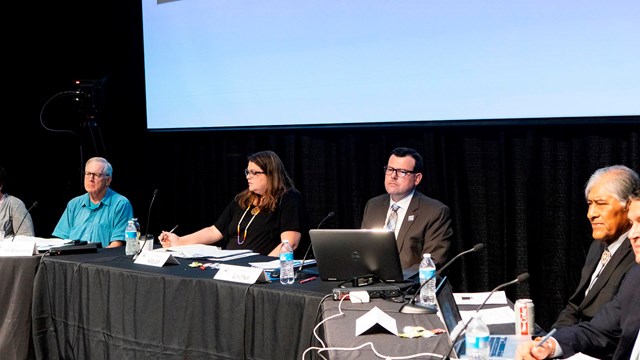
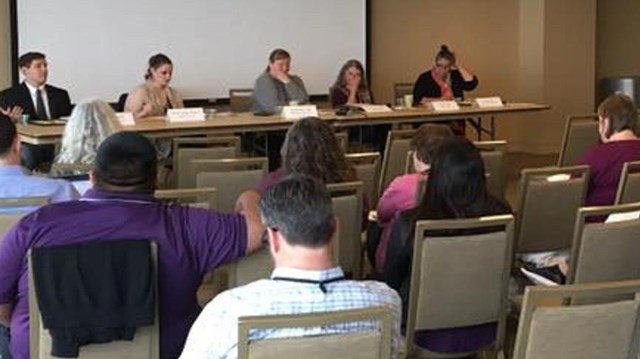
The 24th Meeting of the Review Committee
The
24th meeting of the Native American Graves Protection and
Repatriation Review Committee was called to order by Mr. Armand
Minthorn at 8:30 a.m., Friday, November 8, 2002, in the Walker-
Ames Room, Kane Hall, University of Washington, Seattle, WA.
Review
Committee members in attendance û
Mr. Armand Minthorn, Chair
Mr. Garrick Bailey
Mr. James Bradley
Mr. Lawrence Hart
Ms. Vera Metcalf
Mr. John OÆShea
Ms. Rosita Worl
Designated
Federal Officer in attendance: Mr. John Robbins,
Assistant Director, Cultural Resources, National Park Service,
Washington, DC
National
Park Service staff in attendance û
Ms. Carla Mattix, SolicitorÆs Office, U.S. Department of the
Interior (DOI), Washington, DC
Ms. Martha Graham, Program Officer, National NAGPRA program,
National Park Service, Washington, DC
Mr. Timothy McKeown, Program Officer, National NAGPRA program,
National Park Service, Washington, DC
Ms. Paula Molloy, Program Officer, National NAGPRA program,
National Park Service, Washington, DC
Ms. Cynthia Murdock, Program Officer, National NAGPRA program,
National Park Service, Washington, DC
Ms. Lesa Hagel, Consultant, National NAGPRA program, Rapid City,
SD
Persons
in attendance during part or all of the meeting (names
and affiliations as provided at the meeting by attendees) û
Ms. Helen Almojera, Deming, WA
Mr. Bob Anderson, University of Washington, Seattle, WA
Ms. Lara Anderson, U.S. Army Corps of Engineers, St. Louis, MO
Ms. Lisa Anderson, New York State Museum, Albany, NY
Mr. Herbert Anungazuk, National Park Service, Anchorage, AK
Mr. Roger Anyon, Smithsonian Institution, Tucson, AZ
Ms. Risa Arbolino, Smithsonian Institution, Washington, DC
Ms. Keri Baker, Central Washington University, Ellensburg, WA
Mr. Bill Billeck, Smithsonian Institution, Washington, DC
Mr. Michael Bittner, Odyssey Maritime Discovery Center, Seattle,
WA
Mr. Isaac Blum, Lummi Tribe of the Lummi Reservation, Bellingham,
WA
Ms. Susan Bone, University of Washington, Seattle, WA
Ms. Kristine Bouy, University of Washington, Seattle, WA
Ms. Barbara Brotherton, Seattle Art Museum, Seattle, WA
Ms. Karin Caldwell, Colorado State University, Sparta, WI
Ms. Sandra Carter, University of Washington, Puyallup, WA
Ms. Vicki Cassman, University of Nevada, Las Vegas, NV
Ms. Rosemary Caye, Confederated Salish & Kootenai Tribes, Elmo,
MT
Mr. Bill Chada, Bureau of Reclamation, Grand Island, NE
Ms. Janet Cohen, National Park Service, Anchorage, AK
Mr. Steve Denton, Burke Museum, Seattle, WA
Ms. Sara Doyle, Kirkland, WA
Mr. David Francis, University of Washington Extensions Program,
Seattle, WA
Ms. Adeline Fredin, Confederated Tribes of the Colville
Reservation, Nespelem, WA
Ms. Suzanne Fritch, University of Washington, Seattle, WA
Ms. Myra Giesen, Office of Policy, Bureau of Reclamation,
Lawrence, KS
Ms. Kirstie Haertel, National Park Service, Seattle, WA
Mr. Bill Helmer, Timbisha Shoshone Tribe, Death Valley, CA
Ms. Lourdes Henebry-DeLeon, Central Washington University,
Ellensburg, WA
Mr. Brent Hicks, Confederated Tribes of the Colville Reservation,
Nespelem, WA
Mr. Richard Hitchcock, Phoebe A. Hearst Museum of Anthropology,
Berkeley, CA
Ms. Donna Hogerhuis, Muckleshoot Indian Tribe, Auburn, WA
Mr. Audie Huber, Confederated Tribes of the Umatilla Reservation,
Pendleton, OR
Mr. Michael Johnson, University of Washington, Bellingham, WA
Mr. Roger Kiers, Seattle Public Utilities, Seattle, WA
Ms. Marina King, University of Washington, Seattle, WA
Mr. Keith Kintigh, Society for American Archaeology, Tempe, AZ
Ms. Jerilyn Kovalenko, University of Washington Extensions
Program, Bellevue, WA
Ms. D. Bambi Kraus, National Association of Tribal Historic
Preservation Officers, Washington, DC
Ms. Lee Kreutzer, National Park Service, Torrey, UT
Mr. Peter Laape, Burke Museum, Seattle, WA
Mr. Walt Lara, Jr., Yurok Tribe of the Yurok Reservation,
Klamath, CA
Mr. Russell Leighty, American Museum of Natural History, New
York, NY
Mr. George MacDonald, Burke Museum, Seattle, WA
Ms. Joanne MacDonald, Burke Museum, Seattle, WA
Mr. John H. Madsen, Arizona State Museum, Tucson, AZ
Ms. Meyo Marrufo, Lake County Inter-Tribal NAGPRA Consortium,
Nice, CA
Mr. Augustine McCaffery, The Graduate School, Seattle, WA
Ms. Lynette Miller, Washington State Historical Society, Tacoma,
WA
Mr. Bryan Mitchell, National Park Service, Washington, DC
Ms. Rebekah Monette, Makah Cultural and Research Center, Neah
Bay, WA
Mr. James Nason, Burke Museum, Seattle, WA
Ms. Jodie Nelson, University of Washington Extensions Program,
Seattle, WA
Ms. Nancy Nelson, Ak Chin Indian Community of the Maricopa Indian
Reservation, Maricopa, AZ
Ms. Nancy Odegaard, Arizona State Museum, Tucson, AZ
Mr. Noel D. Orr, Confederated Tribes of the Colville Reservation,
Shoreline, WA
Ms. Patience E. Patterson, U.S. Army Corps of Engineers, Fort
Worth, TX
Ms. Laura Phillips, Burke Museum, Seattle, WA
Ms. Wanda Quitiquit, Robinson Rancheria of Pomo Indians of
California, Nice, CA
Mr. James Riding In, Working Group for the Return of Culturally
Unidentifiable Human Remains, Tempe, AZ
Ms. Mary Rossi, Lummi Tribe of the Lummi Reservation, Bellingham,
WA
Ms. Eliz Scharf, University of Washington, Seattle, WA
Ms. Lene Schumacher, New York, NY
Mr. Joel Schwarz, University of Washington News & Information,
Seattle, WA
Mr. Martin Skrydstrup, Columbia University, New York, NY
Mr. Chuck Smythe, National Park Service, Boston, MA
Mr. Mark Squire, Burke Museum, Seattle, WA
Mr. Kirk Stensvig, Seattle, WA
Ms. Rebecca Tsosie, Arizona State University, Tempe, AZ
Ms. Cathy Van Arsdale, U.S. Army Corps of Engineers, St. Louis,
MO
Mr. Andrew Washburn, University of Washington Extensions
Programs, Tacoma, WA
Ms. Sherry White, Stockbridge-Munsee Community of Mohican Indians
of Wisconsin, Bowler, WI
Mr. Jim Wojtala, U.S. Army Corps of Engineers, Vicksburg, MS
Mr. Frederick York, National Park Service, Seattle, WA
Introduction
Mr.
Minthorn welcomed the Review Committee and members of the
audience and stressed the responsibility of the Review Committee
in implementing NAGPRA. Ms. Worl gave the opening invocation.
Review Committee members and National Park Service staff
introduced themselves. Mr. Robbins expressed appreciation to the
following University of Washington organizations for sponsoring
the Review Committee meeting: American Indian Law Center, Office
of Minority Affairs, American Indian Studies Center, Department
of Anthropology, Graduate School, and the Archaeology Department
of the Burke Museum. Mr. Robbins extended his appreciation to
Mr. James Nason, Museology Program, Burke Museum, for his efforts
in organizing the meeting. Mr. Robbins asked the members of the
audience to register as part of the meeting record.
Review of the Agenda
Mr.
Minthorn reviewed the meeting agenda.
Review of the Tulsa, OK, Review Committee Meeting Minutes
Background.
Federal Advisory Committee Act (FACA) regulations 41
C.F.R. Part 102-3.165: ô(a) . . . The chairperson of each
advisory committee must certify the accuracy of all minutes of
advisory committee meetings,ö and ô(c) The Designated
Federal
Officer (DFO) must ensure that minutes are certified within 90
calendar days of the meeting to which they relate.ö
Topic.
At the Tulsa meeting, the Review Committee agreed to
review the Tulsa meeting minutes electronically and submit any
recommended revisions to the National NAGPRA program. The Tulsa
meeting minutes were certified by the DFO as required by FACA.
Prior to the Seattle meeting, the Tulsa meeting minutes were
signed as approved by the Review Committee chair without review
by the full Review Committee.
Discussion.
Review Committee members expressed concern that they
did not have an opportunity to review the final version of the
minutes prior to the Seattle meeting to ensure that their
revisions were incorporated. Mr. Bradley cited a specific
example of an omission.
Conclusion.
1. The Review Committee requested that members receive the final
version of the minutes two weeks prior to the subsequent
meeting to allow for adequate review.
2. Mr. Bradley requested the following text be added to page 12,
at the end of the second to the last paragraph, ôMr. Bradley
expressed concern that the Committee did not have sufficient
time to review and comment on these draft regulations given
the dispute before the Committee and asked that this be placed
on the agenda for the Seattle meeting.ö Mr. Robbins confirmed
that the text would be added pending verification against the
transcript.
Administration of NAGPRA
Discussion.
1. Mr. Robbins explained that Mr. Robert Stearns, manager of the
National NAGPRA program for the past year and DFO for the
Tulsa meeting, had changed positions. Mr. Stearns is
currently Special Assistant to the National Park ServiceÆs
Deputy Associate Director for Cultural Resources. Mr. Robbins
stated that he is currently the DFO of the Review Committee,
pursuant to the current Review Committee charter. When the
manager position for the National NAGPRA program is filled,
Mr. Robbins will delegate DFO responsibilities to the new
manager.
2. Mr. Robbins stated that Ms. Kate Stevenson will no longer
serve as Associate Director for Cultural Resources, effective
December 2002 or January 2003, and a new Associate Director
will be appointed. Mr. Robbins reviewed the organizational
chart of the National Park Service.
Conclusion.
1. Mr. Bradley stated that the administrative changes appear to
be above the day-to-day functioning of the National NAGPRA
program and implementation of NAGPRA.
2. Ms. Worl expressed concern about instability within the
program caused by senior staffing changes, the need for a
qualified Native American as the National NAGPRA program
manager, and possible conflicts of interest that results from
the location of the National NAGPRA program within the
National Park Service. Ms. Worl urged the National Park
Service to consider appointing Mr. Timothy McKeown as acting
or permanent manager of the National NAGPRA program.
3. Regarding the location of the National NAGPRA program within
the National Park Service, Mr. Robbins stated that the
Department of Interior had recently considered this issue, and
had determined and stated that the National Park Service is
the appropriate agency to administer NAGPRA.
4. Mr. Minthorn stressed the importance of stability within the
National NAGPRA program.
National NAGPRA Reports
Mr.
Robbins reviewed the National NAGPRA reports. The Review
Committee discussed these topics as follows:
NAGPRA
Update: This report provided a summary of the work of the
National NAGPRA program in the period between the Tulsa and
Seattle meetings.
Discussion.
1. Ms. Worl raised the issue of whether a statute of limitations
applies to civil penalties cases. Ms. Mattix stated that the
DOI SolicitorÆs Office is currently reviewing this issue.
Ms.
Worl stated that clarification of this matter should be a
priority due to outstanding cases and asked for an update at
the next Review Committee meeting.
2. Ms. Molloy described the activities of the Department of the
Interior Contaminated Collections Working Group. The group is
utilizing a three-pronged approach to address the issue of
collection contamination --
a. Raise public and professional awareness of the issue,
including discussions of further development of Website
materials and resources;
b. Develop Department of the Interior policies that apply to
all bureaus; and
c. Begin dialogues with other Federal agencies to develop
additional funding sources, specifically aimed at the issue
of testing.
Conclusion.
1. Ms. Worl requested an update on the issue of statute of
limitations for civil penalties cases.
2. The Review Committee identified a need for an increased number
of NAGPRA training seminars offered throughout the United
States. Mr. Robbins stated that the National NAGPRA program
would be open to partnership arrangements on training
seminars, as well as suggestions regarding venues and topics.
3. The Review Committee asked that the National NAGPRA reports be
available to the public. Mr. Robbins stated that the National
NAGPRA program will consider posting the reports on the
National NAGPRA Website.
Status
of Notices: This report provided a summary of all notices
published for the period between the Tulsa and Seattle meetings,
and cumulatively since 1993. The report also summarized the
status of the notice backlog.
Discussion.
Mr. Robbins stated that the overall trend for
notices shows that the percent of backlog notices is decreasing
and the percent of published notices is increasing. Mr. Robbins
explained that on-hold notices are placed on hold at the request
of the institution for a variety of reasons. The on-hold
designation serves the programÆs records management purposes
and
does not relieve the institutions of NAGPRA responsibilities.
Mr. OÆShea stated that in some cases an institution placed
a
notice on hold at the request of an Indian tribe.
Conclusion.
Ms. Worl stated that timeframes for completion
should be developed regarding on-hold notices.
NAGPRA
Grants: This report provided a summary of grant
applications received and awarded for FISCAL YEAR 2002 and
cumulatively for years FISCAL YEAR 1994 through FISCAL YEAR 2002.
Discussion.
Ms. Worl stated that she was concerned that $250,000
of the $2.467 million appropriated for the NAGPRA grants program
was reprogrammed in fiscal year 2002 for administrative costs.
Mr. Robbins explained that grant funds may be reprogrammed as
needed to cover administrative costs and that his goal is to
continuously decrease the reprogrammed amount.
Conclusion.
Ms. Worl recommended trying to reduce the amount of
reprogrammed grant funds.
Status
of NAGPRA Regulations: This report provided a summary of
the status of the five reserved sections of NAGPRA regulations.
Background.
When drafting the statute, Congress assigned
responsibility for promulgating NAGPRA regulations to the
Secretary of the Interior, who delegated drafting responsibility
to the National Park Service. Proposed NAGPRA regulations were
published in the Federal Register in 1993; 43 C.F.R. 10 was
published in 1995, with five reserved sections û
1. Section 10.7. Disposition of unclaimed human remains,
funerary objects, sacred objects, or objects of cultural
patrimony.
2. Section 10.11. Disposition of culturally unidentifiable human
remains.
3. Section 10.12. Civil penalties. (An interim rule was
published in 1997.)
4. Section 10.13. Future applicability.
5. Section 10.15(b). Failure to claim where no repatriation or
disposition has occurred.
Discussion.
Mr. Robbins stated that Section 10.12 and Section
10.13 are under review within the National Park Service and the
Review Committee will be informed of their progress. Section
10.11 was discussed at the Seattle meeting (see below,
ôRegulations û Section 10.11. Disposition of culturally
unidentifiable human remainsö).
Culturally
Unidentifiable Human Remains: This report provided a
summary of the progress of the culturally unidentifiable human
remains database and requests to the Review Committee for
disposition of culturally unidentifiable human remains.
Background.
43 C.F.R. 10.10, Repatriation. ô(g) Culturally
unidentifiable human remains. If the cultural affiliation of
human remains cannot be established pursuant to these
regulations, the human remains must be considered culturally
unidentifiable. Museum and Federal agency officials must report
the inventory information regarding such human remains in their
holdings to the Departmental Consulting Archeologist who will
transmit this information to the Review Committee. The Review
Committee is responsible for compiling an inventory of culturally
unidentifiable human remains in the possession or control of each
museum and Federal agency, and, for recommending to the Secretary
specific actions for disposition of such human remains.ö
Discussion.
Ms. Worl asked for the number of institutions
entered into the database of culturally unidentifiable human
remains to date. Mr. Robbins stated that number is not available
from the current database information, and added that the
National NAGPRA program is working to answer that question.
Ms. Murdock explained that National NAGPRA files contain data
from at least 326 institutions. Data from approximately 40
percent of the institutions have been entered database of
culturally unidentifiable human remains to date. Ms. Murdock
explained that the National NAGPRA program is entering data from
larger, more complete inventories first and then will enter data
from smaller, less complete inventories. Mr. OÆShea stated
that
inventories may seem incomplete when information does not exist
in an institutionÆs records and not because the institution
has
not supplied it. He added he was concerned about the lack of a
systematic approach for choosing inventories for entry. Ms.
Murdock estimated 2-4 years to complete data entry; she continues
to revise this estimate as National NAGPRA program interns enter
data.
Conclusion.
1. Ms. Worl suggested that this topic needs to be analyzed to see
whether the Review Committee and the National NAGPRA program
are being responsive to public concerns regarding the database
and to explore possible ways to expedite the process.
2. The Review Committee asked that the report on the database of
culturally unidentifiable human remains state the number of
museums and Federal agencies that are contained in the
database.
3. The Review Committee stressed that the completion of the
culturally unidentifiable human remains database is a
priority.
Status
of Disputes: This report provides a summary and current
status of all disputes.
Background.
25 U.S.C. 3006, Section 8, ô(c) Responsibilities. û
The [Review Committee] established under subsection a) shall be
responsible for ûà(3) upon the request of any affected
party,
reviewing and making findings related to û (A) the identity
or
cultural affiliation of cultural items, or (B) the return of such
items; (4) facilitating the resolution of any disputes among
Indian tribes, Native Hawaiian organizations, or lineal
descendants and Federal agencies or museums relating to the
return of such items including convening the parties to the
dispute if deemed desirable.ö 43 C.F.R. Section 10.17, ô(b)
Review Committee Role. The Review Committee may facilitate the
informal resolution of disputes relating to these regulations
among interested parties that are not resolved by good faith
negotiationsàö
Discussion.
The Review Committee reviewed the status of the
following disputes û
1. Dispute scheduled for consideration at the Seattle meeting û
CON009 Ho-Chunk Nation and the Field Museum: This dispute was
withdrawn per a November 4, 2002, letter from the Ho-
Chunk Nation Legislature and a November 9, 2002,
Statement of Record from the Field Museum. Copies of
both documents were provided to the Review Committee.
While satisfied with the decision of the Ho-Chunk Nation
Legislature, the Review Committee expressed concern that
no dispute would be heard at the Seattle meeting.
2. Other disputes û
PEN008 Hopi Tribe and U.S. Department of the Interior, National
Park Service, Mesa Verde National Park: The Chair and
the DFO will review this dispute to determine whether it
is appropriate for Review Committee consideration, in
light of the National Park System Advisory BoardÆs report
on determinations of cultural affiliation.
PEN010 American Indian Intertribal Association (AIIA) and
University of Toledo: The Chair and DFO will review this
dispute to determine whether it is appropriate for the
Review CommitteeÆs consideration, in light of the Review
CommitteeÆs discussion of the ôaffected partyö
issue.
PEN011 Narragansett Indian Tribe and Peabody Museum of
Archaeology and Ethnology: The National NAGPRA program
will request information from the parties, as outlined in
the current dispute resolution procedures. Then the
Chair and DFO will review this dispute to determine
whether it is appropriate for the Review CommitteeÆs
consideration.
PEN012 Piro-Manso-Tiwa and U.S. Department of the Interior,
National Park Service, Salinas Pueblo Missions National
Monument: The Chair and DFO will review this dispute to
determine whether it is appropriate for Review Committee
consideration. The dispute involves reburial, which is
not specifically addressed in the dispute resolution
procedures.
PEN013 Sand Creek Massacre DescendantÆs Trust and Cheyenne
Tribal Governments: The Chair and DFO will review this
dispute to determine whether it is appropriate for the
Review CommitteeÆs consideration, in light of the Review
CommitteeÆs discussion of the affected party issue. Mr.
Hart stated that he does not consider the Sand Creek
Massacre DescendantÆs Trust to be an affected party. The
U.S. Department of the Interior, Bureau of Indian Affairs
proposed the dispute, but is not a party to the dispute.
In addition, the dispute involves issues that are not
specifically addressed in the dispute resolution
procedures.
PEN014 Hopi Tribe and U.S. Department of the Interior, National
Park Service, Aztec Ruins National Monument: Previously,
the Chair and DFO determined that this dispute was not
appropriate for the Review CommitteeÆs consideration due
to the issues involved in the dispute. The Hopi Tribe
had asked to appeal the decision to the entire Review
Committee, but the appeal was delayed pending the
National Park System Advisory BoardÆs report on
determinations of cultural affiliation. To date, the
Hopi Tribe has not formally appealed the determination.
FIN015 Western Apache NAGPRA Working Group and Denver Art
Museum: Ms. Graham explained that the Denver Art Museum
and the Western Apache Working Group continue to work
towards fulfilling the Review CommitteeÆs
recommendations. The Denver Art Museum submitted a
September 18, 2002, memorandum with new preliminary
findings of cultural affiliation for two of the objects
that were part of the repatriation request by the Western
Apache NAGPRA Working Group, a cap and a mask. For the
cap, the Denver Art Museum affirmed the Review
CommitteeÆs recommendation. For the mask, the Denver Art
Museum found information that suggested the cultural
affiliation was more likely to be with the Mescalero
Apache Tribe or Fort Sill Apache Tribe. The Mescalero
Apache Tribe has informed the museum that the mask is not
culturally affiliated with the tribe and will not submit
a claim.
PEN016 Royal Hawaiian Academy of Traditional Arts and the Bishop
Museum: The National NAGPRA program is in the process of
requesting information required by the dispute resolution
procedures. Upon receipt of all information, the Chair
and DFO will review this dispute to determine whether it
is appropriate for Review Committee consideration.
PEN017 Narragansett Indian Tribe and the Robert S. Peabody
Museum of Archaeology: The National NAGPRA program has
requested information from both parties. Upon receipt of
all information, the Chair and DFO will review this
dispute to determine whether it is appropriate for Review
Committee consideration.
Conclusion.
1. The goal is to reduce the dispute backlog by considering at
least one dispute per meeting.
2. The Review Committee suggested that the National NAGPRA
program develop a process and a capacity to have materials
regarding disputes queued and available for Review Committee
consideration.
3. The Review Committee requested that dispute materials are
available 1 month minimum prior to a meeting to provide
adequate time for review.
4. The Review Committee requested that review of the dispute
resolution procedures be placed on the agenda for the next
meeting. Possible discussion topics include the number of
disputes to be heard at each meeting and criteria for
prioritizing pending disputes.
Federal
Agency Implementation: This report summarized efforts by
the National NAGPRA program to develop a standardized format for
Federal agency reporting on NAGPRA-related activities and
collections.
Background.
The Archaeological Resources Protection Act (1979)
mandates that Federal agencies complete the annual Federal
Archeology Program Questionnaire, which the National Park
ServiceÆs Archeology and Ethnography program tabulates and
submits as a report to Congress. The National NAGPRA program has
developed a draft pilot Federal agency survey that focuses solely
on NAGPRA issues, which Federal agencies can use voluntarily to
report on NAGPRA activities.
Discussion. Mr. Minthorn expressed concern about the lack of
compliance of Federal agencies. Mr. Bradley agreed and suggested
that the Review Committee use the report to Congress to highlight
this issue.
Public
Access to NAGPRA Information: This report provided a
summary of various ways that the public can access information on
NAGPRA implementation, including the National NAGPRA Website,
http://www.cr.nps.gov/nagpra, and the Native American
Consultation Database,
http://www.cr.nps.gov/nagrpa/NACD/INDEX.HTM.
Discussion.
The Review Committee did not discuss this report
further.
National
NAGPRA FISCAL YEAR 2003 Work Plan: This report provides
a summary of six areas that the National NAGPRA program will
emphasize in FISCAL YEAR 2003: notices, regulations, NAGPRA
Review Committee support, grants, public information
dissemination, and training and technical assistance.
Discussion.
The Review Committee did not discuss this report
further.
Action
List: This report tracks the progress of actions items
requested by the Review Committee.
Discussion.
The Review Committee asked whether a new member
would be appointed to fill Mr. HartÆs position on the Review
Committee by the next meeting. Mr. Robbins stated that a new
member would be appointed by the May 2003 meeting. [Mr. HartÆs
term on the Review Committee expired in September 2001. Per the
Review Committee charter, Mr. Hart may continue to serve until a
successor is appointed or Mr. Hart is reappointed.]
Conclusion.
The National NAGPRA program will update the action
list based on discussions at the Seattle meeting.
Regulations û Section 10.11, Disposition of Culturally
Unidentifiable Human Remains
Public
Presentations
Ms.
Rebecca Tsosie, Arizona State University, described the
components of the grant funded by the National NAGPRA program for
a
dialogue on culturally unidentifiable Native American human
remains, implemented by Ms. Tsosie on behalf of Arizona State
University (ASU) and the Indian Legal Program. The grant funded
two meetings: a tribal forum on November 30, December 1 and 2,
2001, and a conference on June 14, 2002.
The tribal forum convened over 120 participants, and generated a
vision statement and five policy recommendations (discussed by Mr.
Riding In).
The conference convened approximately 20 invited participants
from tribal, museum, and scientific communities. Conference
participants discussed the five policy recommendations developed
during the tribal forum and the proposed rule on culturally
unidentifiable human remains, among other topics. The participants
of the conference agreed on four general propositions û
1. The remains of early peoples of North America are Native
American.
2. The National Park Service should expeditiously complete an
inventory of all culturally unidentifiable human remains.
3. The law requires consultation with Indian tribes, and increased
consultation would result in culturally affiliating many remains
now designated as culturally unidentifiable.
4. The Federal government should provide increased funding for
consultation.
Ms. Tsosie stated that a fair process for the ultimate resolution
of this issue needs to be determined. Ms. Tsosie said that the
regulations should not be drafted without the underlying
information that will come from the completed inventory of all
culturally unidentifiable human remains. Ms. Tsosie described
three collateral issues regarding NAGPRA that deserve attention
û
1. NAGPRA faces many challenges (for example, court decisions in
the
Bonnichsen case).
2. NAGPRA interfaces with existing Indian laws.
3. International cases need to be considered when focussing on
NAGPRA.
Mr.
James Riding In, Working Group for the Return of Culturally
Unidentifiable Human Remains.
The working group consists of grassroots repatriation and
cultural specialists working to protect and repatriate ancestral
human remains.
The working group objects to the draft regulations on culturally
unidentifiable human remains presented at the Review Committee
meeting in Tulsa, OK.
The working group advocates moving NAGPRA oversight from the
National Park Service to the office of the Secretary of the
Interior.
Mr. Riding In summarized the tribal forum held November 30,
December 1 and 2, 2001, at ASU. Forum participants developed the
following ôRecommendations for Disposition of Culturally
Unidentifiable Native American Human Remains under NAGPRAö
û
1. Culturally unidentifiable Native American human remains are
culturally affiliated to contemporary Native peoples, including
federally recognized tribes, nonfederally recognized tribes,
Native Alaskan peoples, and Native Hawaiian peoples.
2. All Native American human remains and associated funerary
objects, including those deemed culturally unidentifiable, shall
be under the ownership and control of contemporary Native
peoples.
3. All culturally unidentifiable Native American human remains shall
be promptly repatriated to Native peoples in accordance with
procedures to be determined by contemporary Native American
groups.
4. All scientific study of culturally unidentifiable Native American
human remains shall immediately cease.
5. The Federal government shall be responsible for funding the
repatriation costs.
The working group requests that the Review Committee û
1. Adopt the five recommendations as part of the policy for
disposition of culturally unidentifiable human remains;
2. Support the removal of NAGPRA oversight from the National Park
Service; and
3. Investigate whether analysis of culturally unidentifiable human
remains is being conducted by any Federal agency or museum
subject to NAGPRA.
Mr.
Keith Kintigh, Society for American Archaeology.
The Society for American Archaeology was involved in the
development of NAGPRA and continues to support NAGPRA.
Mr. Kintigh offered the following comments about NAGPRA and the
draft regulations û
1. NAGPRA does not mandate the return of all Native American human
remains, but contains a principle of balance between scientific
and educational interests and Native American interests.
2. NAGPRA unequivocally provides the right for culturally affiliated
Indian tribes to repatriate their ancestral remains.
3. Congress assigned the Review Committee the task of making
recommendations towards the development of a process for the
disposition of culturally unidentifiable human remains. The law
does not provide the Department of the Interior the authority to
issue regulations on the disposition of culturally unidentifiable
human remains; however, should the Review Committee and the
Department of the Interior proceed with the regulations, SAA will
help make the regulations as effective as possible.
4. For culturally unidentifiable human remains, questions arise
on
the balance of interests and who should receive control of the
human remains. If the human remains are to be transferred to
Native American groups, SAA would argue for thorough scientific
documentation to mitigate the loss of scientific information.
5. The draft regulations include associated funerary objects, which
is not warranted in the law. Institutions should be required to
notify the Department of the Interior only when there is a change
in status of the human remains, such as a disposition.
Aboriginal territory should be defined consistently in the law
and in the proposed regulations. The regulations should clarify
that, while they do not mandate new scientific studies, the study
of culturally unidentifiable human remains is not prohibited.
Mr. Kintigh discussed the June 14, 2002, conference. Mr. Kintigh
stated that Ms. Tsosie did a wonderful job of summarizing the
results of the meeting. Mr. Kintigh discussed the following points
regarding the conference û
1. Individuals have different perspectives on the same topic, as
is
evident in Ms. TsosieÆs report on the conference. The report
was
not reviewed by the representatives of the scientific community
who participated in the conference.
2. Mr. Kintigh pointed out that Ms. Tsosie used a lack of dissent
to
indicate assent on certain points, which was not always accurate
given the structure of the conference. Participants did not
reach formal agreement on the wording of the propositions listed
by Ms. Tsosie in her presentation.
3. Mr. Kintigh noted that Ms. Tsosie referenced difficulty in
getting people to talk and noted a lack of trust among the
participants. He explained the concern that the opportunity to
engage in open dialogue would be limited because tribal
representatives came to the conference having already made key
decisions on the topic.
4. The transcript of the conference has multiple errors and should
be read with caution.
Mr.
Walt Lara, Jr., Yurok Tribe of the Yurok Reservation, stated
that he needed clarification of the term ôculturally
unidentifiable.ö Ms. Mattix read the definition of culturally
unidentifiable human remains from the statute. Mr. Lara stated
that the term culturally unidentifiable does not exist for his
people and expressed frustration that people do not understand
Indian tribesÆ need to return ancestral remains. Mr. Lara
described difficulties that his tribe has faced when dealing with
Sonoma State University regarding culturally unidentifiable human
remains.
Ms.
Bambi Kraus, National Association of Tribal Historic
Preservation Officers, asked how institutions made determinations
of cultural affiliation and if that process changed since NAGPRA
was passed. Mr. Bradley stated that he could not speak on behalf
of all museums; however, every museum known to him follows the law.
Mr. Bradley and Mr. OÆShea suggested that Ms. Kraus read the
Review
CommitteeÆs recommendations on culturally unidentifiable human
remains for clarification of this issue. Ms. Kraus questioned the
value that human remains with flawed records have to museums. Mr.
OÆShea stated that within the principles of agreement, the
Review
Committee agreed that the designation of culturally unidentifiable
is not necessarily permanent and could change with consultation
and
additional information.
Review
Committee Comments on Presentations
The
Review Committee had the following questions and comments
following the public presentations û
1. Ms. Worl stated that she was pleased that the National Park
Service awarded the grant to Arizona State University and the
Indian Legal Program, and noted that the forum convened as
part of the grant work involved broad tribal representation.
Ms. Worl also reported that her review of the record of
comments on the three drafts of the Review CommitteeÆs
recommendations concerning the disposition of culturally
unidentifiable human remains showed that comments were
received from 33 tribes in contrast to 128 comments received
from museums and scientific organizations.
2. Mr. Hart stated that he has felt the alienation of tribal groups
involved with repatriation. Mr. Hart stated that he is dedicated
to ensuring the return of all Native American human remains and
disagrees with the statement in the draft regulations at 10.11
(d)(3), ôA Federal agency or museum may choose to retain
possession or control of culturally unidentifiable human remains
and associated funerary objects.ö
3. Ms. Metcalf agreed with Mr. HartÆs statements and expressed
appreciation for the report presented by Ms. Tsosie.
4. Mr. Bradley stated that he expressed reservations at the
Review CommitteeÆs meeting in Tulsa that the draft proposed
rule did not reflect the principles approved by the Review
Committee at the Juneau meeting, and that he did not feel that
the Review Committee gave complete approval of the draft
proposed rule at the Tulsa meeting.
5. Mr. Bailey stated he was concerned about the lack of inclusion
of nonfederally recognized Indian groups in this process.
6. Mr. OÆShea stated that he had participated in the June
14, 2002,
conference. Mr. OÆShea stated that his impression at the
symposium was that the discussions were back to the all-or-
nothing, whoÆs-going-to-prevail attitude of the early 1990s,
which is not how he perceives that the spirit of NAGPRA has
evolved. Mr. OÆShea added that the working groupÆs
recommendations were presented as a final document and not as
discussion points. Mr. OÆShea asked the Review Committee to
consider two issues: first, that the status of culturally
unidentifiable is transient rather than permanent, and second,
that as consultation continues culturally unidentifiable human
remains can be affiliated.
7. Ms. Worl asked specific questions of Mr. Kintigh and Ms. Tsosie
regarding their understanding of and suggestions for possible
consultation processes for this issue. Mr. Kintigh stated that
he agreed that consultation should begin when an Indian tribe
files a request for repatriation of culturally unidentifiable
human remains and then a more broad consultation process should
proceed based on the merits of the request. Ms. Tsosie stated
that the participants of the forum and conference, especially the
Native participants, felt that Native people should be consulted
in developing the inventory of all culturally unidentifiable
human remains.
Discussion
of Section 10.11, Disposition of Culturally
Unidentifiable Human Remains
Background.
Per a presentation by Mr. McKeown û
1. The Review Committee developed a set of recommendations regarding
the disposition of culturally unidentifiable human remains that
was published in the Federal Register on June 8, 2000.
2. A draft proposed rule for Section 10.11 was developed, dated
May
6, 2002, for the Review CommitteeÆs consideration at the Tulsa
meeting.
3. Recent National NAGPRA program activity on Section 10.11 includes
correspondence received since the Tulsa meeting and a symposia
report from the two conferences held at Arizona State University
on November 30 through December 2, 2001, and June 14, 2002.
4. This section of the regulations continues to be discussed as
a
draft and is not ready to be published as a notice of proposed
rulemaking.
5. Prior to the Seattle meeting, discussions between Mr. Stearns,
then DFO, and Mr. Minthorn, Chair, resulted in the regulationsÆ
being brought before the Review Committee at the Seattle meeting
for additional consideration instead of being published in the
Federal Register as a notice of proposed rulemaking.
Mr. Minthorn stated that the decision was made due to tribal
criticism and displeasure with the draft regulations.
Discussion.
Mr. McKeown explained that the draft proposed rule
provided to the Review Committee members and public at the
Seattle meeting was exactly the same as the draft proposed rule
provided at the Tulsa meeting. Mr. McKeown summarized the
changes proposed by the Review Committee during the Tulsa
meeting.
1. Subsection (b): A general recommendation that ôxxxö
would be
12 months.
2. Subsection (c)(1) û
a. Replace ôUpon receipt of a request forö with ôPrior
to any
agreement regarding the.ö
b. Delete ôfrom an Indian tribe or Native Hawaiian
organization.ö
c. Replace ôthe museum and Federal agencyö with ôthe
museum or
Federal agency.ö
3. Subsection (c)(2): Delete entirely.
4. Subsection (d): A discussion regarding the applicability of
the phrase ôwith priority given in the order listed.ö
5. Subsection (d)(1)(ii): Replace ôthe Indian tribe that is
recognizedö with ôthe Indian tribe or tribes that are
recognized.ö
6. Subsection (d)(1)(iii): Replace ôthe Indian tribes and
Native
Hawaiian organizationsö with ôthe individual or consortium
of
Indian tribes or Native Hawaiian organizations.ö
7. Subsection (e)(2): Delete and replace with ôWithin 30 days
of
transferring possession or control of culturally
unidentifiable human remains and associated funerary objects
pursuant to subsection (d)(1) or (d)(2), the museum or Federal
agency must notify the Manager, National NAGPRA program.
Within 30 days of receipt of such notification, the Manager,
National NAGPRA program, must revise the list of culturally
unidentifiable human remains and associated funerary objects
and make the revised list of culturally unidentifiable human
remains and associated funerary objects accessible to Indian
tribes, Native Hawaiian organizations, nonfederally recognized
Indian groups, museums, and Federal agencies.ö
8. 43 C.F.R. 10.9 (e)(6): Replace ôthe first sentence,ö
with
ôthe second sentence.ö
Review
CommitteeÆs plan of action: The Review Committee
expressed concern about contrasting views regarding the draft
regulations and the need to get additional feedback from the
public. After discussion, the Review Committee agreed to discuss
the draft regulations, address concerns of Review Committee
members with edits to the document, and distribute the document
as a draft proposed rule. This process would allow for
additional public review and comment, which the Review Committee
could consider in further discussions before the regulations are
published as a notice of proposed rulemaking.
The
Review Committee discussed the following changes to the
proposed rule û
1. Preamble: Ms. Worl requested wording in the preamble that
acknowledges the Native belief that all Native American human
remains are culturally affiliated to contemporary Native
peoples. Ms. Worl requested an addition to the preamble that
explained that consultation has occurred for culturally
unidentifiable human remains during the initial inventory
process required under 25 U.S.C. 3003, Section 5.
2. Subsection (b)(1) û
a. Replace ôlistö with another title such as ôReview
Committee
inventoryö or ôcomprehensive inventory.ö
b. Add a sentence that details all data fields that are to be
included in the database. The Review Committee suggested
publishing an interim inventory with the proposed rule.
Mr. Robbins stated that the National NAGPRA program would
first need to develop a methodology for ensuring that
inventories have been entered in a systematic, consistent
format.
3. Subsection (c)(1)(ii): Add ôandö after the semicolon.
4. Subsection (c)(1)(iii): Mr. OÆShea stated that the term
ôcultural relationshipö is ambiguous and suggested that
the
term be defined or replaced. Mr. McKeown said that the term
comes from Section 3 of the regulations and would need to be
defined in the definitions section of the regulations.
5. Subsection (c)(2): Delete entirely.
6. Subsection (d)(1): Change to ôA Federal agency or museum
must
offer to transfer control of culturally unidentifiable human
remains for which it cannot prove right of possession, with
priority given in the order listed.ö
7. Subsection (d)(2): Edit the beginning of the sentence, ôIf
none of the Indian tribes or Native Hawaiian organizations
identified in subsection (d)(1) agrees to accept the transfer,
the Federal agency àö
8. Subsection (d)(3): Change sentence to ôA Federal agency
or
museum may choose to retain possession or control of funerary
objects that are associated with culturally unidentifiable
human remains.ö
9. Subsection (d): The Review Committee had a detailed
discussion about this section. While all concerns were not
addressed in the revised language, the Review Committee
decided to retain this language during the public review and
comment period with the understanding that additional
discussion can occur at a future date.
10. Subsection (f): Mr. McKeown pointed out that the Review
CommitteeÆs discussions regarding affected party, during which
the Review Committee recommended that nonfederally recognized
Indian groups not be included as part of disputes, could have
implications for this section.
Conclusion.
1. The Review Committee requested that Mr. McKeown make the
changes recommended by the Review Committee and then
distribute the draft proposed rule to museums, Federal
agencies, Indian tribes, Native Hawaiian organizations, and
interested members of the public, and on the National NAGPRA
Website. Ms. Mattix stated that the proposed rule must be
reviewed within the Department of the Interior prior to any
distribution.
2. Ms. Worl suggested that some consultation requirements be
added, using a Department of Justice initiative as a model.
3. The Review Committee requested a copy of the current version
of the database of culturally unidentifiable human remains at
the next meeting.
Federal Agency Implementation
Federal
agency implementation survey
Topic.
Ms. Molloy introduced the topic. In an effort to improve
Federal agency reporting, the National NAGPRA program hosted a
meeting with Federal agency, tribal, and museum representatives
in July 2002 in Albuquerque, NM. Discussions focussed on a draft
document aimed at providing a consistent format for Federal
agencies to report to the Review Committee on NAGPRA
implementation and compliance. Three Federal agencies agreed to
participate in the pilot reporting -- the Bureau of Indian
Affairs, the Forest Service, and the Corps of Engineers,
Vicksburg District and Fort Worth District. The Review Committee
was provided copies of the pilot reports for the Bureau of Indian
Affairs and the Forest Service. Before being implemented on a
nationwide basis, the survey would undergo full interagency
review and comment.
Mr. Frank Wozniak commented on behalf of U.S. Department of
Agriculture, Forest Service. The Forest Service found the pilot
survey to be a useful exercise in clarifying several NAGPRA
matters and providing information to the Review Committee on
Forest Service implementation and compliance. The pilot survey
brought to light discrepancies between the Forest ServiceÆs
internal records regarding NAGPRA compliance and the records
maintained by the National NAGPRA program. In addition, the
pilot survey aided in clarifying that some Forest Service units
did not submit inventories or summaries due to the lack of
collections that fall under NAGPRA. The law does not require
Federal agencies or museums to file statements of no collection
or inventory. Mr. Wozniak stated that the Forest Service is
working with the National NAGPRA program to update information
pertaining to the Forest Service. Mr. Wozniak summarized the
Forest ServiceÆs compliance and implementation efforts and
urged
the Review Committee members to review the Forest ServiceÆs
pilot
survey report.
Discussion.
In response to a question by Mr. OÆShea regarding
developing a template for reporting culturally unidentifiable
collections for entry into the database, Mr. Wozniak stated that
the Forest ServiceÆs Southwestern Region uses a template for
reporting culturally unidentifiable human remains. Ms. Worl
asked if the Forest Service had an agencywide policy for reburial
on Forest Service lands. Mr. Wozniak stated that the Forest
Service is developing a systemwide policy on reburial, which is
undergoing internal review. To date, a number of reburials have
occurred on Forest Service lands.
Ms. Worl described three topics she would like added to the
Federal agency implementation survey: 1) Federal agency NAGPRA
budgets; 2) the status of Federal agency NAGPRA collections in
nonfederal repositories and repositories outside of the United
States; and 3) the Federal agency reburial policies.
Ms. Molloy explained that a question regarding Federal agency
NAGPRA budgets had been in an earlier draft of the survey, but
was removed in response to input from Federal agency
representatives that budget information probably would not be
supplied due to the voluntary nature of the survey. Ms. Molloy
stated that Ms. WorlÆs other topics would be considered in
revising the survey.
Other
Federal agency reports
Department
of the Interior, Bureau of Land Management: Written
report provided.
Department
of the Interior, Bureau of Reclamation: Ms. Myra
Giesen presented an update on the status of Bureau of
ReclamationÆs national NAGPRA implementation and compliance
efforts, which was also provided in a written report. Ms. Giesen
commented on the Federal agency pilot survey and urged that the
survey be reviewed at a national level by Federal agencies and by
the Review Committee to ensure that the Federal agencies would be
comfortable with and utilize the survey. Ms. Giesen commented
that the perceived lack of Federal agency reporting leads to
generalizations about lack of compliance by Federal agencies,
when in fact some Federal agencies report fully and regularly.
On behalf of Ms. Lynne MacDonald, Ms. Giesen summarized the
status of Bureau of Reclamation, Pacific Northwest RegionÆs
NAGPRA implementation and compliance efforts. Ms. Giesen urged
the Review Committee to review the written report submitted by
Ms. MacDonald. Mr. Minthorn and Mr. Hart commended Ms. Giesen
and the Bureau of Reclamation on the agencyÆs NAGPRA compliance
record and the agencyÆs consistency in reporting to the Review
Committee.
Disputes
National
Park System Advisory Board Report
Background.
In July 2000, then National Park Service Director
Robert Stanton requested that the National Park System Advisory
Board undertake a Servicewide review of how the National Park
Service makes determinations of cultural affiliation of human
remains and associated funerary objects under NAGPRA. The
request was prompted, in part, by concerns raised by the Hopi
Tribe and the NAGPRA Review Committee regarding cultural
affiliation determinations by the National Park Service.
Topic.
Mr. Robbins presented a summary of the final report by
the National Park System Advisory Board, which was provided to
the Review Committee. The report focused on how the National
Park Service makes determinations of cultural affiliation for
National Park Service collections subject to NAGPRA, and included
the following recommendations û
1. Traditional association and cultural affiliation: The
National Park ServiceÆs NAGPRA Handbook should incorporate
further guidance to clarify the meaning and use of ôcultural
affiliationö as defined in NAGPRA and ôtraditionally
associated peopleö as defined in the National Park Service
Management Policies 2001.
2. Consultation: In many cases, the National Park Service has
been responsive to requests for consultation regarding
cultural affiliation on a individual tribal basis. Further
guidance is needed, however, to ensure that the National Park
Service understands the importance of, and is responsive to,
requests for individual tribal consultation, and that the
National Park Service offers such opportunities whenever
appropriate.
3. Determining cultural affiliation: The National Park Service
should strive to make the most precise determinations of
cultural affiliation possible regarding each cultural item in
a parkÆs collections, and further guidance in the NAGPRA
Handbook on this topic is needed
4. Technical improvements in Notices of Inventory Completion:
Notices should consistently reflect each Native American
groupÆs status in the repatriation process, specifically
noting if there are agreements among groups regarding which
group will lead in a repatriation, which groups, if any, have
elected to withdraw from a repatriation, and other pertinent
information. Further guidance in the NAGPRA Handbook on this
topic is needed.
5. Further public participation: Further discussions with Native
Americans and others affected by NAGPRA should be included as
the National Park Service develops the recommended guidance.
Discussion.
1. Mr. Robbins stated that the report by the subcommittee of the
National Park System Advisory Board was accepted by the
National Park System Advisory Board and submitted to the
Director, National Park Service, who referred the report to
the Associate Director for Cultural Resources, who referred
the report to the Assistant Director for Cultural Resources,
Mr. Robbins, who was instructed to effect the reportÆs
recommendations. Mr. Robbins referred the report to Mr. Frank
McManamon, Manager of the National Park ServiceÆs Archeology
and Ethnography program and responsible for Park NAGPRA in the
Washington office, to developing a plan for effecting the
reportÆs recommendations.
2. Ms. Worl stated that the report does not clearly define
cultural affiliation. The report states that cultural
affiliation refers to a relationship to cultural items,
without including reference to earlier identifiable groups.
Conclusion.
1. Ms. Worl asked that her request for clarification of the
definition of cultural affiliation be noted to the National Park
Service.
2. Mr. Bradley asked that the Review Committee be updated on the
implications of the report in terms of the Hopi Tribe-Chaco
Culture National Historical Park dispute and the pending
disputes between the Hopi Tribe and Mesa Verde National Park
and Aztec Ruins National Monument.
Discussion
of Affected Party
Background.
For pertinent citing in the statute and regulations,
see below, ôNational NAGPRA Reports, Status of Disputes,
Background.ö Ms. Mattix explained that neither the statute
nor
the regulations clearly state the meaning of affected party, and
the preamble to the regulations does not provide additional
information about the terms ôaffected party/iesö or ôinterested
party/ies.ö
Topic.
Ms. Mattix introduced the topic of the definition of
affected party. Ms. Mattix and Mr. Robbins asked the Review
Committee to develop reasonable guidance about who could be
considered an affected party for the purposes of the dispute
resolution procedures.
Discussion.
The Review Committee clarified that the National
NAGPRA program reviews inquiries about disputes on an ongoing
basis. The Chair and DFO determine who is an affected party as
part of determining which proposed disputes are appropriate for
the Review CommitteeÆs consideration. The Review Committee
distinguished between the broad category of interested party and
the more narrow category of affected party. An affected party
can receive a remedy under NAGPRA. Affected parties include
those listed specifically in the statute û lineal descendants,
Indian tribes, Native Hawaiian organizations, museums, and
Federal agencies û and groups of those entities. Groups must
demonstrate that they represent each individual entity within the
group for purposes of the dispute. An agent may represent an
affected party or parties but an agent is not considered an
affected party. If the Chair and DFO decline consideration of a
proposed dispute because they determine that the proposer is not
an affected party, the proposer may use the appeal process in the
dispute resolution procedures to present a case to the Review
Committee for consideration as an affected party.
Conclusion.
The National NAGPRA program will draft language for
the Review CommitteeÆs dispute resolution procedures for
consideration by the Review Committee.
Report to Congress
Background.
25 U.S.C. 3006, Section 8 (h), requires û ôAnnual
Report û The committee established under subsection (a) shall
submit an annual report to the Congress on the progress made, and
any barriers encountered, in implementing this section during the
previous year.ö
Topic.
Review Committee members prepared a draft 1999-2001
Report to Congress for consideration of the full committee at
this meeting.
Discussion.
The Review Committee discussed the report in depth,
made changes with the approval of all members, and approved a
final version to be submitted as Review CommitteeÆs report
to
Congress. The following significant issues were discussed and
changes were made accordingly û
1. Introduction: Ms. Worl suggested that less emphasis be placed
on the advisory role of the Review Committee and suggested
wording that highlighted their statutory responsibilities.
2. Section 3, Recommendations on the disposition of culturally
unidentifiable human remains: Ms. Worl pointed out that three
versions of the draft recommendations had been published, not
two versions. The Review Committee agreed to include a
statement that public comment on the first recommendations was
taken into account when reviewing the draft recommendations at
the Review CommitteeÆs meeting in Portland, OR.
3. Dispute resolution: In the first paragraph, Ms. Mattix
suggested dropping any reference to formal or informal
mediation; under the regulations all actions by the Review
Committee are informal because formal mediation is the
judicial process. Mr. Bailey suggested noting for the Fallon
Paiute-Shoshone Tribe and Bureau of Land Management dispute
that the Bureau of Land Management did not attend. Ms. Worl
stated that lack of consensus does not necessarily result in a
lack of credibility, as stated in the last paragraph on page
6. After discussion, the Review Committee agreed to wording
on page 6 that incorporates both of these viewpoints.
4. Implementation issues: The Review Committee rearranged the
implementation issues in priority order. Under
ôReorganization of the NAGPRA program,ö Ms. Worl suggested
adding a statement about concern over the perception of
conflict of interest and relocation of the NAGPRA program
within the Department of the Interior.
5. Recommendations: The Review Committee evaluated the
recommendations to ensure that each recommendation was
appropriate for Congress, which reduced the number of
recommendations to four. Ms. Worl suggested adding a
recommendation to amend the statute to extend NAGPRA to
nonfederally recognized tribes. After discussion, the Review
Committee agreed to postpone that recommendation for a
subsequent report.
Conclusion.
The Review Committee asked the National NAGPRA
program to prepare the final version of the report to Congress
and to distribute the final version electronically to the Review
Committee for confirmation prior to printing. Only technical
corrections are allowed during this final review.
Update on Kennewick Case
Background.
Bonnichsen, et al. v. the United States, often
referred to as the ôKennewick case,ö was filed in 1996.
The
plaintiffs sought access to study human remains found in the
Columbia River near Kennewick, WA, and sought review of the U.S.
Army Corps of EngineersÆ determination that the human remains
were affiliated with several local tribes. The case was briefed
in spring of 2001 and a hearing was held in June 2001. U.S.
Magistrate Judge John Jelderks issued his opinion and order on
August 30, 2002.
Topic.
Ms. Mattix summarized the status of the Kennewick case.
The main issues in this case concern determinations by the
Department of the Interior and the U.S. Army Corps of Engineers
that the human remains were Native American, subject to
repatriation under NAGPRA, and culturally affiliated to five
tribal claimants making a coalition claim for the human remains.
Discussion. Ms. Mattix summarized portions of Judge JelderksÆ
opinion and order related to NAGPRA, including the finding that
the Kennewick remains are not Native American as defined by
NAGPRA, and that there was not sufficient evidence to make a
finding of cultural affiliation. Ms. Mattix stated that Judge
Jelderks cited unfairness in the process used in making
determinations as the judgeÆs basis for fashioning his own
remedy
rather than remanding the action back to the agency. Judge
Jelderks ordered that the plaintiffsÆ request for access to
study
the remains be allowed, and ordered that the plaintiffs must
submit a study protocol within 45 days of the decision and that
the United States had 45 days to respond to the protocol. Ms.
Mattix stated that the United States has to determine whether it
will appeal the entire decision or a portion or portions of the
decision. A protective notice of appeal was filed on October 28,
2002, and the United States has 60 days from that date to file a
notice of appeal. The United States is currently preparing a
response to the plaintiffsÆ study protocol, due November 25,
2002. The SolicitorÆs Office and the Office of the Secretary
have not taken a formal position on the impact of this opinion on
NAGPRA, as they are currently studying the possibility of appeal.
Conclusion.
In response to a question by Mr. Bradley, Ms. Mattix
stated that this decision does not impede the functioning of the
NAGPRA Review Committee, although the final outcome of the case
might affect the issue of regional consortia dealing with
culturally unidentifiable human remains.
Review Committee Business
Upcoming
Review Committee meetings
1.
May 9-11, 2003, St Paul, MN. Agenda items for this meeting
include dispute resolution procedures, timetable for dispute
resolution, regulations on culturally unidentifiable human
remains, Federal agency reports, 2002 Report to Congress,
consultation, governance, and consideration of a dispute.
2. November 2003, Albuquerque, NM
Review
Committee Governance
Ms.
Graham stated that the National NAGPRA program developed the
Review Committee Governance outline to help the Review Committee
address topics that have been raised in the past related to the
CommitteeÆs operation. Mr. Minthorn stated that the Review
Committee has functioned without this guidance to date and can
continue. Further consideration of governance was postponed to
the Minneapolis/St Paul meeting.
Public Comment
Mr.
Richard Hitchcock, NAGPRA coordinator, Phoebe A. Hearst Museum
of Anthropology, University of California, Berkeley, CA, announced
the appointment of the first full-time director for the museum,
Dr.
Douglas Sharon.
Mr.
Keith Kintigh, Society for American Archaeology, commented
positively on the results of the National Park System Advisory
Report and thanked the Review Committee for its work.
Ms.
Bambi Kraus, National Association of Tribal Historic
Preservation Officers, asked for details of National NAGPRA program
staffing, which Mr. Robbins provided. Ms. Kraus expressed concern
that the staff of the National NAGPRA program consists of many
senior archeologists and no Native Americans. Ms. Kraus stated
that in the Departmental Manual, NAGPRA is administered by the
Archeology and Ethnography program. Mr. Robbins explained that
since 1999, National NAGPRA is separate from Park NAGPRA, with
National NAGPRA administered as a program of the National Center
for Cultural Resources and Park NAGPRA administered within the
Archeology and Ethnography program of the National Center for
Cultural Resources. Ms. Kraus stated that the current staffing of
the National NAGPRA program and the cooperative agreement between
the Society for American Archaeology and the National Park Service
create a conflict of interest. Mr. Robbins stated that while the
National Park Service has many cooperative agreements, the National
NAGPRA program is not directly responsible for any cooperative
agreements.
Mr.
James Nason, University of Washington and Burke Museum, stated
that the funding need for mitigation of contaminated collections
is
going to be substantial based on preliminary results of
contamination research at the Burke Museum. Mr. Nason urged the
Review Committee to take any action possible to help secure funding
to address this issue. Mr. Nason stated that there is an increased
need for NAGPRA workshops due to the large turnover in NAGPRA
representation.
Meeting Adjournment
The
meeting adjourned at 5:15 p.m. on Saturday, November 9, 2002.
Certified
û
/s/
Mr. John Robbins, Date February 10, 2003
Assistant Director, Cultural Resources
Designated Federal Officer, Native American Graves Protection
and Repatriation Review Committee
Approved on behalf of the Review Committee û
/s/
Mr. Armand Minthorn Date February 11, 2003
Chair, Native American Graves Protection
and Repatriation Review Committee
NAGPRA REVIEW COMMITTEE MEETING MINUTES
November 8 and 9, 2002; page 6
|
|