Introductory title image for the National Park Service, U.S. Department of Interior and the National Center for Cultural Resources to include the official arrowhead of the National Park ServiceImage of the official National Park Service arrowhead and a link to ParkNet The National NAGPRA title image on a green background with an historic image of native baskets next to water and reed-type river grass - image by Edward S. Curtis, courtesy of NPS Resources for navigation image bar including tribes, museums, agencies, public and press linksimage for tribes linkimage for museums linkimage for agencies linkimage for public linkimage for press link

Native American Graves Protection and

Repatriation Review Committee

Meeting Minutes


Sixth Meeting


MINUTES
NATIVE AMERICAN GRAVES PROTECTION AND REPATRIATION
REVIEW COMMITTEE
SIXTH MEETING: JANUARY 23-25, 1994
PHOENIX, ARIZONA

The sixth meeting of the Native American Graves Protection and
Repatriation Review Committee was called to order at 9:00 a.m., Sunday,
January 23, 1994, by Ms. Tessie Naranjo, committee chair. The committee
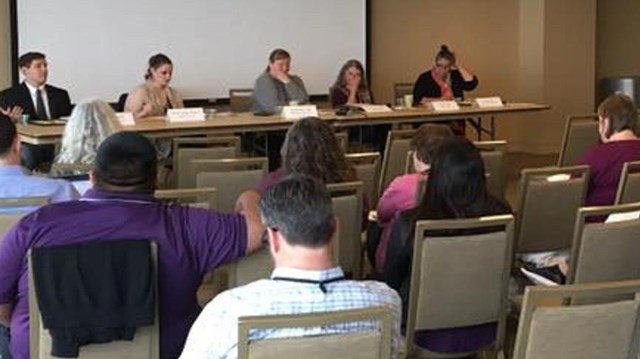
meeting was held at the Heard Museum, Phoenix, AZ. The following
committee members, staff, and others were in attendance:

Members of the committee:
Ms. Rachel Craig
Mr. Jonathan Haas
Mr. Dan Monroe
Ms. Tessie Naranjo, chair
Mr. Martin Sullivan
Mr. William Tallbull
Mr. Philip Walker

National Park Service staff present:
Mr. Francis McManamon, Departmental Consulting Archeologist,
Washington, D.C.
Mr. C. Timothy McKeown, NAGPRA Program Leader, Washington, D.C.
Mr. Hugh (Sam) Ball, Archeologist, Washington, D.C.

The following others were in attendance during some or all of the
proceedings:
Mr. Cecil Anton, Gila River Indian Community, Sacaton, AZ
Ms. Donna Augustine, representing Aroostook Band of Micmac Indians,
ME
Mr. Kevin Barlow, Micmac Tribe, Canada
Mr. Richard M. Begay, Navajo Nation, Window Rock, AZ
Ms. Jan Bell, Arizona State Museum, University of Arizona, Tucson,
AZ
Mr. Elgin CrowsBreast, Three Affiliated Tribes, Newtown, ND
Mr. Fred Fest, Peabody Western, Flagstaff, AZ
Mr. Manson Garreaux, Eagle Butte, SD
Mr. David Gillio, US Forest Service, Albuquerque, NM
Mr. Cedric Goodhouse, Standing Rock Sioux Tribe, Fort Yates, ND
Mr. Terry Gray, Rosebud Sioux Tribe, SD
Ms. Sherry Hutt, Phoenix, AZ
Mr. Michael Jardreau, Lower Brule Sioux Tribe, Lower Brule, SD
Mr. Leigh Jenkins, Hopi Tribe, Kykotsmovi, AZ
Mr. Keith Kintigh, Arizona State University, Tempe, AZ
Mr. Sebastian LeBeau, Cheyenne River Sioux Tribe, SD
Ms. Shereen Lerner, Mesa Community College, Mesa, AZ
Mr. John Lewis, Intertribal Council of Arizona, Phoenix, AZ
Mr. Tom Lincoln, Bureau of Reclaimation, Phoenix, AZ
Mr. Owen Lindauer, Arizona State University, Phoenix, AZ
Mr. Paul Little, North Dakota Intertribal Reinterment Committee,
Devil's Lake Sioux Tribe, ND
Mr. Ronald Little Owl, North Dakota Intertribal Reinterment
Committee, Three Affiliated Tribes, ND
Ms. Gloria Lomahaftewa, Heard Museum, Phoenix, AZ
Mr. Ruben McCloskey, United Sioux Tribes, Pierre, SD
Mr. Tim Mentz, Sr., Standing Rock Sioux Tribe, Fort Yates, ND
Ms. Alida Montiel, Intertribal Council of Arizona, Phoenix, AZ
Mr. Jerry Nagel, Three Affiliated Tribes, ND
Ms. Oelomi Nagel, Three Affiliated Tribes, ND
Mr. Darrell Newell, Passamaquoddy Tribe, Princeton, ME
Mr. John Ravesloot, Gila River Indian Community, Sacaton, AZ
Mr. Rick Red Eagle, Phoenix, AZ
Mr. Charles Redman, Arizona State University, Tempe, AZ
Mr. Ken Sayers, North Dakota Intertribal Reinterment Committee,
Turtle Mountain Band of Chippewa, ND
Mr. Clarence Sky, United Sioux Tribes, Pierre, SD
Mr. David Smith, Winnebago Tribe of Nebraska, Winnebago, NE
Ms. Yolanda Hart Stevens, Gila River Indian Community, AZ
Ms. Connie Stone, Bureau of Land Management, AZ
Mr. Gary Stumpf, Bureau of Land Management, AZ
Mr. Raymond Thompson, Arizona State Museum, University of Arizona,
Tucson, AZ
Mr. Carey Vicenti, Jicarilla Apache Tribe, NM
Mr. Peter Welsh, Arizona State University, Tempe, AZ
Mr. Frank E. Wozniek, US Forest Service, Albuquerque, NM
Mr. Alfred Yazzie, Navajo Nation, AZ
Ms. Pemina Yellow Bird, North Dakota Intertribal Reinterment
Committee, Three Affiliated Tribes, ND

The committee and National Park Service staff introduced themselves. Ms.
Naranjo confirmed there was a quorum present. Mr. Francis P. McManamon
advised the committee that notice of the meeting had been published in
the Federal Register as required under the Administrative Procedures
Act. Ms. Naranjo then asked Mr. William Tallbull to offer an
invocation. Mr. Martin Sullivan introduced Mr. John Lewis of the
Intertribal Council of Arizona and thanked him and his organization for
cosponsoring the meeting with the Heard Museum.

Review of the Agenda

Mr. Mcmanamon reviewed the meeting agenda. Major items included: 1)
election of a committee Chair for 1994: 2) review of implementation
activities; 3) discussion of regulation sections previously reserved for
civil penalties and sample draft inventory; 4) review of the committee's
dispute resolution procedures; 5) discussion of regulation sections
previously reserved for the disposition of culturally unidentifiable
human remains in museum and Federal agency collections, disposition of
unclaimed human remains and cultural items excavated or discovered on
Federal or tribal lands, and future applicability of statute.

Chair Election

Mr. Sullivan nominated Ms. Naranjo to serve as Chair for 1994. There
was unanimous consent to retain Ms. Naranjo as committee Chair for 1994.

Implementation Update

Mr. Mcmanamon presented information regarding the current status of
efforts to implement the statute. The statute required Federal agencies
and museums that receive Federal funds to complete summaries of their
collections that might contain unassociated funerary objects, sacred
objects, and objects of cultural patrimony by November 16, 1993. These
summaries were to be sent to culturally affiliated Indian tribes, Alaska
Native villages and corporations, and Native Hawaiian organizations,
with copies to the Archeological Assistance Division (AAD). Mr.
McManamon reported that AAD had thus far received copies of summaries
from over 500 Federal agencies and museums, and provided the committee
members with a listing of those institutions.

After reviewing the list of institutions that had sent copies of
summaries to AAD, Mr. Walker expressed his concern that some Federal
agencies and museums that he believed currently held unassociated
funerary objects, sacred objects, and objects of cultural patrimony were
not on the list. Mr. Haas was particularly concerned that very few
university departments of anthropology had submitted summaries. Mr.
Sullivan and Mr. Haas also noted that some Federal agencies appeared to
be missing. Mr. McManamon explained that each Federal agency had
developed its own approach to completing the summaries. Some, like the
National Park Service and the Bureau of Reclamation, submitted one
summary of its whole collection. Others, such as the Department of
Energy, had delegated reporting responsibilities down to individual
field offices. Mr. McKeown explained that some museums and Federal
agencies may not have realized that they needed to send copies of their
summaries to AAD. Mr. McManamon suggested that national museum
organizations such as the American Association of Museums might be able
to provide some assistance in identifying museums that have thus far not
sent out summaries. Mr. Monroe suggested placing reminder notices in
museum professional publications. Mr. Walker suggested asking Indian
tribes to identify museums and Federal agencies that they believe have
unassociated funerary objects, sacred objects, and objects of cultural
patrimony but from which they have not received summaries. Mr. McManamon
noted that many Indian tribes have yet to complete their review of all
the summaries. Mr. Tallbull explained that the Northern Cheyenne Tribe
is having difficulty reviewing all the summaries and setting priorities
regarding follow up. Ms. Naranjo reported that some museums in New
Mexico were concerned about making particularly sensitive information in
their summaries part of the public record and had thus not submitted
copies to AAD. Mr. McKeown said that many Indian tribe representatives
had expressed interest in having access to the summary information and
that AAD hoped to make available a computerized cross-reference of all
Federal agencies and museum sending summaries and all Indian tribes
receiving summaries. No summary text will appear in that database.

Mr. McManamon reported that Congress had appropriated $2.3 million for
grants to assist museums and Indian tribes in implementing the statute.
Grant guidelines have been prepared and distributed to all 759 Federally
recognized Indian tribes, Alaska Native villages and corporations, and
Native Hawaiian organizations and to nearly 500 museums that had
submitted copies of their summaries to the AAD. Federal agencies are not
eligible for grants. Deadlines for grant applications are in March,
1994. Mr. McManamon stated that he expected grants administration to
become an increasing work load for the AAD staff. Mr. McManamon also
reported that AAD had recommended that the grant budget be increased to
$10 million in FY 1995 but that the final determination within the
administration had not been made.

Mr. McManamon reported that AAD's outreach activities were increasing. A
separate NAGPRA module has been established as part of the National
Archeological Data Base (NADB). This on-line system provides ready
access to electronic copies of the statute, legislative history,
proposed regulations, and Federal Register notices. Mr. McManamon also
reported that data entry was continuing on a cross-listing of all
summaries received by AAD, indicating the sending institution and the
receiving Indian tribe, Alaska Native village or corporation, or Native
Hawaiian organization. Mr. McManamon asked committee members and members
of the public for information regarding other on-line networks related
to museums and Indian issues so those networks can receive NADB access
information.

Mr. McManamon reported that members of the AAD staff had been involved
in training around the country. Staff members had participated in a
variety of meetings of national Indian, museum, anthropological, and
archeological organizations. Mr. McKeown is co-teaching a three day
course on the statute through the University of Nevada-Reno. Ms.
Naranjo stated that there was a great need for additional training for
Indian communities. Ms. Craig agreed, stating that Alaska Native
villages and corporations want to begin working on their summaries, but
need training. Mr. Monroe stated that there was a great need for
training within the museum community as well, citing smaller museums'
unfamiliarity with the statute and procedures leading to specious claims
being honored. Mr. McManamon said that the AAD is hoping to develop a
more active and regular training program, but the office has very
limited staff and resources to generate and deliver such a program.

Mr. McManamon reported that those changes to the final regulations
recommended by the committee at its September, 1993, meeting in
Washington had been made and that drafting of the preamble for the final
regulations was ongoing. He then outlined the process that would be used
within the Department of the Interior to review the final regulations
prior to their publication in the Federal Register. Mr. Monroe asked for
clarification of the purpose of the preamble. Mr. McKeown responded
that the preamble is an indispensable part of the regulatory record in
that it details the range of comments received on the proposed
regulations and provides explanations for any changes made. Mr. Monroe
and Mr. Walker requested that the committee be able to review the final
regulations before they are sent to the Secretary. Mr. Monroe was
concerned that the committee would not be aware of the final form and
wording of the regulations and would not have the opportunity to voice
on-going differences of language. Mr. McManamon assured the committee
that he would inform them if the Departmental review resulted in any
significant changes to the final regulations.

Mr. Monroe asked for the committee to discuss the interpretation of the
definition of "Indian tribe" in the final regulations. An Indian tribe
is defined in the statute as a group recognized as eligible for the
special benefits and services provided by the United States to Indians
because of their status as Indians. That definition has been interpreted
in other statutes, particularly the American Indian Self Determination
Act, to include only those entities recognized by the Bureau of Indian
Affairs. The final NAGPRA regulations reiterate the statutory definition
and stipulate that the Secretary of the Interior will promulgate a list
of Indian tribes eligible under the statute. Mr. Monroe was concerned
that the Secretary would simply use the BIA list, which he saw as
problematic in light of the looser standards used in the statute to
define a Native Hawaiian organization. Mr. McManamon explained some
alternatives in broadening the current interpretation, including
development of a list of Native American organizations recognized as
eligible by any Federal agency. Mr. McManamon and Mr. McKeown will work
with the Solicitor's Office to explore the viability of broader
interpretations of the statutory definition. Mr. Tom Lincoln, an
archeologist with the Bureau of Reclaimation, stressed the importance of
interpreting the definition in a fashion that did not allow Federal
agencies and museums to decide for themselves if a particular group had
standing under the statute.

Mr. Tallbull asked for a clarification regarding protection afforded
funerary objects found on private or state lands. He explained that the
Northern Cheyenne people continually place funerary object at or near
grave sites, and that just about anyone, if they wanted to, can take
them. Mr. McManamon stated that funerary objects found on Federal or
tribal lands could be protected under provisions of NAGPRA as well as
the Archeological Resource Protection Act. Funerary objects found on
private or state land might be covered by applicable state laws.

10.12 Civil Penalties

Mr. McManamon explained that the statute authorizes the Secretary of the
Interior to assess civil penalties against any museum receiving Federal
funds that fails to comply with provisions of the act. However,
assessment of civil penalties under these provisions requires
promulgation of regulations outlining procedures to ensure due process.
The draft of these procedures provided to the committee was intended as
a starting point for development of proposed regulation and, following a
period of public comment, eventual promulgation of final regulations.
Mr. McKeown explained that the format of the present draft was modeled
on procedures used to assess civil penalties under the Archeological
Resources Protection Act.

Mr. Monroe asked for clarification as to who had standing to bring
failures to comply to the notice of the Secretary. Mr. McManamon
responded that failures to comply could be reported to the Secretary by
any party. Mr. Vicenti noted that in the assessment of civil penalties
for non-compliance with the act, the Secretary served as an enforcement
official who was able to take complaints from any person discovering an
issue of noncompliance who would then serve as a witness for the
inquiry. Ms. Hutt explained that the committee had an important role in
recommending specific criteria for action on the part of the Secretary.
She also questioned whether the committee should serve as a preliminary
tribunal in the penalties process given its temporary nature. Ms.
Naranjo and Mr. Vicenti concurred that the Secretary served as the
enforcement official. Mr. Monroe asked whether the Secretary would
evaluate each claim of failure to comply separately or could consider
multiple claims against a single museum in the aggregate. Ms. Sherry
Hutt, a Maricopa County judge and former United States Assistant
District Attorney, responded that the Secretary has considerable
discretion in making assessments and that the Office of the Solicitor
will play an important role in deciding how to present charges. Mr.
McManamon explained that the director of the National Park Service will
be acting for the Secretary of the Interior in actions filed under civil
penalties. Mr. Walker questioned the process for reporting Park Service
noncompliance. Mr. McManamon stated that the civil penalties section
deals specifically with museums and institutions which are not Federal
agencies. Other means exist to file complaints against Federal agencies.

Mr. Monroe recommended that due process considerations be addressed
throughout the section. Mr. McKeown explained that the process of fact
finding, determination of failure to comply, assessment of penalty, and
appeal derived from the ARPA civil penalty procedures satisfies
Constitutional due process requirements. Ms. Hutt added that adoption of
the ARPA wording would also comply with administrative law processes
encouraging negotiation to resolve the charge prior to institution of
assessment procedures. She also recommended that specific criteria for
evaluating claims be included in the regulations. Mr. Haas recommended
that the regulations clearly state when complaints will be verified and
exactly when penalties would be levied. Mr. Ken Sayers of the Turtle
Mountain Chippewa asked the committee to recommend that language be
included to allow statements in the procedures from an aggrieved party
regarding the effects and damages suffered because of the museum's
noncompliance. Mr. Monroe recommended that specific deadlines be
included for the Secretary to respond to any party filing a statement of
noncompliance. He also reiterated his recommendation that tribes be
notified of proposed responses to non-compliance complaints and allowed
opportunities to testify during the procedures. Mr. LeBeau commented
that the procedures sounded to him like an attempt to allow museums to
drag the process out. Mr. Monroe replied that the current draft was
modeled after an already existing process. The procedures for assessing
civil penalties must be fair and meet the due process criteria specified
in the Constitution. Mr. Monroe stated that he wanted to ensure that
both museums and Indian tribes will have direct access to civil penalty
procedures once they are established.

Mr. McKeown presented additional text that specified that any Indian
tribe or Native Hawaiian organization this is, or is likely to be,
culturally affiliated human remains or cultural items in the possession
or control of a museum may bring evidence of that museum's failure to
comply with provisions of the statute to the attention of the Secretary.
A second subsection specified the procedures to be followed by the
Secretary when verifying the validity of a complaint of non-compliance.
Mr. LeBeau spoke in support of insert Section B and C.

Mr. Monroe requested that additional language be included in the
regulations specifying situations in which civil penalties may not be
assessed, such as if a museum decided not to comply with the committee's
recommendation following a dispute hearing. Mr. Vicenti advised against
such an exclusion in the regulations, since a museum's refusal to follow
the committee's recommendation might become an issue of noncompliance,
with the recommendation becoming part of record.

Mr. Monroe recounted his understanding of the legislative history
regarding penalty amounts, indicating that Congress intended the amount
to be sufficient to motivate compliance. Mr. Walker concurred that
penalty amounts should be sufficient to have a deterrent effect. Ms.
Hutt reminded the committee that whatever system for calculating penalty
amounts was used would have to be consistent with the statutory
language. She also recommended that the regulations include a liquidated
formula for use by judges in determining penalty amounts so that
everyone would be on notice about the possible costs of non-compliance.

Mr. McKeown read from section 9 (b) of the act that stipulated that
penalty amounts be determined by taking into account: 1) the
archeological, historical, or commercial value of the item involved; 2)
the damages suffered, both economic and non economic, by an aggrieved
party, and 3) the number of violations that have occurred. Mr. Sullivan
suggested the committee look carefully at the language used in the
Archeological Resources Protection Act regarding the calculation of
penalties based upon the commercial value of the item involved. He felt
that if such an approach was used in calculating penalties under NAGPRA
the regulations should carefully avoid using language that would provide
any credence to the values of collectors and auction houses. Ms. Hutt
agreed with Mr. Sullivan's caution, but suggested that while such
evaluations might be repugnant to many, the alternative would require
development of guidelines to calculate the historical or cultural value
of an object that would fit within an administrative law framework. Mr.
Monroe objected to any determination of penalty amounts based on the
cultural value or cost of damages to the aggrieved party. Mr. Little Owl
objected to use of the economic value of human remains or cultural items
in determining penalty amounts. Mr. Monroe objected to basing penalty
amounts on the cost of completing a summary, inventory, or repatriation
because of the difficulty in calculating those costs. Mr. Monroe
suggested use of a system of daily fines during the period of non-
compliance. He suggested that penalties should be based on a percentage,
such as .05%, of the non-complying museum's annual budget, not to exceed
$5,000. He then suggested that if, after exhausting its rights to
appeal, the museum continues to be in non-compliance, an additional
penalty of $100 per day be assessed until the museum complies with
provisions of the act. Mr. McKeown indicated that the Solicitors Office
had indicated that such a two phased penalty structure based on a
percentage of the non-complying museum's annual budget an a flat daily
penalty for continued non-compliance, would be workable. Mr. Haas
suggested that the penalty rates should be increased for second and
third failures to comply. Mr. Sullivan voiced his support for a system
of daily fines and re-emphasized that the goal was to ensure compliance,
not collect money. Mr. Sayers suggested a two phase penalty process with
an initial penalty amount that could be mitigated if the museum complies
within a set time frame. Continued failure to comply after the set time
could result in additional daily penalties. Mr. Monroe, Mr. Walker, and
Mr. Sullivan agreed that the two phase penalty system represented a good
beginning to consideration of penalty calculation. Mr. Vicenti
suggested that penalty amounts should also include costs incurred by the
aggrieved party and by the court if collection by the court is required.
Mr. Vicenti asked if double or triple damage costs might be an
appropriate method of assessing penalties in cases where a museum had
been charged with second or third violations. Ms. Hutt explained that
any approach to determining penalty amounts would necessarily have to
fall within the parameter specified in the Act. Double or triple damages
would probably be considered to be punitive in nature and would not hold
up if tested in court. Mr. Vicenti added that while the penalties must
be significant, they cannot be severe. Mr. Vicenti suggested that a
performance option could be used to mitigate punitive-appearing
penalties. Ms. Hutt responded that such an option would be similar to a
purge clause and would have to be researched. Mr. Gray recommended that
museums found to be in non-compliance with the act be precluded from
obtaining Federal funds for a period of ten years. Mr. Monroe stated
that such a penalty mechanism had been considered by Congress but that
the specific language had not been included in the act.

Ms. Hutt asked the committee to consider where any civil penalties that
might be collection should go. Mr. Vicenti agreed that the regulations
should specify the destination of the fines levied. Mr. Little Owl
recommended that these monies be given to the aggrieved Indian tribe.
Ms. Hutt said that all penalty monies collected under the Archeological
Resources Protection Act cases on Indian lands go directly to that
tribe, and that the United States Fish & Wildlife Service have been
successful in making certain that collected monies go to the aggrieved
parties instead of to the "black hole" of the United States Treasury.
Mr. McKeown stated that the Solicitors Office had indicated that since,
unlike ARPA, the destination of penalty monies was not specified in
NAGPRA, these monies would have to be returned to the Treasury. Mr.
Monroe questioned whether penalty amounts might be directed to some
specific Federal account, such as NAGPRA grants.

Sample Inventory

Section 5 of the statute requires museums and Federal agencies to
complete inventories of all human remains and associated funerary
objects in their collections by November 16, 1995. The committee
recommended at previous meetings that a sample inventory be developed to
guide compliance with this requirement. A separate section was reserved
in the proposed regulations to accommodate the sample inventory. Mr.
McManamon opened discussion of the sample inventory by reiterating the
statutory requirements and summarizing the committee's previous
recommendations regarding completion of this document.

Mr. Monroe questioned whether completion of the inventory required
consultation with the appropriated culturally affiliated Indian tribe.
Mr. McManamon explained the regulations required consultation prior to
completion of the inventory. Mr. McKeown explained that the inventory is
required to be a very different document than the summary. Summaries
did not have to be completed in consultation and were required only to
summarize collections that might include unassociated funerary objects,
sacred objects, and objects of cultural patrimony with which a
particular Indian tribe was likely to culturally affiliated. The summary
serves as an invitation to consult. The inventory is much more like an
agreement, in that it requires museums and Federal agencies, after
consultation, to identify the Indian tribe that is culturally affiliated
with the human remains and associated funerary objects. Mr. Sullivan
suggested that the result of consultation be listed separately in the
sample inventory to reinforce its importance in the inventory process.
Mr. Monroe concurred, and felt inclusion of a checklist of consultation
procedures would insure greater compliance with the statute. Mr. Haas
recommended that a separate column for information on the geographic
affiliation of the human remains and associated funerary objects be
included in the sample inventory. Mr. Sullivan, Ms. Craig, and Mr.
Tallbull agreed, indicating that information on geographic affiliation
is required by the statute and would be extremely helpful in determining
the cultural affiliation of the human remains and associated funerary
objects. Mr. McManamon agreed, and indicated that the sample inventory
would revised accordingly.

Mr. Monroe asked whether the sample inventory shouldn't include all
human remains with the museum or Federal agency's collection. Mr.
McKeown responded that sample inventory was intended as a comprehensive
guide for completion of the actual inventory. As such it attempted to
synthesize a wide range of possible situations that might be faced by
any particular museum or Federal agency. However, it was also greatly
simplified and was not intended as a model of what an actual inventory
would look like. Mr. Haas recommended adding examples of culturally
unidentifiable human remains in the sample inventory. Mr. Sullivan
agreed, emphasizing the importance of have a complete listing of all
human remains -- both culturally affiliated and culturally
unidentifiable -- in museum and Federal agency collections.

Sample Agreement regarding Repatriation

Mr. McManamon explained that the sample agreement regarding repatriation
was intended to reiterate the repatriation standards outlined in the
statute and the proposed regulations. The committee had, at a previous
meeting, recommended inclusion of a sample agreement as an appendix to
the regulations, and a separate section had been reserved for that
purpose. The draft sample agreement stipulated that the Indian tribe
making the claim had standing to do so, that the objects being
repatriated fit within the statutory categories, and that there was
evidence of cultural affiliation between the objects and the particular
Indian tribe. The document would also specify the date when ownership of
the object was transferred from the museum or Federal agency to the
Indian tribe.

Mr. Sullivan expressed his concern that the draft contained too much
"legalese," and that the most important section is the one indicating
that both parties have the authority to agree to and make the transfer.
Mr. McManamon responded that the sample was drafted to supply clear
guidance to those museums, Federal agencies, and Indian tribes that
might not be clear as to the necessary steps. Ms. Craig supported the
intent of the sample agreement. Mr. Haas suggested making it clear that
repatriation might be to either a lineal descendant or a culturally
affiliated Indian tribe. Mr. Sullivan suggested language to make it
clear that either a Notice of Inventory Completion or a Notice of Intent
to Repatriate might be published in the Federal Register depending on
the type of cultural item being repatriated. Mr. Wozniak, Southwestern
Region NAGPRA Coordinator for the United States Forest Service,
expressed his support of the sample agreement to the committee,
indicating that he thought it would be extremely useful in continuing
proper implementation and compliance with the statute. Mr. Vicenti said
he thought inserts regarding custodial provisions would be a great
assistance to institutions and tribes in situations where the tribe
would regain possession and agree to leave an object in the institution
with certain conditions being met. He also thought that a paragraph on
"conditions of transfer" would be useful in potentially hostile
repatriations, and additionally, disclosures of conditions,
storage/preservation, or any other needs of any objects going into
tribal cultural institutions. Mr. Walker suggested that a transfer of
ownership agreement be one document, and work up examples of other
agreements available to the parties. Mr. Sullivan suggested including
actual repatriation agreement, such as that between the Heard Museum and
the Crow Nation. Mr. Walker concurred. Mr. Monroe suggest replacing the
sample agreement with a listing of issues that museums, Federal
agencies, and Indian tribes should consider during consultation. Mr.
Sullivan suggested it might be more appropriate to include the list of
issues and the examples as a memorandum and not in the regulations
themselves. Mr. McManamon proposed removing the sample agreement from
the regulation and -- after revising the text to include a list of
critical issues and collecting actual examples that some more agreements
between institutions and tribes be found, make revisions to the current
sample -- issuing a memorandum to all museums, Federal agencies, and
Indian tribes. Mr. Thompson expressed his support for this idea.

Agreement on Inadvertent Discoveries and Intentional Excavations

Mr. McManamon reviewed the draft Agreement on Inadvertent Discoveries
and Intentional Excavation. The committee had recommended at a previous
meeting that the regulations include a sample document outlining some of
the issues that might be considered by Federal land managers and Indian
tribe officials regarding inadvertent discoveries and intentional
excavation on Federal or tribal lands. The draft document provided to
the committee represented an initial attempt to formalize such a sample.

Ms. Naranjo and Mr. Sullivan suggested simplifying and rearranging some
of the language used in the sample document.

Ms. Yellowbird provided a critique of the draft document. She objected
strongly to the paragraph expressing the scientific value of human
remains and cultural items and recommended it be deleted from the text.
She was concerned about the inclusion of the statutory definitions in
the text of the agreement. She emphasized that immediate notification of
both the Federal agency official and the tribal official of an
inadvertent discovery was paramount to the success of the process. She
strongly supported the text in Article II (b) indicating a preference
for in situ preservation of inadvertently discovered human remains and
cultural items, although she recognized that excavation would be
necessary in some cases. She supported inclusion of specific language in
the agreement regarding the treatment, including analysis, of excavated
or discovered human remains or cultural items, although she objected to
inclusion of reference to the possibility of destructive analysis in the
draft document. She requested specific language be included in the draft
document that outlines the Federal agency's responsibility to consult
with the appropriate Indian tribe prior to selection of an appropriate
reinterment site. She questioned whether a report needed to be submitted
following reinterment and, if such a report would be required, requested
that the information contained in the report be kept confidential.
Finally, Ms. Yellowbird submitted, for the committee's consideration, a
memorandum of agreement between the North Dakota Intertribal
Reinternment Committee and the Omaha District of the Corps of Engineers.

Mr. Wozniak expressed his concern about the required newspaper
publication of notices detailing any impending disposition of excavated
or discovered human remains or cultural items. He felt that these
notices might be used by unscrupulous individuals to locate and loot
reburial sites.

Mr. Jenkins spoke in support of the sample agreement, indicating that it
reflected the efforts of the Hopi as well as the Apache, Zuni and Navajo
to develop better working relations with the Federal agencies. He
emphasized that each Indian tribe needs to determine its priories and
develop agreements to reflect its needs. Mr. Jenkins indicated that the
Hopi Tribe allowed scientific analysis of human remains and cultural
items and saw this work as augmenting its own oral traditions.

Mr. Monroe suggested that the draft agreement should include several
examples so that people could see that there is more than one way to
approach such agreements. Mr. Sullivan and Ms. Craig agreed.

Mr. McManamon proposed removing the sample agreement from the
regulations and distributing a separate memorandum, including several
examples, to all Indian tribes, Alaska Native villages and corporations,
Native Hawaiian organizations, and Federal agencies. The committee
concurred.

Dispute Resolution Procedures

Ms. Hutt was asked to address how the committee might conduct dispute
resolution proceedings. She stressed the importance of attempting to
resolve disputes without having to resort to United States District
Court. She recommended that the committee consider itself the primary
forum for all parties to air their positions and emphasized the
importance of coming to good, solid recommendations. Such an approach
would have a major and pervasive impact on the smooth implementation of
the act. Mr. CrowsBreast of the North Dakota Intertribal Reinternment
committee asked what would happen if a member of the committee was
affiliated with an institution coming before the committee. Mr. Monroe
replied that such a situation would be represent a conflict of interest
and the committee member would have to recuse themselves from the
dispute proceedings. Ms. YellowBird asked if that procedure would be
included in the regulations. Mr. Monroe assured her that conflicts of
interested would be specifically addressed in the committee's dispute
procedures.

Disposition of Culturally Unidentifiable and Unclaimed Human Remains

Mr. McManamon explained that the statute required the committee to make
recommendations to the Secretary regarding the disposition of culturally
unidentifiable human remains in museum or Federal agency collections and
of unclaimed human remains excavated or discovered on Federal or tribal
land. Sections 10.7 and 10.11 of the regulations have been reserved to
address these issues.

Mr. Antone, Lieutenant Governor of the Gila River Indian Community and
spokesperson for the Intertribal Council of Arizona, stated that the
four Piman-O'odham communities in Southern Arizona have established a
cooperative agreement to facilitate the reburial of human remains and
cultural items. The geographically closest Indian tribe takes
responsibility for the disposition of any human remains or cultural
items that are excavated or discovered on Federal land. He stressed that
it would be very improper for these communities to argue of the proper
care and treatment of human remains and cultural items. Mr. Antone
recommended that culturally unidentifiable human remains in museum or
Federal agency collections and unclaimed human remains and cultural
items excavated or discovered on Federal lands be given to the
geographically closest Indian tribe.

Mr. Jenkins, Director of the Hopi Cultural Preservation Office, stated
that he considered there to be no difference between the remains of
someone's father, and human remains of individuals that lived 2,000 or
10,000 years ago. The Hopi Tribe considers the disturbance of any human
remains to be desecration. He explained that over the past four years he
has learned to fit his position into the jurisdictional and political
arenas of the museum and academic communities. He explained that the
Hopi Tribe was interested in the results of scientific and archeological
investigations because they tend to support Hopi oral tradition. Mr.
Jenkins concluded his statement by stressing that the best way for
resolve issues related to the disposition of culturally unidentifiable
and unclaimed human remains and cultural items was for all parties to
respect each other and to leave complicating political and
jurisdictional issues behind.

Mr. Redman, chairman of the Department of Anthropology at Arizona State
University, stressed the need for all human remains, both culturally
affiliated and culturally unidentifiable, to be treated with respect.
He stated that all parties need to do as much as possible to identify
the cultural affiliation of human remains in museum and Federal agency
collections. Disposition of culturally unidentifiable human remains
should not be taken lightly. He reiterated that the scientific and
academic community and Indian tribes need to work together to bring this
issue to a clearer understanding. Mr. Redman urged the committee to act
very carefully for the future in making decisions regarding these two
reserved sections.

Mr. Kintigh, an archeologist with the Department of Anthropology at
Arizona State University, suggested the committee's recommendations
regarding disposition of culturally unidentifiable and unclaimed human
remains and cultural items needed to strike a balance between the
interests of Indian tribes and those of the scientific community. This
is a very difficult issue with no readily identifiable solution. He
described the construction and use of tribally-controlled mausoleums as
one possible solution that would allow access to human remains and
cultural items for scientific research with the consent of the
appropriate Indian tribe. Funding for such facilities remains a major
obstacle. He also discussed the establishment of tribal consortia as one
solution to the question of establishing claims for culturally
unidentifiable human remains.

Mr. Thompson, Director of the Arizona State Museum, identified the
procedures and standards related to determinations of cultural
affiliation as the primary issues to be resolved in dealing with
culturally unidentifiable and unclaimed human remains and cultural
items. He expressed his hope that the committee will provide explicit
guidance in order to avoid inconsistencies in how the statute is being
implemented. Mr. Thompson spoke in favor of cooperative efforts between
museums, Federal agencies, and Indian tribes to develop more information
to help resolve these questions. He was also in favor of tribal
consortia claiming culturally unidentifiable human remains.

Public Comments

Mr. Tallbull explained events surrounding his attempts to repatriate the
remains of the 94 Northern Cheyenne people killed at Fort Robinson,
Nebraska. He explained that some remains have been repatriated to the
community, but the location of the mass grave at Fort Robinson is still
unknown. A man walking in the area though to contain the mass grave
heard "kids playing and dogs barking, and he heard a drum." Mr. Tallbull
said the records at the fort say nothing about the Cheyenne grave while
the soldier's graves are cared for. He also stated that "bulldozers
have been down there (where the grave may be) moving silt and stuff
around the bottom of the valley. We still don't know where the grave
is...".

Mr. Antone addressed the committee regarding the development of tribal
consortia to facilitate repatriation and disposition of human remains
and cultural items. He explained that the southern Arizona tribes have
signed a cooperative agreement regarding the reburial of human remains
and cultural items that might otherwise be listed as "culturally
unidentifiable." Mr. LeBeau asked whether Mr. Antone had experienced any
difficulties from museums or Federal agencies that questioned the
intertribal organization. Mr. Antone responded that they had thus far
worked primarily with institutions in Arizona, but that none had
questioned the tribes' authority to work together. Mr. Antone stated
that he has seen evidence of a new sensitivity on the part of museum and
Federal agency officials regarding Native American human remains and
cultural items. He emphasized the need for museums and Federal agencies
to work closely with Indian tribes to ensure that human remains and
cultural items are repatriated to the correct Indian tribe.

Mr. Little Owl advised that Indian tribes had their own ways of
identifying the cultural affiliation of human remains and cultural
items. He recounted his experience at the Smithsonian Institution, of
being brought in to identify remains in a spiritual way. He also
explained the difficulty he had experienced in trying to identify
reburial sites. Commenting on Mr. Jenkins and Mr. Antone's statements
regarding their good working relationship with Federal agencies in
Arizona, Mr. Little Owl explained that the history of animosity between
Indian tribes and Federal agencies in the Dakotas makes Indian tribes
very leery of the "western scientific community." He went on to note
that each Indian tribe had to make up its own mind regarding the
appropriateness of scientific analysis of human remains and cultural
items.

Mr. Gray outlined the types of problems Indian tribes in the Dakotas
were having with Federal agencies, particularly their assertion that
sending summaries constitutes consultation.

Mr. CrowsBreast explained that for him repatriation comes down his
responsibility to his family. He asked how someone would feel if it were
his or her parents, spouse, or children sitting on a museum shelf.

Ms. Yellowbird expressed her concern that the proposed regulations were
weakening the statute and pushing the tribes toward having to resolve
disputes in court. She stated that she felt that the committee failed
to adequately represent the interests of Indian tribes. She challenged
the emphasis on consultation in the statute instead of the development
of binding agreements. She advised Indian tribes to do their own
research and historical reconstruction of what happened to human remains
and cultural items to check records provided by museums and Federal
agencies. She rejected use of arbitrary cut-off dates in determining
cultural affiliation. She was particularly concerned regarding the
disposition of "culturally unidentifiable human remains" and "unclaimed
human remains and cultural items." She explained that the North Dakota
Intertribal Reinterment Committee considered museums and Federal
agencies to have only a custodial responsibility for human remains and
cultural items and indicated that the North Dakota Intertribal
Reinternment Committee would accept responsibility for the care of all
culturally unidentifiable and unclaimed human remains.

Mr. Smith, representing the Winnebago Tribe of Nebraska, asked what
could be done regarding human remains and cultural items in the
possession of private collectors. Mr. McKeown responded that the statute
does not apply to private collections, but that other legal means might
be used to reclaim stolen property.

Mr. Wozniak recounted his experience in preparing summaries of the
collections held by twelve National Forests in the Southwest Region,
explaining that cultural affiliation was indicated whenever it could be
determined.

Mr. Jenkins expressed his belief that the intent of the statute will be
fulfilled if everyone's spirit to together.

Mr. Redman explained that while it had required a Federal law to force
scientists to begin talking to Indian tribes, the statute has been
instrumental in expanding the dialogue between the scientific and tribal
communities. This dialogue will allow for far greater understanding,
respect, and compassion among all Americans. He also spoke about the
good relations some anthropologists and tribal people have had as an
example of positive connections between western scientific and tribal
communities.

Mr. LeBeau stated that his community was not going to be dictated to in
the repatriation process. Indian tribes need to be consulted with
regarding the study and repatriation of human remains and cultural
items. The statute requires dialogue. He thanked the committee for
allowing extensive public comment.

Mr. Mentz addressed the committee about the need for the mainstream
scientific community to respect the tribal knowledge of the past and to
also consider the statute's affect on the future of our children. All
Native American human remains should be brought home to rest.
Communities should be allowed to heal. His grandmother had told him that
when she was little two white men had come around asking about burials.
She had shown them where her relatives were buried. A few weeks later,
she discovered that the graves had been opened and the bodies stolen.
Mr. Mentz expressed his pain in remembering his grandmother's dying
request for forgiveness for having shown the graves to those two men.

Mr. John Lewis explained that for Arizona tribes repatriation was
helping to resolve
many long-standing concerns regarding the validity and importance of
tribal religions and thought.

Mr. Mike Granger, President of the United Sioux Tribes of South Dakota,
addressed the committee. He spoke in support of the people from his
area working on NAGPRA issues and the great importance of those
activities for Sioux communities. He said that many people feel
repatriating the things now contained in museums is part of regaining
the wholeness of the communities.

Mr. Tallbull explained that museums and Federal agencies need to
understand the emotional strains that repatriation is placing upon
Indian tribes. Many of the sacred objects that were lost by Indian
tribes long ago are now turning up on summaries. Indian tribes need to
work though the conflicting feelings they have before preceding with
repatriation of these objects.

Ms. Augustine, representative of the Aroostook Micmac in Maine, outlined
some her repatriation experiences in Canada. Several years ago, during a
ritual sweat bath, she had seen an image of a particular pipe. She drew
a picture of the pipe on a piece of paper. She was later asked to
participate in a national task force of Canadian museum officials and
First Nations representatives. During one of the task force meetings,
she showed the drawing to an Ojibwa man. He recognized the drawing as
being of a midewiwin pipe for the Three Fires Council for which the
Ojibwa elders had been searching for many years. Nearly two years later,
Ms. Augustine was in the Royal Ontario Museum and was drawn to a
particular drawer in the storage area. The pipe she had seen at the
sweat was in the drawer. This experience showed her the spiritual
aspects of repatriation. She apologized to the committee for appearing
to be argumentative, but asked them to remember that all she was trying
to do was take her ancestors home and allow them to rest.

Mr. Newell explained that the Passamoquoddy Tribe of Maine rejects the
preeminence of archeological information in determining the cultural
affiliation of human remains and cultural items.

Mr. Sky outlined some of the difficulties involved is establishing
communication between museums and tribal people. He used as an example a
recent incident in which a young French woman who could speak the Lakota
language was invited to reorganize the Native American collections of a
museum in Pierre, South Dakota. Mr. Sky found it curious that a tribal
member had never been asked to be involved in managing the collection.

Mr. Garreaux reminded the committee of the great responsibility that the
statute put on their shoulders. He expressed his dismay that, while the
statute was passed to benefit Indian people, their concerns were being
largely dismissed. He chastised the committee for what he called
emasculating the statute in the regulatory process. Lastly, he invited
the committee to hold its next meeting in the Dakotas in order to allow
tribal officials and traditional religious leaders to express their
feelings regarding implementation of the law.

Mr. McCloskey, representative of the Eleven Sioux Tribes Treaty Council,
spoke about that organization's work to preserve burial and sacred sites
in the Black Hills. He explained that tribal officials and traditional
religious leaders would like the committee to hold its next meeting in
in the Dakotas so they could have a voice in implementation of the
statute.

The meeting was closed at 4:10 p.m. on Saturday, January 25, 1994.

Approved:

/s/ Tessie Naranjo August 18, 1995
Tessie Naranjo, Chair Date
Native American Graves Protection
and Repatriation Committee


Home
Frequently Asked Questions
Law and Regulations
Online Databases
Grants
Training
Notices
Documents and Publications
Review Committee
Special Topics
Contact National NAGPRA
navigation bar image with links to ParkNet, Links to the Past, FOIA, Privacy, Disclaimer and FirstGov Image link to ParkNet, the National Park Service websiteimage link to Links to the Past, the National Park Service's Cultural Resources websiteImage link to the National Park Service's Freedom of Information Act Image link to the National Park Service's Privacy PolicyImage link to the National Park Service's Disclaimer, Liability and Ownership notice Image link to the U.S. Government's FirstGov official web portalImage link for First GovImage link for NPS Search EngineImage link for ParknetImage link for Links to the PastImage link for FOIA PrivacyImage link for Disclaimer

PMM