Introductory title image for the National Park Service, U.S. Department of Interior and the National Center for Cultural Resources to include the official arrowhead of the National Park ServiceImage of the official National Park Service arrowhead and a link to ParkNet The National NAGPRA title image on a green background with an historic image of native baskets next to water and reed-type river grass - image by Edward S. Curtis, courtesy of NPS Resources for navigation image bar including tribes, museums, agencies, public and press linksimage for tribes linkimage for museums linkimage for agencies linkimage for public linkimage for press link

Native American Graves Protection and

Repatriation Review Committee

Meeting Minutes


Third Meeting


MINUTES
NATIVE AMERICAN GRAVES PROTECTION AND REPATRIATION
REVIEW COMMITTEE
THIRD MEETING: OCTOBER 8 - 10, 1992
FORT LAUDERDALE, FL

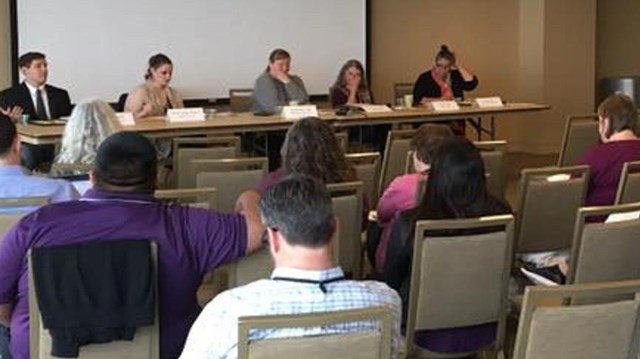
The third meeting of the Native American Graves Protection and
Repatriation Review Committee was called to order by Acting-Chair Rachel
Craig at 9:00 a.m, Thursday, October 8, 1992, at the Sheraton Yankee
Trader Hotel, Fort Lauderdale, Florida. The following Review Committee
members, staff, and others were in attendance:

Members of the Review Committee:
Ms. Rachel Craig, Acting-Chair
Dr. Jonathan Haas
Mr. Dan Monroe
Ms. Tessie Naranjo
Dr. Martin E. Sullivan
Mr. William Tallbull
Dr. Phillip L. Walker

National Park Service staff present:
Dr. Francis McManamon, Departmental Consulting Archeologist
Dr. C. Timothy McKeown, NAGPRA Program Leader
Mr. Hugh (Sam) Ball, Archeologist

The following were in attendance during some or all of the proceedings:
Dr. Glen Doran, Florida State University
Dr. Edward Friedman, Bureau of Reclamation, Denver
Ms. Betty Hall, Ballowe Reporting Service
Mr. Lars Hanslin, Solicitor's Office, Department of the Interior,
Washington
Mr. Wayne Prokopetz, Bureau of Reclamation, Salt Lake City
Ms. Lana Thompson, Lake Worth, Florida

Dr. McManamon advised the Committee that notice of the meeting had been
published in the Federal Register and confirmed that a quorum of members
was present. Ms. Craig, Acting Chair, requested that each committee
member and each member of the public introduce themselves. Ms. Naranjo
summed up the sentiments of several other members when she said that she
was glad to be at the meeting and was glad to see the "humanity that's
part of our Committee."

Draft 4 of the Proposed Implementing Regulations

Ms. Craig asked Dr. McManamon to introduce discussion of Draft 4 of the
implementing regulations. Dr. McManamon explained that the primary
reason for having the meeting so soon after the August meeting was to
get proposed regulations out for public comment as quickly as possible.
He complimented the Archeological Assistance Division staff and Mr.
Hanslin of the Solicitor's Office for their efforts in arranging the
meeting and completing Draft 4. He noted that the current draft was
thinner and had been reorganized. He also noted that certain sections
were listed as "reserved," because these sections were not essential for

NAGPRA REVIEW COMMITTEE:
10/8-10/92 MINUTES: page 1
basic implementation of the statute and either were no fully thought
out, or might be considered contentious and could hold up completion of
the core provisions.

Dr. Haas expressed some frustration that many of the points which he
thought had been settled during the previous meeting's discussion of the
memorandum on summaries and inventories had not been included in Draft
4. Dr. McKeown responded by recounting his efforts since the August
meeting. His first step had been to delete the summary and inventory
sections of Draft 3 and substitute the appropriate sections from the
memorandum. He also deleted or significantly reduced several other
sections on the basis of Committee recommendations at the August
meeting. The revised document was then sent to Mr. Hanslin for review.
Redrafting and editing continued until October 5, 1992, when the draft
was sent to the Committee. Mr. Hanslin apologized for any substantive
changes he may have made during his legal editing and suggested
identifying those changes to see if they could be put back to their
original form.

Mr. Monroe questioned the current organization of the draft. Mr.
Hanslin outlined the present four subpart structure: Subpart A contains
sections on purpose, applicability, definitions, and consultation
principles; Subpart B deals with collections; Subpart C deals with
excavations and discoveries; and Subpart D contains sections of general
applicability. Mr. Monroe suggested reordering the subparts to more
accurately mirror the statute, particularly reversing the order of
Subparts B (collections) and C (excavations).

Dr. Haas questioned the need for a separate section in Subpart A to deal
with Consultation Principles. Mr. Hanslin responded that this section
was included to emphasize that consultation is a central aspect of the
regulations although it is not legally necessary. Dr. Haas also
questioned combining summary and inventory consultation processes into
one section when the two processes are quite different. Mr. Hanslin
indicated it would not be a problem to insert specific consultation
procedures into the sections on summaries and inventories and to delete
the general consultation section in the collections subpart.

The Committee then began a section-by-section review of the draft. The
section numbers given in italics refer to the October 5, 1992 version.

Subpart A-Introduction

§ 10.1 Purpose and Applicability

Dr. McManamon suggested inserting a sentence stating that these
regulations apply to human remains and cultural items which are
indigenous to Alaska, Hawaii, and the continental United States, but not
to United States' territories.


NAGPRA REVIEW COMMITTEE:
10/8-10/92 MINUTES: page 2
§ 10.2 Definitions

"Federal agency" [§10.2 (a)(4)]. Mr. Monroe asked for clarification of
the term "instrumentality." Mr. Hanslin explained that it is a statutory
term meaning any entity, beyond an individual, which receives Federal
funds.

"Museum" [§10.2 (a)(6)]. Dr. Haas pointed out that restating the
statutory exclusion of the Smithsonian Institution gave the impression
that it was excluded by the regulations. He suggested adding a phrase
making it explicit that this exclusion was "established by the Act." Mr.
Hanslin stated that it was not really necessary to include the exclusion
line at all, and suggested its deletion.

Mr. Hanslin went on to explain that the definition of "museum" had been
expanded to include an explanation of the term "receives Federal funds."
This clarification mirrors language in Title 6 of the Civil Rights Act,
with the exception that NAGPRA specifies the receipt of Federal funds
instead of Federal assistance, which also includes non-monetary
benefits. Mr. Monroe asked for clarification on how direct the
connection must be between the Federal government and a particular
museum in order for provisions of NAGPRA to apply. Mr. Hanslin
responded that if a museum is part of a State or local government or a
private university and the State or local government or private
university receives Federal funds for any purpose, the museum is
considered to receive Federal funds.
Dr. Walker asked why the statute applies to only those institutions
receiving Federal funds after November 16, 1990. Mr. Hanslin explained
that the statute could not retroactively apply to institutions that have
received, but no longer receive Federal funds.

Dr. Haas raised the question of whether provisions of the statute will
apply to museums that receive Federal funds after the November 16, 1995
deadline for completion of inventories. Mr. Hanslin explained that this
issue is not mentioned in either the statute or the legislative history.
Dr. McManamon added that a similar issue relates to museums that receive
cultural items after the November 16, 1995 deadline.

Mr. Monroe asked whether the statute applies to Indian Tribal museums.
Mr. Hanslin indicated that all museums receiving Federal funds after
November 16, 1990 are required to comply with the summary and inventory
provisions of the statute.

"Indian Tribe" [§10.2 (a)(9)]. Dr. Haas questioned defining "Indian
Tribe" to include only those Indian Tribes recognized by the Bureau of
Indian Affairs. He understood the definition was meant to be more
encompassing. Mr. Monroe added that the statutory definition states
"any tribe, band, nation, or other organized group or community of
Indians, including any Alaska Native Village." Dr. McKeown explained
that the crucial provision of this definition is the phrase "recognized
as eligible for the special programs and services provided by the United
States to Indians because of their status as Indians," which is verbatim
from the Indian Self-Determination Act. In fact, the July 10, 1990,
version of H.R. 5237, the bill that eventually became NAGPRA, simply

NAGPRA REVIEW COMMITTEE:
10/8-10/92 MINUTES: page 3
says "Indian Tribe shall have the same meaning given that term in
Section 4 of the Indian Self-Determination and Education Act." The
Secretary of the Interior has interpreted that definition in the Indian
Self-Determination Act to mean those Indian Tribes that are recognized
by the Bureau of Indian Affairs. Mr. Hanslin added that Congress knew
how the "Indian Tribe" was being interpreted in the Indian Self-
Determination Act when they passed NAGPRA. Further, there is not one
word in the legislative history which indicates that they meant anything
beyond that. After a general discussion of various options to deal with
this dilemma, Dr. Walker suggested that the definition be expanded to
include the Bureau's criteria for recognition as required under 25 CFR,
Part 83.

In recognition of the discomfort felt by some members of the Committee
regarding this definition, Dr. McManamon reminded the Committee that
they are required to submit an annual report to Congress that deals, in
part, with any barriers encountered in implementing the statute. The
Committee may wish to recommend a legislative change to broaden the
definition of "Indian Tribe."

"Traditional Religious Leader" [§10.2 (a)(13)]. Dr. Haas questioned
whether traditional religious leaders should be recognized by "members
of that Indian Tribe" as being responsible for performing cultural
duties, or if recognition should be from the Indian Tribe as a whole.
Dr. McKeown explained that the "members of" clause had been used in
recognition that in some Indian Tribes the political leadership and the
religious leadership are divided. Mr. Tallbull stated that the Northern
Cheyenne Cultural Commission, of which he is chairman, was founded to
begin bridging this gap between political and religious leadership. Ms.
Naranjo added that for many Pueblo people it is a bit presumptuous for
the statute to require museums and Federal agencies to contact
traditional religious leaders. At Santa Clara, no one knows who the
traditional religious leaders are except the people in the community.
Ms. Craig noted that in Alaska this process will be a little more
complicated since each village might have an Indian Reorganization Act
Council, an Elders Council, and a Regional Council. Mr. Hanslin
recommended deleting "members of" from the sentence.

"Lineal Descendant" [§10.2 (a)(14)]. Dr. Haas suggested revising the
definition to specify that ancestry be traced by means of the
traditional kinship system of the appropriate Indian Tribe. Dr. Walker
expressed some misgivings with this approach, indicating that it may
"open a can of worms." Mr. Hanslin indicated that he considered such a
change to be lawful, but that this sort of "cultural overlay" may lead
to more spurious claims and more litigation than might otherwise occur.

"Human Remains" [§10.2 (b)(1)]. The definition of human remains, and in
particular the status of scalps, was extensively discussed at the
Committee's previous meeting but was eventually tabled due to Mr.
Tallbull's absence.

Dr. Haas asserted that one of the biggest issues faced by the Committee
concerned whether human remains that had been incorporated into other
objects, such as scalp shirts or finger bone necklaces, should be dealt

NAGPRA REVIEW COMMITTEE:
10/8-10/92 MINUTES: page 4
with as part of the summary or as part of the inventory. Mr. Monroe
objected to including scalps as human remains due to the burden it would
place on museums to do an item-by-item inventory of all items that
contain scalps. Ms. Naranjo and Mr. Tallbull considered the scalps on a
shirt to be culturally affiliated with the Indian Tribe that made that
shirt. Dr. McKeown proposed amending the definition to include the
following statement: "For the purpose of determining cultural
affiliation, human remains incorporated into a cultural item shall be
considered as part of that cultural item." Dr. Haas pointed out that
treating human remains as cultural items would mean Indian Tribes would
have to demonstrate that the particular item was an unassociated
funerary object, sacred object, or object of cultural patrimony before
it could be repatriated. This approach would also have implications for
determining ownership. Dr. Sullivan noted that he was unaware of any
Indian Tribe seeking repatriation of scalps from shirts culturally
affiliated with another Indian Tribe. He was worried about making
explicit the distinction between the cultural affiliation of the shirt
and the cultural affiliation of the scalps before everyone has time to
sort out these issues for themselves. Ms. Craig reminded the others
that no matter how this issue is resolved, human remains should be
treated with dignity. Dr. Haas suggested going ahead with the proposed
amendment with the expectation that there will be a great deal of
comment from museum curators and art dealers. Mr. Tallbull spoke about
medicine bundles which contain human remains. He explained that someone
had to have made each bundle. The maker had a teacher who gave
instructions to collect this plant, this scalp, this skull. The
collected objects together became a medicine bundle which belonged to
the person who made it.

"Cultural Affiliation" [§10.2 (c)]. Mr. Monroe found the definition
confusing. Dr. McKeown explained that the present form was an attempt
to deal with the Committee's objection at their first meeting to having
present-day individuals related to objects instead of to other
individuals. Mr. Monroe proposed deleting everything after the colon.
Dr. Walker concurred.

"Tribal lands" [§10.2 (d)(2)]. Dr. Haas asked for clarification of the
status of allotments. Mr. Hanslin suggested amending the definition to
read "`Tribal lands' means all lands, excluding privately owned lands,
which: (i) are within the exterior boundaries of any Indian reservation
including, but not limited to, allotments held in trust or subject to a
restriction on alienation by the United States." Ms. Craig concurred.

"Summary" [§10.2 (e)(2)]. Dr. Haas suggested changing the definition to
read "`summary' means the written description of collections that may
contain unassociated funerary objects, sacred objects, and objects of
cultural patrimony required by § 10.4 of these regulations." This
definition reflects the Committee's discussion at their Denver meeting.

"Intentional excavation" [§10.2 (e)(4)]. Dr. Walker questioned
inclusion of the phrase "in an archeological context." Mr. Hanslin
explained that the phrase, which was also included in the definition of
"inadvertent discovery" [§10.2 (e)(5)], was intended to limit potential
Fifth Amendment taking problems related to the "discovery" of privately

NAGPRA REVIEW COMMITTEE:
10/8-10/92 MINUTES: page 5
owned cultural items in the trunk of someone's car while on Federal or
Tribal land. Dr. McManamon proposed replacing the phrase with "under or
on the surface."

§ 10.3 Consultation Principles

Dr. Haas questioned whether this section takes the requirements for
consultation somewhat beyond what is mandated by the law. Dr. McManamon
explained that the content and placement of this section was designed to
emphasize the importance of consultation to the entire protection and
repatriation process and suggested that the Committee direct their
comments to any specific provisions which overstep legislative intent.
The section was eventually deleted.

Subpart B-Human Remains and Cultural Items in Museums and Federal
Collections

Dr. McManamon reminded the Committee that this subpart will be
redesignated as Subpart C.

§ 10.4 Summaries

General [§10.4 (a)]. Dr. McKeown proposed amending this paragraph to
emphasize that the summary is of "collections which may contain
unassociated funerary objects, sacred objects, or objects of cultural
patrimony." Mr. Hanslin proposed inserting a sentence stating that the
section implements Section 6 of the statute.

Notification [§10.4 (b)(4)]. Mr. Hanslin explained that this section was
inserted to meet the due process requirements of the law. Mr. Monroe
objected that in its present form, museums would have to complete an
inventory of all collections claimed by an Indian Tribe instead of just
those that were to be repatriated. Dr. Haas suggested changing this to
a Notice of Intent to Repatriate that covers only those items that the
museum or Federal agency is prepared to repatriate. Mr. Hanslin
concurred. Mr. Monroe suggested that some museums or Federal agencies
might use this step to try circumventing the law by having another
Indian Tribe waiting in the wings to challenge the repatriation. Mr.
Hanslin admitted that may happen, but that the Notice of Intent to
Repatriate would not be the most efficient time to do it. The Notice is
intended to protect museums and Federal agencies from being held liable
for an object which has already been repatriated.

§ 10.5 Inventories

Notification [§10.5 (d)(1)]. Dr. Haas asked whether it was necessary to
require that the Notice of Inventory Completion be sent by certified
mail. Mr. Hanslin indicated that there is no legal requirement that it
be certified, although doing so would certainly be in a museum or
Federal agency's best interest. Dr. Sullivan suggested deleting the
line. Mr. Hanslin suggested inserting a sentence stating that the
section implements Section 5 of the statute.

NAGPRA REVIEW COMMITTEE:
10/8-10/92 MINUTES: page 6
Dr. Walker asked at what point a museum or Federal agency was locked
into the NAGPRA process. Dr. McManamon answered that the NAGPRA
procedures went into effect on November 16, 1990, and any museum which
failed to follow the statutory provisions would be potentially liable.
Mr. Hanslin added that some museums and Federal agencies are
repatriating things without the required notification in the Federal
Register. He pointed out that the notice serves as the key to cutting
off claims. Without it the museum or Federal agency is at risk of being
sued, perhaps years later, for failing to comply with the law. Dr.
Walker indicated that this aspect of the law is not generally known.

Electronic Format [§10.5 (d)(4)]. Mr. Monroe suggested that many small
museums would not be able to provide information in an electronic
format. Dr. McKeown reminded the members that the NPS staff is required
to monitor inventories and keep the Committee appraised. It will be
easier for each individual museum to put their inventory in an
electronic format than it will be for the staff to deal with several
thousand inventories in printed form. Dr. Haas suggested adding:
"Information on the proper format for electronic submission and
suggested alternatives for museums unable to meet these requirements are
available from the Departmental Consulting Archeologist."

Completion [§10.5 (e)]. Mr. Monroe questioned the meaning of the term
"good faith", which was not defined in the statute or in the draft
regulations. He wondered whether initiating one consultation and
preparing a written plan by the five year deadline should be accepted as
a good faith effort to comply with the statute. Dr. Haas indicated that
given the fact that regulations are not yet in place and the grant
program not yet funded, this minimum standard may well constitute a good
faith effort for some small museums. Mr. Hanslin pointed out that the
statute reads "good faith effort as determined by the Secretary." It
would be possible to list additional factors the Secretary will consider
in assessing that effort. Dr. Haas suggested adding "institutional
resources" as one of the factors to be considered by the Secretary. Mr.
Monroe objected and instead proposed adding language stating that a good
faith effort shall "include, but not be limited to," an initiation of
active consultation and the development of a written plan.

§ 10.6 Consultation

Dr. McManamon reminded the Committee of previous discussions dealing
with § 10.3 and the possibility of having separate consultation sections
for summaries and inventories. Dr. Haas proposed the use of two
sections in order to make it clear that consultation is required in both
cases. Mr. Monroe agreed that this strategy would be more effective,
though less efficient. Dr. Sullivan concurred. Dr. Haas also suggested
including the kinds of cultural items considered unassociated funerary
objects within the information requested from Indian Tribes. The
section was deleted.

§ 10.7 Repatriation

Dr. Haas objected to the first sentence of § 10.7 (a), stating that it
downplayed the importance of the numerous exceptions, and suggested

NAGPRA REVIEW COMMITTEE:
10/8-10/92 MINUTES: page 7
moving § 10.7 (c) to the front of the section. Mr. Hanslin explained
that the exemptions had been placed at the end since some of them
applied to both human remains and associated funerary objects and to
unassociated objects, sacred objects, and objects of cultural patrimony.
Dr. Walker objected to inclusion of any discussion of "right of
possession" when dealing with human remains.

Mr. Monroe suggested restructuring the subsection to make explicit the
repatriation process. Dr. Haas volunteered to draft the revision and
later returned with two separate subsections. § 10.7 (a) was rewritten
to include criteria for repatriation, right of possession, and
notification provisions for unassociated funerary objects, sacred
objects, and objects of cultural patrimony. Criteria for repatriation
included: (i) the object meets the definitions; (ii) cultural
affiliation is determined; (iii) a lineal descendant or Indian Tribe
presents evidence that the museum or Federal agency does not have right
of possession; (iv) the museum or Federal agency fails to present
evidence proving it has right of possession; and (v) none of the
specific exemptions apply. Right of possession was defined using the
statutory text. Finally, notification provisions were listed. § 10.7
(b), dealing with the repatriation of human remains and associated
funerary objects, was structured in a similar fashion, except that the
definition and provisions for documenting right of possession were
omitted. Dr. Haas also suggested that § 10.7 (g) on Standard of Proof
be deleted, as it had already been inserted under §10.7 (a). Mr.
Hanslin added that § 10.16 (a) on Right of Possession should also be
deleted.

Dr. McManamon suggested reserving a section to deal with the statute's
future applicability. In particular, he suggested that the section
should consider the issue of museums which receive Federal funds after
the deadlines for summary and inventory completion and the issue of
cultural items added to collections after the deadlines. Mr. Hanslin
pointed out that the statute does not address either point and to be
legal any additional provisions must be within the reasonable scope of
implementation of the law. Dr. Sullivan added that he interprets the
statute as creating a standard in perpetuity rather than a one-time
exchange of information.


Subpart C-Human Remains and Cultural Items Recovered from Federal or
Tribal Lands

Dr. McManamon reminded the Committee that this subpart will be
redesignated as Subpart B.

§ 10.10 Intentional Excavations

Procedures [§ 10.10 (c)]. Dr. Walker questioned the requirement that
"any person who believes" a planned activity on Federal land may result
in excavation of human remains or cultural items shall notify the
responsible Federal official, noting that there could be thousands of
people who might believe such a thing is going to occur. Mr. Hanslin
acknowledged that "any person" had come from the inadvertent discovery

NAGPRA REVIEW COMMITTEE:
10/8-10/92 MINUTES: page 8
section and agreed to change this section to read "Any person who
proposes to undertake an activity..." Mr. Hanslin suggested inserting a
sentence stating that the section implements Section 3 (c) of the
statute.

Dr. Walker was concerned that Federal agency officials might "hide in
their offices" in order to avoid learning about the possibility of
encountering human remains or cultural items. Dr. McManamon stated that
such activity would probably land the particular Federal agency official
in court. Dr. Walker suggested including a sentence indicating that
Federal agency officials shall take reasonable steps to determine
whether a planned activity, of which he or she has received notice or
otherwise is aware, may result in the excavation of human remains or
cultural items from Federal lands. Dr. McManamon concurred.

Dr. McManamon suggested further specifying the contents of the notice to
Indian Tribes to include "the Federal agency's proposed treatment of any
human remains or cultural items that may be excavated, and the proposed
disposition of any excavated human remains or cultural items."

Dr. McManamon suggested inserting a subsection to further ensure
coordination of NAGPRA provisions with other planning activities. He
proposed § 10.10 (c)(3) to read: "If the planned activity is also
subject to review under Section 106 of the National Historic
Preservation Act (16 U.S.C. 470 et seq.), the Federal agency official
should coordinate consultation and any subsequent agreement for
compliance conducted under that Act with the requirements of § 10.3
(c)(2) and § 10.5 of these regulations. Compliance with these
regulations does not relieve Federal officials of requirements to comply
with Section 106 of the National Historic Preservation Act (16 U.S.C.
470 et seq.)."

§ 10.11 Inadvertent Discovery

Federal Lands [§ 10.11 (d)(2)]. Mr. Monroe asked about the requirement
that Federal agency officials must notify, within one working day, known
Indian Tribes that are likely to be culturally affiliated with
discovered human remains or cultural items. He reminded the Committee
that numerous comments were received on Draft 3 related to this point.
Mr. Hanslin explained that the short time-frame had been used because
the thirty-day stoppage of activities in the area of inadvertently
discovered human remains or cultural items begins when the Federal land
manager receives notice and, without some type of deadline, the official
could wait the entire thirty days before notifying the Tribe of the
discovery. Dr. McKeown explained that an earlier draft had specified
notification must occur within twenty-four hours, but weekends and
holidays needed to be taken into account. Mr. Hanslin suggested
inserting a sentence stating the section implements Section 3 (d) of the
statute.

§ 10.12 Consultation

Written Agreement [§ 10.12 (f)]. Dr. McManamon explained that this
subsection, as it was originally drafted, imposed a requirement on

NAGPRA REVIEW COMMITTEE:
10/8-10/92 MINUTES: page 9
Federal agency officials and Indian Tribe officials to develop a binding
agreement. He explained that such an agreement, although a laudable
goal, is not required by the statute. He proposed renaming the document
a Written Plan of Action which includes a provision specifying the
treatment, care, and handling of any human remains or cultural items
recovered; steps to be followed in contacting Indian Tribe officials;
and the kind of traditional treatment to be afforded the human remains
or cultural items.

§ 10.13 Ownership and Disposition

Dr. McManamon explained that the subsection's criteria for determining
priority of ownership had been revised to explicitly reflect the
statutory language, as requested by several individuals in comments on
Draft 3.

Dr. Haas objected to the thought expressed in the last line of § 10.13
(b) that human remains would be "disposed." Mr. Hanslin suggested
replacing the term with "transfer ownership or control" and deleting the
term "disposition" from the section title.

§ 10.14 [Reserved-Disposition of Unclaimed Human Remains].

Dr. McManamon explained that this section was reserved for procedures
for the disposition of unclaimed human remains.

Subpart D-General

§ 10.15 Lineal Descent and Cultural Affiliation

Dr. Haas proposed amending the criteria for determining lineal descent
to bring them in line with the previously changed definition. Dr.
McKeown supported Dr. Haas' suggestion, explaining that inclusion of a
reference to a traditional kinship system would help to ensure a group-
specific method for determining who should receive cultural items. Mr.
Tallbull supported this change.

§ 10.16 Right of Possession, Disposition Limitations and Remedies.

Dr. Sullivan suggested retitling this section "Repatriation Limitations
and Remedies" to bring it into line with previous changes. Mr. Hanslin
also suggested deleting § 10.16 (a) Right of Possession, as this
subsection had already been moved to § 10.7. Mr. Hanslin proposed
retitling § 10.16 (b), "Repatriation Limitations", and deleting the
reference to right of possession in order to make it clear that Congress
did not intend any Fifth Amendment takings from museums to occur. He
explained that, unfortunately, the statute leaves the takings issue a
bit ambiguous.

Dr. Haas raised the issue of the lack of a statute of limitations in the
subsection on Failure to Claim. He pointed out that this omission
effectively puts a museum's entire North American collection in
perpetual uncertainty since its title will remain clouded. Dr. McKeown
pointed out that a statute of limitations had been discussed by Congress

NAGPRA REVIEW COMMITTEE:
10/8-10/92 MINUTES: page 10
but not included in the final statute. Dr. Sullivan suggested reserving
a section to deal with this issue.

Election of the Committee Chair

Following discussion of Draft 4 of the implementing regulations, Ms.
Craig asked the Committee to consider election of a Chair for the next
year. Dr. McManamon explained that a full-time Chair was necessary both
to facilitate meetings, and between meetings, to serve as the
Committee's primary liaison with the Departmental Consulting
Archeologist. Mr. Monroe reminded the Committee that at the Denver
meeting the members had asked Ms. Naranjo to consider taking on the
responsibilities of the position. Ms. Naranjo responded that, although
she didn't like to be called conservative - she would rather be called
Pueblo, after a month of consideration on the "new shoe" she was about
to buy, she had decided that if it was the consensus of the rest of the
Committee to reinvite her, she would accept the position.

Dispute Resolution Procedures

Dr. McManamon introduced the Draft Dispute Resolution Procedures for
review by the Committee. He explained the various steps of the process:
receipt of a request; decision by the Departmental Consulting
Archeologist and the Committee Chair that review of the dispute is
appropriate; placement of the dispute on the Committee's agenda; review
of the facts of the dispute by the Committee; issuance of a
recommendation; and the possible resubmission of the dispute for further
consideration and issuance of a finding. Dr. Sullivan suggested that
the Committee be very careful to avoid taking on a "Dear Abby" role of
giving advice to people who do not know what to do. Mr. Monroe pointed
out that each member of the Committee would probably be approached
individually and asked to deal with disputes. He stressed the
importance of a clear explanation that an opinion given by an individual
Committee member is a personal opinion and does not represent the
opinion of the Committee. Mr. Tallbull cautioned the members to be
extremely careful with the press. "Someone from the press will call and
ask your opinion, and when it appears, the group that doesn't like what
you said will be down at the trading post buying 30-30 shells."

Future Activities

Dr. McManamon updated the Committee on the status of several items.

Memorandum on Summaries and Inventories

With Committee review of the Draft Proposed Regulations completed, Dr.
McManamon indicated that he was prepared to submit the memorandum to the
Department of the Interior for review. He anticipated that, without any
unforseen problems, the memorandum might be out by the end of the year.

Proposed Regulations


NAGPRA REVIEW COMMITTEE:
10/8-10/92 MINUTES: page 11
Dr. McManamon indicated that based on the Committee's review and
comment, he was prepared to submit the current draft as proposed
regulations for publication in the Federal Register. This process would
entail drafting a preamble explaining some of the decisions the
Committee had made regarding definitions and procedures, review of the
entire package within the Department of the Interior, obtaining an
exemption to the President's regulatory moratorium, and review by the
Office of Management and Budget. The regulations would then be
published in the Federal Register for public comment.

Reserved Sections

Dr. McManamon explained that several section had be "reserved" in the
draft regulations. These sections would appear in the proposed
regulations as a title with no text. He explained that this is a way to
identify issues and procedures that are recognized as being necessary,
but for which there was either not enough time to complete or were not
considered essential at this time. Dr. Sullivan inquired about the
reserved section on civil penalties, particularly a statement in an
earlier draft indicating that museums which failed to comply with the
statute risked the loss of Federal funding. Dr. McKeown explained that
Mr. Hanslin's opinion was that such a penalty was not mentioned in the
statute or the Committee reports. Mr. Monroe asked that it be
communicated to Mr. Hanslin, who had left the meeting, that he
understood the civil penalties were intended to be substantive and that
he was against any effort to water them down. He went on to state that
he was opposed to any approach that tried to assess civil penalties on
the basis of monetary or market value. There were no objections from
the Committee.

Hui M lama and Hearst Museum Dispute

Dr. McManamon outlined the chronology of events related to the dispute.
In September, 1992, Hui M lama I N K puna 'O Hawai'i Nei, a Native
Hawaiian organization recognized by the statute, submitted a formal
request to the Committee to consider their dispute with the P.A. Hearst
Museum at the University of California-Berkeley. Dr. McManamon
consulted with Ms. Craig, in her role as acting Chair, to decide whether
the Committee should consider the dispute. They both agreed that the
dispute should be considered by the Committee. On September 24, 1992,
Dr. McManamon notified both Hui M lama and the Hearst Museum, and asked
them to submit written statements by the beginning of November. The
plan is for the NPS staff to review the written statements, discuss them
with the Chair, and move forward from that point. The dispute may end up
on the agenda for the next meeting.

Grants

Dr. McManamon indicated that the American Association of Museums, the
Native American Rights Fund, the Society for American Archaeologists,
and other organizations were working as a coalition of Native American,
museum, and scientific organizations to meet with various members of the
administration and of Congress to lobby for an appropriation for the
grants program authorized in the statute. Mr. Monroe urged members of

NAGPRA REVIEW COMMITTEE:
10/8-10/92 MINUTES: page 12
the Committee to go on record in support of the grants program and to
convey that opinion directly to the Secretary of the Interior. Dr. Haas
agreed with this suggestion, adding that the Committee should also voice
their concern to the Congressional appropriations committees and various
members of Congress. Mr. Monroe and Dr. Haas agreed to draft a letter
from the Committee to the appropriate members of the Administration and
Congress.

Information Clearinghouse

Dr. McManamon explained that the Archeological Assistance Division was
beginning to serve as a point of contact for Indian Tribes, museums,
Federal agencies, and other interested parties who wish to find out
about implementing the statute. AAD has put together a mailing list for
all Federally recognized Indian Tribes. The longer range goal, he
explained, was to provide this type of information as an on-line
computer system, as well as through traditional paper form. He
requested the Committee members provide him with contacts or networks
that they felt should be included. Dr. Haas asked that information also
be gathered regarding what different groups consider to be sacred
objects and objects of cultural patrimony.

Upcoming Meetings

Dr. McManamon suggested that the Committee consider establishing a
regular meeting schedule and tentatively assign locations for next
year's meetings. The first meeting of 1993 was tentatively scheduled
for late January in Hawaii to consider the dispute between Hui M lama I
N K puna 'O Hawai'i Nei and the P.A. Hearst Museum, as well as other
aspects of implementing the statute in Hawaii. The second meeting was
tentatively scheduled to follow the close of the comment period for the
proposed regulations -- possibly in May or June -- in order to expedite
moving from proposed to final regulations. The Committee expressed
interest in holding this meeting in the Plains states. The Committee
also expressed interest in holding the third meeting in conjunction with
the annual meeting of Keepers of the Treasures, scheduled for October,
1993.

Public Comment

Mr. Wayne Prokopetz, from the Bureau of Reclamation (BOR) in Salt Lake
City, Utah, spoke about BOR's attempts to implement NAGPRA as part of
the Animas-LaPlata Project located in Southwest Colorado. BOR was
recently enjoined from doing any archeological work beyond mapping until
consultations were completed with 21 Pueblos, the All Pueblo Council,
the Navajo Nation, the Ute Mountain Ute, and the Southern Ute. The
process has been disrupted due to conflicts between the various Tribes.
Mr. Hanslin stated that this situation points out the necessity of
getting the regulations finalized as quickly as possible, because
currently, U.S. District judges can read the law any way they choose.
There are no prior cases and no regulations to guide them.

Dr. Glen Doran, an anthropologist from Florida State University and the
President of the Florida Archeological Council, addressed the Committee.

NAGPRA REVIEW COMMITTEE:
10/8-10/92 MINUTES: page 13
He voiced concern about the definition of Indian Tribe official which,
he believes, is based on the assumption that one individual in each
Indian Tribe has been charged with dealing with these kinds of issues.
He pointed out that a recent questionnaire to eighty Indian Tribes
garnered only about a 35-40% response rate, and that some of those
replies consisted of "I don't need to tell you this information, we will
take care of it." Dr. Haas responded that he understood it to be the
Indian Tribe's responsibility to respond to the museum and Federal
agency consultation attempts. Dr. Doran also indicated that he felt the
one working-day requirement for notification of an inadvertent discovery
was not enough time. Dr. Edward Friedman, a BOR Historic Preservation
Officer, commented that the National Historic Preservation Act
regulations call for a 72-hour deadline for the initiation of
consultation. Dr. McManamon pointed out the situations are somewhat
different, however, in that there is no 30-day clock ticking during the
NHPA process. Dr. Doran asked whether there were some situations in
which the Committee might ask Congress to amend the statute. Mr. Monroe
answered that it was conceivable, but that there seemed no intent on the
part of the Committee to engage in that process at this point.

Ms. Naranjo asked Dr. Haas to provide a closing invocation or "good
saying." Dr. Haas gave thanks for everyone's safe travel to the meeting,
for the good work they had accomplished, and for the help the Committee
had received from their friends from the National Park Service. He also
wished that the Committee could continue their work in good spirit, that
their families would understand what they were doing, and, on the 500th
anniversary of Europeans in the New World, that the next 500 years would
be better than the last. He ended by saying that he thinks a lot about
his family when he is away from them, but that it is very nice to have
another family in the Committee.

The meeting was adjourned by Ms. Naranjo at 1:30pm on Saturday, October
10, 1992.

Approved:

__/S/_Tessie Naranjo______________ __________________
Tessie Naranjo, Chair Date
Native American Graves Protection
and Repatriation Review Committee

NAGPRA REVIEW COMMITTEE:
10/8-10/92 MINUTES: page 14


Home
Frequently Asked Questions
Law and Regulations
Online Databases
Grants
Training
Notices
Documents and Publications
Review Committee
Special Topics
Contact National NAGPRA
navigation bar image with links to ParkNet, Links to the Past, FOIA, Privacy, Disclaimer and FirstGov Image link to ParkNet, the National Park Service websiteimage link to Links to the Past, the National Park Service's Cultural Resources websiteImage link to the National Park Service's Freedom of Information Act Image link to the National Park Service's Privacy PolicyImage link to the National Park Service's Disclaimer, Liability and Ownership notice Image link to the U.S. Government's FirstGov official web portalImage link for First GovImage link for NPS Search EngineImage link for ParknetImage link for Links to the PastImage link for FOIA PrivacyImage link for Disclaimer

PMM