MINUTES
NATIVE AMERICAN GRAVES PROTECTION AND REPATRIATION
REVIEW COMMITTEE
SECOND MEETING: AUGUST 26-28, 1992
LAKEWOOD, CO
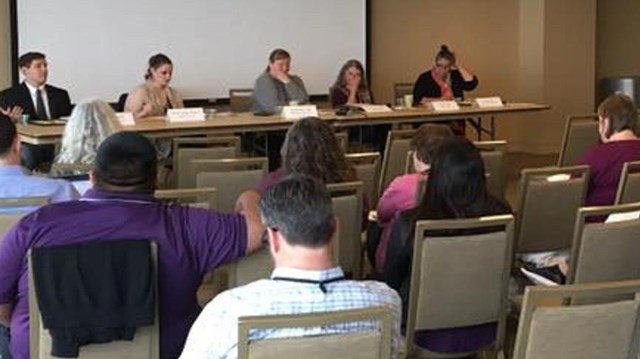
The second meeting of the Native American Graves Protection
and
Repatriation Review Committee was called to order by Dr. Francis
P.
McManamon, Departmental Consulting Archeologist, at 9:18 a.m,
Wednesday,
August 26, 1992, in the City Lights Room of the Denver Sheraton
West,
Lakewood CO. The following Review Committee members, staff,
and others
were in attendance:
Members of the Review Committee:
Ms. Rachel Craig
Dr. Jonathan Haas
Mr. Dan Monroe
Ms. Tessie Naranjo
Dr. Martin E. Sullivan
Dr. Phillip L. Walker
Members absent:
Mr. William Tallbull
National Park Service staff present:
Dr. Francis McManamon, Departmental Consulting Archeologist
Dr. C. Timothy McKeown, NAGPRA Program Leader
Mr. Hugh (Sam) Ball, Archeologist
Other National Park Service personnel present:
Mr. Robert Baker, Rocky Mountain Regional Director
Dr. William Butler, Rocky Mountain Regional Office
Mr. Edward Natay, Southwest Regional Office
Dr. David Ruppert, Rocky Mountain Regional Office
Dr. Larry Van Horn, Denver Service Center
Mr. Frank Williss, Denver Service Center
The following others were in attendance:
Ms. Nancy Blomberg, Denver Art Museum
Ms. Suzanne Casey, Colorado State Museum
Dr. Susan Collins, Colorado Historical Society
Dr. Jane Day, Denver Museum of Natural History
Dr. Alan Downer, Navajo Nation
Mr. Fred Fest, Peabody Coal Company
Dr. Edward Friedman, Bureau of Reclamation
Ms. Carol Gleichman, Advisory Council on Historic Preservation
Ms. Kristine Haglund, Denver Museum of Natural History
Mr. Jon Halverson, Denver Museum of Natural History
Ms. Joyce Herold, Denver Museum of Natural History
Ms. Claudia Nissley, Advisory Council on Historic Preservation
Mr. Stanley Pollack, Navajo Nation
Mr. Alan Stanfill, Advisory Council on Historic Preservation
Dr. Brit Storey, Bureau of Reclamation
Mr. Jack Trope, American Association for Indian Affairs
Ms. Teresa Wilkins, Colorado State Museum
Ms. Cynthia Wood, Denver Museum of Natural History
Dr. McManamon advised the Committee that notice of the meeting
had been
published in the July 21, 1992 Federal Register and confirmed
that a
quorum of members was present. He explained that Mr. Tallbull
wasunable to attend due to illness. Dr. McManamon then asked
Ms. Craig to
offer an invocation.
Rocky Mountain Regional Director
After the invocation, Dr. McManamon introduced Mr. Robert Baker,
Director of the NPS Rocky Mountain Region. Mr. Baker explained
that
while he had served nineteen years as the regional director
(in the NPS
Southeast Region), he was new to the Rocky Mountain Region.
His recent
trips to parks in the six states of the Rocky Mountain Region
had
confirmed his thought that NPS properties preserve both the
glories and
the tragedies of the nation's heritage. In his recent travels,
Mr.
Baker had met with many Native American groups to discuss their
perspectives on various parks. He looked to the Committee for
additional guidance in protecting the region's, and the nation's,
heritage. Mr. Baker also announced his intent to establish an
Office of
Indian Affairs within the regional office. After his presentation
Mr.
Monroe thanked Mr. Baker for taking time from his busy schedule
to
attend the Committee meeting.
Review of the Agenda
Dr. McManamon reviewed the meeting agenda. Major items included:
election of a Committee Chair, consideration of the draft Memorandum
on
Written Inventories and Summaries, discussion of major policy
issues
related to the regulations, development of dispute resolution
procedures, and consideration of the request for intervention
from Hui
M lama I N K puna `O Hawai`i Nei.
Chair Election
The Committee discussed election of the Chair. It was decided
to delay
the election until the last day of the meeting to allow the
members to
get better acquainted. Dr. McManamon agreed to continue to serve
as
meeting facilitator until the new Chair was elected.
Memorandum on Written Summaries and Inventories
Dr. McManamon introduced discussion of the Memorandum on Written
Summaries and Inventories. The Committee had originally requested
preparation of the document at their first meeting in Washington
D.C.
The Archeological Assistance Division of the National Park Service
drafted the memorandum using the appropriate sections of Draft
3 and the
comments which were received on that document as models. The
Committee
focused their discussion on definitions and procedures outlined
in the
memorandum.
Lineal Descendants
Dr. Haas expressed his concern over the definition of lineal
descendant.
He recognized that Native Americans define lineal descendants
differently than the way he does. He regretted that Mr. Tallbull
was
not present for the discussion because the Tallbull pipe was
one of the
best examples of the difficulties in identifying lineal descendants.
The Tallbull pipe is at the Smithsonian Institution and there
has been a
request for its return. There are about 65 living descendants
of the
person who originally owned the pipe, including Committee Member
Mr.
Bill Tallbull. However, the Cheyenne reckon the ownership of
objects
such as pipes and medicine bundles through the youngest male
of thefamily,
so of the 65 initially identified descendants, only two are
probably proper descendants.
Dr. Haas stated that notification of lineal descendants presents
museums
with a problem. He commented that requiring a museum, which
might have
collections from 200 different Indian Tribes, to notify all
lineal
descendants would be a multi-million dollar task. As an example,
he
recounted that when the Field Museum of Natural History repatriated
human remains to the Blackfeet, Tribal officials asked if there
was any
information about individuals. There was none. The Tribal officials
then asked about geography, and the museum responded that some
of the
remains had been shipped from a particular railroad station.
The Tribal
officials knew who had lived in that particular area and agreed
to pass
the information on to the descendants. In conclusion, Dr. Haas
thought
that Draft 3 placed a far greater burden on museums than is
inherent in
the statutory language. Dr. Sullivan added that Section 6 of
the
statute, which deals with summaries, does not contain the phrase
"lineal
descendant."
Dr. McManamon explained that the term was included in recognition
of the
priority lineal descendants have in repatriations. However,
he added, a
museum obviously cannot provide information that it does not
have. Dr.
McKeown suggested that the museum be required to convey the
collectors'
names and other pertinent information related to the original
collection
of specific items to culturally affiliated Indian Tribes. The
Tribes
would be best able to identify lineal descendants.
Ms. Craig offered that in her area it was easy for Native Alaskan
groups
to find out who was related to someone because many of the villages
were
beginning to document their family trees. Even villages that
were
relocated by the BIA, for example, can call back to their original
area
to obtain information. Having the museum provide what information
it
has to Tribes would fulfill the Congressional intent of getting
museums
and Indians working together.
Dr. McManamon summarized the Committee's recommendation to drop
references to museums' need to identify lineal descendants in
the
introduction and in the sections on summaries and inventories.
Dr.
Walker added that there should be a section outlining the kind
of
process discussed by Dr. Haas and Ms. Craig where museums and
Indian
Tribes cooperate in identifying lineal descendants.
Indian Tribe
Dr. Walker pointed out that in California there is a great deal
of
concern about how the term "Indian Tribe" will be
defined in the
regulations. Dr. Haas indicated that his understanding of legislative
intent was that the term included a very broad range of groups
that were
somehow eligible for Federal programs. Mr. Monroe concurred
that the
intent of the drafters was to recognize those Indian Tribes
that had
been disenfranchised in the 1950s. Dr. Walker pointed out that
it was
also important to not make the definition overly broad so that
anyone
who received health care services from a Federal agency could
make a
claim. Dr. McKeown pointed out that in one of the earlier versions
of
the bill the term was defined with a reference to the American
Indian
Self-Determination Act. In the final statute the reference was
replaced
with the verbatim text from the Self-Determination Act. The
important
point is that at the time the statute was passed Congress knew
that the
concept of Indian Tribe in the Self-Determination Act was being
interpreted
to mean only those groups recognized as eligible for Federal
services by the Bureau of Indian Affairs.
Mr. Monroe asked Mr. Trope, a member of the public, to address
the
issue. Mr. Trope indicated that he had represented the Association
of
American Indian Affairs during negotiations prior to passage
of the
statute. He stated that the definition had been left ambiguous
because
detailed explication of the many issues involved would have
probably
killed passage of the bill. From his perspective, non-BIA recognized
groups that had received services from other Federal agencies,
like the
Administration for Native American, should probably be included.
Individuals receiving health benefits would not be included.
He
predicted, however, that much of the discussion was moot because
the
Department of the Interior Solicitor would probably propose
the
narrowest possible definition based on the philosophy that the
term
"Indian Tribe" is applied in many other areas. He
questioned how the
Committee would want to deal with this situation.
Human Remains
Dr. Sullivan raised the issue of the definition of human remains.
He
explained that some objects with diverse purposes have been
made from
teeth or bones and should be exempted from this category. Dr.
Haas
offered examples of a necklace of drilled teeth and human hair
that had
been incorporated into a doll or weavings. Dr. Sullivan proposed
a
distinction between teeth or hair which had been "harvested"
from a
living person and the later use of parts taken from a dead person.
Dr.
Haas wondered to whom scalps should be returned. Ms. Naranjo
suggested
that both the teeth necklace and scalps should be considered
human
remains. She suggested that objects such as a scalp shirt should
be
repatriated to the maker's people since it is possible to identify
them
and, in many instances, the scalp has taken on an important
role in the
ceremonies of that group. Ms. Craig disagreed, thinking the
scalp still
belonged to the deceased individual and should go back to his
people.
Dr. Walker recalled that during one of the Congressional hearings
the
Antique Tribal Art Dealers Association had brought up the issue
of
scalps but that their points seemed to have had little effect
on
Congress. At this point Mr. Monroe asked if Jack Trope could
again be
recognized.
Mr. Trope remembered that the issue of finger bone necklaces
had come up
during the negotiations and it was clear at the time that there
was no
way Congress was going to exclude them. The Antique Tribal Art
Dealers
Association had raised the issue, but their perspective was
disregarded.
Concerns raised regarding human teeth and hair are part of a
legitimate
gray area which was not discussed. Mr. Trope then suggested
that this
was an area where the Native Americans on the Committee -- Mr.
Tallbull,
Ms. Naranjo, and Ms. Craig -- will have to provide a lot of
guidance.
Concerning the "right of possession" to human remains,
Mr. Trope stated
that the only application of the concept was in the trafficking
provisions. If a museum has human remains, and they are culturally
affiliated, they must be returned.
Associated Funerary Objects
Dr. Sullivan commented that the second part of the definition
--
cultural items "exclusively made for burial purposes or
to contain human
remains" -- is very vague. Dr. Haas raised the issue of
"burial
moccasins" that are commonly believed to have been made
exclusively for
burial but, when examined, reveal wear patterns on the bottoms.
Dr.Sullivan
questioned whether the groom's plaque and bride's robe (Hopi?),
which are supposed to be interred with them upon their death,
would be
included. Dr. McKeown raised the issue of ceremonially "killed"
pots,
which Dr. Haas rejected since he could show in some cases such
pots do
not occur in burial contexts.
Sacred Objects
Dr. Haas raised the issue of whether objects needed to renew
ceremonies
should be included in the definition. He recalled that the sentence
dealing with that type of objects had deliberately been taken
out of the
statute. Dr. McManamon indicated that the language in the definition
had been taken from the Senate Committee report. Dr. Sullivan
suggested
that the term be rewritten to recognize only those situations
where a
ceremony could not be renewed because a necessary object was
in a
museum. Mr. Trope commented from the audience that his recollection
was
that objects needed to renew ceremonies were to be considered
sacred
objects. The key part of the definition was that there had to
be
present-day adherents to the religion.
Scope of the Summary
Mr. Monroe raised the issue of exactly what items must be included
in
the summaries. Quoting from Section 6 of the statute, he said
it
appeared that the summary should present information on just
the
unassociated funerary objects, sacred objects, and objects of
cultural
patrimony in a museum's collection. This was not the drafters'
intent.
Their intent had been for museums to communicate to the Tribes,
in a
simple narrative form, broad categories of objects within their
collections. This approach was chosen because museums are generally
not
in a position to determine what is a sacred object or what is
an object
of cultural patrimony. Further dialogue between the museum and
particular Indian Tribes would then identify particular sacred
objects
and objects of cultural patrimony. This point must be resolved
as few
museums can or should identify sacred objects or objects of
cultural
patrimony.
Dr. Haas concurred that some of the statutory language appeared
to
indicate the summaries would only include unassociated funerary
objects,
sacred objects, and objects of cultural patrimony. He then proceeded
to
give two examples of why this approach was not appropriate.
The Field
Museum repatriated some objects to the Blood Tribe of Canada.
The
museum had looked through the catalogue of its collection and
noted
pipes, flutes, bowls, baskets, bags, and a variety of other
items as
objects of possible interest to the Tribe. The museum also noted
objects designated "sacred fawn skins". When the two
Blood religious
leaders came to the museum, they paid no attention to the fawn
skins,
picking out instead some very small bundles that had been listed
as
"bags of buffalo stones". They prayed over the bundles
for
approximately ten minutes. When museum officials asked about
the
bundles, the Blood leaders replied they were not going to tell
the
museum, because they were not supposed to know. The Blood leaders
also
selected a metal rifle barrel that had been made into a flute.
It
turned out to be a very important item for certain ceremonies
and one of
only two known in all Blood material culture. The leaders also
choose
one bowl from the thirty in the collection. The bowl was a berry
bowl
necessary for certain ceremonies.
Dr. Haas' second example concerned the Iroquois. The Field Museum
knew
that the Iroquois were interested in the masks in its collection.
Whenthe
Iroquois arrived, they also asked to see peach pit games, which
the
museum had not identified as sacred. The Iroquois were not concerned
with turtle rattles, which the Museum understood to be of religious
significance, and recommended that they be kept on display.
However,
two months later, the Tribe wrote back and said that they had
talked it
over and would like the turtle rattles removed from display.
Dr. Haas summarized that in general the Tribes do not want museums
determining what are sacred objects and what are objects of
cultural
patrimony. They want to know what a museum has, they want to
look at
the collection, and then they want to return and identify the
particular
objects they are concerned about. Anything else will ensure
mistrust
between museums and Indian Tribes.
Dr. Sullivan concurred that the intent of the statute was to
get
information exchanged. He identified the second sentence of
Section 6,
paragraph (a) of the statute to support this approach for dealing
with
sacred objects and objects of cultural patrimony. Unassociated
funerary
objects might have to be dealt with differently. Dr. Haas disagreed
that unassociated funerary objects should be dealt with differently,
citing as example an Iroquois visit to the Field Museum when
religious
leaders were able to identify a particular pipe which is not
found
outside a funerary context.
Summary Notification
Dr. Haas raised the issue of various levels of specificity within
summaries. He cited as example a request the Field Museum had
received
for information on materials from the Northern Rio Grande Pueblos.
The
museum responded that it had the following materials from particular
pueblos. In addition, the following materials came from "New
Mexican
pueblos", and the following materials came from "New
Mexico". On the
other hand, he continued, nearly all of the museum's Apache
material is
catalogued simply as "Apache", even though there are
ten different
Apache groups. Dr. Haas explained that the museum will probably
send
the same list to all of them.
Ms. Craig stated that it will be very important for museums
to include
information on when objects were purchased or collected and
by whom
because Native Alaskans know which villages were visited by
particular
collectors. Ms. Naranjo added that for Pueblo people, objects
made of
stone might be of particular importance. Just seeing "stone
object" in
the summary might peak their interest.
Dr. Sullivan suggested including a sample summary as part of
the
memorandum. Dr. McKeown suggested that rather than using a specific
summary as an example, a generic example might be created. After
discussion between Drs. Sullivan, Haas, and Walker, Mr. Monroe,
Ms.
Naranjo, and Interim Chair Craig, the Committee suggested the
following
guidelines: Provide as much information as is possible given
the
available documentation in a museum's possession; provide a
summary of
collections and existing information; do not make judgments
about what
are sacred objects and objects of cultural patrimony. Dr. Haas
also
suggested being as specific as possible by using terms such
as "drum" or
"flute", not terms such as "items of personal
adornment".
Scope of the Inventory
Dr. McManamon opened discussion by identifying the two reasons
behind
the current approach. First, it was felt that detailed information
oneach
object would be needed to assist in cultural affiliation
determinations. Second, this information would be necessary
to ensure
all parties have a clear understanding of exactly what is being
repatriated and what is being retained by the museum. Dr. Sullivan
divided the listing of required information into two categories,
information which should be readily available to most museums,
and
information which may not be available. He raised the question
of
whether information from the second category should be required
since,
if it were, it would entail additional studies and costs to
museums.
Mr. Monroe pointed out limitations imposed by the statute on
the kinds
of information that can be used for these purposes, i.e., no
additional
research. Dr. McManamon pointed out that the information in
this part
of the regulations was an attempt to systematize the requirements
so
that museums would all provide the same kind of information
to the
Tribes. Dr. Sullivan and Mr. Monroe pointed out that if the
regulatory
requirements are such that a grants program is necessary to
fully comply
and the grant program is not funded, implementation of the law
may be
stymied.
Dr. Haas pointed out that there are great difficulties in identifying
the cultural affiliation of many of the remains currently in
museums.
Neither the museums nor the Native Americans want to repatriate
or have
repatriated individuals that are not related to the group receiving
the
remains. Dr. Haas recounted an example of 72 Blackfeet remains
that
were held by the Field Museum. After examination, it was determined
that 71 were Blackfeet and one was not. Dr. Haas stated that
it is an
issue of great difficulty, nobody wants to give or receive remains
that
are not related to the people receiving them. Dr. Walker related
an
example of a collection from a 3000-year-old California site
which
included an historic Hispanic burial. Dr. Sullivan summed up
the
conversation on this point by saying that this kind of additional
information is critical to decisions regarding repatriation,
but is not
appropriate in an inventory.
The general consensus of Drs. Sullivan, Haas and Walker and
Mr. Monroe
was that there would be relatively few clear identifications
of cultural
affiliation and that the majority of cases would be more ambiguous,
requiring further analyses to verify identifications to the
satisfaction
of the Tribes and the museums. Dr. McKeown pointed out that
there were
two ways to proceed: Either require morphological documentation
of the
remains or not. In the first instance, cultural affiliation
will be
determined in the majority of cases. In the second, the majority
of
cases will not be identified as culturally affiliated. Drs.
Sullivan,
Haas and Walker agreed and stated that the cost of doing the
kind of
documentation under discussion was high and could only be accomplished
with an authorized grant program. Without the grants, most museums
will
not be able to undertake that kind of work. Indian Tribes will
also not
be able, or in some cases willing, to receive unidentified remains
because they will not know if the remains are related to them.
Dr. Sullivan recounted that the Heard Museum had attempted to
repatriate
19 cremation jars to the Gila River Indian community. Two of
the jars
were found to contain remains of a person much younger than
the five to
eight hundred-year-old jars. A third jar contained the remains
of a
bighorn sheep. The Gila River community was willing to take
responsibility for reinterring all of the human remains. Consultation
between the community and the museum revealed information about
the
collections and the attitudes of the Gila River community.Dr.
McManamon
raised the issue of data requirements and proposed
inclusion of the required and optional sections. He explained
that the
central issue was to ensure that the remains go back to the
appropriate
group while allowing the consideration of the widest spectrum
of data.
He also pointed out that because the memorandum represented
guidance and
not regulations, all the language needed to be conditional.
Mr. Monroe
urged using the phrase "strongly encouraged" throughout
the memorandum.
Ms. Naranjo concurred. Dr. McManamon continued that the first
cut is to
be made with "available" information. Decisions would
then be made in
consultation with the culturally affiliated Indian Tribes as
to what
further steps were necessary, appropriate, and agreed to by
both
parties.
Format Requirements
Dr. Haas raised the issue of the computer format requirements,
stating
that most, if not all, of the smaller museums do not have computers.
Many smaller museums will not even understand what an ASCII
format is.
Flowchart of Determination of Cultural Affiliation Process.
Discussion then moved to the flow chart attached to the Memorandum
as
Attachment 1. Several Committee members indicated the chart
was
difficult to read. Ms. Naranjo felt that it was too confusing
and urged
that it be removed. Dr. McManamon stated he felt it was needed
for
those people who would use charts like this. Dr. McManamon offered
to
put a warning label on the chart cautioning users about the
difficulties
of using it. Several suggestions for changes were made to make
it
clearer. Mr. Monroe suggested removing any references to the
rare cases
where Europeans were adopted into Indian Tribes and Dr. McManamon
agreed.
The Committee then discussed what steps they could take to facilitate
the approval process for the memorandum. After a short discussion,
the
Committee unanimously approved the content and intent of the
memorandum
and indicated that clear mention in the minutes would be satisfactory.
Draft Regulations
Dr. McManamon was asked to outline the necessary steps for the
promulgation of the proposed regulations. He indicated that
a number of
written comments had already been received on Draft 3. He invited
the
Committee to make their recommendations. Following the Committee
meeting, a revised Draft 4 would be developed. This Draft would
initially be reviewed by the Department of the Interior's Office
of the
Solicitor, probably by Mr. Lars Hanslin, a very experienced
lawyer in
that office, and then forwarded to the Committee for consideration
at
their next meeting. Once the Committee agrees, steps would be
taken to
publish proposed regulations in the Federal Register.
Mr. Monroe asked if he could see the written comments and the
results of
the Solicitor's review as soon as possible. Dr. Walker seconded
that
request, adding that he understood that the Solicitor's changes
would be
hard to oppose.
Mr. Monroe asked which issues the Solicitor wanted to address.
Dr.
McManamon thought they would include the definitions of Indian
Tribe,
museum, tribal land, and right of possession. Dr. Haas suggested
that
the penalty section would also need the Solicitor's review.
Dr.
McManamon agreed and Dr. McKeown added that the criminal penalties
wouldnot be included in the regulations as Department of Justice
has
jurisdiction.
Dr. McManamon proposed a schedule to complete Draft 4 by the
end of
September for discussion with the Committee at the next meeting
in
November. Mr. Monroe stated that he felt the situation was more
urgent
than that. He proposed that the Committee work on the existing
draft
and have the next meeting in early October. Mr. Monroe also
urged that
the meeting be moved to occupy part of the weekend because the
Committee
members had many other duties and needed the extra weekday.
Dr. Haas asked that the location be chosen to encourage public
participation, especially by Native Americans. Ms. Craig commented
that
she thought it would be necessary to provide better notification.
Dr.
McKeown explained he had worked through the Colorado State Indian
Commission to notify every Indian Tribe in Colorado of the meeting.
Mr.
Monroe suggested that it would be better to contact the groups
directly.
Ms. Craig stated that you can invite Indian people, but you
cannot be
sure that they will come.
Cultural Affiliation
Dr. McManamon mentioned that one of the central comments concerned
the
process and the information requirements for determining cultural
affiliation. Dr. Walker indicated his unease with the statutory
definition of cultural affiliation. He had particular trouble
with the
emphasis on biological kinship determination (i.e., based on
osteological examinations). Some groups adopted people of different
ancestry as a common practice. Biological identity and cultural
identity are very different. Ms. Naranjo stated that in Pueblo
society,
biological identity was most important. Cultural experience
was
secondary to birth in determining membership.
Dr. Walker discussed the nature of culture as defined in anthropological
terms and stated that most decisions on cultural affiliation
would be
made by people with anthropological backgrounds. Mr. Monroe
challenged
Dr. Walker's statement. After Dr. Walker clarified the types
of
institutions he was including, both agreed that the majority
would have
an anthropologist on staff. Dr. Sullivan pointed out that the
definition of cultural affiliation used in the statute is somewhat
different from the classical anthropological definition. The
statute
uses the term to define who has the right to make a claim for
an object.
Dr. McManamon referred the members of the Committee back to
the
definitions in Draft 3 which require the existence of a shared
group
identity between a present day Indian Tribe or Native Hawaiian
organization and an identifiable past group. Dr. Walker highlighted
the
difficulty in this task.
Dr. McKeown pointed out that the first step was to determine
if the
human remains or cultural objects were Native American. Only
after that
question was answered would cultural affiliation come into play.
The
Committee will be required to recommend disposition for unaffiliated
remains, even if no determination of cultural affiliation has
been made.
Dr. Haas and Mr. Monroe asked where this process might lead.
Dr.
McManamon responded that the regulations only specified the
kind of
information that must be included in the inventory not how the
determination of cultural affiliation was to be done. Dr. Sullivan
referred to a comment on Draft 3 as an example of clearer language
for
describing this kind of information and urged the staff to adopt
a
similarly structured approach. Dr. Sullivan then asked forclarification
of
the statement in the Draft 3 on how cultural
affiliation is established. Dr. McKeown explained that the three
categories were to encompass biological data (i.e., osteological
data),
cultural data (i.e., archeological and anthropological data),
and a
category to encompass history, folklore and other similar kinds
of
evidence enumerated in the law.
Dr. Haas suggested the Committee disregard the draft regulation
sections
concerning determination of cultural affiliation at this point
in their
deliberations and reformat the section of the memo to include
the
relevant portions of the regulations without wholesale incorporation
of
the regulations' language. Dr. Walker suggested dividing the
section
into three problems to be solved: 1) what documentation was
available to
the museum for making determinations of cultural affiliation;
2) what
was the nature of the object in question; and 3) what information
was
available to the Tribe.
Mr. Monroe suggested that there was very little chance that
guidelines
could be created to cover all cases. He urged keeping the procedures
as
simple as possible. Dr. Walker reminded the Committee that the
statute
required museums to use existing information and that preponderance
of
evidence was the statutorily defined standard. Dr. McManamon
suggested
that the object itself would serve as the documentation. Dr.
Haas
pointed out that there was always the option of determining
an object to
be unaffiliated if the existing information is not adequate.
Many cases
may come down to that.
Civil Penalties
Mr. Monroe asked where the section on civil penalties had originated.
Dr. McKeown stated that he had three considerations, having
to do with
legal definitions of value, in mind when he wrote this section:
1)
archeological value; 2) historic value; and 3) commercial value.
Dr.
Haas asked about the potential loss of Federal funds by non-complying
institutions, indicating that this penalty was very light in
some cases
and extreme in others. He also stated that the statute's framers
had
explicitly excluded the loss of Federal funds from possible
penalties.
Mr. Monroe questioned how to create a section that had enough
teeth to
discourage violation of the statute. Dr. Haas mentioned the
strong
penalties associated with the Archaeological Resources Protection
Act
(ARPA). Dr. McManamon agreed that this was the case. Dr. McManamon
then stated that ARPA had been used as a model for this section,
but
that he was open to different approaches. He also explained
that the
NAGPRA staff had used the Rare & Endangered Species Act
as a model for
civil penalties. Dr. Haas questioned the use of "commercial
value" in
determining civil penalties asking if, for instance, there was
a legal
market for eagle feathers.
Dispute Resolution Procedures
Dr. McManamon explained that a request had been received from
Hui M lama
I N K puna `O Hawai`i Nei, a Native Hawaiian organization recognized
by
the statute, for the Committee to review a dispute. Dr. McManamon
summarized the situation to date, emphasizing that the Review
Committee
needed to first consider procedures for handling such disputes.
Second,
he suggested that the Committee decide whether to review this
dispute
now or to postpone the consideration until either further data
are
available or until procedures are in place. Dr. Sullivan suggested
a
formal notification process for all parties in a dispute. He
also
suggested that all parties should have an opportunity to submit
documentation to the Committee and were entitled to see the
information
submitted by other parties. Dr. Haas noted that minimum time
frames
needed to be established to allow parties to respond to any
requests for
information or to send representatives to Committee meetings.
Dr.
Walker pointed out that if all parties were allowed plenty of
time to
consult then solutions might be found before it became necessary
for the
Committee to intervene.
Mr. Monroe outlined a possible dispute resolution process which
was then
discussed. The Committee agreed to a two-part procedure. A request
to
review a dispute would first be received by the DCA. He would
consult
the Chair and together they would determine if the Committee
should
consider the dispute. If not, then a letter would be sent to
the
requesting party explaining the decision. If a decision was
reached to
accept the dispute for consideration, then letters would be
sent to all
parties to the dispute asking for written statements outlining
their
understanding of the issues and requesting the identity of other
parties
that might have an interest in the dispute. The Committee would
then
review the dispute at a regularly scheduled meeting and make
a
recommendation to the disputing parties. If, after working through
the
proposed solutions, the parties could not come to an agreement,
they
could resubmit the dispute to the Committee. After deciding
if the
dispute should be reconsidered, the Committee might rehear the
issues at
a regularly scheduled meeting and issue a finding.
The majority of discussion concerned how the Committee would
determine
which parties should be considered. It was decided that identifying
the
parties was the responsibility of the museums and the Indian
Tribes.
While the Committee should ask if there were other parties with
potential interest, it was not their job to seek these parties
out.
Timing the receipt of disputes and scheduling them for consideration
by
the sitting Review Committee was extensively discussed and a
cutoff date
of 30 days before a regularly scheduled meeting was adopted.
The
Committee agreed that they needed time to fully consider the
materials
submitted in any dispute.
Election of the Committee Chair
Dr. Haas expressed the opinion that the Committee needed an
Indian voice
to lead it. Much of the Committee's future work would be in
the
resolution of disputes and he felt the Committee needed a Native
American's view to guide it. Ms. Naranjo disagreed, suggesting
that the
duties of the Chair should include a practical, common sense
approach to
facilitating the meetings, keeping things simple and moving
things
along. She stated that she thought that a Native American viewpoint
was
not necessary and suggested Mr. Monroe. Mr. Monroe agreed with
Ms.
Naranjo's position, but indicated that he felt that he could
not devote
the time necessary to the position. Ms. Craig offered her support
for
Ms. Naranjo as Chair. Ms. Naranjo stated that she wanted to
withdraw
from consideration for the first term. Mr. Monroe suggested
that if Ms.
Naranjo was currently unwilling to serve the Committee could
elect an
Interim Chair and she could re-consider the position at the
next
meeting. The Committee then selected Ms. Craig as Interim Chair.
Next Meeting
Ms. Craig suggested the Committee consider the time and location
of the
next meeting. After some discussion, the meeting was scheduled
for
October 8-10, 1992 in Florida in order to accommodate the Committee's
wish to move expeditiously on the proposed regulations and to
accommodate members' travel plans.
Public Comment
Dr. Susan Collins, Colorado State Archaeologist and Deputy State
Historic Preservation Officer, raised five points for the Review
Committee's consideration. Her first issue concerned the identification
of Indian Tribal representatives. Dr. Collins indicated this
information was generally unavailable and urged publication
of a central
list of representatives designated by Indian Tribes. Secondly,
she
inquired whether the Committee was considering a statute of
limitations
on claims by Indian Tribes and what effect such a limitation
might have
on the legal status of collections; specifically, was the repatriation
effort intended as a one time event or will it be an ongoing
process?
Related to this issue, Dr. Collins asked if it would be possible
for a
museum to continue to curate cultural objects if requested by
a claiming
Tribe. Thirdly, Dr. Collins asked if museums would be required
to make
judgments concerning the cultural affiliation of Indian Tribes
to older
archaeological collections. Finally, she requested guidance
on the
status of ownership of objects originating on tribal lands.
Dr. Collins
suggested that the link between ownership or cultural affiliation
of
cultural items may be tenuous and proposed that the regulations
needed
to expand on these issues. Dr. Collins also raised the issue
of
coordination between Section 106 of the NHPA review and the
NAGPRA
process. She asked the Committee to provide guidance on this
issue as
quickly as possible, because a consistency problem was already
surfacing
as different Federal agencies went in entirely different directions.
Dr. McManamon stated that would be covered in Draft 4 as a result
of
comments received on Draft 3. Dr. Collins further suggested
the
utilization of state Indian Commissions in the consultation
process.
Dr. Alan Downer, the Navajo Nation Historic Preservation Officer,
stated
that he believed the Navajo position on the reburial of hereditary
enemies on Navajo land and the burial of Navajos on enemy land
was quite
clear. The Navajo wanted the burials reinterred as soon as possible
and
he speculated that the Hopi would feel the same way. Dr. Downer
then
pointed out that he disagreed with Dr. Haas's contention that
repatriation was the primary goal of the statute. Dr. Downer
stated
that the law and its regulations have significant consequences
for
management on Federal and Tribal lands. He suggested that procedures
for Federal and Tribal lands should be separated out in the
regulations
because of the great differences in the management of the two
classes of
lands. He then strongly urged the Committee to continue to refer
back
to the statute for regulatory language. Mr. Monroe asked Dr.
Downer
what specific issue he was referring to. Dr. Downer responded
that he
was worried about the issue of Tribal sovereignty over archeological
sites on Tribal land when another group could demonstrate by
a
preponderance of the evidence that they had a connection with
the sites.
Dr. Brit Storey of the Bureau of Reclamation, outlined the difficulties
Federal agencies are having in identifying the museums holding
their
collections. Many museums are unaware of which artifacts belong
to the
Federal Government as the artifacts cannot be related to their
points of
origin until the records are traced. Dr. Walker responded by
questioning whether cultural objects from Federal lands that
are
currently in the Smithsonian were covered by the National Museum
of the
American Indian Act (NMAIA) or NAGPRA. Lastly, Dr. Storey cautioned
the
Review Committee that if the 30-day shutdown period (after inadvertent
discoveries of human remains or cultural items) was allowed
to stand,
field people would stop reporting discoveries.
Mr. Edward Natay of the National Park Service, Southwest Regional
Office, urged the Committee to consider fostering face-to-face
contact
between museums and Indian Tribes. Some Indian Tribes have strong
historic preservation programs, but those Tribes which do not
may be
unable to respond to just a letter of notification. Even those
Tribes
with historic preservation programs may have problems representing
the
views of all the people of the Tribe. He emphasized again that
direct,
face-to-face contact was important to successfully comply with
NAGPRA.
As a second point, Mr. Natay urged the Committee to consider
that many
Indian Tribe officials are only in office for a year. Decisions
to
claim or not to claim human remains and cultural items may be
reversed
with a new government. Mr. Natay raised the issue of Indian
Tribes
laying ancestral claim to pottery discovered over a broad geographic
area. He cited the example of an agreement between Mesa Verde
National
Park and the Zuni and Hopi Tribes in which the Indian Tribes
claim the
Anasazi inhabitants of that area as ancestors. Ms. Naranjo asked
Mr.
Natay to talk about the relations between the Pueblos and the
Anasazi
ruins in and around the Navajo Reservation. Mr Natay replied
that some
Pueblo groups are ready to deal with this issue and some are
not. He
urged the Committee to take this situation into account when
devising
methods for handling repatriation requests, particularly when
devising a
statute of limitations. Dr. Haas asked Mr. Natay for some specific
recommendations as applied to his situation: 200 groups to contact
and
a very small staff to handle the task. Mr. Natay reiterated
his
suggestion that personal contact was the best approach.
Dr. Jane Day of the Denver Museum of Natural History asked what
had
happened to the Grants program authorized in NAGPRA. Dr. McManamon
replied that there had been no appropriation of funds to cover
this
program in the FY '93 budget. The Committee then discussed practical
methods of attempting to convince Congress to appropriate funds.
After closing statements, including a "Good Saying"
by Ms. Naranjo in
her native Tewa, Interim Chair Craig adjourned the meeting at
3:25 pm
August 28, 1992.
Approved:
___[SIGNED TESSIE NARANJO]___ ___03/28/93___
Tessie Naranjo, Chair Date
Native American Graves Protection
and Repatriation Review Committee