MINUTES
NATIVE AMERICAN GRAVES PROTECTION AND REPATRIATION
REVIEW COMMITTEE
THIRTY-SECOND MEETING: MAY 30-31, 2006
TREADWELL BALLROOM, WESTMARK BARANOF HOTEL
JUNEAU, AK
TABLE OF CONTENTS
Background . . . 3
The 32nd Meeting of the Review Committee . . . 4
Introduction/Welcome . . . 5
Comments and Review of the Agenda – Designated Federal Official . . . 6
Certification of Minutes of Marach 3, 2006 . . . 6
Comments from the Associate Director, Cultural Resources . . . 6
Report on Implementation of NAGPRA for the First Half of FY 2006 . . . 7
Discussion Regarding the Review Committee's 2005 Report to Congress . . . 10
Initial Discussion (May 30, 2006) . . . 10
Final Discussion (May 31, 2006) . . . 11
Review of Documentation Submitted as Part of a Possible Dispute Between the White Mountain Apache Tribe and the Field Museum . . . 11
Consideratioin of Documentation . . . 12
Discussion of Dispute Process . . . 13
Appearance of Parties to the Potential Dispute . . . 14
Final Discussion . . . 14
Culturally Unidentifiable Human Remains from Iowa . . . 17
Presentation of Issue . . . 17
Review Committee Questions . . . 19
Recommendation . . . 20
Discussion of Review Committee Dispute Procedures . . . 21
Upcoming Meetings . . . 22
Public Comment (Chronological order) . . . 22
Closing Remarks . . . 24
Meeting Adjournment . . . 25
Background
The Native American Graves Protection and Repatriation Review Committee was established under the Native American Graves Protection and Repatriation Act (NAGPRA), 25 U.S.C. 3001 et seq., which was signed into law by President George H.W. Bush on November 16, 1990.
The Review Committee's charter states that –
“The duties of the Committee are solely advisory. Specifically, the Committee will be responsible for:
1. Monitoring and reviewing the implementation of the inventory and identification processes and repatriation activities required under sections 5, 6, and 7 of NAGPRA to ensure a fair and objective consideration and assessment of all available relevant information and evidence;
2. Reviewing and making findings relating to the identity or cultural affiliation of human remains, funerary objects, sacred objects, and objects of cultural patrimony, or the repatriation of such items, upon the request of any affected party;
3. Facilitating the resolution of any disputes among Indian tribes, Native Hawaiian organizations, or lineal descendants, and Federal agencies or museums relating to the repatriation of human remains, funerary objects, sacred objects, and objects of cultural patrimony, including convening the parties to the dispute, if deemed desirable;
4. Compiling an inventory of culturally unidentifiable human remains that are in the possession or control of each Federal agency and museum and recommending specific actions for disposition of such remains;
5. Consulting with Indian tribes, Native Hawaiian organizations, and museums on matters pertaining to the work of the Committee affecting such tribes or organizations;
6. Consulting with the Secretary of the Interior in the development of regulations to carry out NAGPRA;
7. Performing such other related functions as the Secretary of the Interior may assign to the Committee;
8. Making recommendations, if appropriate, regarding future care of human remains, funerary objects, sacred objects, and objects of cultural patrimony which are to be repatriated; and
9. Submitting an annual report to Congress on the progress and any barriers encountered in carrying out the Review Committee's responsibilities during the year.
The Review Committee is organized and administered according to the Federal Advisory Committee Act (FACA), 5 U.S.C. Appendix (1994).
Review Committee members are appointed by the Secretary of the Interior from nominations submitted by Indian tribes, Native Hawaiian organizations, traditional Native American religious leaders, national museum organizations, and scientific organizations.
The Review Committee reports to the Secretary of the Interior. Under the Review Committee's charter, the Manager, National NAGPRA Program, National Park Service or a designee serves as the Designated Federal Officer (DFO), who oversees the activities of the Review Committee and with whom the National Park Service provides administrative and staff support to the Review Committee on behalf of the Secretary of the Interior.
Additional information about the Review Committee – including the Review Committee's charter, membership, meeting protocol, and dispute procedures – is available at the National NAGPRA Website, http://www.cr.nps.gov/nagpra/ (click on “Review Committee”).
Notice of this Review Committee meeting was published in the Federal Register on May 11, 2006 (Vol. 71, No. 91, page 27509-27510).
The 32nd Meeting of the Review Committee
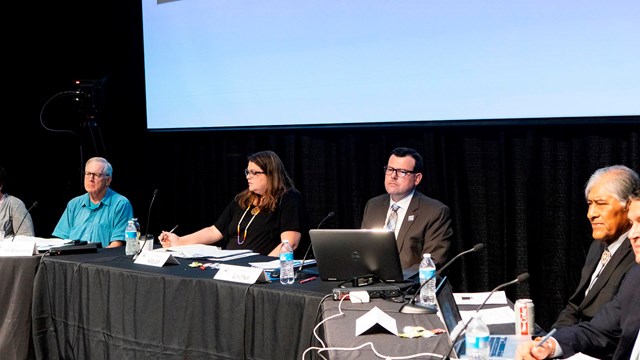
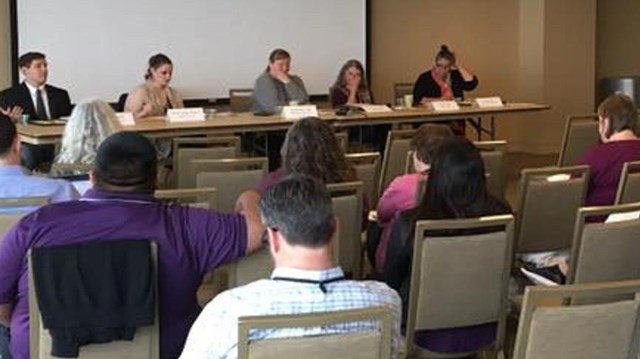
The The 32nd meeting of the Native American Graves Protection and Repatriation Review Committee was called to order by Ms. Rosita Worl at 8:30 a.m., Tuesday, May 30, 2006, in the Treadwell Ballroom, Westmark Baranof Hotel, Juneau , AK .
Review Committee members –
Ms. Rosita Worl – Chair
Mr. Willie Jones
Mr. Colin Kippen
Mr. Dan Monroe
Mr. Vincas Steponaitis
Designated Federal Officer –
Mr. Timothy McKeown, Program Officer, National NAGPRA Program
National Park Service/Department of the Interior staff in attendance –
Ms. Janet Matthews, Associate Director, Cultural Resources, National Park Service
Ms. Sherry Hutt, Program Manager, National NAGPRA Program, National Park Service
Ms. Robin Coates , Secretary, National NAGPRA Program, National Park Service
Ms. Lesa Hagel, Contractor, National NAGPRA Program, National Park Service
Ms. Carla Mattix, Division of Parks and Wildlife, Office of the Solicitor
Mr. Toby Halvarson, Division of Indian Affairs, Office of the Solicitor (telephonic appearance)
Ms. Jean Rice, Division of Indian Affairs, Office of the Solicitor (telephonic appearance)
Persons in attendance during part or all of the meeting (names and affiliations as provided at the meeting by attendees) –
Mr. Kenneth Ames, Society for American Archaeology, Department of Anthropology, Portland State University , Portland , OR
Mr. Shane Anton, Salt River Pima-Maricopa Indian Community, Scottsdale , AZ
Ms. Mona Bernadino, Office of Hawaiian Affairs, Honolulu , HI
Mr. Bill Billeck, Smithsonian Institution, National Museum of Natural History , Washington , DC
Mr. Joe Brennan, Field Museum , Chicago , IL
Ms. Lori Breslauer, Field Museum , Chicago , IL
Ms. Barbara Brotherton, Seattle Art Museum , Seattle , WA
Ms. Mary Carroll, National Park Service, Park NAGPRA, Denver, CO
Ms. Theodora Castillo, US Forest Service, Juneau , AK
Ms. Janet Cohen, National Park Service, Anchorage , AK
Mr. Howard Crow Eagle, Office of the State Archaeologist Indian Advisory Council, University of Iowa , Des Moines , IA
Ms. Sandra Dong, Peabody Museum of Archaeology and Ethnology, Cambridge , MA
Mr. Lance Foster, Office of Hawaiian Affairs, Honolulu , HI
Mr. Kenneth Grant, Glacier Bay National Park , Gustavus , AK
Mr. Eric Hollinger, National Museum of Natural History, Smithsonian Institute, Washington , DC
Ms. Andrea Hunter, Smithsonian Institute, Repatriation Review Committee, Washington , DC
Mr. Clarence Jackson, Tsaagweidi, Kake , AK
Mr. Joseph T. Joaquin, Tohono O'odham Nation, Sells, AZ
Mr. Greg Johnson, University of Colorado, Boulder, CO
Ms. Jacqueline Johnson, National Congress of the American Indian, Washington , DC
Mr. John Johnson, Smithsonian Institute, Anchorage , AK
Mr. David Katzeek, Shangukeidi, Juneau , AK
Mr. Russell Leighty, American Museum of Natural History , New York , NY
Mr. Ricardo Leonard, Salt River Pima-Maricopa Indian Community, Scottsdale , AZ
Ms. Dorothy Lippert, National Museum of Natural History , Washington , DC
Mr. Kai Markell, Office of Hawaiian Affairs, Honolulu , HI
Ms. Cyd Martin, National Park Service, Park NAGPRA, Denver, CO
Ms. Henrietta Massey, Sac and Fox Nation of Oklahoma, Stroud, OK (telephonic appearance)
Ms. Sandra Massey, Sac and Fox Nation of Oklahoma, Stroud, OK (telephonic appearance)
Mr. Lamar Matthews, Sarasota , FL
Ms. Kathy Miller, Sealaska Heritage Institute, Juneau , AK
Ms. Nell Murphy, American Museum of Natural History , New York , NY
Mr. Patt Murphy , Iowa Tribe of Kansas and Nebraska , Abilene , KS
Ms. Angela Neller, Wanapum Heritage Center , Ephrata , WA
Ms. Cindy Orlando, National Park Service, Hawaii Volcanoes National Park , HI
Ms. Kate Riley, Seattle Times, Seattle , WA
Mr. Ramon Riley, White Mountain Apache Tribe, Fort Apache , AZ
Mr. Alexander Ritchie, White Mountain Apache Tribe, Whiteriver , AZ
Ms. Helen Robbins, Field Museum , Chicago , IL
Ms. Shirley Schermer, Iowa Office of the State Archaeologist, University of Iowa , Iowa City, IA
Ms. Lauren Sieg, Springfield , VA
Mr. Chuck Smythe, National Park Service, Northeast Region, Boston , MA
Mr. Walter Soboleff, Tlingit, Juneau , AK
Mr. Jerome Thompson, State Historical Society of Iowa, Des Moines , IA (telephonic appearance)
Ms. Sue Thorsen, Sitka National Historical Park, Sitka , AK
Mr. Steve Titla, San Carlos Apache Tribe, Globe, AZ
Mr. Donald Wanatee, Office of the State Archaeologist Indian Advisory Council, University of Iowa , Sac and Fox of Iowa , Tama , IA
Ms. Sherry White, Stockbridge Munsee Community, Bowler, WI
Mr. Ricardo Worl, Tlingit, Juneau , AK
Mr. Fred York, National Park Service, Pacific West Region, Seattle , WA
Introduction/Welcome
Mr. McKeown conducted a roll call of members and confirmed that the Review Committee had quorum for the meeting. Mr. Walter Soboleff, Raven, Clan leader of the Leeneidí , offered an invocation. On behalf of Sealaska Corporation, Ms. Worl welcomed everyone to the homeland of the Tlingit, the Haida, and the Tsimshian. Ms. Worl then introduced the following traditional leaders.
Mr. Clarence Jackson, Eagle, clan leader of the Tsaagweidí from Kake , AK , welcomed everyone to Alaska and stated his traditional names; Galtín ( Tsaagweidi ), Asx'áak ( Kaagwaantaan ), Taadakua (phonetic), Daa naawú ( Tsaagweidi ), and Tá Gooch ( Teikweidi ). Mr. Jackson stated that names are important and draw people together. Mr. Jackson stated that when he was a young boy, his grandmother sent him to a gathering and said he would be her face. Later, she explained that the people at the gathering could tell from the mask he was wearing what clan he was from because she appointed him to be the face of the Killer Whale family from Kake. Mr. Jackson stated that being the mask means to represent yesterday's people, taking yesterday's culture to tomorrow's people. Mr. Jackson stated that the forefathers never stopped speaking and sharing knowledge. Mr. Jackson stated they were present at the meeting to represent yesterday's people and let everyone know that these objects are important because they will be passed on to the younger people. Mr. Jackson thanked everyone for being in Alaska .
Mr. David Katzeek, Eagle, Clan leader of the Shangukeidí , stated his Tlingit name is Tlin Ge Astay and thanked everyone for being at the meeting. Mr. Katzeek stated that at.óow represents those who have gone on before and are not brought out just for show. Mr. Katzeek stated when he sees at.óow he will be reminded of his sister who passed away. Mr. Katzeek stated that the at.óow represent his people from time immemorial, which is why it is so important that the correct people make a claim so that the items go to the clan where they belong.
Mr. Ricardo Worl, Eagle, maternal nephew of Clan leader David Katzeek, welcomed everyone to Alaska . Mr. Worl stated he has had the opportunity to witness three objects being repatriated and witness how the objects were welcomed back and empowered the people. Mr. Worl stated he wanted all involved in NAGPRA and repatriation to know that their work was noticed and appreciated.
Mr. Katzeek and Mr. Worl sang a mourning song composed for a man who lost his mother and was returning to the village of Klukwan . Mr. Katzeek stated songs are also at.óow and people need to be careful to sing only their songs.
Mr. Kenneth Grant, Raven, Clan leader of the T'a k deintaan , stated his Tlingit name was Katla tuklaket (phonetic). Mr. Grant welcomed all of the Indian tribes and thanked them for coming to Alaska . Mr. Grant stated his clan comes from Mount Fairweather, Lituya Bay , and he proudly wears the crest of his clan. His clan gets its strength from Mount Fairweather , which played an important part in the clan's history, giving the clan at.óow , regalia, songs, and names. Mr. Grant stated that his people were forced out of their homeland by the Ice Age, and then suffered through the coming of the Russians, Europeans, and the Federal government. Christianity resulted in regalia being scattered in museums through the country and the world. The Review Committee is charged with returning regalia that rightfully belongs to his people, and Mr. Grant was hopeful that would be the case.
Mr. Walter Soboleff, Raven, Clan leader of the Leeneidí stated that Tlingit protocol of long ago was that a person did not have the privilege to speak unless he first learned to respect himself so that others would respect him as he speaks. Tlingit culture has maintained its integrity despite the influence of Russian and Western cultures. Mr. Soboleff stated that every item of repatriation was a chapter of the culture of the people, and some pieces the people would like to repatriate while others they would choose not to repatriate. Mr. Soboleff stated he marvels at the memory retention of his culture, with individuals hearing a story once and remembering it for the rest of his or her lifetime. Mr. Soboleff stated he appreciated the efforts of all gathered at the meeting, to have a part in the preservation of repatriation, which is chapters of the history of the culture of the people. Mr. Soboleff explained that Tlingit people respond when another person is speaking to follow appropriate Tlingit protocol, expressing approval and thanking the speaker with gratitude for the remarks.
On behalf of the Review Committee and NPS staff, Ms. Worl thanked the speakers for their welcome, wisdom, and sharing their ancestors with all present.
Mr. Joe Joaquin offered an invocation the second day of the meeting.
Comments and Review of the Agenda – Designated Federal Official
Mr. McKeown announced that the meeting was a public meeting and a notice had been published in the Federal Register in accordance with the Federal Advisory Committee Act (FACA) procedures. Mr. McKeown gave a brief review of the agenda.
Certification of the Minutes of March 3, 2006
The Review Committee adopted the minutes of the March 3, 2006 Review Committee teleconference.
Comments from the Associate Director, Cultural Resources
Ms. Janet Matthews, Associate Director, Cultural Resources, National Park Service, thanked the Tlingit, Haida, and Tsimshian people for their ceremonious welcome in conjunction with Celebration 2006. Two years ago, Ms. Matthews was able to personally meet with the Review Committee members and thank them formally for their willingness to serve to implement the law as a secretarially appointed NAGPRA Review Committee. Ms. Matthews assumed responsibility as Associate Director on January 5, 2004, and was charged by NPS Director Fran Mainella with making effective implementation of NAGPRA a top priority.
In 2004, Mr. Willie Jones, Mr. Vincas Steponaitis, and Mr. Dan Monroe were appointed to the Review Committee. In June 2004, Mr. McKeown was selected as Designated Federal Officer for the Review Committee. Following his appointment, Mr. McKeown coordinated a federally noticed teleconference on July 29, 2004, the first official Review Committee meeting in quite some time. In July 2004, through an Intergovernmental Personnel Act assignment, Dr. Sherry Hutt began to serve as Program Manager for the National NAGPRA Program. Ms. Cyd Martin was appointed to serve as the head of Park NAGPRA. Since the September 2004 separation of National and Park NAGPRA, Ms. Martin has coordinated the NAGPRA compliance obligations relevant to NPS units, reporting to the Intermountain Region of the NPS. The National NAGPRA Program reports ultimately to the Assistant Secretary for Fish and Wildlife and Parks. The separation of the working files of the two programs was complete in November 2004, with the two programs operating with distinct budgets.
Mr. Colin Kippen was appointed to the Review Committee in 2005. Secretarial Order 3261, signed May 23, 2005, further clarified the responsibilities of the National NAGPRA Program. Civil penalty enforcement pursuant to NAGPRA was assigned to the National NAGPRA Program as staff support to the Assistant Secretary for Fish and Wildlife and Parks. A consultative relationship was established between the Assistant Secretary for Fish and Wildlife and Parks and the Assistant Secretary for Indian Affairs. Program duties include: preparing regulations for issuance by the Assistant Secretary for Fish and Wildlife and Parks; reviewing and recommending disposition of requests for extensions of the inventory deadlines by the Assistant Secretary; publishing notices in the Federal Register; service as the DFO's responsibilities to the NAGPRA Review Committee in consultation with the Office of the Solicitor; providing technical assistance to the Department of Justice in implementation of the trafficking provisions of NAGPRA; developing and issuing guidelines; technical information, training, and other programs, and administering grants to assist Indian tribes, Native Hawaiian organizations, and museums in meeting NAGPRA obligations.
On July 28, 2005, the Senate Indian Affairs Committee held an oversight hearing on implementation of NAGPRA. Deputy Assistant Secretary Paul Hoffman testified on behalf of the DOI. A recent informal agreement allowed the National NAGPRA Program staff to work in cooperation with the NPS Visitor Resource and Protection Associate Directorship for training to support prosecution of criminal and civil cases in conjunction with the DOJ and the FBI Art Crimes team.
Ms. Matthews stated that all of these accomplishments over a relatively short period of time rely on the leadership of the Review Committee and the National NAGPRA Program staff and solicitors for their professional expertise and the hard work of all who join together in this critical effort. On behalf of NPS Director Fran Mainella, Acting Assistant Secretary Matt Hogan, and Secretary Dirk Kempthorne, Ms. Matthews thanked the Review Committee members for meeting to address a complex agenda. These responsibilities include the far-reaching issues regarding the protection of burial sites, disposition of the dead, and repatriation of cultural items improperly taken from Indigenous people. Ms. Matthews thanked Sealaska Heritage Institute and its President and Review Committee Chair Rosita Worl for her forethought and tenacity in bringing together the Review Committee and Celebration 2006, providing an opportunity for Tlingit, Haida, and Tsimshian people to participate in this meeting and for the Review Committee members and staff to attend this important event. Ms. Matthews stated that at Celebration 2006, the Sealaska Heritage Foundation would release a new video entitled Kuwóot yas.éin (His Spirit is Looking Out From the Cave) , which documents the participation among Alaska Native peoples, scientists, and government agencies following the discovery of 10,000 year old human remains in a cave on Prince of Wales Island. On behalf of NPS Director Fran Mainella, Deputy Director Steve Martin, and the DOI, Ms. Matthews thanked the Review Committee members for their efforts and stated she looked forward to receiving their recommendations.
Report on Implementation of NAGPRA for the First Half of FY2006
Ms. Hutt summarized the activities of the National NAGPRA Program detailed in the National NAGPRA FY 2006 Midyear Report.
Grants : Ms. Michelle Wilkinson has accepted the Grants Coordinator position, as an employee of the National NAGPRA Program. The number of FY 2006 grants increased approximately 25 percent over the prior year, demonstrating that efforts to conduct outreach with Indian tribes and museums has been effective and will be continued in the coming year. The FY 2006 grants package was in process to the Assistant Secretary for approval and will be complete in the near future. The grant recipients list will contain Indian tribes and museums receiving grants for the first time, which can be attributed in part to Ms. Wilkinson's efforts.
Notices : Under the administration of Ms. Jaime Lavallee, Notice Coordinator, the number of notices to date in FY 2006 is on track to repeat the success of FY 2005 in published notices. Ms. Hutt stated that while efforts continue to reduce the notice backlog, the National NAGPRA Program has been receiving a greater number of new notices, including notices that deal with a large number of individuals. This positive trend is reflective of the continued and greater attention given to the notice process.
Civil Penalties : Mr. David Tarler, Civil Penalties Enforcement Coordinator, and Mr. Bob Palmer, Law Enforcement Agent, have submitted a civil penalties package to the Assistant Secretary, which includes the first civil penalty resolution. There has been a greater effort to communicate with museums to attain closure of each civil penalty issue with either a finding of civil penalty or finding of no civil penalty. Ms. Hutt stated that the renewed effort to resolve civil penalty issues has resulted in increased requests for assistance, reflective of the civil penalty program's real message of the promotion of compliance.
Database : Efforts continue to stabilize technology and include more information on the Website to assist parties with research to identify individuals on the list of culturally unidentifiable human remains, including the addition of Royce treaty maps.
Review Committee Discussion : Mr. Steponaitis stated that under the Barriers Encountered section in previous reports to Congress, the Review Committee pointed out the discrepancy between the amount of money requested by Indian tribes and museums for grants verses the amount that was actually able to be awarded. In addition, due to funding constraints within the National NAGPRA Program, some of the grant money has been used to cover operating costs. Mr. Steponaitis asked for an update on this situation for FY 2006. Ms. Hutt stated that the total Congressional appropriation was reduced by an across-the-board Congressional holdback, as well as funds directed toward administration in FY 2006. This amount was less than in previous years, with the current year's available grant funding approximately $400,000 above last year from what Congress appropriated. Mr. Steponaitis stated that a total of 3.7 million dollars was requested in grant applications, so the total amount of grants funded was approximately half of the requested amount. Ms. Hutt stated that the total amount requested is increasing, which shows an increase in interest in NAGPRA grants.
Mr. Steponaitis asked for an update on the status of Federal agency compliance and if there are any ongoing cases involving Federal agency noncompliance with NAGPRA. Ms. Hutt stated that one case is in litigation, involving the Fallon Paiute-Shoshone Tribe and the Bureau of Land Management, where the Fallon Paiute-Shoshone Tribe has questioned the BLM's decision in a finding of cultural unidentifiable. The National NAGPRA Program is monitoring the litigation. Mr. Steponaitis stated he has heard complaints about lack of Federal agency compliance and asked about steps the National NAGPRA Program is or could take to encourage Federal agency compliance. Ms. Hutt stated the National NAGPRA Program is working to reduce the notice backlog, which will assist in moving both museums and Federal agency compliance forward. Another affirmative duty step will be reviewing inventories that have been filed to identify areas that need attention to meet compliance requirements and to ultimately publish notices. The National NAGPRA Program has done training for solicitors in the DOI, as well as other attorneys and Federal agencies in general. Ms. Worl stated that Mr. Steponaitis identified a major issue that there is not a good process to ensure Federal agency compliance and the Review Committee could include a recommendation in the report to Congress to hold oversight hearings to address the issue of Federal agency compliance.
Mr. Kippen recommended tracking the status of Federal agency compliance. Ms. Worl recommended reviewing previous Review Committee meeting minutes for discussions regarding Federal agency compliance. Mr. McKeown stated the Review Committee included a report on Federal agency compliance in its 2001 report to Congress and he would provide a copy for the Review Committee's reference.
Mr. Kippen asked for an update on the status of the outstanding regulations. Ms. Hutt stated that 43 CFR 10.13, Future Applicability, was published for comment. Ten comments were received and integrated into the rule. The regulation was presently at the DOI for review toward publication as a final rule. Its progress was being monitored by the National NAGPRA Program. 43 CFR 10.11, Disposition of Culturally Unidentifiable Human Remains, has been drafted and was presently at the DOI for review toward publication for comment. The National NAGPRA Program was monitoring its progress. Mr. McKeown stated the DOI notified the Senate Indian Affairs Committee that it would be published by October 1, 2006. Mr. Kippen stated he would like to express concern to Congress about the long amount of time 43 CFR 10.11 has taken to get to publication. Mr. Monroe asked why the process has taken so long. Mr. McKeown stated part of the delay was due to reluctance from tribal commenters to engage in a discussion on a draft of the rule absent access to the culturally unidentifiable database and the regulatory process itself can be lengthy. The completed inventory was online and being used by Indian tribes and others. Ms. Worl stated that many Indian tribes expressed concern about lack of adequate consultation with Indian tribes on the regulation. Mr. Jones stated it was important that consultation be meaningful.
Mr. Kippen asked if the National NAGPRA Program would be able to compile information drawing a link between meaningful consultation, technical assistance, and the amount of the grants appropriation. Mr. Kippen stated that the Review Committee should include this topic in every report to Congress until there was no further need for consultation. Ms. Hutt stated that the National NAGPRA Program would have a full-time intern over the summer who would be reviewing information on the grant program to consider the areas served and to identify Indian tribes and museums served by the grants. Then the National NAGPRA Program staff can plan the means and methods of addressing the underserved areas and groups to help overcome the barriers for those groups applying for and receiving grants. Ms. Hutt stated that the project should be complete in time to include the requested information in the year-end report. Ms. Worl stated that Mr. Kippen's request was specifically talking about consultation and capacity building, that many Indian tribes were inundated with requests for comments and prefer to participate in a direct consultation process. Mr. Kippen stated he would like to include the language from the previous report to Congress to amend the definition of Native American to include the words “or was” in the current report to Congress.
Mr. Steponaitis stated that at the Albuquerque meeting the Review Committee asked if there would be a Solicitor's Office review of the impact of the Bonnichsen decision on the implementation of NAGPRA, and asked for an update. Ms. Hutt stated that at that meeting Deputy Assistant Secretary Paul Hoffman stated his view that the decision does not impact the administration of the program, because the case falls under Section 3 of NAGPRA. Ms. Mattix stated that the Solicitor's Office currently was not doing any further review or guidance, but was monitoring future relevant cases to assess the need for guidance or more specific review. Mr. Steponaitis stated that although the case itself fell under Section 3 of NAGPRA, the decision focused on the definitions of Native American and cultural affiliation, both of which were of critical and central importance to all aspects of NAGPRA. Mr. Steponaitis stated that while much of the focus of the reaction to the decisions has been on the definition of Native American, a lot of clarity was brought to the issue of cultural affiliation. Mr. Steponaitis urged the National NAGPRA Office to consider how to incorporate that into its training and implementation guidance to Federal agencies and museums. Mr. Jones stated that his Indian tribe's experience with an inadvertent discovery process taught him the importance of conducting tribal consultation with the appropriate people.
Mr. Kippen stated that in addition to reporting the progress made in completing the culturally unidentifiable database, he would like to include information about the need for addressing geographical areas that are listed in the database as having culturally unidentifiable human remains. Ms. Hutt stated that the National NAGPRA Office would develop information regarding Mr. Collin's request. Ms. Worl asked about the progress of the process to appoint a Review Committee member to fill the current vacancy. Ms. Worl stated she was pleased to hear of the progress in the grants program. Ms. Worl recommended that some audits be completed on the 459 Statements of No Summary Required that were reported in the Midyear Report, because she was aware of instances where institutions claimed they had nothing to report but actually did. Ms. Worl stated that of the 16 training sessions detailed in the report , only 2 were specifically oriented towards Native Americans, and she encouraged the National NAGPRA Program to reach out to Indian tribes. Ms. Worl stated that upon reviewing the National NAGPRA staff listing, she was not certain if any of the staff members were Native American and would like to encourage including Native Americans on the National NAGPRA staff.
Mr. Monroe asked what the guidelines were for member attendance of Review Committee meetings. Mr. McKeown stated that according to the Review Committee Charter any member who fails to attend two successive meetings of the committee or who otherwise fails to substantially participate in the work of the committee may be removed from the committee by the Secretary and a replacement named. Mr. Monroe urged the Review Committee to recognize and honor that clause, because member absences can functionally disable the Review Committee. Mr. Monroe recommended that the Review Committee's report to Congress be distributed more broadly to increase its impact, to all Congressmen and Senators who represent states where there are many Indian tribes.
Mr. Kippen made a motion that the Review Committee accepts the Midyear Report. Mr. Steponaitis seconded the motion. A vote was taken. The motion passed by unanimous vote. The Review Committee approved the National NAGPRA FY 2006 Midyear Report.
Discussion Regarding the Review Committee's 2005 Report to Congress
Initial Discussion (May 30, 2006)
Mr. McKeown stated he prepared a preliminary document as a starting point for the Review Committee's discussion. The Review Committee members agreed to use the preliminary document, with no proposed changes. The Review Committee members considered additional recommendations for the following sections of the report.
Progress Made: Ms. Worl recommended adding a statement to the effect that significant progress had been made since the last report, in particular that the culturally unidentifiable database was online.
Barriers Encountered: Mr. Steponaitis recommended adding a statement to address the issue of the disparity between the amount of funding available for grants versus the amount that has been requested. Mr. Kippen stated that the finalization and use of the culturally unidentifiable database will ultimately result in the need for even more funding. Mr. Kippen stated that the fact that some of the NAGPRA regulations are incomplete has created a barrier towards implementation of the program. Mr. Steponaitis recommended stating that that the issue of Federal agency compliance has been and continues to be an area of concern, and added that the Review Committee currently does not have a baseline for assessing Federal agency compliance. Mr. Kippen stated that sufficient money needs to be available for adequate consultation in the process.
Recommendations: Mr. Steponaitis stated a recommendation should be included to request additional funding for the grants program and program administration. Ms. Worl stated that one recommendation would be for Congress to hold oversight hearings on Federal agency compliance to assess the status and make recommendations for improvement. Mr. Kippen stated he would like to again include the recommendation that Congress amend the definition of Native American by adding the words “or was.” Ms. Worl recommended including language discussed in previous reports to Congress that the Review Committee supports the reburial of human remains as close to the original site as possible and recommends that a uniform reburial process be adopted by all Federal agencies.
Mr. Steponaitis and Mr. Kippen were appointed as a subcommittee to draft the 2005 Report to Congress for the full Review Committee's consideration and discussion. Mr. Steponaitis stated that a comparison of total notices filed by Federal agencies from the prior year to the current year shows little change and asked if that was reflective of the level of Federal agency compliance. Mr. McKeown stated that may not be a fair measure, especially when considering the increased number of museum notices. The recent efforts of the National NAGPRA Program to investigate allegations of failure to comply in museums may have precipitated more incoming notices and inventories from other institutions. Ms. Hutt stated that a 12-month summary of Federal agency compliance might provide a more accurate picture of agency compliance. Mr. McKeown stated that by statute the Secretary of the DOI is authorized to investigate allegations of failure to comply by museums, but the Secretary has no authority to assess civil penalties on Federal agencies. Ms. Mattix stated that although Federal agencies can be encouraged to comply, only Congress would be able to address the issue of Federal agency compliance.
Final Discussion (May 31, 2006)
The Review Committee discussed the Draft 2005 Report to Congress, prepared by Mr. Kippen and Mr. Steponaitis. Mr. Steponaitis and Mr. Kippen summarized the portions of the report that were added to the initial outline prepared by Mr. McKeown, which was discussed the previous day.
Progress Made: A final paragraph for this section was added and described the contents and status of the Database of Culturally Unidentifiable Human Remains.
Barriers Encountered: The first paragraph drew attention to fact that the Review Committee was concerned about the costs of compliance with NAGPRA and noted the disparity between the amount of money available for grants, the amount of money requested for grants, and setting the stage for asking for more. The second paragraph addressed the pending NAGPRA regulations, gave a brief description of the pending regulations, and ended by saying that the Review Committee believes it was of utmost importance that the regulations be completed and implemented as soon as possible. The third paragraph addressed the issue of Federal agency NAGPRA compliance and outlined the difficulties of accurately determining the level of Federal agency compliance without sufficient data to measure compliance. The Review Committee members agreed to delete the language from the prior report to Congress, which was included for reference purposes, and include the new language.
Recommendations:
Costs to Comply with NAGPRA. This section was the same as the prior report to Congress. Ms. Worl asked about including a request for funding specifically for the National NAGPRA Program. The members agreed to add the phrase “National NAGPRA Program,” to make the second bullet under this section read, “The amounts requested by the administration that is targeted for the National NAGPRA Program and each Federal agency's compliance efforts.”
Definition of Native American. This section was the same as the prior report to Congress.
Government Accountability Office (GAO) Study and Congressional Oversight Hearings. Mr. Kippen explained that this section was included to address the Review Committee's concerns about Federal agency compliance. The Review Committee recommends that Congress immediately call for a GAO study to assess and evaluate the compliance of each and every Federal agency with the provisions of NAGPRA and for Congressional Oversight Hearings on this subject. The Review Committee also recommends that the GAO consult with the NAGPRA Review Committee and the NAGPRA professional staff before designing and implementing this study. Ms. Worl suggested that the phrase “NAGPRA professional staff” be changed to “National NAGPRA Program.” The Review Committee members agreed.
Ms. Worl stated she would like to include a recommendation, as discussed earlier, to review different Federal agencies' reburial policies.
The Review Committee approved of the report in principle, subject to final review. Ms. Worl thanked the subcommittee for their hard efforts in creating the draft report.
Mr. Steponaitis stated that he added the additional point under Barriers Encountered concerning the fact that some Federal agencies were not allowing remains to be reburied on Federal land, which was mentioned in an earlier report to Congress. After reviewing the proposed language, Mr. Kippen made a motion to include the proposed language under the Barriers Encountered section. Mr. Jones seconded the motion. Mr. Kippen called the question. A vote was taken. The motion passed by unanimous vote. The Review Committee approved the motion to include the proposed language. Mr. Steponaitis agreed to provide a final version of the document to the DFO for production and distribution.
Mr. Steponaitis stated that upon reviewing the document he realized that the fourth recommendation regarding development of a uniform reburial policy on Federal lands in consultation between Federal agencies and Indian tribes was actually not a recommendation to Congress but to Federal agencies and moved the recommendation to the end of the last Barriers Encountered section. Mr. Kippen recommended that a copy of the report be sent to every member of Congress. The Review Committee agreed to the amended language proposed by Mr. Steponaitis.
Review of Documentation Submitted as Part of a Possible Dispute between the White Mountain Apache Tribe and the Field Museum
Consideration of Documentation
Mr. McKeown stated that Mr. Ramon Riley sent a letter dated March 17, 2006 to Ms. Hutt, Program Manager, which was the initial inquiry letter into this issue. Based on that letter, Mr. McKeown sent a letter to both parties to try to determine if the Review Committee would consider this issue, focusing on two specific points; the assertion that the White Mountain Apache Tribe made that the object was an object of cultural patrimony to which the Field Museum disagreed, and the assertion by the Field Museum that the Field Museum had right of possession to which the White Mountain Apache Tribe disagreed. Mr. McKeown stated that the information request to both parties was based specifically on those issues in an attempt to narrow the focus of issues to a manageable amount for the Review Committee. Mr. Monroe asked if the Field Museum has agreed to repatriate the object. Mr. McKeown stated that the Field Museum has offered to repatriate the object but the White Mountain Apache Tribe had declined to accept the offer. Mr. Monroe stated that if the dispute were to be heard, it would be a dispute to make a finding with respect to right of ownership and whether or not the objects are cultural patrimony. Mr. McKeown agreed that the dispute would be on factual issues related to the request, but the immediate focus would not be the disposition.
Mr. Steponaitis stated that Mr. McKeown had tried to focus the Review Committee's efforts by asking for consideration of facts rather than consideration of law and asked for clarification of the distinction between the two. Mr. McKeown stated that interpretation of the law was the provenance of the Secretary of DOI and the Solicitor's Office. The reason the Review Committee was impaneled was because of the members' expertise in dealing with issues related to the reality of situations. So the focus, especially over the past year, had been on trying to make sure that Federal dollars and the Review Committee members' time was not spent on issues that were outside of the Review Committee's expertise. Mr. Steponaitis asked if the Review Committee could choose to help facilitate resolving a dispute in ways that go beyond simply making findings of fact. Mr. McKeown stated that one of roles of the Review Committee was to facilitate the resolution of disputes and creative solutions were most welcome, keeping in mind the importance of the evaluation of facts.
Mr. Kippen stated that this specific issue was difficult because one party was willing to return the objects but the other party was unwilling to accept them, for reasons stated in the materials. The Review Committee may not be able to bring the parties to a closer agreement. Mr. Monroe stated that under the statute the primary purpose of dispute resolution was to make a finding regarding the return of human remains or other cultural items. In this case, the Review Committee would not discuss the return or repatriation of the objects but rather the grounds under which they were to be repatriated. Mr. Monroe stated, one, he did not agree with Mr. McKeown that the role of the Review Committee was simply to find facts, and two, he was unclear as to the rationale at this point for considering this particular issue as a dispute since disposition and repatriation were not at dispute. Mr. McKeown stated that he was not saying that the role of the Review Committee was specifically and only limited to the evaluation of contested facts but that the DOI was asking that whatever recommendation the Review Committee makes was based on an evaluation of contested facts. There had not been a determination whether this issue was a dispute, and the initial step was to focus on the contested facts and then see if there was a possible resolution.
Ms. Hutt stated that the DFO was establishing a protocol that when there was a potential dispute that the Review Committee would review the materials before the actual consideration of the dispute to determine if additional materials were needed. Ms. Hutt stated that in terms of factual disputes, many disputes seen by the Review Committee were due to a failure to come to terms, oftentimes because of a difference in the parties' viewpoints. The Review Committee's analysis of the facts could be incredibly instructive to parties and may potentially remove a stumbling block to resolution. Mr. Monroe urged that at some point the Review Committee have a discussion on whether this issue was a dispute, as he feels it was unprecedented in the sense that it was not a dispute about disposition. Ms. Hutt stated that it was. Ms. Mattix agreed and stated that NAGPRA was a consultative process and not just about the final result. Mr. McKeown stated that in this situation the two issues of whether the object was an object of cultural patrimony and whether the Field Museum has right of possession were preliminary matters that need to be resolved to determine how the disposition would work. For example, if an object was found to meet all NAGPRA requirements and a museum did not have right of possession, then the museum would need to repatriate the object to the Indian tribe without restriction. Mr. Monroe asked if there were restrictions proposed in the repatriation of these objects by the Field Museum . Mr. McKeown stated that his understanding was that there were restrictions. Mr. Monroe asked what the restrictions were. Ms. Hutt stated there was a reluctance to discuss the details of the issue because the parties were still in consultation on this issue, but hypothetically if in any repatriation a museum said they had right of possession and returned the items with reversion conditions in the agreement that would be a transfer of possession subject to conditions rather than a repatriation. Mr. Monroe stated that if there was documentation of a reversion condition in this instance, he either missed that information or the Review Committee was not provided the information, which was very relevant in terms of deciding if this was a dispute.
Mr. Steponaitis asked if there had been a similar dispute between the White Mountain Apache Tribe and the Denver Art Museum . Ms. Hutt stated in that case, the Denver Art Museum initially agreed to deaccession and gift the object, without making any determinations regarding whether the item was a sacred item. The White Mountain Apache Tribe declined the deaccession and gift, preferring to have the determinations and findings made pursuant to the NAGPRA process. Mr. Steponaitis stated he felt a sense of disquiet about this issue, in part stemming from a possible difference of opinion about what the most effective resolution to a dispute like this might be, whether to determine findings of fact or a different approach. The Review Committee can make a determination if an object was a sacred object or an object of cultural patrimony, but that opinion was not binding on any of the parties. Mr. Steponaitis stated that since the Review Committee had published a set of Dispute Procedures, at a minimum each party to a potential dispute should be requested to submit the information required in the Dispute Procedures. Specific to this issue, Mr. Steponaitis requested additional information on the conditions of the disposition or repatriation, elaboration of information in the categories outlined in the dispute procedures, and the missing information addressing the dispute procedures from the Field Museum . Ms. Worl stated that in the future each party would receive the same request for information, with reference to the Review Committee's Dispute Procedures.
Discussion of Dispute Process
Mr. McKeown stated that this more focused approach was to provide the Review Committee with information up front before a decision was made to move forward with a dispute. Ms. Worl stated that this process was difficult in gathering information while restraining from asking detailed questions but also provides benefits in outlining all material necessary for consideration. The Review Committee needs to determine if they wish to continue using this process of fact finding before making a determination whether a dispute will be accepted. Mr. McKeown stated that under the Dispute Procedures, first one party sends in information, then the DFO requests information from the other party, and then the DFO and Chair in consultation decide whether there is a dispute. Those first two steps still occurred in this situation; however, the DOI made a determination to narrow the range of information requested in order to help the Review Committee focus on the issues. This decision was made partly in response to past concerns of the Review Committee when members felt that too much information was provided, making determinations more complicated.
Mr. Monroe asked if the parties to the potential dispute would be willing to address the Review Committee. Mr. Steponaitis stated he felt a sense of disquiet about asking for comment when the dispute was not formally placed on the agenda, not knowing who all of the interested parties were or if they were notified, which leads to a worry that people may feel like they were blindsided. Mr. McKeown stated that earlier in the meeting he indicated clearly that he was not asking for a recommendation but was attempting to ensure that the documentation was adequate to fully consider the issue. Mr. McKeown proposed that after the Review Committee agreed on a procedure, in the future the documents could be sent to the Review Committee members, who could individually determine if additional information was needed. Mr. Monroe stated he actually preferred this more open approach, because comments made by the other Review Committee members were relevant in his deliberations. While there may be a disadvantage in terms of cost, the dispute process itself was costly, and a full consideration of all facts and review of materials was very important and may help result in a higher success rate in dispute resolution. Mr. McKeown asked if the Review Committee would be amenable to doing that process by teleconference, holding their discussion in a publicly noticed meeting. Mr. Steponaitis stated that it may be beneficial to use both a combination of individual requests and a teleconference discussion. Mr. Steponaitis stressed the importance of not scheduling a formal hearing on a dispute until all relevant documents are before the Review Committee with sufficient time to digest the information. Ms. Worl asked that the proposed changes in the Dispute Process be drafted for the Review Committee's consideration.
Appearance of Parties to the Potential Dispute
Mr. Alexander Ritchie, counsel for the White Mountain Apache Tribe, stated that this dispute goes back to the late 1990s. Three National NAGPRA Program grants have been provided to help this matter. Mr. Ritchie apologized for the late arrival of the last document, which was sent early and delayed in the mail. Mr. Joe Brennan, Vice President of External Affairs, Field Museum , introduced himself.
Mr. Ritchie stated that he was also a little out of sorts about the process, and his understanding was that the Review Committee would be reviewing the submitted documents to see if they needed any additional information. At issue was the Receipt Agreement, a document that does provide certain terms and conditions on the repatriation. The White Mountain Apache Tribe feels the agreement skips the NAGPRA process, and if the White Mountain Apache Tribe alienates the items in the future the Field Museum would have right of reversion. The White Mountain Apache Tribe has claimed that these are both items of cultural patrimony and sacred objects. Mr. Ritchie stated that the parties discussed a potential resolution earlier that day, and the White Mountain Tribe representatives need to present that information to the elders. In the meantime, the White Mountain Apache Tribe would like to schedule a hearing date for a dispute, and can provide a formal response to the Field Museum 's documents. The White Mountain Apache Tribe is committed to further discussions with the Field Museum , but if not successful is willing to commit to the Review Committee's schedule for submissions of materials and the dispute process.
Mr. Brennan stated that he joined the Field Museum in December 2005. Mr. Brennan stated that earlier today he acknowledged the fact that the Field Museum 's process in terms of interacting with the White Mountain Apache Tribe has been subject to some unfortunate contingencies. Mr. Brennan apologized, and offered to apologize to the elders, for the unfortunate breakdown in communications, partly due to some recent staff changes. Mr. Brennan stated that this was a difficult conversation to conduct on a preliminary basis. Mr. Brennan stated that he did offer to take the restrictions off of the agreement with the White Mountain Apache Tribe. For some time, the Field Museum included the right of reversion because there was some confusion and uncertainty about what the tenor of the law actually says in terms of trustee's obligations to ensure that the rights and interests of the people of Illinois were protected. Mr. Brennan stated that was the legal part of this issue, which gets away from the spirit of dealing with the White Mountain Apache Tribe and the spirit of NAGPRA. The Field Museum was committed to the healing and growth of the Apache Nation and other tribes.
Mr. Jones stated that his tribe recently went through a process following a gravesite disturbance. The situation involved Indian tribes from Canada , which has a different set of laws. The original law for reburial was in place before the Canadian border or State of Washington boundaries were in place. So there are two sets of laws to deal with, then and now. Mr. Jones stated he tries to read the law so that both the past law and the current law are considered. Mr. Steponaitis asked the parties for their impression of the Review Committee Dispute Procedures in general and regarding the potential predispute documentation review process. Mr. Ritchie stated he would like to reserve comment until the process for this situation is complete. Mr. Brennan stated that he thinks the process allows people to talk past each other. Mr. Brennan stated that honing down the amount of information to get to the core issues more easily could be beneficial. Mr. Kippen asked if the offer to remove the reversion conditions was new information. Mr. Brennan stated that he made that offer earlier that day and would consider it new information to the discussion.
Mr. Monroe asked for additional information from the Field Museum: one, what conditions or analyses resulted in the establishment of reversion conditions for repatriation in some instances and not others, with a request for specific details regarding facts, analyses, or other factors; two, documentation regarding the number of times the Field Museum repatriated objects with reversion provisions; and three, the Field Museum's reasons for including reversion provisions as a function of fiduciary responsibility, when most other museums do not.
Mr. Ramon Riley, Cultural Resources Director, White Mountain Apache Tribe, stated he is saddened that they need to use counsel. For the Apache, culture and tradition come first and they have always dealt with institution staff. The issue is not resolved, because the new information needs to be presented to the tribal elders, as they will make the decisions. Mr. Steve Titla, San Carlos Apache Tribe, stated he was present in support of the White Mountain Apache Tribe. Mr. Titla stated that the Tlingit elders captured the essence of the Apache way of thinking during their welcome ceremony. The Apache way of thinking was that those items belong to the Apache and nobody else.
Final Discussion
The second day of the meeting, Mr. Monroe read a prepared statement.
While members of this Review Committee are nominated by museums, universities or Native organizations or tribes, once selected by the Secretary of the Interior, every member of the NAGPRA Review Committee is responsible for carrying out the responsibilities of this committee to fulfill Federal law. We do not serve as representatives of one group or another group. We serve the Secretary of the Interior in the implementation of NAGPRA. NAGPRA is civil rights legislation at its heart. It is designed to remedy past injustices to Native Americans and in so doing to help heal Native American cultures of the harm done by these injustices. As a member of the museum community, I am on whole proud of the profound changes that have occurred in the relationship among museums, universities, Federal agencies and Native people as a result of NAGPRA. The overwhelming majority of museums and museum professionals have acted in good faith and conscience to carry out the provisions of this Act and in so doing to demonstrate a new level of appreciation, understanding, and a commitment to America 's first cultures and people. Last, I'm not an attorney. It's within this context that I make the following remarks. According to testimony presented yesterday by the Field Museum to the Review Committee, it appears that the Field Museum has in effect loaned works of art to several tribes while claiming that they have repatriated such works. Such de facto long-term loans have apparently been affected in situations in which the museum recognizes under the provisions of NAGPRA that an object is a sacred object or an object of cultural patrimony while concurrently claiming a right of possession. In several instances, the museum has apparently transferred physical possession of objects to tribes while failing to transfer complete legal control of these objects by retaining a right of return of the objects to the museum if for any reason the tribe decides to alienate them in the future. In effect, as I understand the law, the museum has thus made a kind of long-term loan of tribes to objects in certain circumstances.
NAGPRA, as I understand it, contains no explicit provisions for extending loans of objects to parties requesting repatriation of certain cultural items, assuming the tribes requesting return of such objects have established cultural affiliation and the objects fulfill the criteria presented in NAGPRA's sacred objects or objects of cultural patrimony. Actually, there are some specific kinds of instances in which sacred objects could, in fact, conceivably be defined as sacred objects and at the same time the museum could claim a right of possession. NAGPRA recognizes that a museum may choose for reasons it deems appropriate to transfer ownership and control of objects to a tribe as a gift, even though the museum may assert that it has a right of possession to such objects. However such transfers occur outside the provisions of NAGPRA, they're not technically repatriations of objects to a tribe under NAGPRA. NAGPRA does not recognize the right of a museum or university or Federal agency to identify an object of cultural patrimony while concurrently claiming a right of possession. It may be possible in some instances that a museum might identify an object as a sacred object while concurrently claiming a right of possession, as I mentioned just a moment ago. NAGPRA further contains no provisions for identifying objects as sacred objects or objects of cultural patrimony and for concurrently transferring physical possession of such objects to a tribe while retaining certain ownership control interests in the objects such that if a tribe decided to alienate the object or objects for any reason then the tribe must automatically return the object or objects to the museum. A museum may offer such terms and conditions to a tribe, but it is highly questionable in my mind that return of objects to a tribe with revision clauses constitute a legal repatriation in at least some instances. Arrangements for de facto long-term loans of objects to tribes could be established outside the provisions of NAGPRA but not within provisions of NAGPRA.
If as it appears, the Field Museum has transferred physical control of certain objects to some tribes while retaining certain ownership interests in the object, then it is, I believe, at a minimum doubtful that the museum has legally repatriated such objects to tribes. This is a serious issue because if the above analysis and assessment is correct, then the Field Museum may have falsely claimed to have repatriated certain objects to tribes under NAGPRA when in fact no repatriation as defined by NAGPRA has occurred. Further, the Field Museum provided this committee with a great deal of information regarding its discussions with the White Mountain Apache Tribe claim for repatriation of certain objects. In none of the extensive documentation provided by the Field Museum was there any mention of the museum's apparent intent to transfer physical ownership but not complete legal control of the objects requested for repatriation. This information is absolutely central to any purported offer of repatriation and the fact that it was apparently withheld or otherwise not included in information provided the committee raises, in my mind, extremely serious concerns.
I believe it's incumbent upon the Review Committee, the NAGPRA Office, and the Secretary of the Interior to ascertain if the Field Museum for whatever reasons has inappropriately represented certain transfers of sacred objects or objects of cultural patrimony to tribes as repatriations under the terms of NAGPRA while making claims of continuing ownership interest in such objects such that the museum has, in effect, not repatriated objects to tribes but has in effect made long-term loans of these objects. If the above legal analysis holds and if the Field Museum has taken such actions as those described above, then the Field Museum has purported to repatriate several objects to tribes, whether by intention or not, that fail to qualify as repatriations under NAGPRA. In such cases, it's incumbent on the Review Committee in my estimation to review each of these transactions and to make recommendations to the Secretary regarding their status. It may further be necessary for the Review Committee and the Department to review the processes by which repatriations are qualified and listed in the Federal Register. None of the points made above are made with specific reference to the White Mountain Apache Tribe case, which is a case in which there may not be a dispute and a case, even if there is a dispute, which this Review Committee has not chosen to consider. It is in reference to testimony provided by representatives of the Field Museum and others yesterday.
With that, I would encourage the committee to consider a draft letter from the Department to the Field Museum articulating and identifying our concerns in the regards I just mentioned and asking and requesting that the Field Museum provide full and complete disclosure of information regarding such previous repatriations, if they have occurred, and that we then review all of the information provided by the Field Museum to determine what, if any, further actions are necessary.
Mr. Kippen stated he would like to associate himself with Mr. Monroe's comments. Mr. Kippen made a motion to approve a letter that has been prepared by Mr. McKeown to Mr. John McCarter, Field Museum . Mr. Monroe seconded the motion.
Mr. Steponaitis stated that prior to this discussion the Review Committee was enjoined to be careful to look at this as a procedural matter and evaluate the information provided. Mr. Steponaitis expressed concern that despite disclaimers embedded in Mr. Monroe's statement this was a rush to judgment, very similar to a process followed by the Review Committee at the Albuquerque meeting, which had unhappy results. Mr. Steponaitis stated that in his statement Mr. Monroe admits he is not a lawyer but then presents a legal analysis that Mr. Steponaitis would like to consider before signing on to this statement. Mr. Monroe stated that while he clearly cannot agree with Mr. Steponaitis's characterization of the statement or the process at the Albuquerque meeting, he respects Mr. Steponaitis's right to interpret them as he wishes. Mr. Monroe stated that the Review Committee heard information such that it appears that, aside from the White Mountain Apache Tribe/Field Museum situation, in the past the Field Museum has carried out actions claiming them to be under the provisions of NAGPRA that in fact may not be legal repatriations. Ms. Worl stated that the motion before the Review Committee was to adopt the letter. Mr. Steponaitis requested to table the motion under after the break. The discussion was tabled.
Following the break, Mr. Steponaitis stated that if his previous comments sounded as though they were directed at Mr. Monroe, that was not his intension and he apologized. Mr. Steponaitis stated his main concern was with the process, and he shared the concerns raised by Mr. Monroe about the whole issue of whether a repatriation can be made with strings attached, which was an issue that was appropriate for the Review Committee to consider. Mr. Steponaitis suggested an alternative to sending the draft letter discussed earlier in the day; first, that the Review Committee ask the Field Museum for information in the context of the potential dispute with the White Mountain Apache Tribe, and second, to investigate the broader issue of the inclusion of revision provisions with all museums, particularly large museums that are very involved with NAGPRA. At the same time, to ask the Solicitor's Office to help provide background on some of these issues to help evaluate the information and invite Indian tribes to provide information on their experience with such returns and whether the provisions serve the Indian tribes' interests. Mr. Jones stated that he would like to refer to the White Mountain Apache Tribe and the Field Museum issue as a potential resolution or potential solution, rather than a potential dispute, to focus on the resolution rather than the dispute.
Mr. Monroe stated that given the comments at the meeting the first question to the Field Museum regarding the White Mountain Apache Tribe was whether or not they intend to include reversion provisions in any potential agreement with the White Mountain Apache Tribe. Mr. Monroe stated that he appreciated Mr. Steponaitis's suggestion that these are broader issues. Mr. Monroe would like to see the questions posed in the draft letter to the Field Museum be made to the broader museum and tribal community as part of the more general query on the Review Committee's part. Mr. Monroe reviewed the informational requests from the letter: one, documentation regarding each instance in which the Field Museum has placed a reversion condition on a repatriation of cultural items to a lineal descendant, Indian tribe, or Native Hawaiian organization; two, the legal basis for including reversion conditions in some repatriation agreements and not in others; three, the Field Museum's rationale for including reversion conditions as a function of fiduciary responsibility.
After discussion, the Review Committee members agreed to send a letter to both the Field Museum and the White Mountain Apache Tribe requesting that the parties notify the National NAGPRA Program of the status of the issue and whether the parties have reached resolution by August 1, 2006. If no resolution has been reached, the Review Committee authorized the DFO to take action in terms of soliciting information and placing the issue on the meeting agenda. Mr. McKeown proposed one change to the draft letter, changing “tribal representatives agreed” to “tribal counsel agreed.” Mr. Kippen made a substitute motion to send a letter to both parties with a resolution deadline, with a follow-up letter containing an informational request to be sent to both parties should resolution not be met. Mr. Monroe seconded the motion. A vote was taken. The motion passed by unanimous vote. The Review Committee agreed to the motion to send the letter to the parties.
Ms. Worl stated that the broader issue of reversion provisions will be placed on the agency for the next meeting. Mr. Monroe recommended that the following information be requested: one, a letter to major museums asking if they have carried out repatriations that include reversion provision clauses and details of such, if applicable; two, a letter to Indian tribes asking if they have received repatriations with reversion clauses that they likewise notify the Review Committee; three, request testimony from museums, Indian tribes, and Federal agencies regarding any such reversion agreements; four, request information and analyses from the Solicitor's Office regarding the technical definition of repatriation, particularly with respect to sacred objects and objects of cultural patrimony in regard to the right of possession and ownership control. Ms. Hutt stated that notices have been published of conditional transfers of possession. Ms. Worl requested that a list of those notices be included in the above request. Mr. Jones recommended adding a request that if parties are successful in resolving these issues the parties should share that success with the Review Committee, which was added as a final request.
Mr. Monroe described more specifically the information that the Review Committee would like to receive from the Solicitor's Office: one, an analysis of whether or not it is possible for a museum to recognize an object as an object of cultural patrimony and concurrently claim a right of possession; two, whether or not it's possible for a museum to recognize an object as a sacred object and concurrently claim a right of possession; three, if there are any provisions that provide for attachment of terms and conditions to a repatriation as defined by and within the provisions of NAGPRA that include terms and provisions of transfer of rights of property possession but not full rights of property control; and four, if that can be done, under what circumstances within the terms and conditions of NAGPRA.
Mr. Monroe stated that all of the Review Committee members were concerned about the appearances of the committee with respect to being equitable and at the same time the Review Committee conducts its business publicly. Diversity of opinion is a plus regarding what proper processes the Review Committee should follow. Mr. Monroe thanked and recognized Mr. Steponaitis for expressing his very good ideas on this score. Mr. Monroe stated that personally, and on behalf of the entire Review Committee, there was no agenda at work aimed at the Field Museum , but a very important set of questions was raised regarding whether or not repatriations have occurred that actually do not fall within the provisions of NAGPRA. It is important that it is explicitly clear that while the Review Committee has questions to address to the Field Museum , other museums, and Indian tribes, those questions are motivated by the Review Committee's responsibility to carry out its responsibilities to the Secretary of the Interior and fulfill their responsibility to implement the law fairly and equitably.
Culturally Unidentifiable Human Remains from Iowa
Presentation of Issue
Ms. Shirley Schermer , Director of the Burials Program, Iowa Office of the State Archaeologist, University of Iowa , described the request for Review Committee's approval of the Draft Process for Reburial of Culturally Unidentifiable Native American Human Remains and Associated Funerary Objects Originating from Iowa (Draft Process). Ms. Schermer thanked the Review Committee for the opportunity to speak and summarized the request. In 1976, the Code of Iowa was modified to provide protection of all human remains, regardless of age and whether originally from public or private land. The 1976 Code gave the Iowa Office of the State Archaeologist statutory responsibility for ancient human remains and burial sites, defining ancient as more than 150 years in age. The 1976 Code established an Indian Advisory Council to work with the Iowa Office of the State Archaeologist. Mr. Donald Wanatee was one of the original members of the council and has now served for 30 years in that capacity, and the other current members are Mr. Howard Crow Eagle and Mr. Royal Kerchee. The 1976 Code established a cemetery on State land specifically for the reburial of ancient remains. Through the years, a total of four cemeteries have been established and the remains of over 2,000 individuals have been reburied. Reburials are done in the cemetery closest to the original burial site. Prior to NAGPRA, Iowa conducted regular reburials once or twice a year. Following the passage of NAGPRA, one request for reburial took from 1997 until 2001 to go through the process to where a reburial could occur. Because of their State-mandated responsibilities, the Iowa Office of the State Archaeologist will continue to receive human remains. In 2001, discussions began to develop a process to expedite the timely reburial of culturally unidentifiable human remains within the provisions of NAGPRA. With the receipt of a NAGPRA grant, the Draft Process was developed at a tribal conference in October 2004, for which representatives were invited from 21 federally recognized Indian tribes and 1 non-federally recognized Indian group. A slightly modified version of the Draft Process was submitted for the Review Committee's consideration. The Draft Process would deal only with Native American human remains determined to be culturally unidentifiable and would involve submitting inventories to all of the signatory tribes, plus the National NAGPRA Office, twice a year, followed by a published notice. After the 30-day waiting period, the human remains would be reburied at the original burial location or closest appropriate cemetery.
Mr. Patt Murphy , Iowa Tribe of Kansas and Nebraska , thanked the Review Committee for allowing him to speak and thanked the Native people of Alaska for hosting the meeting and their wisdom shared earlier in the meeting. Mr. Murphy stated he has spoken to the Review Committee in the past about the old people from Iowa . He was sent by his Indian tribe to impress on the Review Committee members the importance of getting these old people back into Mother Earth so they can continue their journey. The Iowa Tribe of Kansas and Nebraska signed the Draft Process presented by the State of Iowa .
Mr. Don Wanatee , Meskwaki, Indian Advisory Council, Iowa Office of the State Archaeologist, University of Iowa , stated he was a tribal elder from the Thunder Clan. He provided written documentation to the Review Committee that showed Indian country. Mr. Wanatee stated that he believes in the survival of Indian tribes and reservations, which requires knowledge of sociolinguistic and ethno-religious aspects of every Indian tribe. Mr. Wanatee stated that he helped Ms. Maria Pearson in her work to establish this program in Iowa , to try to address the problem of uncovering gravesites and mounds and the desecration and destruction of Indian villages. Mr. Wanatee recommended that the Review Committee recommend to Congress that all restrictions on Indian land be removed and every aspect of identifiable/unidentifiable objects, patrimony, grave goods, and human remains be returned to the American Indian. Many Indians were removed from their reservations in the 1950s. This is one way of returning all that they have lost, including cultural patrimony objects. Indian tribes must develop their own advisory committees that are versed in their culture, cultural habits, and cultural beliefs.
Mr. Howard Crow Eagle , Navajo, Sioux, Indian Advisory Council, Iowa Office of the State Archaeologist, University of Iowa, stated he was touched with the elder's words earlier in the meeting about wearing his grandmother's face. Mr. Crow Eagle stated it reminded him of their struggles with Indian Child welfare in Iowa, and how one individual, Mr. Frank LaMere, stated that we're fighting for our children because one day our children are going to hear that we fought for them and at least they'll know we tried. Mr. Crow Eagle stated that the October 2004 discussions of the Draft Process from Iowa were left strictly to the tribal affiliates to discuss what they wanted to do; the state representatives left the room. When the tribal representatives left the meeting, everyone that attended was in total agreement that it was their responsibility to make sure the ancestors were returned to Mother Earth. Mr. Crow Eagle hopes past mistakes can be rectified so that the same issues are not being discussed in another ten years. Mr. Crow Eagle expressed thanks for the opportunity to speak.
Mr. Jerome Thompson , State Historical Society of Iowa, (appearing via telephone) stated that the State Historical Society of Iowa is the custodian of culturally unidentifiable human remains that were acquired over a long period of time by Mr. Charles Keyes, the first state archaeologist for the State Historical Society. These inventories have been reported. The State Historical Society of Iowa wishes to be a party to this Draft Process and have these culturally unidentifiable human remains treated in the proposed manner. The State Historical Society is a State agency, as is the Iowa Office of the State Archaeologist.
Ms. Henrietta Massey , Sac and Fox Nation of Oklahoma, (appearing via telephone) stated she attended the October 2004 conference and agrees with this proposal. Ms. Massey stated it would help the Indian nations if this proposal could be confirmed and all could comply. Ms. Massey would like to see the Review Committee accept this agreement.
Ms. Sandra Massey , Sac and Fox Nation of Oklahoma, (appearing via telephone) stated her tribe was in full support of this proposal. The listed Indian tribes were each involved in drafting the proposal and it does show the tribal perspective. The tribal groups had a very good relationship with the agencies in Iowa . Ms. Massey stated that culturally unidentifiable human remains really don't exist; they belong to some Indian tribe and deserve to be put back in the ground. They were never meant to be disturbed. This is a chance to right a wrong, and this is a process that can help return culturally unidentifiable human remains right away without waiting for the NAGPRA law. Ms. Massey stated she hoped the Review Committee would approve the proposal.
Review Committee Questions
Mr. Kippen asked for the degree of tribal support for the Draft Process. Ms. Schermer stated 14 federally recognized Indian tribes have submitted signed signatory pages and 1 nonfederally recognized Indian group submitted a letter of support, and stated that all groups listed as a signatory have participated in the process. Mr. Steponaitis stated that he understood the frustration that led to the development of this Draft Process, in light of the long period of time for the development of regulation 43 CFR 10.11, Disposition of Culturally Unidentifiable Human Remains. Mr. Steponaitis stated that this process is very different in principle from past considerations of the Review Committee, which have dealt with specific situations. Mr. Steponaitis stated that this agreement would essentially allow Iowa to opt out of NAGPRA and have its own process. Mr. Steponaitis stated that 43 CFR 10.11 was expected to be published by October 1, 2006, as a proposed rule and it is unclear whether the draft process will be consistent with the regulation or not. Ms. Schermer stated that the parties to the agreement don't see the process as Iowa opting out of NAGPRA, but rather as a process that would be fully in compliance with NAGPRA while at the same time expediting the timely disposition of culturally unidentifiable human remains. Following publication of 43 CFR 10.11, the Draft Process would continue, providing it complies with the regulation. If not in compliance, changes could be made. Mr. Steponaitis asked about the type and extent of forensic examinations described in the agreement. Ms. Schermer stated that when human remains are received an examination is performed by qualified staff to determine if the human remains are Native American. If they are determined to be Native American, then the process detailed in NAGPRA is followed.
Mr. Monroe congratulated all parties to the agreement, which fulfills the spirit of NAGPRA. Mr. Monroe stated he enthusiastically endorses the agreement with the caveat that it may need to be adjusted once the regulations are finalized. Mr. Monroe made a motion that the Review Committee support the Draft Process for Reburial of Culturally Unidentifiable Native American Human Remains and Associated Funerary Objects Originating from Iowa . Mr. Kippen seconded the motion.
Mr. Steponaitis asked for further details of the forensic examination process, which were provided by Ms. Schermer. Mr. Steponaitis asked Ms. Mattix how this agreement might interact with the regulations that are currently in process. Ms. Mattix stated that the regulations basically say that in the absence of the culturally unidentifiable regulation 43 CFR 10.11, museums or Federal agencies must retain possession of such human remains pending promulgation of the regulation unless legally required to do otherwise or recommended to do otherwise by the Secretary. In the past, that recommendation has come from the Review Committee to the Secretary, at which point the Secretary can approve the recommendation and send it forward. The Draft Process from Iowa follows the past process recommended by the Review Committee, follows the requirements of NAGPRA, and does not appear to conflict with the law as it now reads. Ultimately, the Secretary is responsible for these recommendations and would have to retain some discretion over the determinations. Wording could be included in the Secretary's letter approving this process to guarantee the necessary continued oversight of the Department. Ms. Mattix stated that upon promulgation, regulation 43 CFR 10.11 would be the controlling document concerning any differences.
Mr. Steponaitis stated he was not comfortable with this agreement because it radically differs from what the Review Committee has done in the past and was occurring at a time when the regulations were very close to being complete. Mr. Monroe stated that the diversity of viewpoints on the Review Committee was a good thing, and while he understands and respects the concerns raised by Mr. Steponaitis, he sees this as such a positive set of steps that it was a true testament to the efforts of all involved. Mr. Monroe stated for him that testament outweighs any considerations about individual inspections or analyses. Mr. Monroe stated that it was impossible, and was never envisioned as desirable, for the Review Committee to consider every instance concerning culturally unidentifiable human remains. Mr. Jones stated he was struck by the number of Indian tribes involved in the process and their certain scrutiny of the process. Mr. Jones stated he felt good about having that many Indian tribes have a voice in a process that affects the ancestors. Mr. Jones stated that this agreement works to rebury the ancestors as quickly as possible, while following the requirements of NAGPRA, and he supported it. Mr. Jones stated other states should follow this example.
Mr. McKeown asked Ms. Schermer if they anticipated any difficulty in obtaining the remaining seven signatory pages. Ms. Schermer stated that although she could not make any guarantees, she would continue working with the remaining Indian tribes, some of which have verbally expressed support. Mr. Steponaitis asked what would happen if new Indian tribes came forward and wanted to be part of the process. Ms. Schermer stated that the other signatory Indian tribes would be notified and if the new Indian tribe was agreeable to the terms of the process there would not be any problems. If they disagreed with the approach, Ms. Worl stated that they would have the option to initiate a dispute before the Review Committee. Ms. Worl stated she was willing to move forward with the agreement but would like to see the remaining signatures.
Recommendation
Ms. Worl called for a vote. A vote was taken. In favor of the motion were four (Mr. Jones, Mr. Kippen, Mr. Monroe, and Ms. Worl) and opposed to the motion was one (Mr. Steponaitis). The motion passed. The Review Committee approved the Draft Process for Reburial of Culturally Unidentifiable Native American Human Remains and Associated Funerary Objects Originating from Iowa . Mr. McKeown agreed to draft a letter detailing this recommendation for the Review Committee's consideration at the meeting. Mr. Steponaitis stated that while he did not vote in favor of the agreement, he admired the work, consensus, and sentiment that went into drafting the agreement.
The second day of the meeting, Mr. McKeown reviewed the draft letter prepared in response to discussions. The Review Committee members had the following comments. Regarding the last sentence, “We will notify you when 43 CFR 10.11 and 43 CFR 10.13 are promulgated as final rules,” Mr. Steponaitis asked if that should be changed to that the parties would be notified if the Secretary determined that the agreement would need to be modified subsequent to the regulations being finalized. Mr. Halvarson (appearing via telephone) stated his concern would be in requiring an affirmative action on the part of the National NAGPRA Program and recommended wording it that the agreement would automatically be modified by the promulgation of future rules. Mr. McKeown asked for discretion to work out the wording with the Solicitor's Office. Mr. Steponaitis asked for an explanation of the process and how it would work if there was a concern regarding a Notice of Inventory Completion. Mr. McKeown stated that the language of the notices would be changed slightly to show the change in role of the NPS and DOI from ministerial to reviewing the substance of the notices, and a clause would need to be added that any Indian tribes objecting to the dispositions would need to notify the DOI, rather than the institution. Mr. Steponaitis recommended adding language that details the necessary changes to the notices.
Mr. Kippen referenced the requirement in the letter that the remaining signatures be obtained before the process could move forward and stated he thought the Review Committee was allowing the process to proceed with the signatures that were obtained. Mr. McKeown stated that requirement came from the Draft Process document. Mr. Kippen stated that a signatory was one who signs the document, so the parties that have not signed were not signatories. Ms. Mattix stated that the Draft Process defined the signatories on page 1 of the document, and so the provided definition needs to be used, rather than common meaning of the word signatories. Mr. Jones stated he thought the list of Indian tribes discussed previously was a partial list, and he was impressed with the total number of Indian tribes participating in this process. Ms. Schermer stated that she agreed with Mr. Kippen, that those who sign the signatory page become signatories and have the right to either request changes in the process or review the process after the eight-year period. Ms. Worl stated that to move forward with the Draft Process without all of the signatures would require an amended document. Ms. Mattix stated that according to the document itself, the Draft Process would not be effective until all listed signatories sign. Ms. Mattix stated she would be concerned with having the DOI go along with this process if there was confusion over who are the parties to the agreement. Ms. Mattix stated that the Review Committee could approve the Draft Process with the condition that all signatures need to be received before the document goes into effect. Ms. Worl stated that she would choose not to act on this document unless all signatures have been obtained. Ms. Mattix confirmed that if the Draft Process was amended, the Review Committee would need to review the Draft Process again. The Review Committee agreed to move forward with the letter presented by Mr. McKeown, with a provisional approval clause dependent upon the receipt of signatures from all listed signatory Indian tribes.
Discussion of Review Committee Dispute Procedures
Mr. McKeown presented changes to the Review Committee Dispute Procedures.
Section I, Authority: Mr. McKeown recommended deleting section A, which referenced and was contained in the Review Committee Review and Findings Procedures.
Section III, Potential Disputes: Mr. McKeown recommended deleting section C, Determinations of the ownership of particular human remains or other cultural items, because that references Section 3 of the statute. Section 3 focuses on the collection side of the law and was outside of the Review Committee's dispute resolution process.
Section IV, Dispute Procedures: Mr. McKeown recommended adding one documentation requirement under section A.1., “copies of any primary documents that are directly relevant to the dispute.” Instead of adding an additional requirement, Mr. Kippen recommended modifying section A.1.a. to read “statement outlining the relevant facts of the dispute, including relevant portions of primary documents.” Mr. McKeown recommended adding an additional step between A.1. and A.2., which would grant the DFO discretion to consult with the Chair and identify what issues fall within the Review Committee's jurisdiction, upon which decision the Review Committee would be notified. Under D, Review Committee Chair and DFO consultation, Mr. McKeown recommended changing the first sentence to “The DFO will provide the information received from the parties to all Review Committee members.”
Mr. Jones asked to be provided with a copy of the current Review Committee Dispute Procedures showing all proposed changes, so he can review the changes before considering approval. Ms. Worl stated she was concerned that this process was quite involved and asked if the revisions needed to be adopted at this meeting. Mr. McKeown stated that he has received another dispute and this discussion will provide clarification on how to deal with the dispute. Mr. McKeown stated he would make the approved changes and forward the document to the Review Committee members for review and for the Chair's approval. Mr. Kippen stated he was in favor of delegating the authority to the DFO to make the changes and to the Chair to approve the changes, knowing that any additional changes that need to be made could be addressed at the next meeting. Mr. McKeown stated that another addition to the Dispute Procedures would be a suggestion from the last meeting to refer people to alternative dispute resolution.
Mr. Jones was in favor of waiting to discuss the changes after receiving an updated version of the Dispute Procedures at the next meeting. Mr. Steponaitis stated that if there was no compelling reason to make a decision before the next meeting he agreed with Mr. Jones. Mr. McKeown stated that he received another dispute request. Ms. Worl stated that the current Dispute Procedures are online and being used as a reference. Additional changes can be made in the future, but the most current version should be available.
Mr. Kippen made a motion that the Review Committee should enable the Chair to adopt the amendments that have been identified in the meeting, in the interim between the Juneau meeting and the next meeting. Mr. Monroe seconded the motion. Mr. Steponaitis stated that another dispute by itself was not compelling in the sense that the current Dispute Procedures may work perfectly well and asked Mr. McKeown if it would be a personal hardship if the current process remained intact until the following meeting. Mr. McKeown stated he was not concerned about a personal hardship but rather a hardship on the parties to the dispute, if the Review Committee has considered changes to the concept of the process but then moves forward with the old process. Mr. McKeown stated that the Review Committee members could speak individually to the Chair after reviewing the revised procedure. The Review Committee would be approving in concept the changes discussed at the meeting, and the Chair would not be able to suggest other changes. Mr. Kippen asked Ms. Mattix if the Review Committee could vote on this issue and delegate to the Chair the ability to act on behalf of the Review Committee to approve these rules. Ms. Mattix stated that technically under the regulations, FACA committee procedures are to be developed by the agency and specifically the DFO, although certainly it would be best if all agree. The DFO's responsibility is to ensure that the FACA committee works and provides efficient advice to the Secretary.
Mr. Kippen called for the question. A vote was taken. The motion passed by unanimous vote. The Review Committee approved the proposed changes to the Review Committee Dispute Procedures.
Upcoming Meetings
Following an invitation from the Chicago Field Museum , the Review Committee members discussed holding the next meeting in Chicago , IL , in fall 2006. Mr. Steponaitis made a motion to hold the fall 2006 Review Committee meeting in Chicago , IL . Mr. Monroe seconded the motion. The motion passed by unanimous vote. The Review Committee unanimously agreed to hold the next meeting in Chicago , IL .
Following concern expressed during the public comment session, the Review Committee reconsidered the decision to hold the next meeting in Chicago to avoid any question of impropriety due to the potential dispute involving the Field Museum . Ms. Sherry White, Stockbridge Munsee Community, extended an offer to host the Review Committee in Wisconsin . Ms. Cyd Martin, Park NAGPRA, NPS, extended an offer to host the Review Committee in Denver , CO. Mr. Shane Antone, Salt River Pima-Maricopa Indian Community, extended an offer to host the Review Committee in Phoenix , AZ. Ms. Hutt stated that it would be helpful budget wise to hold the meeting in a hub city, with easy airline access. After discussion, the Review Committee unanimously agreed to hold the fall 2006 meeting in Denver , CO , and the spring 2007 meeting in Chicago , IL , to coordinate with a meeting of the American Association of Museums. Mr. McKeown will work with the Review Committee members to coordinate available dates.
Public Comment (Chronological Order)
Ms. Cindy Orlando, Superintendent, Hawaii Volcanoes National Park, thanked the Review Committee for the opportunity to speak on the progress relative to repatriation of five items in the collection at Hawaii Volcanoes National Park. Subsequent to the written update provided at the Albuquerque meeting, Hawaii Volcanoes National Park determined that the five objects should be classified as unassociated funerary objects under NAGPRA. Considering all relevant evidence, it is reasonable to believe that the objects were placed with and are associated with the human remains that were located in Forbes Cave . The Review Committee was provided a copy of the decision document and all potential claimants have been notified of the decision. The next step will be to gather and assess information from potential claimants. Should there be insufficient evidence to determine the most appropriate recipient among multiple claims, Hawaii Volcanoes National Park will continue to provide protection of and stewardship of the items until the requesting parties agree upon the disposition or the dispute is otherwise resolved. Hawaii Volcanoes National Park recognizes that these items are highly significant cultural items and looks forward to working with Native Hawaiian organizations and individuals to complete the repatriation process.
Ms. Cyd Martin, National Park Service, Park NAGPRA, provided the Review Committee with a copy of Appendix R, which is the National Park Service guidance to the parks for compliance with NAGPRA. Appendix R has been revised to incorporate recommendations made by the National Park System Advisory Board after completion of a review of the National Park Service NAGPRA process. The National Park Service Advisory Board determined that the process was being followed correctly but could be improved. A committee was formed and after much review and effort, the final product was Appendix R, which was available on the National Park Service internal internet, as well as in hard copy. Ms. Martin stated that Ms. Mary Carroll was instrumental in the completion of this process.
Ms. Martin described a repatriation and reburial of 1,564 sets of human remains and over 4,000 associated funerary objects at Mesa Verde National Park on April 20, 2006. The Hopi Tribe gave permission for Ms. Martin to describe the repatriation and asked her to pass along their greetings. The repatriation took place on a beautiful day, with members of the Hopi Tribe, many other Indian tribes, and many members of the NPS staff present. The Hopi elder in charge of the ceremonial process, by tradition, took responsibility for the spiritual journey of the individuals for the next four years. The Indian tribes were happy with the repatriation, and the Hopi Tribe has asked Chaco Culture National Historical Park to complete their reburial this fall under the same agreement and circumstances that were applied to Mesa Verde National Park . As the Review Committee was aware, there was a dispute over cultural affiliation that delayed this process for a number of years. The Indian tribes, the NPS, and solicitors came up with the following clause that allowed the repatriation process to move forward, “By participating in this process, no tribe waives or concedes any factual or legal argument relating to its claim of cultural affiliation or its claim that another tribe is not culturally affiliated with the human remains and the other material being repatriated.” Ms. Martin stated that the Hopi Tribe asked her to tell the Review Committee that this would also be a key phrase in the Chaco Culture National Historical Park repatriation.
Mr. Fred York, Regional Anthropologist, National Park Service, Pacific West Region, stated he has been assisting Superintendent Orlando and her staff in carrying out the consultations in Hawaii Volcanoes National Park issue. He joined Ms. Martin at the Review Committee meeting to address any technical questions.
Mr. Steponaitis asked if Appendix R was available to people outside of the NPS. Ms. Carroll stated it was available on the NPS's Archaeology Program Website, http://www.cr.nps.gov/archeology/ , under the link for National Park repatriation. Mr. Steponaitis commended everyone for their efforts that lead to the culmination of this process.
Ms. Sandra Dong, Peabody Museum of Archaeology and Ethnology, Harvard University , gave a review of the Peabody Museum 's NAGPRA implementation for the current year. The Peabody Museum 's North American collection is among the largest subject to NAGPRA, and the Peabody Museum has been very active in the implementation process. To date, the Peabody Museum has repatriated over 3,000 human remains and about 10,000 funerary objects. Of those, over 2,700 human remains and over 3,600 funerary objects have been physically returned. In FY 2006, the Peabody Museum had over 500 interactions with approximately 50 Native American groups, hosted 3 NAGPRA consultation visits, performed 4 physical repatriations, and supported 5 NAGPRA grant applications by Native American groups. The Peabody Museum developed a Collections Website, with the assistance of a NAGPRA grant in 2003, which has 16 custom lists compiled for consultation purposes. The Website has been extremely useful and convenient in creating dialogue and facilitating consultation between the museum and Native American groups.
Mr. Greg Johnson, speaking as a member of the public, expressed concern about the Review Committee's decision to meet in Chicago , IL , for the next meeting. Although the potential dispute between the Field Museum and the White Mountain Apache Tribe may be resolved, it would be unfortunate if it were not as the Field Museum would be hosting the meeting at which they were involved in a dispute. Mr. Johnson stated that he does not doubt the Field Museum 's sincerity, but appearances do matter.
Ms. Helen Robbins, Repatriation Program, Field Museum , thanked the Review Committee for the opportunity to present a brief report on repatriation and related activities of the Field Museum in 2005/2006. The Field Museum takes its responsibilities under NAGPRA very seriously and conducts its work with the utmost respect for Native American tribes. In the past year, the Field Museum completed some of its largest repatriations to date; including 44 unassociated funerary objects to the Central Council of the Tlingit and Haida Indian Tribes of Alaska in July 2005 and human remains representing 74 individuals, 56 associated funerary objects, and 2 unassociated funerary objects to the Pueblo of Acoma in August 2005. Pursuant to a NAGPRA consultation and documentation grant, two interns from the Crow Tribe of Montana worked with the Field Museum's collections, conducting archival research, working with the ethnographic collections, and consulting with Field Museum staff about repatriation and traditional care. The interns continued their work in Montana by disseminating information about the materials at the Field Museum and meeting with elders and members of the Crow Culture Committee. In 2005-2006, the Field Museum hosted 16 visits from 15 Indian tribes. Apart from the repatriations described above, the Field Museum published three Notices of Inventory Completion, and commissioned a contemporary pole to be carved to replace the pole repatriated to the Cape Fox Corporation in 2001. The Field Museum has taken an active role on the issue of the past use of pesticides and other contaminants on museum collections, and a Field Museum conservator will present a paper at the upcoming Culture, Chemicals, and Repatriation conference, which numerous Field Museum staff members will attend. Ms. Robbins gave an update on the Wampum belt, which is subject to competing repatriation claims of the Oneida Nation of New York and the Oneida Tribe of Wisconsin. Pursuant to a dispute hearing at the November 1-3, 1996 NAGPRA meeting the Review Committee recommended further discussions between the Oneida Nation of New York and the Oneida Tribe of Wisconsin. Ms. Robbins stated that as of the current date, the Field Museum continues to hold the belt awaiting an agreement between the Indian tribes on the belt's disposition. Representatives of both Indian tribes, as well as the Oneida of the Thames in Canada, have conducted separate visits to view the belt. Ms. Robbins stated that one of the Field Museum's Native American board members recently ended her tenure, and the Field Museum intends to name a new Native American board member.
Mr. David Katzeek thanked the Review Committee for the opportunity to speak. Mr. Katzeek stated he was concerned that his people have been rejected and not accepted by the general society and were considered not sophisticated or educated in Western ways. Mr. Katzeek said that the at.óow has the history of the people in it, with beautiful stories, songs, and values that deal with respect, honor, and integrity. Mr. Katzeek stated the at.óow was important for the younger generations, to start speaking their language, singing their songs, beginning to dance, and providing them with self-esteem, confidence, and a feeling of belonging. The at.óow represents the history of the people. Repatriation was not returning things and saying you have to tell me what you're going to do with it. That is speaking down to people. Mr. Katzeek thanked the Review Committee and hoped they would be able to enjoy part of Celebration, to see the young children with their at.óow and hear their language.
Ms. Sherry White, Tribal Historic Preservation Officer, Stockbridge Munsee Community, stated the Stockbridge Munsee Community repatriated a Wampum belt from the Field Museum several years ago, and the repatriation agreement had the same clause discussed earlier. Ms. White stated that the Stockbridge Munsee Community agreed to the clause because after two years of trying to get the belt back, they decided it was better to have possession even without control. Ms. White hoped the Review Committee could hear the dispute and try to stop that clause from being in repatriation agreements.
Ms. Jacqueline Johnson, Raven, Lukaa x .ádi Sockeye Clan, President, National Congress of the American Indian (NCAI), welcomed the Review Committee to her hometown of Juneau and hoped everyone could stay for Celebration. Ms. Johnson stated that tribal leaders across the country continue to bring NAGPRA up as an issue in forums. Ms. Johnson stated that while tribal leaders are busy and often delegate NAGPRA responsibility, given the highly technical nature of the NAGPRA law and requirements for implementation, they are concerned about how it proceeds. Ms. Johnson felt it would be useful to create a forum for keeping tribal leaders up-to-date on NAGPRA implementation. Ms. Johnson stated NCAI was very involved with trying to fulfill the Review Committee nominations, actively seeking out candidates. Ms. Johnson stated she remembered when NAGPRA was at the top of the tribal leaders' agenda. NAGPRA remains important, but tribal leaders have seen progress and solutions and expect the Review Committee to carry on and continue this work. Ms. Johnson thanked the Review Committee for their time and commitment. Ms. Johnson stated that the previous day she had the honor of being invited to lunch with the new Secretary Kempthorne on his first official day, along with two other tribal leaders to discuss the tribal leaders' agendas. Ms. Johnson stated she found it promising that when discussing trust responsibilities and trust issues Mr. Kempthorne really understood the issue of sense of value and ownership and ties to ancestors. Ms. Johnson stated she hopes to continue this collaboration and she looks forward to having a NAGPRA update in October in Sacramento , CA .
Ms. Lori Breslauer, Field Museum , associate legal counsel, stated she would like to make a brief statement on behalf of the Field Museum . First, Ms Breslauer expressed her deep appreciation for the care and diligence shown by the Review Committee members at the meeting in carrying out their responsibilities under NAGPRA. The Field Museum was committed to the NAGPRA process. Ms. Breslauer stated she wanted to convey the Field Museum 's concern regarding the predispute process implemented during the Review Committee meeting. The Field Museum was informed by the DFO that the process would be an exercise to facilitate the Review Committee's ability to review disputes and the Field Museum 's attendance was not required. Outside the published Review Committee Dispute Procedures, the Field Museum was asked to, and did, provide information specific to right of possession and cultural patrimony. The Field Museum did not withhold any information and as requested will be pleased to provide a full record to the Review Committee in an effort to fulfill the Review Committee request for a more complete picture of the issues and documentation. In response to Review Committee members' comments, Ms. Breslauer stated that the Field Museum believes it's clear under NAGPRA that museums not only may have right of possession to sacred objects but also to objects of cultural patrimony. The Field Museum believes that under NAGPRA, Indian tribes and Native Hawaiian organizations may consent to and enter into agreements regarding the repatriation of cultural items covered under the Act. The Field Museum would be happy to provide any information requested by the Review Committee. Ms. Breslauer thanked the Review Committee for their time and consideration.
Closing Remarks
Mr. McKeown acknowledged the efforts of the Review Committee members to take care of all of the issues on a complex agenda. Mr. McKeown thanked the Tlingit, Haida, and Tsimshian people for their welcome and hospitality; the Sealaska Corporation, the Peabody Museum at Harvard, and the Kiks.ádi Clan for allowing participation in the repatriation the previous evening; the Field Museum and White Mountain Apache Tribe representatives for their help in clarifying issues before the Review Committee; the State of Iowa and affiliated Indian tribes for their help in clarifying issues before the Review Committee; the National NAGPRA Program staff for their support; Ms. Jan Matthews, Associate Director, NPS, and Ms. Cyd Martin, and Ms. Mary Carroll, who came to represent the Park NAGPRA Program; to counsel, Ms. Mattix, Mr. Halvarson, and Ms. Rice, for their advice; and most importantly to the Review Committee members, Ms. Worl, Mr. Jones, Mr. Kippen, Mr. Monroe, Mr. Steponaitis, and Mr. Bailey, who called to send his regards.
Mr. Jones stated he wished to thank the Review Committee for standing by him the past year throughout his many health issues. Mr. Jones stated that he was very excited to serve on the Review Committee and felt that his health problems have strengthened him, allowing him to come back stronger than ever. Mr. Jones stated he was happy to be back working with the Review Committee, representing the Indian nations across the country on this important issue. Mr. Jones stated that he has family in Alaska and looks forward to learning who they are and meeting them.
Mr. Kippen thanked Ms. Worl and the Tlingit and Haida people for their hospitality. Mr. Kippen stated that years ago the Tlingit and Haida people gave a spruce tree to the Native Hawaiian people, who used it to build a canoe. The canoe traveled to Seattle where Mr. Kippen was living, and through the canoe Mr. Kippen reconnected with family and friends in Hawaii and returned to Hawaii . Mr. Kippen thanked the Tlingit and Haida people.
Mr. Steponaitis thanked the Tlingit, Haida and Tsimshian people for their hospitality, Mr. Jones for speaking, the National NAGPRA Program staff for working to make the meeting a success, and Ms. Worl for chairing such a fine meeting.
Ms. Worl thanked everyone for coming to their country and making it richer. Ms. Worl expressed appreciation for the kind words all have said about their country, people, and culture, and further appreciation for the efforts of every one in the work to make NAGPRA a success. Ms. World stated that NAGPRA was a monumental piece of legislation, significant as Indian legislation because it began to recognize that Native people have a right to their ancestors, their remains, and their cultural objects. NAGPRA also recognized that museums have played a role in the protection of cultural objects and human remains. NAGPRA brought people together to work to try to reconcile differences in world views. Ms. Worl stated she appreciates the respect people have shown these differences and the realization that different world views can exist side by side. Ms. Worl stated those who work to implement this law are bound by regulations that seek to protect all interests, and she apologized to those who might get frustrated with the process. Ms. Worl stated the work was hard and she appreciated the work of the Review Committee members. Ms. Worl stated she was glad Mr. Jones was back with the Review Committee and appreciated his comments and commitment to continue to work on this issue. Ms. Worl hoped everyone would participate in Celebration 2006, celebrating the culture and survival of the Tlingit, Haida, and Tsimshian people, other Alaska Native people and other Native Americans. Ms. Worl described the upcoming events of Celebration 2006, including a juried art show, canoe welcoming ceremony, dance festival, and cultural workshops.
Meeting Adjournment
The meeting adjourned at 2:00 p.m., on Wednesday, May 31, 2006.
Certified –
/s/ C. Timothy McKeown September 25, 2006
__________________________________ ______________
Mr. Timothy McKeown Date
Program Officer, National NAGPRA Program
Designated Federal Officer, Native American Graves Protection
and Repatriation Review Committee
Approved on behalf of the Review Committee –
/s/ Rosita Worl September 25, 2006
__________________________________ ______________
Ms. Rosita Worl Date
Chair, Native American Graves Protection
and Repatriation Review Committee