|
Native
American Graves Protection and
Repatriation
Review Committee
Report
to Congress for 1995 - 1997
June
1998
Native
American Graves Protection and Repatriation Review Committee
Report to Congress 1995-1997
Overview.....................................................
1
Specific
Observations...................................2
Cost to Comply with NAGPRA......................2
Cost of Administering NAGPRA.....................3
Federal Compliance......................................4
Recommended Amendments.........................5
Conclusion...................................................6
Committee
Roster.........................................7
Overview
Passage
of the Native American Graves Protection and Repatriation Act
of 1990 (NAGPRA) marked a watershed in a long and often troubled
relationship between Native Americans and many of America's cultural,
educational, and public agencies and organizations. The statute
provides
for the repatriation to lineal descendants and affiliated Indian
tribes
and Native Hawaiian organizations of Native American human remains,
funerary objects, sacred objects, and objects of cultural patrimony
in
museums and Federal agency repositories or that may be excavated
or
inadvertently discovered on Federal or Indian land in the future.
The
statute also provides a means for lineal descendants, Indian tribes,
and
Native Hawaiian organizations to repatriate funerary objects, sacred
objects, and objects of cultural patrimony that were acquired by
museums
and Federal agencies without the approval of those who had authority
to
alienate them. The statute provides greater protection of Native
American graves located on Federal or tribal lands. Lastly, the
statute
prohibits trafficking in Native American human remains and, in certain
situations, funerary objects, sacred objects, and objects of cultural
patrimony.
The
statute affects all Federal agencies and all institutions that
receive Federal funds. Through an intensive effort on the part of
the
National Park Service's Archeology and Ethnography Program, which
administers the statute for the Secretary of the Interior, museums
and
Federal agencies holding Native American collections have been notified
of their compliance responsibilities.
Our
two previous reports to Congress have covered the years 1992, and
1993-1994. This report covers activities during 1995-1997. Two events
have dominated this period:
o On November 16, 1995, all museums and Federal agencies were
required to complete inventories of Native American human remains
and
associated funerary objects. Museums and Federal agencies were required
to notify culturally affiliated Indian tribes and Native Hawaiian
organizations of the inventory results by May 16, 1996.
o On December 4, 1995, final regulations implementing the statute
were published in the Federal Register. These regulations went into
effect on January 3, 1996.
A
great number of other activities supported these two major events.
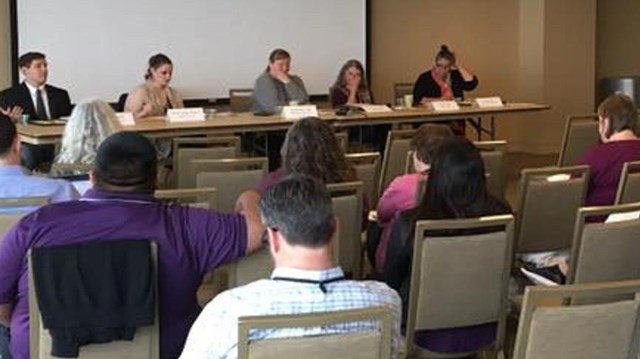
This committee held five meetings -- in Los Angeles, Anchorage,
Billings, Myrtle Beach, and Norman -- at which we considered several
disputes, discussed the disposition of culturally unidentifiable
human
remains, commented on draft regulations, and heard from many people
around the country about how the statute is being implemented. A
common
thread ran through much of the testimony we heard. Many Native Americans
anticipate that repatriation will ultimately provide meaningful,
long-term cultural and economic benefits to individuals of Native
American descent and to Indian tribes and Native Hawaiian organizations.
These repatriations have helped restore a sense of spiritual and
cultural integrity to participating Native American people. Through
the
required consultation, the statute has also fostered an increased
understanding and respect by museums and Federal agencies for Native
American people and cultures.
Most
museums and Federal agencies appear to be carrying out the
provisions of the statute in good faith. Over one thousand museums
and
Federal agencies have distributed summaries of their Native American
collections as required under section 6 of the Act. Over 700 museums
and
Federal agencies completed inventories of human remains and associated
funerary objects in their collections. Two hundred and fifty seven
notices have been filed in the Federal Register regarding repatriations.
These notices announced the availability for repatriation of the
remains
of 9,763 individuals, 296,321 funerary objects, 512 sacred objects,
176
objects of cultural patrimony, and 113 items identified as both
sacred
objects and objects of cultural patrimony.
To
conclude, all parties are generally implementing the statute in
good
faith. Some difficulties, identified below, need to be addressed
and
resolved to fully implement the intent or purpose of the Native
American
Graves Protection and Repatriation Act.
Specific
Observations
Cost
to Comply with NAGPRA: In 1990, the Congressional Budget Office
estimated that implementation of the statute would cost the Federal
government between $20 million and $55 million over five years.
That
estimate assumed that:
o museums and Federal agencies hold between 100,000 and 200,000
Native American human remains and that documenting and determining
their
cultural affiliation would cost between $50 and $150 per individual
set
of remains;
o summaries of unassociated funerary objects, sacred objects, and
objects of cultural patrimony and inventories of associated funerary
objects would cost between $10 and $15 million over five years;
o grants to Indian tribes and Native Hawaiian organizations would
cost between $5 and $10 million over five years;
The
exact number of human remains held by museums and Federal agencies
is still not known. However, information obtained through the grant
and
inventory process reveals that 175 museums currently hold 110,029
Native
American human remains. This figure does not include human remains
held
by museums that never applied for a grant or by Federal agencies.
Based
on these data, the Congressional Budget Office's estimate of 200,000
human remains seems reasonable.
The
initial appropriations for grants to museums and Indian tribes came
in FY1994, and have totaled approximately $9 million over the past
four
years.
The
demand for consultation between museums, Federal agencies, Indian
tribes, and Native Hawaiian organizations has increased dramatically
since the inventories of human remains and associated funerary objects
were completed in 1995. Neither Indian tribes and Native Hawaiian
organizations nor museums are financially able to support all of
these
costs. Absent a reasonable amount of Federal support, the statute
will
not be adequately implemented due to lack of funding and the United
States will have failed to make a reasonable and fair effort to
help
return Native American human remains, funerary objects, sacred objects,
and objects of cultural patrimony to lineal descendants, Indian
tribes,
and Native Hawaiian organizations who rightfully have control over
them.
The
committee strongly recommends that Congress appropriate the
following amounts for FY 1999 to ensure continued implementation
of the
Act:
o At least $5 million in grants to Indian tribes, Native Hawaiian
organization, and museums; and
o The amounts requested by the administration for each Federal
agency's compliance efforts.
The
committee recommends that the President request the same amounts
listed above in his FY2000 budget proposal.
Cost
of Administering NAGPRA: Administration of the statute was
delegated to the Secretary of the Interior. Appropriations to support
these responsibilities -- including promulgation of regulations,
publishing notices in the Federal Register, providing staff support
to
the review committee, compiling an inventory of culturally
unidentifiable human remains, grant administration, and assessing
civil
penalties -- were initiated in FY1992 and have totaled approximately
$1.5 million over the past 6 years. Shortage of funding has resulting
in
several administrative problems:
o Federal agencies and museum may not repatriate items until a notice
is published in the Federal Register [43 CFR 10.10 (a)(3) and (b)(2)].
Current staffing levels cannot meet the review necessary for the
Federal
Register publication requirement. The current backlog of draft notices
numbers 83, with 3-5 arriving weekly.
o The review committee averages two meetings per year. At least
three
meetings per year will be necessary to fulfill the committee's
responsibilities to assist in the resolution of an increasing number
of
disputes [25 U.S.C. 3006 (c)(4)].
o Over one thousand summaries and 700 inventories have been received
from museums and Federal agencies. The summaries have all been
evaluated, but over half of the inventories still need to be reviewed.
o Section 8 (c)(5) of the statute requires compilation of an
inventory of all culturally unidentifiable human remains [25 U.S.C.
3006
(c)(5)]. The software application is ready, but at current staff
level,
completion of this database will require a number of years and shifting
effort from other priority actions.
o Civil penalty regulations went into effect on February 12, 1997
[43
CFR 10.12]. The Office of the Solicitor has estimated that a single
civil penalty assessment may cost the department $100,000 in staff
time
and resources. There is currently no appropriation to cover these
assessment costs. The Secretary is responsible for enforcement.
o Two complaints have been filed against the Secretary in Federal
district court [California State University v. Babbitt-dismissed
1996;
City of Providence v. Babbitt-ongoing]. The demands on staff time
and
resources due to litigation are expected to increase.
The
committee recommends that Congress appropriate an additional
$500,000 plus 8 FTE to the National Park Service FY 1999 to enhance
administration of the Act. The committee recommends that the President
request the same amounts listed above in his FY 2000 budget proposal.
Federal
Compliance: The committee is deeply concerned about the failure
of Federal agencies to comply with the deadline for the submission
of
inventories of human remains and associated funerary objects. The
deadline for the submission of these inventories, as clearly stated
in
the statute, was November 16, 1995. Yet by the end of 1997, several
major agencies, responsible for many thousands of human remains,
had
failed to submit their inventories. Furthermore, they failed to
submit
to the committee even a brief explanation of why they did not meet
the
mandated deadlines.
In
reviewing the inventories that had been received by the end of 1997,
it was clear that several agencies in particular were not complying
with
the Act. The Bureau of Land Management is specifically singled out
for
non-compliance as well as the Corps of Engineers and the National
Forest
Service (with important, but limited exceptions, such as the Southwest
Regional office of the Forest Service). These agencies did not reply
to
requests for information about their inventories and did not send
representatives to the committee meeting in Norman, Oklahoma, to
explain
their actions. It should also be noted that the National Park Service
is to be commended for its singular dedication to full compliance.
Some
indirect explanations were offered for the failure of the Federal
agencies to comply. In particular, it was pointed out that the agencies
did not receive separate budgetary allocations to complete their
inventories and were trying to work with what limited funds and
resources were available. The committee finds this excuse to be
singularly unconvincing. The vast majority of non-Federal museums
across the country submitted their inventories by the deadline given
in
the statute. Those institutions that did not submit inventories
specifically applied for extensions and met the stringent criteria
for
having those extensions granted. Many of these institutions were
operating under far more restricted budgetary constraints than any
of
the Federal agencies. The early 1990s were a time of shrinking
attendance and budgets for museums across the country. Yet these
institutions had to and did comply with the NAGPRA requirements.
The
failure of the Federal agencies to meet the standard set by non-Federal
museums is inexcusable.
There
are indications that the Federal agencies are still plodding along
slowly trying to produce inventories eventually. However, their
lack of
compliance with the simple mandate of meeting a reasonable deadline
bodes very poorly for the future of Federal compliance with the
statute.
It would appear that the agencies believe themselves exempt from
the
statute and its associated regulations and that they are not following
the standards set by the leadership of the non-Federal agencies.
The
committee recommends that the Secretary of the Interior take appropriate
steps to insure that its agencies, particularly the Bureau of Land
Management, immediately come into full compliance with NAGPRA. It
also
recommends to Congress that hearings should be held to request a
full
explanation from all the agencies that did not meet the November
16,
1995 deadline for submitting inventories and gain assurances that
these
agencies will comply with NAGPRA in the future.
Recommended
Amendments: Through the provisions of the statute, many, but
not all, Native American people -- lineal descendants, Indian tribes,
Alaska Native villages and corporations, and Native Hawaiian
organizations -- gain a means to remedy inadvertent and intentional
injustices done them and their ancestors through the activities
of the
United States.
Sixty
Indian tribes, formally recognized by the United States
government, were terminated under provisions of various termination
acts
passed in the 1950s and 1960s. Terminated tribes can only be restored
by
an act of Congress. To date, 43 tribes have been restored. Most
of the
remaining 17 tribes are presently seeking restoration. Many other
Indian
groups, especially in California, were never recognized, notwithstanding
treaties between these tribes and the US government that were not
honored or adopted by Congress.
All
Indian groups that are not recognized by the Department of the
Interior are excluded from fully participating in NAGPRA. Though
it is
possible to identify human remains that are culturally affiliated
with
many of these Indian groups in museum and Federal agency collections,
the Department of Interior's interpretation of the meaning of "Indian
tribe" disenfranchises many Native American people from the
repatriation
process.
The
committee does not believe that Congress intended to prevent all
non-Federally recognized Indian groups whose ancestor's remains,
funerary objects, sacred objects and objects of cultural patrimony
are
in museums and Federal repositories from repatriating these items
simply
because they are not presently recognized by the Department of the
Interior.
Although
the statute provides protection for Indian graves found on
Federal and tribal lands, it does not provide similar protection
for
graves that may occur on private or state lands. The committee has
heard
a substantial amount of testimony from representatives of Indian
tribes
and Native Hawaiian organizations regarding disturbance, destruction,
deliberate excavation, or grave robbing of Native American graves
on
private or state lands. Some states have passed legislation to protect
graves on non-Federal lands, but many states lack such legislation.
Federal attention needs to be given to protect Native American graves
from grave robbing and other forms of destruction or disruption
The
committee recommends that Congress amend the statute to:
o Allow Indian tribes and Native Hawaiian organizations to repatriate
funerary objects that are associated with culturally unidentifiable
human remains;
o Protect Native American graves located on state or private lands
from grave robbing and other forms of destruction;
o Provide any monies collected as civil penalties under 43 CFR 10.12
to the Secretary of the Interior to further enforcement activities;
and
o Decide upon a procedure that would allow legitimate, non-Federally
recognized Indian groups to repatriate human remains, funerary objects,
sacred objects, and objects of cultural patrimony with which they
are
culturally affiliated.
Conclusion
NAGPRA
has, on whole, been successful. It has helped rectify the
injustice Native American people have suffered as a result of having
their ancestors remains removed from their graves and located, without
permission of relatives or tribes, in museums and federal agencies.
The
process of implementing the Act has increased knowledge and
understanding of Native American people and cultures within museums
and
federal agencies. This increased knowledge and understanding will
eventually be shared with the public, thereby increasing their respect
for and sensibility to the rights, values, and perspectives of the
first
Americans. Finally, the Act has helped Native American people and
cultures regain a sense of integrity and dignity. It has helped
renew or
continue traditional Native American religions. And it may ultimately
help remedy the corrosive and tragic effects involved in the clash
of
cultures and the loss of land, culture, and lifestyle Native Americans
have endured. It is critically important that the benefits and rights
accorded to Indian tribes be extended to all Indian groups and that
Congress appropriate sufficient funds to help implement this Act.
The
Committee respectfully submits this report to Congress with the
full and
unanimous support of its members.
NATIVE AMERICAN GRAVES PROTECTION
REVIEW COMMITTEE
PURPOSE:
Monitor and review the implementation of the inventory and
identification process and repatriation activities required under
sections 5, 6, and 7 of the American Indian Graves Protection and
Repatriation Act.
AUTHORITY:
Section 8 of Public Law 101-601, November 16, 1990.
TERMS:
Five years.
MEMBERSHIP:
Seven members.
MEMBERS:
Ms.
Tessie Naranjo, Chair
P.O. Box 1807
Espanola, New Mexico 87532
Telephone: (505) 753-7326
Fax: (505) 753-8988
Term Expires: March, 1997
Nominating Source: Santa Clara Indian Pueblo
Ms.
Rachel Craig
309 West University
Shelton, Washington 98584
traditional religious leader
Term Expires: March, 1997
Nominating Source: Treasures for Our Childred Group; Northwest Arctic
Borough; Fairbanks Native Association
Mr.
Jonathan Haas
Field Museum of Natural History
Roosevelt Road at Lake Shore Drive
Chicago, Illinois 60605
Telephone: (312) 922-9410
Fax: (312) 663-5397
Term Expires: August, 1997
Nominating Source: Review Committee Members
Mr.
Lawrence H. Hart
Route 1, Box 3130
Clinton, Oklahoma 73601
telephone: (405) 323-5320
fax: (405) 323-6225
traditional religious leader
(appointed September, 1996)
Term Expires: September, 2001
Nominating Source: Cheyenne and Arapaho Tribes; Forest County Potawatomi
Community
Mr. Dan Monroe
Peabody & Essex Museum
East India Square
Salem, Massachusetts 01970
Telephone: (508) 745-1876
Fax: (508) 744-6776
Term Expires: March, 1997
Nominating Source: American Association of Museums; Museum Trustees
Association
Mr.
Martin Sullivan
22 East Monte Vista Road
Phoenix, Arizona 85004-1480
Telephone: (602) 251-0227
Fax: (602) 252-9757
Term Expires: March, 1997
Nominating Source: Heard Museum; American Association of Museums;
Museum Trustees Association
Mr.
William Tallbull
traditional religious leader
Died: March, 1996
Nominating Source: Northern Cheyenne Tribe
Mr.
Phillip Walker
Department of Anthropology
University of California
Santa Barbara, California 93106
Telephone: (805) 893-2236
Fax: (805) 893-8707
Term
Expires: March, 1997
Nominating Source: Society for American Archaeology; American Association
of Museums; American Anthropological Association
|