|
Native
American Graves Protection and
Repatriation
Review Committee
Report
to Congress
on 1998 Activities
August
1999
CONTENTS
Introduction . . . . . . . . . . . . . . . . . . . . . . . . . .
. . . 3
Committee
Activities in 1998 . . . . . . . . . . . . . . . . . 3
Specific
Observations . . . . . . . . . . . . . . . . . . . . . . 4
Cost to Comply with NAGPRA . . . . . . . . . . . . . . . .4
Cost of Administering NAGPRA . . . . . . . . . . . . . . .5
Federal Compliance . . . . . . . . . . . . . . . . . . . . . . .
7
Recommended Amendments . . . . . . . . . . . . . . . . .8
Conclusions
. . . . . . . . . . . . . . . . . . . . . . . . . . . . 10
Recommendations
. . . . . . . . . . . . . . . . . . . . . . . .11
Committee
Roster . . . . . . . . . . . . . . . . . . . . . . . . 13
Appendix
1: Federal Compliance with NAGPRA . . . 15
Introduction
Passage
of the Native American Graves Protection and Repatriation Act of
1990 (NAGPRA) marked a watershed in a long and often troubled
relationship between Native Americans and many of America's cultural,
educational, and public agencies and organizations. The statute
provides
for the repatriation to lineal descendants and affiliated Indian
tribes
and Native Hawaiian organizations of Native American human remains,
funerary objects, sacred objects, and objects of cultural patrimony
in
museums and Federal agency repositories or that may be excavated
or
inadvertently discovered on Federal or Indian land in the future.
The
statute also provides a means for lineal descendants, Indian tribes,
and
Native Hawaiian organizations to repatriate funerary objects, sacred
objects, and objects of cultural patrimony that were acquired by
museums
and Federal agencies without the approval of those who had authority
to
alienate them. The statute provides greater protection of Native
American graves located on Federal or tribal lands. Lastly, the
statute
prohibits trafficking in Native American human remains and, in certain
situations, funerary objects, sacred objects, and objects of cultural
patrimony. The statute affects all Federal agencies and all institutions
that receive Federal funds.
Committee
Activities in 1998
This
year saw a major change in the composition of the review committee.
The terms for four original members of the review committee, Rachel
Craig, Jonathan Haas, Dan Monroe and Phillip Walker, expired. They
were
replaced by James Bradley, Vera Metcalf, Armand Minthorn, and John
O'Shea; each to serve a six-year term. In addition, the terms of
two
original members, Tessie Naranjo and Martin Sullivan were extended
for
three years. These continuing members, along with Lawrence Hart
whose
term runs until the year 2001, have provided important continuity
to the
working of the review committee.
The
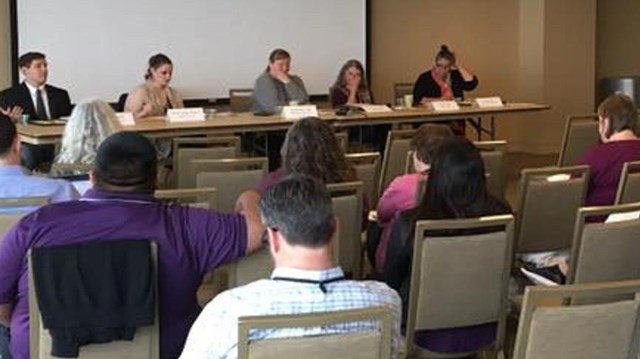
newly constituted review committee held three meetings in calendar
year 1998Cin Washington, DC; Portland, Oregon; and, Santa Fe, New
Mexico--at which we heard reports from representatives of a number
of
Federal Agencies, considered several disputes, discussed the disposition
of culturally unidentifiable human remains, and heard from many
people
around the country about how the statute is being implemented. Written
summaries of each of these meetings can be found on the World Wide
Web:
www.cast.uark.edu/other/nps/nagpra/rcm.html; this series of pages
allows you to Aclick@ and view or print the agenda and summary minutes
of all NAGPRA Review Committee meetings for which the minutes have
been
approved.
A
common thread ran through much of the testimony we heard. Many Native
Americans anticipate that repatriation will ultimately provide
meaningful, long-term benefits to individuals of Native American
descent
and to Indian tribes and Native Hawaiian organizations. These
repatriations have helped restore a sense of spiritual and cultural
integrity to participating Native American people.
Through
the required consultation, the statute has also fostered an
increased understanding and respect by museums and Federal agencies
for
Native American people and cultures. At the same time, it is clear
that
there is still considerable misunderstanding among Native American
people, Federal agencies and museums regarding what NAGPRA does,
and
does not, require. Confusion seems particularly marked as regards
how
to meet the law=s expectation of the required consultation with
Native
people, the definition of sacred, and the permissibility of research
on
culturally unidentified human remains.
Most
museums and Federal agencies appear to be carrying out the
provisions of the statute in good faith. As of December 31, 1998,
1032
museums and Federal agencies have distributed summaries of their
Native
American collections as required under section 6 of the Act, and
733
museums and Federal agencies completed inventories of human remains
and
associated funerary objects in their collections. Two hundred thirty-
eight Notices of Inventory Completion and 99 Notices of Intent to
Repatriate have been published in the Federal Register. These notices
announced the availability for repatriation of the remains of 13,481
individuals, 326,463 funerary objects, 758 sacred objects, 408 objects
of cultural patrimony, and 281 items identified as both sacred objects
and objects of cultural patrimony.
To
conclude, nearly all parties are generally implementing the statute
in good faith. Some difficulties, identified below, need to be addressed
and resolved to fully implement the intent or purpose of the Native
American Graves Protection and Repatriation Act.
Specific
Observations
Cost
to Comply with NAGPRA: In 1990, the Congressional Budget Office
estimated that implementation of the statute would cost the Federal
government between $20 million and $55 million over five years.
This
figure does not include the cost of compliance borne by museums
and
Indian tribes.
The
exact number of human remains held by museums and Federal agencies
is still not known. However, information obtained through the grant
and
inventory process reveals that 175 museums currently hold 110,029
Native
American human remains. This figure does not include human remains
held
by museums that never applied for a grant or by Federal agencies.
Based
on these data, the Congressional Budget Office=s estimate of 200,000
human remains seems reasonable.
The
initial appropriations for grants to museums and Indian tribes came
in FY1994, and have now totaled approximately $10.7 million, with
awards
of $6.5 million to Indian tribes and Native Hawaiian organizations,
and
$4.2 million to museums.
The
demand for consultation between museums, Federal agencies, Indian
tribes, and Native Hawaiian organizations continues unabated. Yet,
neither Indian tribes and Native Hawaiian organizations nor museums
are
financially able to support all of these costs. Absent a reasonable
amount of Federal support, the statute will not be adequately
implemented due to lack of funding and the United States will have
failed to make a reasonable and fair effort to help return Native
American human remains, funerary objects, sacred objects, and objects
of
cultural patrimony to lineal descendants, Indian tribes, and Native
Hawaiian organizations who rightfully have control over them.
The
review committee strongly recommends that Congress appropriate the
following amounts for FY 2000 to ensure continued implementation
of the
Act:
At least $5 million in grants to Indian tribes, Native Hawaiian
organizations, and museums. This represents a doubling of the
current allocation, but is a more accurate representation of the
actual needs of Indian tribes, Native Hawaiian organizations and
museums; and
The amounts requested by the administration that is targeted for
each Federal agency's compliance efforts (see discussion below).
The
review committee recommends that the President request the same
amounts listed above in his FY2001 budget proposal.
Cost
of Administering NAGPRA: Administration of the statute was
delegated to the Secretary of the Interior. Appropriations to support
these responsibilities--including promulgation of regulations,
publishing notices in the Federal Register, providing staff support
to
the review committee, compiling an inventory of culturally
unidentifiable human remains, grant administration, and assessing
civil
penalties--were initiated in FY1992. Shortage of funding has resulted
in
severe administrative problems:
Federal agencies and museums may not repatriate items until a
notice is published in the Federal Register [43 CFR 10.10 (a)(3)
and (b)(2)]. Current staffing levels cannot meet the review
necessary for the Federal Register publication requirement. A
total of 110 notices were published in FY1998. The current
backlog of draft notices is in the range of 250-260, with 3-5
arriving weekly.
The review committee averages two meetings per fiscal year. At
least three meetings per year will be necessary for the review
committee to fulfill its responsibilities to assist in the
resolution of an increasing number of disputes [25 U.S.C. 3006
(c)(4)].
Over one thousand summaries and 700 inventories have been
received from museums and Federal agencies. While most of the
summaries have been evaluated, only about half of the
inventories have been reviewed.
Section 8 (c)(5) of the statute requires compilation of an
inventory of all culturally unidentifiable human remains [25
U.S.C. 3006 (c)(5)]. The software application is ready, but at
current staff level, completion of this database will require a
number of years and shifting effort from other priority actions.
The completion of this database is an essential component for
implementing recommendations for the disposition of culturally
unidentifiable human remains.
Accountability is essential to the success and integrity of the
Grants Program. Yet at current staffing levels, the ability to
monitor grants is rudimentary at best, particularly compared
with other Federal programs, such as the National Institute of
Health, National Science Foundation, or National Endowment for
the Humanities.
Civil penalty regulations went into effect on February 12, 1997
[43 CFR 10.12]. The Office of the Solicitor has estimated that a
single civil penalty assessment may cost the department $100,000
in staff time and resources. There is currently no appropriation
to cover these assessment costs and as a result no actions have
been taken. The Secretary is responsible for enforcement.
One complaint against the Secretary in Federal district court
[City of Providence v. Babbitt] has been dismissed, but the
Department is now a defendant in a new suit [Bonnichsen/Asatru
Folk Assembly v. United States Army Corps of Engineers, et al.].
The demands on staff time and resources for litigation are heavy
and are expected to increase.
The
review committee is extremely concerned that inadequate staffing
of
the Archeology and Ethnography Program is delaying the repatriation
of
Native American human remains, funerary objects, sacred objects,
and
objects of cultural patrimony. It also is undermining the trust
of
Native peoples in the NAGPRA process. It is essential that the program
receive an additional eight full time equivalent (FTE) targeted
to
specific critical tasks. The following proposed allocation of effort
represents a possible apportionment of these FTEs to the mission
critical tasks of the Program.
3
FTE's
Monitoring summaries/inventories and
publishing notices
1
FTE
Grants administration
1
FTE
Civil penalties and liaison with Department of
Justice on trafficking.
1
FTE
Review Committee support
1
FTE
Administrative support
1
FTE
Training and technical assistance,
regulations, and coordination
Along
with these targeted FTE's, the review committee recommends that
Congress appropriate an additional $500,000 to the National Park
Service
FY2000 budget to enhance administration of the Act. The crucial
need for
this additional allocation was repeatedly cited in testimony at
the
NAGPRA Oversight Hearings of the Senate Committee on Indian Affairs
in
April of 1999. The review committee recommends that the President
request the same amounts listed above in his FY2001 budget proposal.
Federal
Compliance: The review committee remains deeply concerned about
the failure of Federal agencies to comply with the deadline for
the
submission of inventories of human remains and associated funerary
objects, and with inconsistencies in the application of NAGPRA
requirements, particularly in the area of tribal consultation. At
the
January 29-31, 1998 review committee meeting, we invited Federal
Preservation Officers to provide updates on their agencies' compliance
activities. Representatives from numerous agencies within the Department
of the Interior, Department of Transportation, Department of
Agriculture, Department of Defense, Department of Commerce, Department
of Energy, and the General Services Administration made presentations
to
the review committee. These presentations were summarized in a report
titled Federal Compliance with the Native American Graves Protection
&
Repatriation Act (NAGPRA). The review committee discussed this summary
report at its Santa Fe meeting. In March, 1999, Federal agency
representatives were asked to update the information in the summary
report. New or edited text was provided by the Bureau of Land
Management, Bureau of Reclamation, Army Corps of Engineers, Air
Force,
and Tennessee Valley Authority, and were added to the report. This
summary report is included as Appendix 1 of this report.
While
it is clear from the Federal agency reports that progress is being
made, both in the recognition of agency compliance responsibility
and in
the actual completion of inventories, Federal compliance still falls
well short of statutory requirements and lags far behind equivalent
progress by non-Federal museums.
Some
indirect explanations were offered for the failure of the Federal
agencies to comply. In particular, it was pointed out that the agencies
did not receive separate budgetary allocations to complete their
inventories and were trying to work with what limited funds and
resources were available. The review committee finds this excuse
to be
singularly unconvincing.
The
vast majority of non-Federal museums across the country submitted
their inventories by the deadline given in the statute. Those
institutions that did not submit inventories specifically applied
for
extensions and met the stringent criteria for having those extensions
granted. Many of these institutions were operating under far more
restricted budgetary constraints than any of the Federal agencies.
The
continuing failure of the Federal agencies to meet the standard
set by
non-Federal museums is inexcusable.
The
review committee noted three specific requirements that must
underlie future Federal agency compliance efforts:
NAGPRA compliance must be an agency priority, and adequate funds
must be earmarked to support compliance activities;
NAGPRA compliance goes beyond simple documentation and
inventories, and must include long-term tribal consultation on a
government-to-government basis; and
Agencies must be accountable.
Congressional Oversight Committees should hold agencies accountable
for
failure to comply with the provisions of NAGPRA, and should take
failure
to comply with NAGPRA into account when assessing agency performance.
Recommended Amendments: Although the statute provides protection
for Indian graves found on Federal and tribal lands, it does not
provide
similar protection for graves that may occur on private or state
lands.
The review committee has heard a substantial amount of testimony
from
representatives of Indian tribes and Native Hawaiian organizations
regarding disturbance, destruction, deliberate excavation, or grave
robbing of Native American graves on private or state lands. Some
states
have passed legislation to protect graves on non-Federal lands,
but many
states lack such legislation. Federal attention needs to be given
to
protect Native American graves from grave robbing and other forms
of
destruction or disruption.
Under the NAGPRA regulations, monies may be collected as civil penalties
from museums that are found by the Secretary of the Interior to
be out
of compliance with NAGPRA. The costs of such enforcement activities
are
significant, however, particularly given the limited funds available
for
the overall NAGPRA program. A reasonable solution is to allow the
monies
collected as civil penalties to be retained by the Department of
the
Interior to be used to support continued enforcement.
The
review committee has also heard considerable testimony reflecting
concerns on the part of Native peoples that information provided
to
Federal agencies, museums and the review committee in the course
of
establishing claims of cultural affiliation, or establishing rights
to
sacred objects or objects of cultural patrimony, could be accessed
or
made available to the general public via a Freedom of Information
Act
(FOIA) request. There is a genuine fear that sensitive cultural
information could easily be misused, and this fear has caused some
to
hesitate coming forward to make rightful claims. Information relating
to
the location of archaeological sites is exempted from FOIA requirements
due to a compelling public interest in protecting sites from looting
and
destruction. It would seem reasonable to extend similar protection
to
particularly sensitive cultural information relating to the location
of
sacred sites and to confidential religious or ritual information
that is
presented solely for the purposes of making a claim under NAGPRA.
The review committee recommends that Congress amend the statute
to:
Protect Native American graves located on state or private lands
from grave robbing and other forms of destruction;
Provide any monies collected as civil penalties under 43 CFR
10.12 to the Secretary of the Interior to further enforcement
activities; and
Exempt sensitive cultural information from the Freedom of
Information Act (FOIA) when it involves material that is
presented by an Indian tribe or Native Hawaiian organization
solely for the purpose of documenting cultural affiliation or
asserting a right to specific sacred objects or items of
cultural patrimony.
Finally, the review committee has faced an increasing number of
instances in which traditional religious leaders have been unable
to
repatriate sacred objects because their beliefs prevent them from
making
known details of the ceremonies or rites for which the objects are
required. While we appreciate that there must be a standard in the
law
by which the appropriateness of a claim can be evaluated, we do
not
believe that it should be necessary for a traditional leader to
compromise religious principles in order to repatriate a needed
sacred
object.
It
would seem reasonable to allow the traditional religious leader
of an
Indian tribe or Native Hawaiian organization to affirm a statement
indicating an awareness of the legal standard (specific ceremonial
objects which are needed by traditional religious leaders for the
practice of traditional Native American religions by their present-day
adherents), and to certify that the specific object meets this standard.
The statement would then be considered as evidence supporting the
claim,
without requiring details of particular rites or religious practices.
While we do not believe this requires amendment of the law, the
review
committee encourages the adoption of this standard in the evaluation
of
future requests.
Conclusions
NAGPRA
has, on whole, been successful. It has helped rectify the
injustice Native American people have suffered as a result of having
their ancestors= remains removed from their graves and located,
without
permission of relatives or Indian tribes, in museums and Federal
agencies. The process of implementing the statute has increased
knowledge and understanding of Native American people and cultures
within museums and federal agencies. This increased knowledge and
understanding will eventually be shared with the public, thereby
increasing their respect for and sensitivity to the rights, values,
and
perspectives of the first Americans. Finally, the statute has helped
Native American people and cultures regain a sense of integrity
and
dignity. It has helped renew or continue traditional Native American
religions. And it may ultimately help remedy the corrosive and tragic
effects involved in the clash of cultures and the loss of land,
culture,
and lifestyle Native Americans have endured. It is critically important
that the benefits and rights accorded to Indian tribes be extended
to
all Indian groups and that Congress appropriate sufficient funds
to help
implement this statute. The review committee respectfully submits
this
report to Congress with the full and unanimous support of its members.
RECOMMENDATIONS OF THE
NATIVE
AMERICAN GRAVES PROTECTION
AND
REPATRIATION REVIEW COMMITTEE
May 5, 1999
Authorized
by the Native American Graves Protection and Repatriation Act
[P.L. 101-601], the Native American Graves Protection and Repatriation
Review Committee has served since 1992 to monitor and review
implementation of the statute. At its May 3-5, 1999 meeting, the
committee made the following recommendations:
________
Costs to Comply with NAGPRA. The committee recommends that
Congress appropriate the following amounts for FY2000 to ensure
continued implementation of the statute:
At least $5 million in grants to Indian tribes, Native Hawaiian
organizations, and museums;
The amounts requested by the administration that is targeted
for
each Federal agency=s compliance efforts.
The committee also recommends that the President request
the
same amounts listed above in his FY2001 budget proposal.
2.
Costs of Administering NAGPRA. The committee recommends that
Congress appropriate eight FTE and $500,000 to the Department of
the
Interior for FY2000 to enhance administration of the statute. The
committee also recommends that the President request the same amounts
in his FY2001 budget proposal.
________
Federal Compliance. The committee recommends that Congress
hold oversight hearings to ensure Federal agency compliance with
the
statute.
________
Amendments. The committee recommends that Congress amend the
statute to:
Protect Native American graves on state or private lands from
grave robbing and other forms of destruction;
Provide monies collected as civil penalties under 43 CFR
10.12
to the Secretary of the Interior to further enforcement
activities;
Exempt sensitive cultural information from the Freedom of
Information Act (FOIA) when it involves material that is
presented by an Indian tribe or Native Hawaiian organization
solely for the purpose of documenting cultural affiliation or
asserting a right to specific sacred objects or items of
cultural patrimony; and
The
committee respectively submits these recommendations with the full
and unanimous support of all members.
James Bradley /S/
_____________________________
James Bradley
Lawrence Hart /S/
_____________________________
Lawrence Hart
Armand Minthorn /S/
_____________________________
Armand Minthorn
Vera Metcalf /S/
_____________________________
Vera Metcalf
Tessie Naranjo /S/
_____________________________
Tessie Naranjo, committee chair
John M. O=Shea /S/
_____________________________
John M. O=Shea
Martin Sullivan /S/
_____________________________
Martin Sullivan
NATIVE AMERICAN GRAVES PROTECTION
REVIEW COMMITTEE
PURPOSE: Monitor and review the implementation of the inventory
and identification process and repatriation activities
required under sections 5, 6, and 7 of the Native
American Graves Protection and Repatriation Act.
AUTHORITY:
Section 8 of Public Law 101-601, November 16, 1990.
TERMS:
Three or six years.
MEMBER
TERM EXPIRES NOMINATING SOURCE
Dr.
James Bradley
Robert S. Peabody Museum
Phillips Academy
Andover, Massachusetts 01810
telephone: (978) 749-4490
fax: (978) 749-4495
email: jbradley@andover.edu
Term Expires: June, 2003
Nominating Source: American Association of Museums
Mr.
Lawrence H. Hart
Route 1, Box 3130
Clinton, Oklahoma 73601
telephone: (580) 323-5320
fax: (580) 323-6225
Term Expires: September, 2001
Nominating Source: Cheyenne and Arapaho Tribes; Forest Potawatomi
Community<br>
Mr. Armand Minthorn
Confederated Tribes of the Umatilla
Indian Reservation
P.O. Box 638
Pendleton, Oregon 97801
telephone: (541) 276-3165
fax: (541) 276-3095
Term Expires: June, 2003
Nominating Source: Confederated Tribes of the Umatilla Reservation
Ms.
Vera K. Metcalf June, 2004 Concurrence of six
NAGPRA Coordinator committee members
Bering Straits Foundation
P.O. Box 1008
Nome, Alaska 99762
telephone: (907) 443-5252
fax: (907) 443-2985
email: nsvkm@aurora.alaska.edu
Term Expires: June, 2004
Nominating Source: Concurrence of six committee members
Dr.
Tessie Naranjo
P. O. Box 1807
Española, New Mexico 87532
telephone: (505) 753-3736
fax: (505) 747-3389
Term Expires: June, 2000
Nominating Source: Pueblo of Acoma; Hui Malama I Na Kupuna O Hawaii
Nei
Dr.
John O'Shea
Museum of Anthropology
University of Michigan
Ann Arbor, Michigan 48109-1079
telephone: (734) 763-5795
fax: (734) 763-7783
email: joshea@umich.edu
Term Expires: June, 2003
Nominating Source: Society for American Archaeology;
American Museum of Natural History; Peabody Museum - Harvard University;
Phoebe A.Hearst Museum; LA County Natural History Museum
Dr.
Martin E. Sullivan
Historic St. Mary's City
P.O. Box 39
St. Mary's City, MD 20686
telephone: (301) 862-0960
fax: (301) 862-0968
Term Expires: June, 2000
Nominating Source: American Associatin of Museums;
Hui Malama I Na Kupuna O Hawaii Nei
APPENDIX 1:
FEDERAL
COMPLIANCE
WITH THE
NATIVE AMERICAN GRAVES
PROTECTION & REPATRIATION ACT
(NAGPRA)
June
1999
INTRODUCTION
The
Native American Graves Protection & Repatriation Act (NAGPRA)
requires all Federal agencies and institutions that receive Federal
funds to:
1)provide
Indian tribes and Native Hawaiian
organizations with summaries of their collections
that may include unassociated funerary objects,
sacred objects, and objects of cultural patrimony
with which they may be culturally affiliated; and
2)compile
inventories of human remains and associated
funerary objects in their collections and, in
consultation with Indian tribes and Native Hawaiian
organizations, determine the cultural affiliation of
those items.
3)provide
copies of the summaries and inventories to
the National Park Service.
In
addition to these requirements, Federal agencies are required
to consult with Indian tribes and Native Hawaiian organizations
regarding the disposition of human remains, funerary objects,
sacred objects, and objects of cultural patrimony discovered or
excavated on Federal lands.
As
a result of concerns regarding Federal compliance with NAGPRA,
the Native American Graves Protection & Repatriation Review
Committee invited Federal agencies to report on their activities.
Federal agency reports were made at the review committees
14th
meeting on January 29-31, 1998, in Washington, DC. Bureaus within
the Departments of Interior, Transportation, Agriculture,
Defense, Commerce, and Energy, as well as the General Services
Administration, presented reports.
The
National Park Service staff maintains a listing of all the
Federal agency NAGPRA summaries (Table 1) and inventories (Table
2) that had been received. Since the January, 1998 meeting,
Federal agency officials have been provided with an opportunity
to update the information they presented. Several have, and these
updates are noted in the text.
Department
of the Interior
National
Park Service: Ms. Jennifer Schansberg, a contractor
working with the National Park Service (NPS), reported that the
NPS has met the relevant deadlines for completion of summaries
and inventories. A single summary was compiled for the entire
agency and was distributed to all Indian tribes, Alaska Native
villages and corporations, and Native Hawaiian organizations on
October 27, 1993. Five Notices of Intent to Repatriate have been
published in the Federal Register. Each park with human remains
and associated funerary objects completed a separate inventory.
One hundred were completed, of which 55 included human remains
and associated funerary objects identified as being culturally
affiliated with particular Indian tribes or Native Hawaiian
organizations. Twenty-six Notices of Inventory Completion have
been published in the Federal Register. The remaining 39 Notices
of Inventory Completion are under review. Sixty-eight of the park
inventories included culturally unidentifiable human remains.
Memoranda
providing detailed step-by-step instructions for
compliance with the statute have been sent to all parks
superintendents. A video and workbook has also been completed and
has been sent to parks and Indian tribes. Ms. Schansberg added
that the NPS is committed to maintaining the government-to-
government relationship between the United States and Indian
tribes in all consultations.
Fish
and Wildlife Service: Mr. Kevin Kilcullen, Federal
Preservation Officer for Fish and Wildlife Service (FWS),
explained that the agencys primary goal is to protect and
restore the Nations wildlife populations and their habitat.
Two
key FWS programs are directly involved with NAGPRA: the land
management aspect and the law enforcement division. FWS has
field offices in every state and most territories and possessions
of the United States, including seven regional offices, over 700
field offices, 500 national wildlife refuges and almost 100
national fish hatcheries, encompassing over 92 million acres of
land. FWS is a decentralized organization with most of the
decisions being made at the regional office level or lower. All
FWS offices are expected to follow the guidance set out in the
cultural resource management and museum collection sections. Mr.
Kilcullen reported that with FWS, day-to-day responsibility for
compliance with NAGPRA rests at the regional office level with
funding coming from general funding for maintenance of museum
collections. There is no separate NAGPRA line item.
Mr.
Kilcullen reported that FWS is in compliance with NAGPRA
summary and inventory requirements. FWS has completed its summary
and will submit a copy to the NPS. FWS completed its inventory in
1996 and submitted it to the NPS. NPS has since requested
additional information and revisions. He conceded that the agency
would never be totally in compliance with the excavation and
discovery requirements of the statute due to the ongoing nature
of these activities.
Mr.
Kilcullen then outlined several problems faced by the FWS
regional offices in complying with NAGPRA. There has been some
problem in determining which Indian tribes should be consulted.
This has been of particular concern in the Southeast United
States. The lack of information regarding existing collections is
also a problem. Some tribal claims have caused difficulties,
particularly those reflecting a misunderstanding of the statute
or those situations where more than one Indian tribe has made a
claim. Lastly, FWS is also faced with an active land acquisition
program resulting in almost 100,000 new acres per year.
Bureau
of Reclamation: At the January 1998 NAGPRA Review
Committee meeting in Washington, DC, Mr. Terry Zontek, NAGPRA
Coordinator for the Great Plains Region, and Ms. Myra Giesen,
NAGPRA Coordinator for all of the Bureau of Reclamation
(Reclamation), presented information on Reclamation compliance
with NAGPRA. Since that time, Ms. Giesen has reported again to
the review committee on two separate occasions (i.e., Portland in
June 1998 and Santa Fe in December 1998). The information
presented below reflects NAGPRA status information as of April
1999.
A
history of Reclamation was provided to the Review Committee at
the January 1998 meeting. Since its inception in 1902,
Reclamation has played a pivotal role in developing water
resources in the 17 western states. Reclamation has jurisdiction
over approximately 8.6 million acres, of which just less than 1
million has been inventoried with respect to cultural resources.
These lands are used for many different purposes including dams,
reservoirs, irrigation facilities, operations, recreation, fish
and wildlife, agriculture, grazing, environmental enhancement,
education, flood control, transportation, and power generation.
Reclamation serves as America's second largest wholesale water
supplier, administering 348 reservoirs with a total storage
capacity of 245 million acre-feet (an acre-foot, 325,851 gallons
of water, supplies enough water for a family of four for one
year). The responsibility for NAGPRA compliance rests with
Reclamation's regional directors and area managers. Maps of
Reclamation boundaries and NAGPRA contact information were
distributed to committee members and the public at both the
January 1998 and December 1998 meetings.
Summary
Status - Section 6: A single Reclamation summary was
submitted in November 1993. On earlier versions of Table 1,
Reclamation's summary appeared as originating out of Colorado.
In March 1999 Reclamation requested NPS to revise its listing to
include recognition of all states from which the summary covers,
including Arizona, California, Colorado, Idaho, Kansas, Montana,
Nebraska, Nevada, New Mexico, North Dakota, Oklahoma, Oregon,
South Dakota, Texas, Utah, Washington, and Wyoming. This
revision is particularly important as summary submissions
information is available via NPS at their internet site
http://www.cast.uark.edu on a state-by-state basis. A total of
18 unassociated funerary objects, 1 sacred objects, and 1 object
of cultural patrimony were reported in Reclamation's summary.
These objects are culturally unidentifiable and have not been
repatriated to tribes; they remain part of Reclamation's museum
property collection.
Inventory
Status - Section 5: All five regions within
Reclamation submitted an inventory by the statutory deadline;
however, new information or the discovery of a previously unknown
archeological collection require amendments to all inventories.
Reclamation should be completed with revising all their NAGPRA
inventories by summer 2000. To date, Reclamation has inventoried
human remains that represent at least 1,564 individuals. This
number is likely to increase as final inventories are completed
on Reclamation collections at a number of museums. Of the 1,564
individuals reported, 1,497 individuals, at this time, are
considered to be culturally unidentifiable, 60 individuals
affiliated with the Arikara, Pawnee, and Wichita, and 7
individuals affiliated with the Nambe Pueblo. It is likely
culturally unidentifiable items on Reclamations inventories
will
be assigned a cultural affiliation as consultations continue and
affiliation studies come to a close.
Following
the publication of an inventory completion notice for
the Nambe Pueblo items, human remains from seven individuals and
three dog burials (associated funerary objects) were repatriated
in 1996. The Pawnee, Arikara, and Wichita tribes have not yet
made a decision regarding the repatriation of their NAGPRA items.
Reclamation
has inventoried approximately 60,000 culturally
unidentifiable associated funerary objects and roughly 1,100
culturally affiliated associated funerary objects. The human
remains and associated funerary objects come from 178
archeological sites and are being curated at 25 different
repositories.
Similar
to our request for summary information to be available on
a state-to-state basis, in November 1998 Reclamation requested
NPS provide state information for their inventory submissions.
Instead of being listed as complete for each of the 17 western
states, Reclamation inventories only appear for five states:
California, Idaho, Montana, Nevada, and Utah.
Ms.
Giesen expressed concerns with double reporting of
inventories by federal agencies and museums. This is to say,
museums are reporting on federal collections. In December 1998
she gave the example of the University of Nebraska, Lincoln
inventorying and reporting on Reclamation's collections.
Reclamation is trying to obtain information on double reporting,
but it has been difficult at best.
Inadvertent
Discoveries and Planned Excavations: Reclamation's
Manual/Directives and Standards LND 02-01 for Cultural Resources
Management states that in order "to meet the intent of Section
3
of NAGPRA, the responsible office will have in place a plan for
intentionally excavated and inadvertently discovered Native
American cultural items. These plans will include a step-by-step
outline of what to do when Native American cultural items are
encountered." Some regions are working toward initiating
comprehensive agreements; Reclamation currently is not tracking
this information. Reclamation as a whole does not have specific
written guidance on the treatment of human remains.
The
Great Plains Region (GP) adopted Policy Directive No. 11,
Inadvertent Discovery of Human Remains on Reclamation Land, on
November 17, 1998. This policy states that all human remains
discovered on Reclamation controlled land will be treated with
equal respect regardless of cultural affiliation or antiquity.
The GP's Policy Directive No.11 is under modification for
application across all of Reclamation. Currently, human remains
as well as all NAGPRA objects are handled as museum property.
They are curated to standards approaching or, in most cases,
exceeding those outlined in 36 CFR 79 and DM 411. Until final
disposition can be determined, NAGPRA items generally are stored
with restricted access. They are treated with respect and are
not available for display or study without prior written approval
of Reclamation in consultation with the appropriate tribes.
Some, but not all regions, restrict photographing human remains.
Recent
NAGPRA initiatives: Reclamation hired Ms. Giesen on a
part-time permanent basis to deal exclusively with NAGPRA at a
bureau-wide level. Reclamation has had two bureau-wide NAGPRA
meetings, one in June 1998 and one in December 1998. The June
meeting had a day of NAGPRA training provided by Mr. Tim McKeown.
Ms. Giesen briefed area managers about NAGPRA at their quarterly
meeting in March 1999.
NAGPRA
Budget: Reclamation's expended $159,041 in FY 1998 for
NAGPRA compliance. For FY 1999, Reclamation has budgeted
$322,600 for NAGPRA compliance.
Consultation:
Reclamation consulted with approximately 80 tribes
while completing their NAGPRA inventories. Currently, efforts
are being made to better communicate within Reclamation about
which tribes have been consulted and by which office within
Reclamation. For example, in the past, offices within a single
region might have consulted with the same tribes without
communicating with each other. In another case, two different
regions consulted with the same eight tribes. To address this
concern, Ms. Giesen has gather information on NAGPRA consultation
histories from each office within Reclamation. Results of this
investigation are available to all officials tasked with NAGPRA
responsibilities, thus allowing for better government-to-
government relations in future consultations. Reclamation's
Native American Affairs Office completed a guidance document
Protocol Guidelines: Consulting with Indian Tribal Governments in
February 1998.
Bureau
of Land Management: Dr. Stephanie Damadio, National
Curator, and Dr. Marilyn Nickels, Group Manager, reported for the
Bureau of Land Management (BLM). Dr. Damadio identified BLMs
primary responsibility as managing public lands, including
authorized mineral extraction, timber operations, recreational
development, and protection of the natural and cultural
environment. BLM is the largest Federal land-managing agency,
with 270 million acres or approximately 41% of all Federal lands
under its control. Constant land transfers in and out of Federal
control have complicated the search for NAGPRA materials.
Since
1812, individuals and institutions have been conducting
scientific expeditions on public lands, excavating and collecting
millions of objects, which were then transported to hundreds of
non-Federal repositories, including universities, museums and
historical societies. Since 1906, permits for archeological
excavations on public land were issued under the Antiquities Act.
BLM has had authority to issue permits for excavation on its own
lands only since the mid-1980s.
The
resources available to the BLM to accomplish NAGPRA tasks are
limited. The BLM has 13 individuals primarily involved with
NAGPRA, most of who are also responsible for a variety of other
tasks. Specific written guidance distributed bureau-wide (not
including extensive guidance issued from individual state offices
to the field) consists of a handbook and 15 policy documents
providing policy, guidelines, templates, protocols, summary
information, as well as copies of secretarial orders, statutes,
and regulations.
Inventories
and summaries are complete for internal bureau
collections. BLM has also completed a multiyear effort to locate
outside repositories holding bureau collections. This has
resulted in the identification of 186 non-Federal repositories,
located in 34 states from Alaska to Florida. BLM has established
a cooperative process with those museums where NAGPRA materials
were found in order to complete inventories. In some instances
this work has been accomplished in cooperation with other Federal
agencies. At this point, the majority of these inventories are
completed, and in many instances the materials have already been
repatriated to Indian tribes. Dr. Nickels felt that the inventory
task would take decades to complete and that it is an expression
of the BLMs commitment to keep working on the job until it
is
complete.
To
date, the BLM has formally identified 627 human remains and
over 14,153 associated funerary objects as subject to
repatriation or transfer under NAGPRA. To date, 19 notices have
been published in the Federal Register, with three more awaiting
publication. This task has required thousands of hours of
inventory and analysis by non-Federal museums and BLM staff, as
well as tribal consultation. This work has involved interaction
with over 200 museums and approximately 150 Indian tribes and
Native Alaskan villages and corporations. Dr. Damadio stated that
due to the vast number of individual occurrences of excavations
that took place, the exact number of human remains and funerary
objects which originated from BLM lands may never be known. She
explained that BLM feels it is in compliance with NAGPRA since it
is continuing NAGPRA work to the best of its ability. She added
that the BLM collections are being cared for in a professional
manner and that study will be necessary to help determine
affiliation.
Regarding
the inadvertent discovery and excavation of Native
American human remains and cultural items on BLM lands, Dr.
Damadio indicated that the agency has been informing Indian
tribes of all NAGPRA related items and proactively contacts them
to begin consultation. To date, 22 notices of custody
determination disposition have been published in newspapers.
Bureau
of Indian Affairs: Mr. Donald Sutherland, Federal
Preservation Officer for the Bureau of Indian Affairs (BIA),
explained that all human remains and cultural items recovered
from land under BIA control are held in non-Federal repositories.
The agency has funded a four-year study by the Arizona State
Museum to assess a collection of between three and four thousand
human remains and the associated funerary objects. He also
described a pilot project with the Museum of Northern Arizona to
assess repatriation costs. Indian tribes are being consulted in
each of these efforts.
Department
of Transportation
Federal
Aviation Administration: Ms. Ann Hooker, Federal
Preservation Officer with the Federal Aviation Administration
(FAA), described her agencys functions as regulating commercial
spaceport operations and space launches, navigable air space, air
craft and airmen, with a primary mission of safety. She
explained that the FAA actually owns very little land, as most
airports are privately owned and are open for public use, with
the exception of Washington National and Dulles airports. She
explained that the FAA does not currently have any objects or
human remains that fall under the provisions of NAGPRA, and added
that the FAA is currently working on developing guidelines for
inadvertent discoveries found on FAA land.
Federal
Highway Administration: Mr. Bruce Eberle, Federal
Preservation Officer for the Federal Highway Administration
(FHA), explained that the FHA is a grant-and-aid agency and is
not a land-managing agency. The FHA generally works as a
contractor for Federal agencies building roads on Federal, tribal
and state-owned lands. Discussions concerning any materials
recovered during construction occur between the Federal or state
agency on whose land the objects were found and the appropriate
Indian tribe. Mr. Eberle explained that some states are
aggressive in setting up periodic meetings with different Indian
tribes, while other states coordinate with tribes on a case-by-
case basis when there are proposed projects in certain areas of
the state. FHA is working to develop an initiative that will
inform more people about FHA public outreach and public
participation programs.
Department
of Agriculture
Natural
Resources Conservation Service: Ms. Kathleen Schamel
with the Natural Resources Conservation Service (NRCS), formerly
known as the Soil Conservation Service, works directly with
private landowners to implement conservation practices on their
lands. NRCS does not own any land and has very few collections
from cultural resource projects. Each NRCS employee who will be
on private lands is required to undergo a week long cultural
resource-training program familiarizing them with the resources,
the laws, and their responsibilities under these laws. Ms.
Schamel explained that if cultural resources are found, NRCS
tries to leave the resource in place if possible. Otherwise, a
cultural resource specialist evaluates the resource and proceeds
with mitigation and consultation with appropriate Indian tribes.
NRCS has identified five collections in its control that are
currently housed in state or local museums. These collections
consist of items not covered by NAGPRA. In addition, human
remains of three individuals were found in New Mexico, two of
which were reburied at the site in consultation with the local
Indian tribe. The third has been retained by the state police lab
as part of a homicide investigation. Ms. Schamel also explained
that in each state, the NRCS has an agreement with the State
Historic Preservation Office to address inadvertent discoveries
of human remains, and provided two examples of these state level
agreements to the Committee members. She described one successful
project with the Klamath Tribe that resulted in permanent
protection of burials exposed by erosion.
Rural
Housing Service / Rural Business Cooperative Service:
Ms. Sue Wieferich, Environmental Protection Specialist and
Federal Preservation Officer for the Rural Housing Service (RHS)
and Rural Business Cooperative Service (RBS), explained that
these two agencies, along with the Rural Utility Service,
constitute the Department of Agriculture Rural Development. She
explained that RHS and RBS are both grant and loan guarantee
agencies for private individuals and businesses and do not own or
possess lands, unless in the rare situation of foreclosure. She
added that in those instances, all three agencies are required to
follow the provisions of the Natural Environmental Policy Act
(NEPA) requiring environmental assessments before resale of any
acquired property, including appropriate measures to protect any
cultural resources present on the site. Ms. Wieferich explained
that neither RHS nor RBS have any collections, and therefore,
have not filed any summary or inventory reports with the NPS.
Rural
Utility Service (RUS): Mr. Larry Wolfe, Senior
Environmental Protection Specialist and Federal Preservation
Officer for RUS, explained that the RUS provides financing
through its insured and guaranteed loan programs for construction
and expansion of facilities that distribute electric power in
rural areas and the development of water and waste disposal
facilities in rural areas and small towns with populations of
less than 10,000. The RUS does not own land and does not have
any collections of Native American cultural items, and therefore,
did not file any summary or inventory reports with the NPS.
Further compliance with NAGPRA on each project includes
consultation with the appropriate agency officials with
jurisdiction on the land resource; including SHPOs for private
land, tribal historic preservation officers (THPO) for tribal
land, and the appropriate cultural resource specialist of the
Federal agency for Federal land.
Forest
Service (FS): Mr. Evan DeBloois, Federal
Preservation Officer for the Forest Service (FS), explained that
the agency was established in 1905 and is the land-managing
agency of the Department of Agriculture. FS currently manages 191
million acres of public land. The FS is a multiple-use agency,
accounting for approximately 25% of the recreational use of
Federal lands in the US, as well as timber areas, watershed
management for municipal water systems, mining interests, and
grazing. The FS is divided into nine regional offices with
approximately 120 forest administrative units.
Activities
on FS land can either be initiated by the agency or
conducted by another party under FS permit, such as installation
of power lines or oil and gas pipelines. The majority of FS
collections from prehistoric sites came from permitted
activities, such as museums and universities doing research. In
the mid-1980s, FS initiated a nationwide effort to identify all
agency collections. Collections were identified in approximately
135 museums in the United States and elsewhere, include some
collections in Russia, Switzerland, and Sweden.
Mr.
DeBloois reported that summaries and inventories have been
completed for all but six National Forests. The largest number of
human remains B approximately 5,500 individuals -- were
identified in the Southwest Region. Repatriation efforts are
underway for approximately one third of these remains, including
450 human remains recovered during the Roosevelt Dam construction
in the 1920s. Approximately 1,100 human remains have been
excavated since 1990. Consultation has been conducted with 52
Indian tribes in preparation for determining proper disposition.
The California Region has 150 human remains and has consulted
with 40 tribes in the repatriation process. Half of these remains
have been repatriated. The Alaska Region has identified 42 human
remains and is prepared to repatriate them to the culturally
affiliated Alaska Native villages and corporations. Lack of
response and intertribal conflicts has delayed any repatriation
of these remains. The remaining regions have relatively small
numbers of human remains. Intermountain Region identified no
human remains or cultural items. Region One identified one
individual. Great Basin Region identified 17, of which half were
repatriated and the remainder are in process. Pacific Northwest
Region identified less than 12 human remains. These human remains
are primarily in museum collections, which in some cases is the
cause of the delay. He added that in Alaska, a number of human
remains were repatriated directly from the museum to the tribes;
the FS was only involved due to requests for reburial on FS land.
Mr. DeBloois reported the FS has completed 90 to 95 percent of
their NAGPRA responsibilities, and is well on the way to
repatriating the human remains and cultural items that have been
identified and requested by Indian tribes. He added that he needs
to clarify the discrepancies between the NPS list of completions
and the FS lists to ensure the NPS has the complete information
available.
Mr.
DeBloois explained that the FS has fiscal concerns regarding
NAGPRA in Alaska due to tribal requests to rebury human remains
in caves on agency land. Prior to reburial, the FS is
responsible to ensure the reburials will have no effects on other
cultural resources. He explained that the FS funded one full-time
position to do the inventories. He added that an estimated cost
for the FS to finance the reburials of human remains was $5.5
million, but so far no Indian tribes have requested that the FS
fund reburials. Mr. DeBloois added that NAGPRA was a budget
priority in the FS, but not a specific line item.
Mr.
DeBloois indicated that there are problems regarding tribal
consultation within the FS, and added that the FS is drafting a
set of consultation guidelines to strengthen performance at the
field level, including the need for decision-making FS personnel
at consultations. Mr. DeBloois also said that NFS has a NAGPRA
training course for their Heritage Specialists, which they are
trying to offer in every NFS region, and are trying to establish
a heritage management training course for line managers covering
a variety of cultural resource acts.
Department
of Defense
Army:
Mr. Lee Foster, Native American Program Coordinator
with the US Army Environmental Center, explained that his primary
concern is cultural and natural resources on the 12 million acres
managed by the Army. The Armys primary mission is to maintain
a
combat-ready trained force, calling for intensive management of
Army lands. In 1994, the Army Environmental Center initiated a
centrally funded nationwide program to bring the Army into
documentary compliance with NAGPRA, assisted by the Center for
Expertise for the Curation and Management of Archaeological
Collections (CX-CMAC), St. Louis District. Of the 167
installations investigated, 97 required preparation of a summary,
which were completed in September of 1996. These reports
included listings of Indian tribes potentially interested and
affiliated with NAGPRA items. Twenty installations required
inventory reports, which were completed in September of 1997.
Individual installations were responsible for initiating
consultation and affecting repatriation to the appropriate
tribes. In an effort to comply with NAGPRA, the Army developed
Army Regulation 200-4, directing installation commanders to
comply with NAGPRA requirements as well as the full range of
statutory and regulatory requirements of concern to Native
Americans. He added that the Army has used examples from other
agencies in developing processes and MOAs.
Army
Corps of Engineers: The Army Corps of Engineers report
was provided by Mr. Paul Rubenstein, Federal Preservation
Officer, and Dr. Michael Trimble, Center for Expertise for the
Curation and Management of Archaeological Collections (CX-CMAC).
In March, 1999, Mr. Rubenstein provided additional editorial
comments. Mr. Rubenstein stated that the Corps primary mission
includes navigation, flood damage control, recreation and
environmental management, and manages roughly 10% of total
Federal lands. The Corps is organized into 39 districts
overseeing 459 lakes and other operating projects. Individual
Corps districts pursued first steps toward NAGPRA compliance in
1993, with a Corps-wide program initiated in December of 1994
managed by the CX-CMAC. The Corps reviewed an estimated 141,000
cubic feet of archaeological collections with an estimated 3,660
skeletal remains. NAGPRA was funded as a line item beginning FY
1995.
Mr.
Rubenstein stated the CX-CMACs missions include NAGPRA
compliance, management of archaeological collections for the
Corps, and assisting other Department of Defense services and
government agencies, which will be accomplished through a wide
range of specialists within CX-CMAC. One of the biggest jobs
related to the NAGPRA process is locating the collections within
the various curation facilities around the country. To date, all
Corps collections have been identified in the Western and Central
parts of the country, and slightly more than half have been
identified in the eastern part of the country.
Of
the 39 Corps districts, all have begun preparation of
summaries and 46% have been completed. Sixty-four percent of the
districts have begun preparation of inventories and 14% have been
completed. Consultation has been initiated in 75% of the
districts. The Corps is working on consultation guidelines
similar to those of the Army, designed to promote better
understanding within the individual districts regarding
consultation and developing consultation processes. The Corps
estimates all collections will be located by FY 1999, all
inventories will be completed by FY 2007, and all reports to
Indian tribes and the NPS will be completed by FY 2008. Mr.
Rubenstein added that even though NAGPRA is a line item, the
Corps still does not have adequate funding to properly execute
NAGPRA processes, although they are trying to increase the amount
yearly.
Dr.
Trimble explained that the CX-CMAC is responsible for
curation, collections management, and the Corps NAGPRA program.
He stated that since many Federal agencies do not have the
resources to do this type of work, the CX-CMAC has agreed to do
curation and NAGPRA-related work for Federal agencies, including
the BIA and BLM. He explained the four-step program that the CX-
CMAC has found to be the most effective in researching and
locating Federal collections: 1) extensive research at the
Federal agency level; 2) extensive research at the State Historic
Preservation Office (SHPO) level; 3) aggressively compare the
data from both of these sources; and 4) compare the data with
collections currently in museums.
Navy:
Ms. Kathleen McLaughlin, Consultant with the US Navy,
stated that the Navy is a decentralized organization, with NAGPRA
responsibility delegated to the commanding officer at each
installation. Each installation received a program note
outlining responsibilities under NAGPRA. Individual institutions
can request funding to bring themselves into compliance. An
informal survey found the majority of Navy collections containing
NAGPRA items to be in the western United States. The Navy
contracted with Corps of Engineers CX-CMAC to inventory all Navy
collections for NAGPRA components and complete summaries and
inventories when indicated. Most Navy collections in the western
United States have completed inventories as of January 1998. The
eastern United States has yet to be inventoried, although those
installations feel they have very few objects applicable to
NAGPRA. The CX-CMAC report on Navy collections is expected to be
completed in September of 1999 detailing the locations of NAGPRA
objects, at which time applicable summaries and inventories will
be completed. Handouts were provided to Review Committee members
detailing Naval installation compliance with NAGPRA.
The
Navy is currently working on training personnel to deal with
inadvertent discoveries, due to problems with inadvertent
discoveries found on Navy installations. The Navy has developed
extensive training and guidance programs including an
introductory class presenting an overview of all historic
preservation legislation, including NAGPRA; a historic
preservation law and section 106 class, which includes a two-hour
NAGPRA section; a week-long Native American Traditions and
Cultures course, developed in consultation with Keepers of the
Treasures, with at least 50 percent of the instructors being
Native American. The Guidance includes development of the US
Navy and Marine Corps Guide to Native American Groups, which
contains tribal information and consultation guidance, and the
Twentieth Century Warriors brochure, designed to break down
barriers between military personnel and Native Americans.
Air
Force: The Air Force provided a written summary of the
January, 1998 meeting, and additional information in April, 1999,
of its efforts to implement the statute. The Air Force has
cultural resource management responsibilities for approximately
9
million acres of land in the United States. One of the many
facets of the Air Force cultural resource management program is
compliance with NAGPRA. Since its passage, the Air Force has had
a number of initiatives designed to ensure NAGPRA compliance.
These range from integrating NAGPRA consultation guidelines into
the Air Force cultural resource management instruction, AFI
320065, to participating in a DOD wide Legacy Resource program
initiative to analyze the condition of collections as well as
analyzing the content of some of the collections.
The
Air Force has participated in several repatriation efforts.
The first occurred in the fall of 1991. The Air Force initiated
consultation concerning the repatriation of human remains,
resulting in the reburial of Quapaw remains on Eaker AFB,
Arkansas.
A
significant repatriation success story involved the former
Williams AFB, in Arizona. In 1997, the Air Force encountered
Native American human remains during runway expansion a few
months before Williams AFB was converted to Williams Gateway
Airport and immediately initiated consultations with several
interested Indian tribes. The Air Force developed a plan of
action pursuant to NAGPRA for excavation, removal, inventory,
description, limited study, report preparation, and repatriation
of these and other possible discoveries of human remains during
the construction project. The plan of action identified Gila
River Indian Community as the primary tribal contact for the
Williams runway expansion. The plan was reviewed and signed by
five Arizona Indian tribes and by the Federal Aviation
Administration. The human remains and associated funerary objects
were repatriated to the Gila River Indian community in 1998.
The
Air Forces most recent repatriation occurred at Avon Park
Bombing Range. In March, 1999, Avon Park completed it first
repatriation ceremony. In keeping with the solemnity of the
occasion the ceremony was low profile and private, with only the
Vice Wing Commander and a representative of the Seminole Tribe of
Florida in attendance.
Vandenberg
AFB, California, has one of the Air Force=s premier
Native American Programs. The base has developed an excellent
relationship with the nearby Santa Ynez Chumash Band based on
trust, rapport, and teamwork. Cultural resource personnel
participate in quarterly meetings with the Santa Ynez Chumash
Elders Council were issues of mutual concern are discussed and
the elders are informed of future projects. This forum affords
the base the opportunity to resolve concerns early in the
planning stages of a project.
When
human remains are encountered or when unanticipated
archeological discoveries occur, Vandenberg immediately notifies
and consults with the elders. Human remains that are exposed and
likely to remain so for an extended period of time are reported
to the coroner and base law enforcement and then recovered,
documented, and identified in accordance with NAGPRA and the
bases Memorandum of Agreement with the Santa Ynez Chumash
Band.
If the remains are identified as being Native American, the
Chumash rebury them in designated areas. This policy effectively
precludes vandalism of exposed remains.
The
Air Force continued to strive to improve guidance for NAGPRA
compliance. The upcoming revision of the cultural resource
management AFI will provide more detailed instructions to assist
our installations in NAGPRA compliance.
Department
of Commerce
Ms.
Stephanie Klodzen, Office of Real Estate Policy and
Major Programs, stated that the Department of Commerce is a
diverse agency comprised of 12 bureaus, two of which are land-
holding agencies, the National Institute of Centers and
Technology (NICT) and the National Oceanic and Atmospheric
Administration (NOAA). Combined, NICT and NOAH control about
14,000 acres and do not have any collections of Native American
human remains. She described one project in Boulder, Colorado
where a successful Memorandum of Agreement was developed to deal
with inadvertent discoveries on a project, although none were
found, and one situation where a proposed NOAA laboratory in
Alaska was relocated to avoid disturbance of Native American
artifacts.
Department
of Energy
Mr.
Andy Wallo explained that the Department of Energy (DOE)
has a comprehensive cultural resource management program, which
covers NAGPRA. Site-specific cultural resource management plans
will be prepared for each site under the guidance for the DOE-
wide program. In addition, field offices are provided guidance
from the NPS, general NAGPRA information, and other agencies in
order to achieve comprehensive programs and compliance. The
Federal Historic Preservation Officer for the DOE is responsible
for managing the cultural resource management program, including
NAGPRA compliance. The DOE sites have been informed about and
directed to proceed with NAGPRA requirements, and all major sites
have compiled summary and inventory information. The designated
historic preservation contact at each DOE site ensures compliance
with consultation requirements of NAGPRA. DOE sites are strongly
encouraged to seek and identify Native Americans who have
cultural affiliations with the sites and DOE controlled lands.
Site
management mechanisms are developed to provide tribal
representatives with information regarding all site activities.
Tribal committees developed by the tribes are involved in NAGPRA-
related decisions where multiple tribes are affiliated with a
site. The DOE currently has MOAs with tribes regarding the
Nevada, Idaho, and Washington sites, and the sites are required
to undertake comprehensive archaeological survey work to discover
locations of archaeological sites and likely locations of burials
in the early planning stages of any land-use decisions. On-site
monitors at many sites include tribal representatives. The DOE
attempts to identify Indian tribes and Native Hawaiian
organizations that might have affiliation with an area that could
be disturbed by a project. DOE has provided guidance and
cultural sensitivity training for all personnel, in most
instances with tribal representatives participating in the
training. A long-term initiative that the DOE is considering is
including their cultural resource program guidance and policy
statements in a DOE directive.
Mr.
Wallo indicated that the DOE is trying to have NAGPRA
integrated into the mission of the DOE program and each site
would have NAGPRA as part of their operations, rather than a
stand-alone item. DOE is working to get all sites at similar
levels of understanding and compliance, through the DOE directive
and active steps with individual sites.
General
Services Administration (GSA)
Ms.
Constance Ramirez, Federal Preservation Officer for the
GSA, reported that the GSA has no NAGPRA collections.
Tennessee
Valley Authority (TVA)
Mr.
J. Bennett Graham, Senior Archeologist and Deputy
Federal Preservation Officer for the TVA reported that the agency
filed NAGPRA summaries with ten Indian tribes and furnished a
copy of the summary to the Departmental Consulting Archeologist
by letter dated June 22, 1994.
Inventories
of human remains and associated funerary objects
removed from TVA land have also been conducted. All collections
of human remains and associated funerary objects removed from TVA
lands are curated at either the University of Tennessee-Knoxville
or the University of Alabama, Alabama State Museum. With the
exception of one small collection, potentially culturally
affiliated Indian tribes have been notified regarding inventory
of TVA collections at the University of Tennessee by that
institution. It recently came to our attention that the
University of Alabama did not notify potentially affiliated
tribes regarding the inventory of collections from TVA lands held
at that institution. TVA is in the process of verifying the
inventory of collections from TVA lands conducted by the
University of Alabama and experts to provide the inventory to
culturally affiliated or potentially culturally affiliated Indian
tribes by January, 1998.
The
collections of human remains from TVA lands consists of
approximately 10,000 sets of individual remains. The vast
majority of these are greater than 1,000 years of age and are not
considered to be culturally identifiable with a present-day
Indian tribe.
Discussion
on Federal Compliance
Review
Committee members expressed their appreciation for
the number of Federal agencies reporting to the Committee, but
were concerned about the difference between the perceived level
of compliance at the top of agencies and the reality of
compliance at the field levels. The committee was particularly
concerned with the compliance activities of NPS, BLM, Army, COE,
Navy, and Marine Corps, and FS. Committee members were struck by
the many questions left unanswered in the agency reports. In
particular, there was concern regarding the location and care of
artifacts and human remains held in non-Federal repositories.
The
Review Committee concluded that three specific requirements
must underlie future Federal Agency compliance efforts:
1)NAGPRA
compliance must be an agency priority, including
the necessary funding and staff to carry out the
responsibilities established by the law and
regulations;
2)NAGPRA
compliance goes beyond simple documentation and
inventories, and must include long-term tribal
consultation on a government-to-government basis;
3)Agencies
must be accountable.
Under
the first two headings, the Committee noted that there are
opportunities for interagency cooperation and assistance,
including the sharing of expertise, databases, training
workshops, and guidance. There also seems to be potential for
agencies to cooperate in funding strategies.
Under
agency accountability, the Review Committee believes that
Congressional Oversight Committees are best situated to hold
agencies accountable for failure to comply with the provisions of
NAGPRA. At the same time, the Committee will continue to monitor
agency compliance by requesting periodic update reports from
agencies reflecting their compliance activities. This first
report will provide a baseline against which agency progress can
be measured.
TABLE 1: FEDERAL AGENCY
SUMMARIES ON FILE [June, 1999]
Department
of Agriculture
Forest Service:
Alaska Regional Office (no summary submitted,
stated reasons), AK
Chugach National Forest, AK
Tongass National Forest, Chatham Area, AK
(no summary submitted, stated reasons)
Tongass National Forest, Ketchikan Area, AK
Tongass National Forest, Stikine Area, AK
Angeles National Forest, CA
Cleveland National Forest, CA (incomplete)
Eldorado National Forest, CA
Inyo National Forest, CA
Klamath National Forest, CA (no
summary submitted, stated reasons)
Lake Tahoe Basin Management Unit, CA
Lassen National Forest, CA
Mendocino National Forest, CA
Modoc National Forest, CA
Plumas National Forest, CA
San Bernardino National Forest, CA
Sierra National Forest, CA (incomplete)
Six Rivers National Forest, CA
Stanislaus National Forest, CA
Tahoe National Forest, CA
Chippewa National Forest, MN
Kootenai National Forest, MT
Lolo National Forest, MT
Cibola National Forest, NM
Southwest Region, NM (incomplete)
Rogue River National Forest, OR
Umpqua National Forest, OR
Winema National Forest, OR (no summary
submitted, stated reasons)
Soil Conservation Service:
Georgia
North Carolina
Department
of Commerce
Economic Development Administration, DC (no
summary sent, stated reasons)
Department
of Defense
Air Force:
Hurlburt Air Field, FL (no summary
submitted, stated reasons)
Patrick Air Force Base, FL (no summary
submitted, stated reasons)
F.E. Warren Air Force Base, WY
(no summary submitted, stated reasons)
Army:
Fort Hunter Liggett, CA
Fort Carson (No summary submitted, stated reasons)
National Museum of Health & Medicine of the
Armed Forces Institute of Pathology, DC
White Sands Missile Range, NM
Fort Sill, OK
45th Infantry Division Museum, OK (no summary submitted,
stated reasons)
Fort McCoy, WI
Corps of Engineers:
Mobile District, AL (incomplete)
Little Rock District, AR
Rock Island District, IL
Newport Army Ammunition Plant, IN
Lake City Army Ammunition Plant, MO
(incomplete)
St. Louis District, MO
Tulsa District, OK (incomplete)
Pittsburg District, PA
Memphis District, TN (no summary
submitted, stated reasons)
Galveston District, TX
Walla Walla District, WA
Forces Command:
Fort Irwin, CA
Presidio of San Francisco, CA
Fort McPherson, GA
Fort Stewart, GA
Hunter Army Airfield, GA
Fort Riley, KS
Fort Campbell, KY
Fort Polk, LA
Fort Devens, MA
Sudbury Training Annex, MA
Fort Dix, NJ
Fort Bragg, NC
Fort Indiantown Gap, PA
Fort Lewis, WA
Vancouver Barracks, WA
Yakima Training Center, WA
Material Command:
Coosa River Storage Annex, AL
Redstone Arsenal, AL
Yuma Proving Ground, AZ
Pine Bluff Arsenal, AR
Sierra Army Depot, CA
Pueblo Depot Activity, CO
Rocky Mountain Arsenal, CO
Joliet Army Ammunition Plant, IL
Rock Island Arsenal, IL
Savanna Army Depot, IL
Indiana Army Ammunition Plant, IN
Jefferson Proving Ground, IN
Iowa Army Ammunition Plant, IA
Sunflower Army Ammunition Plant, KS
Lexington-Blue Grass Activity, KY
Louisiana Army Ammunition Plant, LA
Aberdeen Proving Ground, MD
Adelphi Laboratory Center, MD
Blossom Point Field Test Facility, MD
Army Materiels Technology Laboratory
(Watertown Arsenal), MA
Cornhusker Army Ammunition Plant, NE
Hawthorne Army Ammunition Plant, NV
Fort Monmouth, NJ
Picatinny Arsenal, NJ
Fort Wingate Depot Activity, NM
Seneca Army Depot, NY
Ravenna Army Ammunition Plant, OH
Letterkenny Army Depot, PA
Holston Army Ammunition Plant, TN
Milan Army Ammunition Plant, TN
Lone Star Army Ammunition Plant, TX
Longhorn Army Ammunition Plant, TX
Red River Army Depot, TX
Dugway Proving Ground, UT
Tooele Army Depot, UT
Radford Army Ammunition Plant, VA
Vint Hill Communications and Electronics
Support Activity, VA
Woodbridge Research Facility, VA
Badger Army Ammunition Plant, WI
Medical Command:
Fitzsimons Army Medical Center, CO
Walter Reed Army Medical Center, DC
Fort Detrick, MD
Camp Bullis Training Site, TX
Fort Sam Houston, TX
Military Academy:
West Point Military Reservation, NY
Military District of Washington:
Fort George G. Meade, MD
Fort A.P. Hill, VA
Fort Belvoir, VA
Pacific Command:
Fort DeRussy, HI
Fort Kamehameha, HI
Fort Shafter, HI
Kahuku Training Area, HI
Makua Military Reservation, HI
Pohakuloa Training Area, HI
Waianae Army Recreation Center, HI
Reserve Command:
Fort Douglas, UT
Fort Pickett, VA
Traffic Management Command:
Military Ocean Terminal Sunny Point, NC
Training and Doctrine Command:
Fort McClellan, AL
Fort Rucker, AL
Fort Huachuca, AZ
Fort Chaffee, AR
Fort Ord, CA
Presidio of Monterey, CA
Fort Benning, GA
Fort Gordon, GA
Fort Benjamin Harrison, IN
Fort Leavenworth, KS
Fort Knox, KY
Fort Leonard Wood, MO
Carlisle Barracks, PA
Fort Jackson, SC
Fort Bliss, TX
Fort Eustis, VA
Fort Lee, VA
Fort Monroe, VA
Fort Story, VA
Navy:
North Island Naval Air Station, CA
Pacific Division, Naval Facilities Engineering
Command, HI
Marine Corps:
Camp Pendleton, CA
Department
of Energy
Naval Petroleum Reserves, CA
Rocky Flats Office, CO (no summary
submitted, stated reasons)
Western Area Power Administration, CO
Idaho Operations Office, ID
Fermilab, Fermi National Accelerator Laboratory, IL
(no summary submitted, stated reasons)
Nevada Operations Office, NV
Yucca Mountain Site Characterization Project, NV (no summary
submitted, stated reasons)
Princeton Area Office, Princeton Plasma Physics
Laboratory, NJ (no summary submitted, stated reasons)
Los Alamos Area Office, NM
Brookhaven Area Office, NY (no summary
submitted, stated reasons)
Bonneville Power Administration, OR (no
summary submitted, stated reasons)
Savannah River Operations Office, SC
(no summary submitted, stated reasons)
Superconducting Super Collider Project Office, TX
(no summary submitted, stated reasons)
Richland Field Office, WA
Naval Petroleum and Oil Shale Reserves, WY
Department
of the Interior
Bureau of Indian Affairs:
ANCSA Office, AK
Division of Property Management, DC
(no summary submitted, stated reasons)
Bureau of Land Management:
For entire agency, DC (no summary submitted,
stated reasons)
Arizona State Office, AZ
Anasazi Heritage Center, CO (no summary
submitted, stated reasons)
Idaho State Office, ID
New Mexico State Office, NM
Oregon State Office, OR
Bureau of Reclamation:
For entire agency, CO: covering Arizona, California,
Colorado, Idaho, Kansas, Montana, Nebraska, Nevada, New
Mexico, North Dakota, Oklahoma, Oregon, South Dakota, Texas,
Utah, Washington, and Wyoming.
Fish and Wildlife Service:
Minnesota
Holocaust Memorial Museum, DC (no summary
submitted, stated reasons)
Indian Arts and Crafts Board
Washington, DC
Museum of the Plains Indian & Crafts
Center, MT
Southern Plains Indian Museum & Crafts
Center, OK
Sioux Indian Museum & Crafts Center, SD
Interior Museum, DC
National Park Service:
For entire agency, DC
Alaska Support Systems, AK
Bering Land Bridge National Preserve, AK
Glacier Bay National Park and Preserve, AK
Katmai National Park and Preserve, AK
Northwest Alaska Areas, AK
Sitka National Historical Park, AK
Department of Transportation
Coast Guard Museum, CT
National
Archives and Records AdministrationPresidential
Libraries [incomplete]
Tennessee
Valley Authority
TABLE 2: FEDERAL AGENCY INVENTORIES ON FILE [June, 1999]
U.S. Department of Agriculture
Forest Service:
Chugach National Forest, AK (incomplete)
Tongass National Forest, Chatham Area, AK
(incomplete)
Tongass National Forest, Ketchikan Area, AK
Tongass National Forest, Stikine Area, AK
(incomplete)
Angeles National Forest, CA
Mendocino National Forest, CA (incomplete)
San Bernardino National Forest, CA
(incomplete)
Stanislaus National Forest, CA (incomplete)
Southern Region, GA
Chippewa National Forest, MN
Custer National Forest, MT (incomplete)
Kootenai National Forest, MT
Lolo National Forest, MT (no inventory
submitted, stated reasons)
Santa Fe National Forest, NM
Southwestern Region, NM
Malheur National Forest, OR (no inventory
submitted, stated reasons)
Rogue River National Forest, OR
Winema National Forest, OR (No inventory
submitted, stated reasons)
Manti-LaSol National Forest, UT
Unita National Forest, UT
Gifford Pinchot National Forest, WA
Department
of Commerce
Economic Development Administration, DC (No
inventory submitted, stated reasons)
Department
of Defense
Air Force:
F. E. Warren Air Force Base, WY (No
inventory submitted, stated reasons)
Army:
Armed Forces Institute of Pathology, National
Museum of Health and Medicine, DC (incomplete)
Armor Center and Fort Knox, KY (No inventory submitted, stated
reasons)
Corps of Engineers:
Rock Island District, IL (incomplete)
Newport Army Ammunition Plant, IN (No
inventory submitted, stated reasons)
Tulsa District, OK (incomplete)
Pittsburgh District, PA (incomplete)
Seattle District, WA
45th Infantry Division Museum, OK (No
inventory submitted, stated reasons)
Fort Douglas, UT
Fort Kamehameha, HI
Fort McCoy Headquarters, WI (no inventory
submitted, stated reasons)
Fort Pickett, VA (No inventory submitted,
stated reasons)
Pueblo Chemical Depot, CO
White Sands Missile Range, NM
Navy:
Naval Air Weapons Station, China Lake, CA
West Coast Naval Facilities Engineering
Command, CA (incomplete)
Pacific Division, Naval Facilities Engineering
Command, HI
Naval Air Station, Fallon, NV (incomplete)
Port Hadlock Detachment, WA
Department
of Energy
Nevada Operations Office, NV
Fernald Environmental Management Project, OH
Savannah River Operations Office, SC
Richland Operations Office, WA
Department
of Health & Human Services
Office of Environmental Health & Engineering, AK
(No inventory submitted, stated reasons)
Department
of Interior
Bureau of Indian Affairs
ANSCA Office, AK (no inventory submitted,
stated reasons)
Bureau of Reclamation
Mid-Pacific Region: California, Nevada, and Oregon
Pacific Northwest Region: Idaho, Montana, Nevada, Oregon,
Utah, Washington, and Wyoming
Lower Colorado Region: Arizona, California, Nevada, New
Mexico, and Utah
Great Plains Region: Colorado, Kansas, Montana, Nebraska,
North Dakota, Oklahoma, South Dakota, Texas, and Wyoming
Upper Colorado Region: Arizona, Colorado, Nevada, New
Mexico, Texas, Utah, and Wyoming
Fish and Wildlife ServiceFor
entire agency, DC (incomplete)
Mountain-Prairie Region, CO
Stillwater National Wildlife Refuge, NV(incomplete)
Geological Survey For entire agency, VA (No inventory submitted,
stated
reasons)
Holocaust Memorial Museum, DC (No inventory
submitted, stated reasons)
Indian Arts and Crafts Board
Museum of Plains Indian and Crafts Center, MT
National Park Service
Horseshoe Bend National Military Park, AL
Russell Cave National Monument, AL
Glacier Bay National Park and Preserve, AK
Katmai National Park and Preserve, AK
Noatak National Preserve, AK
Sitka National Historical Park, AK
Canyon de Chelly National Monument, AZ
Casa Grande National Monument, AZ
Fort Bowie National Historic Site, AZ
Glen Canyon National Recreation Area, AZ
Grand Canyon National Park, AZ
Hubbell Trading Post National Historic Site, AZ
Montezuma Castle National Monument, AZ
Navajo National Monument, AZ
Organ Pipe Cactus National Monument, AZ
Petrified Forest National Park, AZ
Pipe Spring National Monument, AZ
Saguaro National Park, AZ
Tonto National Monument, AZ
Tumacacori National Historical Park, AZ
Tuzigoot National Monument, AZ
Walnut Canyon National Monument, AZ
Western Archeological and Conservation
Center, AZ
Wupatki National Monument, AZ
Arkansas Post National Monument, AR
Buffalo National River, AR
Channel Islands National Park, CA
Death Valley National Park, CA
Joshua Tree National Park, CA
Lassen Volcanic National Park, CA
Pacific West Field Area, CA
Yosemite National Park, CA
Bent's Old Fort National Historic Site, CO
Dinosaur National Monument, CO
Hovenweep National Monument, CO
Mesa Verde National Park, CO
Rocky Mountain National Park, CO
Fort Washington National Park, DC
Big Cypress National Preserve, FL
Canaveral National Seashore, FL
De Soto National Monument, FL
Everglades National Park, FL
Fort Caroline National Monument, FL
Fort Mantanzas National Monument, FL
Gulf Islands National Seashore, FL
Southeast Archeological Center, FL
Cumberland Island National Seashore, GA
Fort Frederica National Monument, GA
Ocmulgee National Monument, GA
Haleakala National Park, HI
Hawaii Volcanoes National Park, HI
Pu=uhonua o Honaunau National Historical Park, HI (no
inventory submitted, stated reasons)
Puukohola Heiau National Historic Site, HI (no
inventory submitted, stated reasons)
Effigy Mounds National Monument, IA
Cumberland Gap National Historical Park, KY
Mammoth Cave National Park, KY
Jean Lafitte National Historical Park and Preserve, LA
Acadia National Park, ME
Chesapeake and Ohio Canal National Historical Park, MD
Cape Cod National Seashore, MA
Isle Royale National Park, MI
Grand Portage National Monument, MN
Voyageurs National Park, MN
National Scenic Riverways, MO
Natchez Trace Parkway, MS
Vicksburg National Military Park, MS
Grand-Kohrs Ranch National Historic Site, MT
Little Bighorn Battlefield National Monument, MT
Agate Fossil Beds National Monument, NE
Scotts Bluff National Monument, NE
Great Basin National Park, NV
Lake Mead National Recreation Area, NV
Aztec Ruins National Monument, NM
Bandelier National Monument, NM
Carlsbad Caverns National Park, NM
Chaco Culture National Historical Park, NM
El Morro National Monument, NM
Fort Union National Monument, NM
Gila Cliff Dwellings National Monument, NM
Pecos National Historical Park, NM
Salinas Pueblo Missions National Historical Park, NM
Southwest Regional Office, NM
Statue of Liberty National Monument, NY
Blue Ridge Parkway, NC
Fort Union Trading Post National Historic Site, ND
Knife River Indian Villages National Historic Site, ND
Hopewell Culture National Historical Park, OH
Chickasaw National Recreation Area, OK
Delaware Water Gap National Recreation Area, PA
Badlands National Park, SD
Big South Fork National River and Recreation Area, TN
Shiloh National Military Park, TN
Alibates Flint Quarries National Monument, TX
Amistead National Recreation Area, TX
Big Bend National Park, TX
Guadalupe Mountains National Park, TX
Padre Island National Seashore, TX
San Antonio Missions National Historical Park, TX
Canyonlands National Park, UT
Capitol Reef National Park, UT
Zion National Park, UT
Colonial National Historical Park, VA
Fort Vancouver National Historic Site, WA
Olympic National Park, WA
San Juan Island National Historical Park, WA
Yellowstone
National Park, WY
Department
of Veterans Affairs For entire agency, DC (No inventory submitted,
stated reasons)
|
|