|
Stone is one of the more lasting of masonry
building materials and has been used throughout
the history of American building construction.
The kinds of stone most commonly encountered on
historic buildings in the U.S. include various
types of sandstone, limestone, marble, granite,
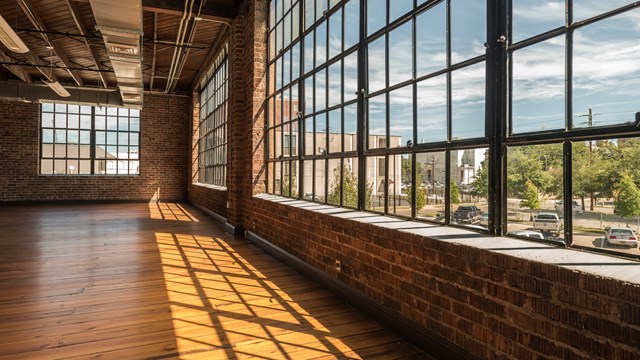
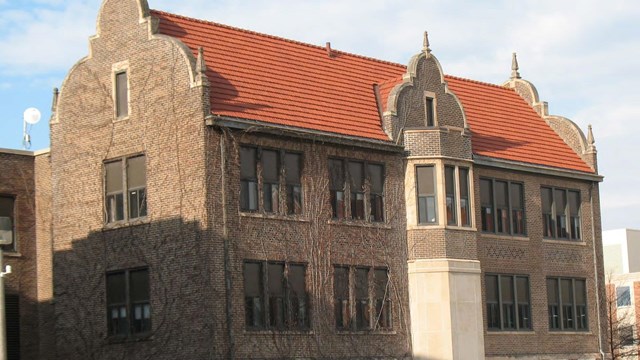
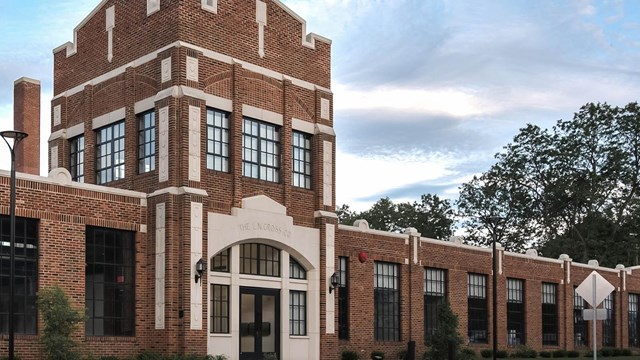
slate and fieldstone. Brick varied considerably
in size and quality. Before 1870, brick clays
were pressed into molds and were often unevenly
fired. The quality of brick depended on the type
of clay available and the brick-making techniques;
by the 1870s--with the perfection of an extrusion
process--bricks became more uniform and durable.
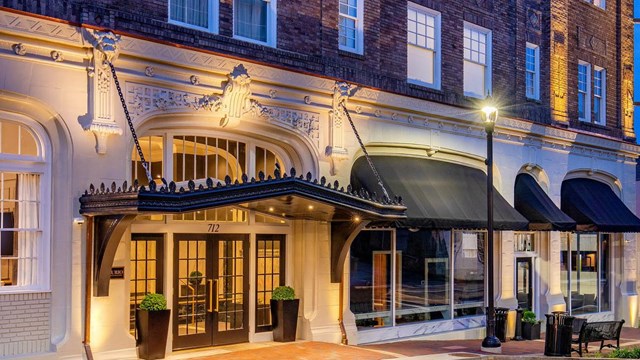
Terra cotta is also a kiln-dried clay product
popular from the late 19th century until the 1930s.
The development of the steel-frame office buildings
in the early 20th century contributed to the widespread
use of architectural terra cotta. Adobe, which
consists of sun-dried earthen bricks, was one
of the earliest building materials used in the
U.S., primarily in the Southwest where it is still
popular.
Mortar is used to bond together masonry
units. Historic mortar was generally quite soft,
consisting primarily of lime and sand with other
additives. By the latter part of the 19th century,
portland cement was usually added resulting in
a more rigid and non-absorbing mortar. Like historic
mortar, early stucco coatings were also heavily
lime-based, increasing in hardness with the addition
of portland cement in the late 19th century. Concrete
has a long history, being variously made of tabby,
volcanic ash and, later, of natural hydraulic
cements, before the introduction of portland cement
in the 1870s. Since then, concrete has also been
used in its precast form. While masonry is among
the most durable of historic building materials,
it is also very susceptible to damage by improper
maintenance or repair techniques and harsh or
abrasive cleaning methods.
|