National Park Service black bar and arrowhead  
 
  home   articles   publications   conferences   links  
 
photo of River Park homes, Washington, D.C., courtsey Richard Longstreth  


Claire Kelly
October 2003

Most people easily recognize that a great diversity exists in historic buildings. They have many shapes, sizes and uses of these structures…but for most, “historic” applies only to buildings that LOOK old. The details, materials and design of older buildings announce their age. We recognize as historic, ornate Victorians, dramatic Art Deco masterpieces and familiar urban rowhouses. Many also recognize the works of the great modernist architects from Neutra to Wright as landmarks to 20th century design and architecture, worthy of protection and preservation.

photo of public housing in Chicago

However, there are many more historic buildings than simply those that look old. Much of the 20th century, particularly Post World War Two, was an era of unprecedented growth in the building industry. New materials and engineering know-how lead to a remarkable diversity of buildings. Because these buildings don’t match up with our perception of historic – because they don’t LOOK old - their architectural importance and potential for rehabilitation and Tax Credits may be missed.

To understand how these buildings can benefit developers, architects, planners and others one must understand how “historic” is defined in the tax credit review process. That definition starts with the National Register. In order for a project to receive a Historic Rehabilitation Tax Credit, the building must be a certified historic structure, meaning that it is listed in the National Register, either individually or as part of a district.

In most cases, historic buildings, as defined by the National Register, must be at least 50 years old. This time frame was set with the understanding that the passage of time is necessary to ensure adequate perspective on the place a property holds in our nation’s history. Experience and the dispassion of distance can insure that listed properties are truly valuable for their historical associations, appearance, or informative potential. That said, not every building older than 50 years is listed in the Register, only those of historic significance.

The National Register also recognizes that in some cases the passage of 50 years is not necessary in order to establish or understand a property’s significance. To this end, they established that properties of exceptional significance can be listed before they reach 50 years.

This means that a younger property that meets the regular criteria - important associations, distinctive characteristics, or artistic merit - and has some exceptional significance at a national, regional or even local level may be listed in the Register. Similarly, younger buildings integral to a registered historic district are also eligible for listing. No matter what the age of the building you are trying to list there are numerous events, architectural developments, social trends and other criteria that may be applied.

photo of corporate headquarters building in Los Angeles converted for hotel use

To date there are approximately 275 historic districts younger than 50 years old, each of which may contain many hundreds of buildings. There are also older districts that have been expanded to include younger buildings. Additionally, there are more than 2,000 properties younger than 50 that are individually listed in the Register. In other words, not only can younger buildings be listed, many already are.

Despite the abundance of newer resources, less than 200 buildings younger than 50 years old have been submitted for consideration for Historic Tax Credits.Clearly, many listed buildings - and many LISTABLE buildings - are being overlooked. These buildings fall into two categories: those that are less than 50 years old but could potentially be listed in the Register due to their significance, and hose that are over 50 years old but don’t look historic.

The diversity of building types available is evidenced in the myriad of projects that are being considered within the tax credit program. Schools, hospitals, commercial buildings, industrial facilities both large and small, gas stations, car dealerships, hotels, office buildings, municipal buildings, parking garages, and military bases just scratch the surface of potential projects.

Thousands of residential properties are also primed for rehab. Perhaps the greatest potential lies in Post World War II era suburban developments. Many garden apartment complexes and single- family subdivisions are worth a second look. They are often cohesive communities linked by design and landscaping and, though the architectural and cultural merit of these suburban communities has not been universally embraced, many have already been listed in the National Register or designated as local or state districts.

Buildings exhibiting new materials, design and techniques can be important to preserve. For example, the first International Style building in a community might be worthy of listing as might the first building to use curtain walls. In addition the factories and plants where these

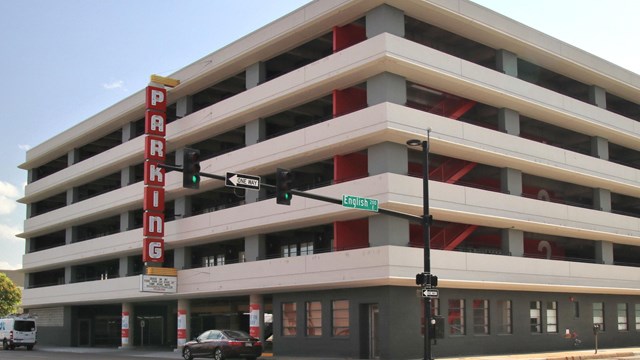
photo of Gimbles Parking garage to be converted for retail use

products were developed are also ripe for preservation. For the preservationist, new challenges exist for assessing and preserving the fabric of these new structures. From plywood houses, to spandrel glass panels to plastics and concrete, new materials mean new approaches to preservation.

The National Historic Preservation Act of 1966 states, historical and cultural foundations of the nation should be preserved as a living part of our community life and development in order to give a sense of orientation to the American people.” Those foundations bridge a much wider collection of resources than is often understood. New buildings create new opportunities and it is worth keeping an eye on the future possibilities.


CK/CR

navigation bar

NPS History & Culture Recent Past Initiative TPS homepage
 
National Park Service ParkNet Heritage Preservation Services