black bar with nps.gov title, National Park Service, U.S. Department of the Interior and the arrowhead

Weatherization and Energy Efficiency

Add shading devices

spacer
Photo ohouse with awnings on front porch.
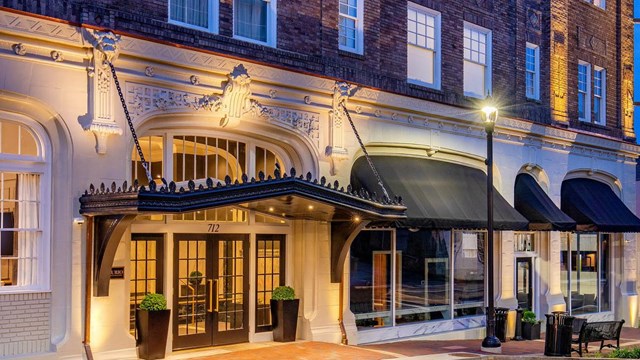
Awnings shade the windows and storefronts of the Francis Scott Key Hotel in Frederick, Maryland, in this early 20th century view.

Historically, awnings and trees provided shade to keep buildings cooler in the summer. Existing awnings and trees should be kept in good condition to take advantage of their energy-saving contribution.

Building owners may consider adding awnings or trees if the summer cooling load is substantial. Awnings are appropriate where there is evidence that they existed historically and on building types where they were common historically, such as commercial buildings with storefronts. Awnings should be installed with care to avoid damaging the building or visually impairing its architectural character. Select an awning style that is compatible with the historic building.

Planting trees can be an effective alternative to installing awnings. For south-facing elevations, select deciduous trees that provide shade in the summer and, after dropping their leaves, allow the sun to warm the building in the winter. Trees should be planted at least 10 feet from a building to avoid damage to building foundations.

Adding either awnings or shade trees may be expensive, but in hot climates, the benefits can often justify the costs.

Learn more »
   Preservation Brief 44: Use of Awnings on Historic Buildings
   Interpreting the Standards Bulletin 27: Adding Awnings to Historic Storefronts and Entrances
   Preservation Tech Note: Windows No. 7: Window Awnings

spacer
Technical Preservation Services NPS History & Culture SEARCH