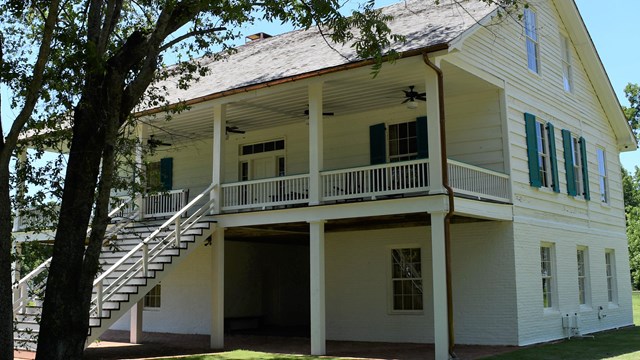
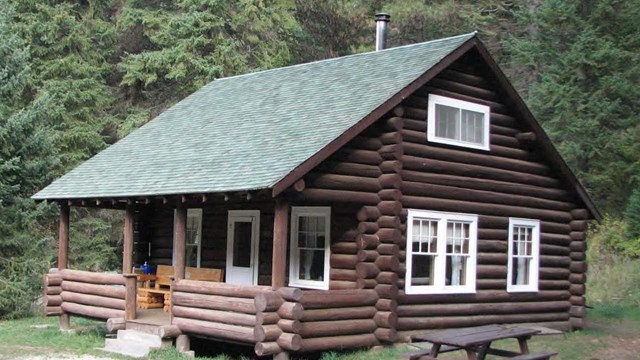
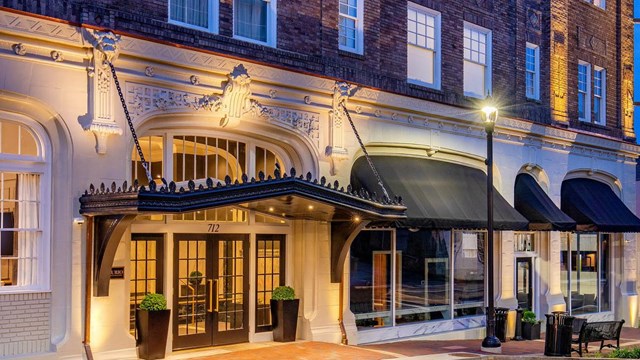
The Secretary of the Interior's Standards for the Treatment of Historic Properties embody two important goals: 1) the
preservation of historic materials and, 2) the preservation of
a building's distinguishing character. Every old building is unique,
with its own identity and its own distinctive character. Character
refers to all those visual aspects and physical features that
comprise the appearance of every historic building. Character-defining
elements include the overall shape of the building, its materials,
craftsmanship, decorative details, interior spaces and features,
as well as the various aspects of its site and environment.
The purpose of this Brief is to help the owner or the architect
identify those features or elements that give the building its
visual character and that should be taken into account in order
to preserve them to the maximum extent possible.
There are different ways of understanding old buildings. They
can be seen as examples of specific building types, which are
usually related to a building's function, such as schools, courthouses
or churches.
Buildings can be studied as examples of using specific
materials such as concrete, wood, steel, or limestone. They can
also be considered as examples of an historical period, which
is often related to a specific architectural style, such as Gothic
Revival farmhouses, one-story bungalows, or Art Deco apartment
buildings.
There are many other facets of an historic building besides its
functional type, its materials or construction or style that contribute
to its historic qualities or significance. Some of these qualities
are feelings conveyed by the sense of time and place or in buildings
associated with events or people. A complete understanding of
any property may require documentary research about its style,
construction, function, its furnishings or contents; knowledge
about the original builder, owners, and later occupants; and knowledge
about the evolutionary history of the building. Even though buildings
may be of historic, rather than architectural significance, it
is their tangible elements that embody its significance for association
with specific events or persons and it is those tangible elements
both on the exterior and interior that should be preserved.
Therefore, the approach taken in this Brief is limited to identifying
those visual and tangible aspects of the historic building. While
this may aid in the planning process for carrying out any ongoing
or new use or restoration of the building, this approach is not
a substitute for developing an understanding about the significance
of an historic building and the district in which it is located.
If the various materials, features and spaces that give a building
its visual character are not recognized and preserved, then essential
aspects of its character may be damaged in the process of change.
A building's character can be irreversibly damaged or changed
in many ways, for example, by inappropriate repointing of the
brickwork, by removal of a distinctive side porch, by changes
to the window sash, by changes to the setting around the building,
by changes to the major room arrangements, by the introduction
of an atrium, by painting previously unpainted woodwork, etc.
This Brief outlines a three-step approach that can be used by anyone
to identify those materials, features and spaces that contribute
to the visual character of a building. This approach involves
first examining the building from afar to understand its overall
setting and architectural context; then moving up very close to
appreciate its materials and the craftsmanship and surface finishes
evident in these materials; and then going into and through the
building to perceive those spaces, rooms and details that comprise
its interior visual character.
Identifying the overall visual character of a building is nothing
more than looking at its distinguishing physical aspects without
focusing on its details. The major contributors to a building's
overall character are embodied in the general aspects of its setting;
the shape of the building; its roof and roof features, such as
chimneys or cupolas; the various projections on the building,
such as porches or bay windows; the recesses or voids in a building,
such as open galleries, arcades, or recessed balconies; the openings
for windows and doorways; and finally the various exterior materials
that contribute to the building's character.
Step One involves
looking at the building from a distance to understand the character
of its site and setting, and it involves walking around the building
where that is possible. Some buildings will have one or more sides
that are more important than the others because they are more
highly visible. This does not mean that the rear of the building
is of no value whatever but it simply means that it is less important
to the overall character. On the other hand, the rear may have
an interesting back porch or offer a private garden space or some
other aspect that may contribute to the visual character. Such
a general approach to looking at the building and site will provide
a better understanding of its overall character without having
to resort to an infinitely long checklist of its possible features
and details. Regardless of whether a building is complicated or
relatively plain, it is these broad categories that contribute
to an understanding of the overall character rather than the specifics
of architectural features such as moldings and their profiles.
Step Two involves looking at the building at close range or arm's
length, where it is possible to see all the surface qualities
of the materials, such as their color and texture, or surface
evidence of craftsmanship or age. In some instances, the visual
character is the result of the juxtaposition of materials that
are contrastingly different in their color and texture. The surface
qualities of the materials may be important because they impart
the very sense of craftsmanship and age that distinguishes historic
buildings from other buildings. Furthermore, many of these close
up qualities can be easily damaged or obscured by work that affects
those surfaces. Examples of this could include painting previously
unpainted masonry, rotary disk sanding of smooth wood siding to
remove paint, abrasive cleaning of tooled stonework, or repointing
reddish mortar joints with gray portland cement.
There is an almost infinite variety of surface materials, textures
and finishes that are part of a building's character which are
fragile and easily lost.
Perceiving the character of interior spaces can be somewhat more
difficult than dealing with the exterior. In part, this is because
so much of the exterior can be seen at one time and it is possible
to grasp its essential character rather quickly. To understand
the interior character, Step Three says it is necessary to move through the spaces
one at a time. While it is not difficult to perceive the character
of one individual room, it becomes more difficult to deal with
spaces that are interconnected and interrelated. Sometimes, as
in office buildings, it is the vestibules or lobbies or corridors
that are important to the interior character of the building.
With other groups of buildings the visual qualities of the interior
are related to the plan of the building, as in a church with its
axial plan creating a narrow tunnel-like space which obviously
has a different character than an open space like a sports pavilion.
Thus the shape of the space may be an essential part of its character.
With some buildings it is possible to perceive that there is a
visual linkage in a sequence of spaces, as in a hotel, from the
lobby to the grand staircase to the ballroom. Closing off the
openings between those spaces would change the character from
visually linked spaces to a series of closed spaces. For example,
in a house that has a front and back parlor linked with an open
archway, the two rooms are perceived together, and this visual
relationship is part of the character of the building. To close
off the open archway would change the character of such a residence.
The importance of interior features and finishes to the character
of the building should not be overlooked. In relatively simple
rooms, the primary visual aspects may be in features such as fireplace
mantels, lighting fixtures or wooden floors. In some rooms, the
absolute plainness is the character-defining aspect of the interior.
So-called secondary spaces also may be important in their own way,
from the standpoint of history or because of the family activities
that occurred in those rooms. Such secondary spaces, while perhaps
historically significant, are not usually perceived as important
to the visual character of the building. Thus we do not take them
into account in the visual understanding of the building.
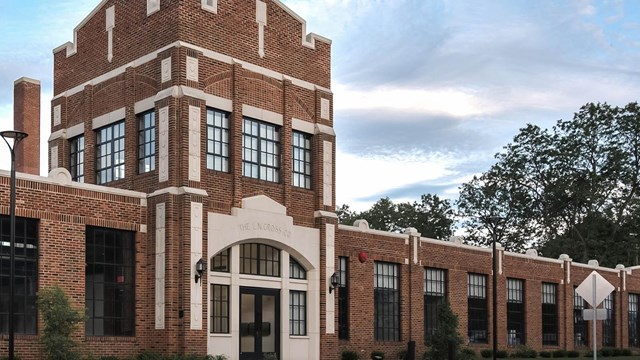
Overall Visual Character: Shape
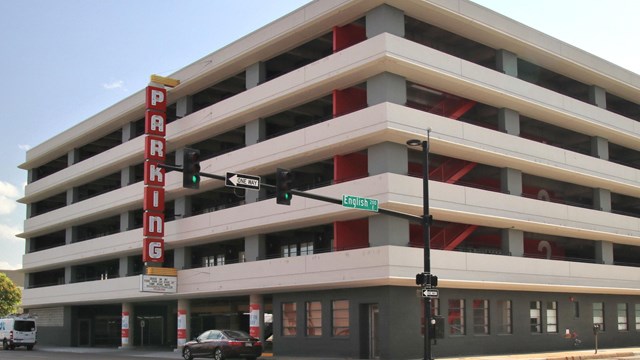
The shape of a building can be an important aspect of its overall
visual character. The building illustrated here, for example,
has a distinctive horizontal boxlike shape with the middle portion
of the box projecting up an extra story.
This building has other
visual aspects that help define its overall character, including
the pattern of vertical bands of windows, the decorative horizontal
bands which separate the base of the building from the upper floors,
the dark brown color of the brick, the large arched entranceway,
and the castle-like tower behind the building.
Overall Visual Character: Openings
The opening illustrated here dominates the visual character of
this building because of its size, shape, location, materials,
and craftsmanship. Because of its relation to the generous staircase,
this opening places a strong emphasis on the principal entry to
the building. Enclosing this arcade-like entry with glass, for
example, would materially and visually change the character of
the building.
Overall Visual Character: Roof and
Related Features
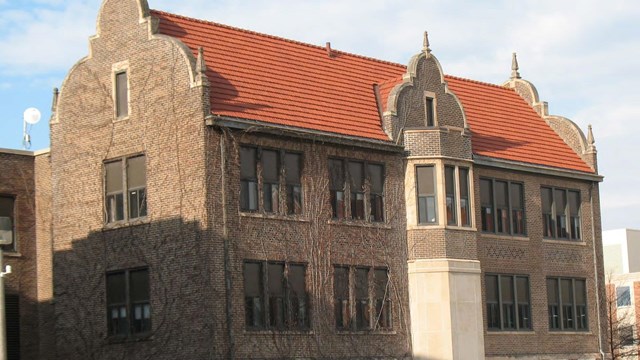
This building has a number of character-defining aspects which
include the windows and the decorative stonework, but certainly
the roof and its related features are visually important to its
overall visual character. The roof is not only highly visible,
it has elaborate stone dormers, and it also has decorative metalwork
and slatework. The red and black slates of differing sizes and
shapes are laid in patterns that extend around the roof of this
large and freestanding building. Any changes to this patterned
slatework, or to the other roofing details would damage the visual
character of the building.
Overall Visual Character:
Roof and Related Features
On this building, the most important visual aspects of its character
are the roof and its related features , such as the dormers and
chimneys. The roof is important to the visual character because
its steepness makes it highly visible, and its prominence is reinforced
by the patterned tinwork, the six dormers and the two chimneys.
Changes to the roof or its features, such as removal or alterations
to the dormers, for example, would certainly change the character
of this building. This does not discount the importance of its
other aspects, such as the porch, the windows, the brickwork,
or its setting; but the roof is clearly crucial to understanding
the overall visual character of this building as seen from a distance.
Overall Visual Character: Projections
A projecting porch or balcony can be very important to the overall
visual character of almost any building and to the district in
which it is located. Despite the size of this building (3-1/2
stories), and its distinctive roofline profile, and despite the
importance of the very large window openings, the lacy wrap-around
iron balcony is singularly important to the visual character of
this building. It would seriously affect the character to remove
the balcony, to enclose it, or to replace it with a balcony lacking
the same degree of detail of the original material.
Overall Visual Character: Trim
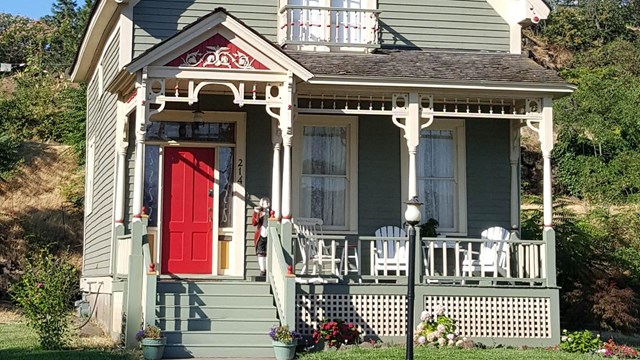
If one were to analyze the overall shape or form of this building,
it would be seen that it is a gable-roofed house with dormers and
a wrap-around porch. It is similar to many other houses of the
period. It is the wooden trim on the eaves and around the porch
that gives this building its own identify and its special visual
character.
Although such wooden trim is vulnerable to the elements,
and must be kept painted to prevent deterioration; the loss of
this trim would seriously damage the overall visual character
of this building, and its loss would obliterate much of the closeup
visual character so dependent upon craftsmanship for the moldings,
carvings, and the see-through jigsaw work.
Overall Visual Character: Setting
Even architecturally modest buildings frequently will have a setting
that contributes to their overall character. In this very urban
district, setbacks are the exception, so that the small front
yard is something of a luxury, and it is important to the overall
character because of its design and materials, which include the
iron fence along the sidewalk, the curved walk leading to the
porch, and the various plantings. In a district where parking
spaces are in great demand, such front yards are sometimes converted
to off-street parking, but in this instance, that would essentially
destroy its setting and would drastically change the visual character
of this historic property.
Arm's Length Visual Character: Materials
At arm's length, the visual character is most often determined
by the surface qualities of the materials and craftsmanship; and
while these aspects are often inextricably related, the original
choice of materials often plays the dominant role in establishing
the close range character because of the color, texture, or shape
of the materials.
In this instance, the variety and arrangement of the materials
is important in defining the visual character, starting with the
large pieces of broken stone which form the projecting base for
the building walls, then changing to a wall of roughly rectangular
stones which vary in size, color, and texture, all with accentuated,
projecting beads of mortar, then there is a rather precise and
narrow band of cut and dressed stones with minimal mortar joints,
and finally, the main building walls are composed of bricks, rather
uniform in color, with fairly generous mortar joints. It is the
juxtaposition and variety of these materials (and of course, the
craftsmanship) that is very important to the visual character.
Changing the raised mortar joints, for example, would drastically
alter the character at arm's length.
Arm's Length Visual Character: Craft Details
There are many instances where craft details dominate the arm's
length visual character. As seen here, the craft details are especially
noticeable because the stones are all of a uniform color, and
they are all squared off, but their surfaces were worked with
differing tools and techniques to create a great variety of textures,
resulting in a tour-de-force of craft details. This texture is very
important at close range. It was a deliberately contrived surface
that is an important contributor to the visual character of this
building.
Interior Visual Character: Individually Important Spaces
In assessing the interior visual character of any historic building,
it is necessary to ask whether there are spaces that are important
to the character of this particular building, whether the building
is architecturally rich or modest, or even if it is a simple or
utilitarian structure.
The character of the individually important space, which is illustrated
here, is a combination of its size, the twin curving staircases,
the massive columns and curving vaulted ceilings, in addition
to the quality of the materials in the floor and in the stairs.
If the ceiling were to be lowered to provide space for heating
ducts, or if the stairways were to be enclosed for code reasons,
the shape and character of this space would be damaged, even if
there was no permanent physical damage. Such changes can easily
destroy the visual character of an individually important interior
space. Thus, it is important that the visual aspects of a building's
interior character be recognized before planning any changes or
alterations.
Interior Visual Character: Related Spaces
Many buildings have interior spaces that are visually or physically
related so that, as you move through them, they are perceived
not as separate spaces, but as a sequence of related spaces that
are important in defining the interior character of the building.
The example which is illustrated here consists of two spaces
that are visually linked to each other.
The top photo shows a vestibule which is of a generous
size and unusual in its own right, but more important, it visually
relates to the staircase off of it.
The stairway, bottom photo, is the second part of this sequence of related spaces,
and it provides continuing access to the upper floors.
These related spaces are very important in defining the interior
character of this building. Almost any change to these spaces,
such as installing doors between the vestibule and the hallway,
or enclosing the stair would seriously impact their character
and the way that character is perceived.
Interior Visual Character: Interior Features
Interior features are three-dimensional building elements or architectural
details that are an integral part of the building as opposed to
furniture. Interior features are often important in defining the
character of an individual room or space. In some instances, an
interior feature, like a large and ornamental open stairway may
dominate the visual character of an entire building. In other
instances, a modest iron stairway (like the one illustrated here)
may be an important interior feature, and its preservation would
be crucial to preserving the interior character of the building.
Such features can also include the obvious things like fireplace
mantles, plaster ceiling medallions, or paneling, but they also
extend to features like hardware, lighting fixtures, bank tellers
cages, decorative elevator doors, etc.
Interior Visual Character: Surface Materials and Finishes
When identifying the visual character of historic interior spaces
one should not overlook the importance of those materials and
finishes that comprise the surfaces of walls, floors and ceilings.
The surfaces may have evidence of either handcraft or machine made
products that are important contributors to the visual character,
including patterned or inlaid designs in the wood flooring, decorative
painting practices such as stenciling, imitation marble or wood
grain, wallpapering, tinwork, tile floors, etc.
The example illustrated here involves a combination of real marble
at the base of the column, imitation marble patterns on the plaster
surface of the column (a practice called scagliola), and a tile
floor surface that uses small mosaic tiles arranged to form geometric
designs in several different colors. While such decorative materials
and finishes may be important in defining the interior visual
character of this particular building, it should be remembered
that in much more modest buildings, the plainness of surface materials
and finishes may be an essential aspect of their historic character.
Interior: Exposed Structure
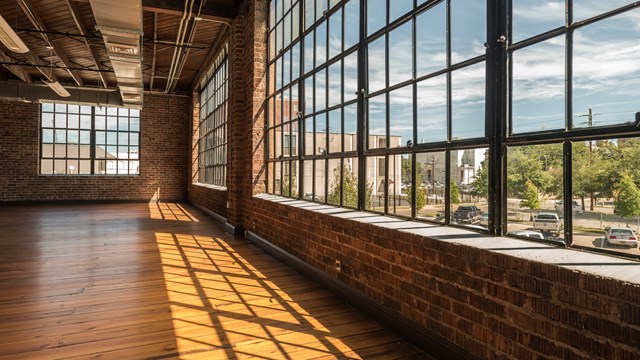
If features of the structural system are exposed, such as loadbearing brick walls, cast iron
columns, roof trusses, posts and beams, vigas, or stone foundation walls, they may be
important in defining the building's interior visual character.
Fragility of A Building's Visual Character
Some aspects of a building's visual character are fragile and
are easily lost. This is true of brickwork, for example, which
can be irreversibly damaged with inappropriate cleaning techniques
or by insensitive repointing practices. At least two factors are
important contributors to the visual character of brickwork, namely
the brick itself and the craftsmanship. Between these, there are
many more aspects worth noting, such as color range of bricks,
size and shape variations, texture, bonding patterns, together
with the many variable qualities of the mortar joints, such as
color, width of joint and tooling.
These qualities could be easily
damaged by painting the brick, by raking out the joint with power
tools, or repointing with a joint that is too wide. As seen here
during the process of repointing, the visual character of this
front wall is being dramatically changed from a wall where the
bricks predominate, to a wall that is visually dominated by the
mortar joints.
Using this three-step approach, it is possible to conduct a walk
through and identify all those elements and features that help
define the visual character of the building. In most cases, there
are a number of aspects about the exterior and interior that are
important to the character of an historic building. The visual
emphasis of this brief will make it possible to ascertain those
things that should be preserved because their loss or alteration
would diminish or destroy aspects of the historic character whether
on the outside, or on the inside of the building.
This checklist can be taken to the building and used to identify
those aspects that give the building and setting its essential
visual qualities and character. This checklist consists of a series
of questions that are designed to help in identifying those things
that contribute to a building's character. The use of this checklist
involves the threestep process of looking for: 1) the overall
visual aspects, 2) the visual character at close range, and 3)
the visual character of interior spaces, features and finishes.
Because this is a process to identify architectural character,
it does not address those intangible qualities that give a property
or building or its contents its historic significance, instead
this checklist is organized on the assumption that historic significance
is embodied in those tangible aspects that include the building's
setting, its form and fabric.
STEP ONE
1. Shape
What is there about the form or shape of the building that gives
the building its identity? Is the shape distinctive in relation
to the neighboring buildings? Is it simply a low, squat box, or
is it a tall, narrow building with a corner tower? Is the shape
highly consistent with its neighbors? Is the shape so complicated
because of wings, or ells, or differences in height, that its
complexity is important to its character? Conversely, is the shape
so simple or plain that adding a feature like a porch would change
that character? Does the shape convey its historic function as
in smoke stacks or silos?
Notes on the Shape or Form of the Building:
____________________________________________________________________
____________________________________________________________________
2. Roof and Roof Features
Does the roof shape or its steep (or shallow) slope contribute
to the building's character? Does the fact that the roof is highly
visible (or not visible at all) contribute to the architectural
identity of the building? Are certain roof features important
to the profile of the building against the sky or its background,
such as cupolas, multiple chimneys, dormers, cresting, or weather vanes?
Are the roofing materials or their colors or their patterns (such
as patterned slates) more noticeable than the shape or slope of
the roof?
Notes on the Roof and Roof Features:
____________________________________________________________________
____________________________________________________________________
3. Openings
Is there a rhythm or pattern to the arrangement of windows or
other openings in the walls; like the rhythm of windows in a factory
building, or a threepart window in the front bay of a house; or
is there a noticeable relationship between the width of the window
openings and the wall space between the window openings? Are there
distinctive openings, like a large arched entranceway, or decorative
window lintels that accentuate the importance the window openings,
or unusually shaped windows, or patterned window sash, like small
panes of glass in the windows or doors, that are important to
the character? Is the plainness of the window openings such that
adding shutters or gingerbread trim would radically change its
character? Is there a hierarchy of facades that make the front
windows more important than the side windows? What about those
walls where the absence of windows establishes its own character?
Notes on the Openings:
____________________________________________________________________
____________________________________________________________________
4. Projections
Are there parts of the building that are characterdefining because
they project from the walls of the building like porches, cornices,
bay windows, or balconies? Are there turrets, or widely overhanging
eaves, projecting pediments or chimneys?
Notes on the Projections:
____________________________________________________________________
____________________________________________________________________
5. Trim and Secondary Features
Does the trim around the windows or doors contribute to the character
of the building? Is there other trim on the walls or around the
projections that, because of its decoration or color or patterning
contributes to the character of the building? Are there secondary
features such as shutters, decorative gables, railings, or exterior
wall panels?
Notes on the Trim and Secondary Features:
____________________________________________________________________
____________________________________________________________________
6. Materials
Do the materials or combination of materials contribute to the
overall character of the building as seen from a distance because
of their color or patterning, such as broken faced stone, scalloped
wall shingling, rounded rock foundation walls, boards and battens,
or textured stucco?
Notes on the Materials
____________________________________________________________________
____________________________________________________________________
7. Setting
What are the aspects of the setting that are important to the
visual character? For example, is the alignment of buildings along
a city street and their relationship to the sidewalk the essential
aspect of its setting? Or, conversely, is the essential character
dependent upon the tree plantings and out buildings which surround
the farmhouse? Is the front yard important to the setting of the
modest house? Is the specific site important to the setting such
as being on a hilltop, along a river, or, is the building placed
on the site in such a way to enhance its setting? Is there a special
relationship to the adjoining streets and other buildings? Is
there a view? Is there fencing, planting, terracing, walkways
or any other landscape aspects that contribute to the setting?
Notes on the Setting:
____________________________________________________________________
____________________________________________________________________
STEP TWO
8. Materials at Close Range
Are there one or more materials that have an inherent texture
that contributes to the close range character, such as stucco,
exposed aggregate concrete, or brick textured with vertical grooves?
Or materials with inherent colors such as smooth orange colored
brick with dark spots of iron pyrites, or prominently veined stone,
or green serpentine stone? Are there combinations of materials,
used in juxtaposition, such as several different kinds of stone,
combinations of stone and brick, dressed stones for window lintels
used in conjunction with rough stones for the wall? Has the choice
of materials or the combinations of materials contributed to the
character?
Notes on the Materials at Close Range:
____________________________________________________________________
____________________________________________________________________
9. Craft Details
Is there high quality brickwork with narrow mortar joints? Is
there hand tooled or patterned stonework? Do the walls exhibit
carefully struck vertical mortar joints and recessed horizontal
joints? Is the wall shinglework laid up in patterns or does it
retain evidence of the circular saw marks or can the grain of
the wood be seen through the semitransparent stain? Are there
hand split or handdressed clapboards, or machine smooth beveled
siding, or wood rusticated to look like stone, or Art Deco zigzag
designs executed in stucco?
Almost any evidence of craft details, whether handmade or machinemade,
will contribute to the character of a building because it is a
manifestation of the materials, of the times in which the work
was done, and of the tools and processes that were used. It further
reflects the effects of time, of maintenance (and/or neglect)
that the building has received over the years. All of these aspects
are a part of the surface qualities that are seen only at close
range.
Notes on the Craft Details:
____________________________________________________________________
____________________________________________________________________
STEP THREE
10. Individual Spaces
Are there individual rooms or spaces that are important to this
building because of their size, height, proportion, configuration,
or function, like the center hallway in a house, or the bank lobby,
or the school auditorium, or the ballroom in a hotel, or a courtroom
in a county courthouse?
Notes on the Individual Spaces.
____________________________________________________________________
____________________________________________________________________
11. Related Spaces and Sequences of Spaces
Are there adjoining rooms that are visually and physically related
with large doorways or open archways so that they are perceived
as related rooms as opposed to separate rooms? Is there an important
sequence of spaces that are related to each other, such as the
sequence from the entry way to the lobby to the stairway and to
the upper balcony as in a theatre; or the sequence in a residence
from the entry vestibule to the hallway to the front parlor, and
on through the sliding doors to the back parlor; or the sequence
in an office building from the entry vestibule to the lobby to
the bank of elevators?
Notes on the Related Spaces and Sequences of Spaces:
____________________________________________________________________
____________________________________________________________________
12. Interior Features
Are there interior features that help define the character of
the building, such as fireplace mantels, stairways and balustrades,
arched openings, interior shutters, inglenooks, cornices, ceiling
medallions, light fixtures, balconies, doors, windows, hardware,
wainscoting, panelling, trim, church pews, courtroom bars, teller
cages, waiting room benches?
Notes on the Interior Features:
____________________________________________________________________
____________________________________________________________________
13. Surface Finishes and Materials
Are there surface finishes and materials that can affect the design,
the color or the texture of the interior? Are there materials
and finishes or craft practices that contribute to the interior
character, such as wooden parquet floors, checkerboard marble
floors, pressed metal ceilings, fine hardwoods, grained doors
or marbleized surfaces, or polychrome painted surfaces, or stenciling,
or wallpaper that is important to the historic character? Are
there surface finishes and materials that, because of their plainness,
are imparting the essential character of the interior such as
hard or bright, shiny wall surfaces of plaster or glass or metal?
Notes on the Surface Finishes and Materials:
____________________________________________________________________
____________________________________________________________________
14. Exposed Structure
Are there spaces where the exposed structural elements define
the interior character such as the exposed posts, beams, and trusses
in a church or train shed or factory? Are there rooms with decorative
ceiling beams (nonstructural) in bungalows, or exposed vigas in
adobe buildings?
Notes on the Exposed Structure:
____________________________________________________________________
____________________________________________________________________
This concludes the three-step process of identifying the visual
aspects of historic buildings and is intended as an aid in preserving
their character and other distinguishing qualities. It is not
intended as a means of understanding the significance of historical
properties or districts, nor of the events or people associated
with them. That can only be done through other kinds of research
and investigation.
Acknowledgements
This Preservation Brief was originally developed as a slide talk/methodology
in 1982 to discuss the use of the Secretary of the Interior's
Standards for Rehabilitation in relation to preserving historic
character; and it was amplified and modified in succeeding years
to help guide preservation decision making, initially for maintenance
personnel in the National Park Service. Please note that many of the figures that were in the printed Brief had to be omitted here; however you can go to a special web site, The Walk-Through--Identifying the Visual Character of Historic Buildings, to study all of Lee Nelson's photos and text presented as a long distance learning program. A number of people contributed
to the evolution of the ideas presented here. Special thanks go
to Emogene Bevitt and Gary Hume, primarily for the many and frequent
discussions relating to this approach in its evolutionary stages;
to Mark Fram, Ontario Heritage Foundation, Toronto, for suggesting
several additions to the Checklist; and more recently, to my coworkers,
both in Washington and in our regional offices, especially Ward
Jandl, Sara Blumenthal, Charles Fisher, Sharon Park, AIA, Jean
Travers, Camille Martone, Susan Dynes, Michael Auer, Anne Grimmer,
Kay Weeks, Betsy Chittenden, Patrick Andrus, Carol Shull, Hugh
Miller, FAIA, Jerry Rogers, Paul Alley, David Look, AIA, Margaret
Pepin-Donat, Bonnie Halda, Keith Everett, Thomas Keohan, the Preservation
Services Division, MidAtlantic Region, and several reviewers in
state preservation offices, especially Ann Haaker, Illinois; and
Stan Graves, AIA, Texas; for providing very critical and constructive
review of the manuscript. Washington, D.C. September, 1988
Home page logo: Close-up of stone wall, showing craftsmanship. Photo: NPS files.