Harpers Ferry Center is committed to providing
outdoor interpretive exhibits that are accessible to all potential
users. |
|
Harpers Ferry Center is committed to providing outdoor interpretive exhibits that are accessible to all potential users. Wayside exhibits will be planned, designed, fabricated, and installed in a manner consistent with the following goals. Standards and specifications used to ensure that these goals are met include:
For Visitors with Mobility Impairments
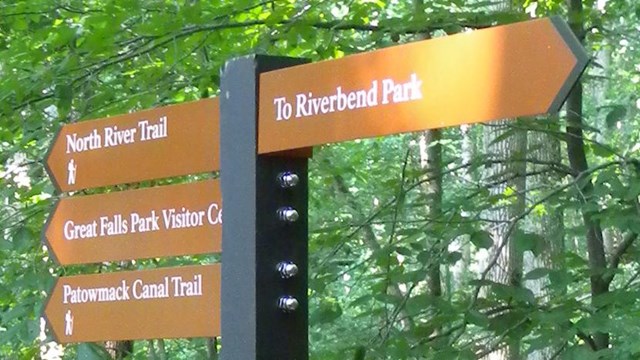
- Wayside exhibits will be installed at accessible locations wherever possible.
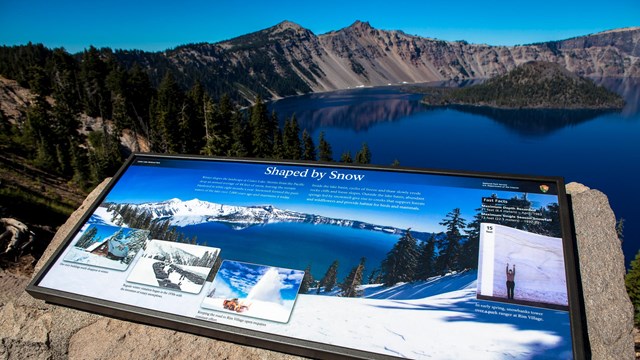
- Wayside exhibit panels will be installed at heights and angles favorable for viewing by all visitors, including wheelchair users. For standard NPS low-profile exhibits the recommended height is 30" from the bottom of the exhibit frame to finished grade; for upright exhibits and bulletin boards the height is 24-28” from the bottom of the exhibit frame to finished grade, depending on panel size.
- Trailhead exhibits will include accessibility advisory information.
- Wayside exhibits will have level, hard-surfaced exhibit pads.
- Exhibit sites will offer clear, unrestricted views of park features referred to in the exhibits.
- In addition, the park should consider posting wayside content (excluding copyright material) on the park's website.
For Visitors with Visual Impairments
- Exhibit typography will be legible and readable, according with the NPS Wayside Exhibit Typographic Standards (PDF).
- Panel colors will be selected to reduce eyestrain and glare and to provide excellent readability under field conditions. Because of its reflectivity, white will not be used as a background color.
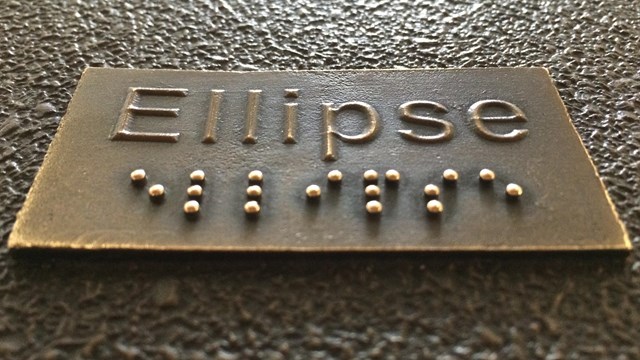
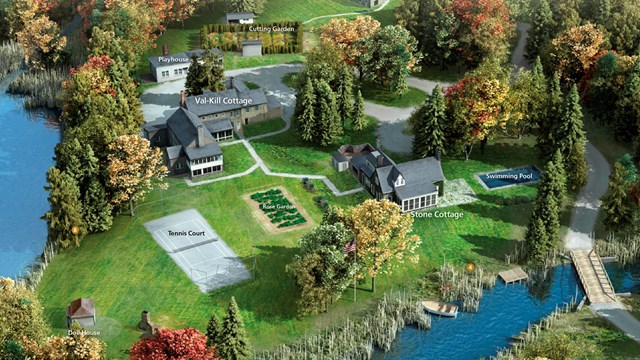
- Selected wayside exhibits will incorporate tactile elements such as models, texture blocks, and relief maps.
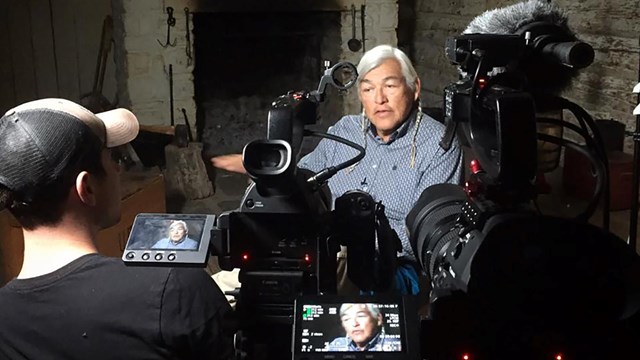
- Selected wayside exhibits will incorporate audio stations.
- For all major features interpreted by graphic wayside exhibits, the park will offer non-visual interpretation (i.e. audio description) covering the same subject matter. Examples include audio tours such as digital audio players, radio systems or dial-up messages for cellular phone users, and ranger talks. In the spirit of Universal Design, we strongly encourage audio descriptions designed for the benefit of all visitors rather than a separate program.
- In addition, parks should consider posting wayside content on the park's website.
For Visitors with Hearing Impairments
- Wayside exhibit panels will communicate visually and will rely heavily on graphics to interpret park resources.
- Essential information included in audio station messages will be duplicated in written form, either as part of the exhibit text or in a publication.
For Visitors with Learning Impairments
- Topics for wayside exhibits will be specific and of general interest. Unnecessary complexity will be avoided. Information will be presented in a clear hierarchical manner.
- Easy-to-understand graphics will be used to convey ideas, rather than text alone.
- Unfamiliar expressions, technical terms, and jargon will be avoided. Pronunciation aids and definitions will be provided where needed.
- Text will be concise and free of long paragraphs and wordy language.
Comprehensive Planning
- Wayside exhibit planning begins with comprehensive park wide interpretive planning. Early recognition of, and sensitivity to, accessibility issues will result in the most successful waysides.
Rev. April 4, 2006 |
|
TABLE OF CONTENTS:
Wayside Exhibits »
RELATED LINKS:
Director’s
Order #42 »
Principles of Universal Design »
PDF DOCUMENTS:
NPS Wayside Exhibit Map Standards »
NPS Wayside Exhibit Typographic Standards »
Help With PDF »
|