Products & Services > Exhibits & Museums > Exhibits In-Depth > Exhibit Production Process

Museum/Visitor Center Exhibit Production Process

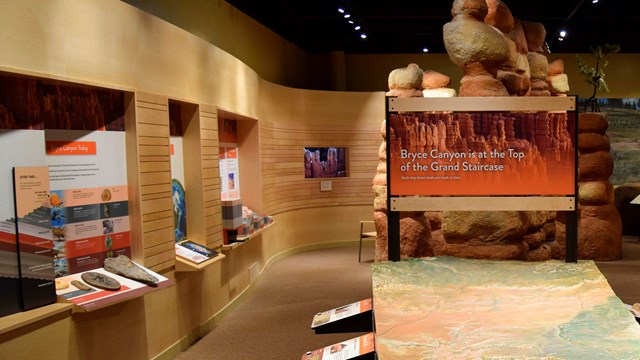
Dickey Ridge Exhibit at Shenandoah National Park

Dickey Ridge Visitor Center Exhibit at Shenandoah National Park, Virginia.


Postaward Meeting and Site Visit

The Postaward Meeting and Site Visit, although usually accomplished in one work day, is a highly critical and productive meeting between the exhibit fabrication contractor, the COR, the park staff, and other involved parties who can participate, such as the design and planning team. This meeting and site visit provides important information and direction to the contractor which they need to supplement the information in their contract documents.

Postaward Meeting -Typical Agenda:

  • Conduct a general review of the project, including the schedule.
  • Review the exhibit design - the contractor points out areas where they have concerns or questions.
  • Turn over Government-Furnished reference materials to the contractor. Conduct a review of these references.
  • The contractor measures and takes reference photographs of the areas in which the exhibits will be installed. This includes taking notes of existing conditions and pointing out potential problems to the COR and park.
  • The contractor inspects, measures, and takes reference photographs of artifacts to be mounted by the contractor.

Detailing, Submittals, Proofs

The submittals phase is the one in which communication between the contractor and their client is fined-tuned through the submittal of detail drawings, proofs, and samples by the contractor, which the COR and park client can accept or reject. Although this phase does not end entirely prior to shop fabrication, for most elements the contractor and their client must work through this period of back and forth communication before proceeding to the next phase.

Typical Submittals:

  • Fabrication details - generally, the design drawings do not include full construction detailing
  • Color and materials samples There may be slight changes in colors and materials from the original design, associated with the fabrication drawings.
  • Catalog Cuts - Manufacturer's information from catalogs, including on-line
  • Graphic Proofs - Print-outs of digital graphics, usually inkjet, for review of text and visual effect of colors, photos and art. Proofs may be in a different output than the final media, or at a smaller scale. Consequently, other samples may be needed to check actual colors or other characteristics.
  • Audiovisual line drawings - these show how all the equipment is to be hooked up

Shop Fabrication

This phase encompasses many elements beyond "shop fabricated" structures, such as, production of specialties which may be subcontracted.

A key requirement of the contractor is complex project management of widely varying, highly specialized and technically complex elements that make up a typical museum exhibit. 2-D design elements, 3-D structures, electronic media, lighting, curatorial elements, and architecture all need to come together.

Typical Elements in a Fabrication Contract:

  • Preparation of digital graphic files and output of digital graphics
  • Fabrication of structures, including artifact cases, panels, walls, platforms, information desks, benches, audiovisual kiosks, etc, etc.
  • Models, including scale models, sculpted or cast human figures, natural history models, taxidermy or freeze dried animals, architectural models, mechanical interactive exhibits
  • Fabrication of custom artifact mounting hardware
  • The contractor acquires the audiovisual hardware and tests it in their shop, prior to installation.

Building Preparation

This phase often runs on a parallel track with the shop fabrication phase. Detailed coordination between the COR, contractor, and park is important. Most of the tasks in this work fall outside the scope of the typical exhibit fabrication contract. However, some exhibit contracts may include some of these elements. In any case, the exhibit contractor needs to be kept well informed about all the details of the building prep work.

Typical Building Preparation Elements:

  • Demolition of old exhibits or other furnishings from previous usage of the space.
  • New finishes, such as painting, carpeting or other floor finishes, acoustical tile ceilings, baseboards, and trim moldings.
  • Changes or additions to electrical circuits, outlets, conduit, fire alarms, emergency exit lights, security system, and other work requiring a licensed electrician.
  • Changes or additions to room lighting, such as installation of track lighting for the exhibits. Lighting needs to be in place when exhibits arrive, with track fixtures put in their approximate final placement.
  • Installation of conduit for audiovisual equipment wiring and preparation of space to serve as audiovisual equipment closet, if available.
  • Changes to building HVAC system, such as moving vents, ducts, or thermostats in order to accommodate the new exhibit structures. Major work may be required, such as a new system to handle the added heat load of the exhibit lighting.

Installation

During this phase, the goal is to deliver the exhibit elements in as complete a state as possible and minimize the amount of on-site work to be done. Installations are costly and labor-intensive. The contractor must carefully coordinate the sequence of installation so that delays are minimized. Subcontractors need to be brought on site when the exhibits are ready for their particular specialty. The contractor concludes the installation with a walk-through with the COR and the park, so that a punch-list can be generated of any corrections that need to be made.

Typical Phases in an Exhibit Installation:

  • Prepare exhibit space - the scope of the exhibit fabrication contract may include some building prep work such as demolition of old exhibits, wall painting, carpeting, or lighting. It also may include minor electrical work to accommodate new AV and lighting for the exhibits.
  • Delivery/unloading - this can take a whole day. The contractor has to plan a staging area for the unloaded exhibit elements.
  • Install large structures, such as platforms, walls, cases, etc. Some projects include full-scale reconstructions of portions of architecture or ships, or full-scale natural history dioramas.
  • Install large graphic panels and murals
  • Install smaller graphics, audiovisual equipment, models, interactive exhibits. When all exhibit elements are installed except for artifacts...
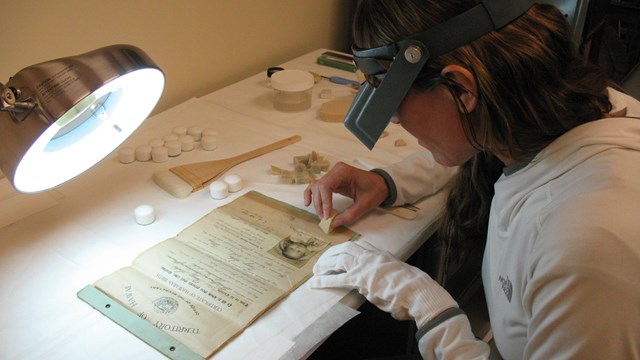
  • Clean work site of debris and dust, clean artifact cases, and install artifacts in artifact cases. Artifacts are prepared with their mounting hardware in a separate "clean" room if available. Install silica gel in cases, before final cleaning of case interior and closing.
  • Aim and adjust lighting fixtures. Adjust light levels on artifacts so as not to exceed recommended safe levels for each type of object. Use light meter to verify light levels, measured in footcandles.
  • COR, park staff and contractor's Project Manager conduct a walk-through inspection of the completed exhibits and generate a punch-list of items which the contractor has to correct. As many items as possible are corrected prior to the crew leaving the site. Some may have to be corrected later, if it involves shop fabrication of items to replace defects in the exhibit, to be installed on another trip to the site.
  • Contractor provides park staff with a Maintenance Manual for care and cleaning of the new exhibits and AV equipment, and conducts a training session for such tasks as how to access the interior of artifact cases and AV equipment enclosures, how to operate AV equipment, how to clean the exhibits, how to do minor repair and touch-up of the exhibits, etc.
  • The exhibit fabricator is required to photograph the completed, installed exhibits.

Closeout, Warranty Period

Museum exhibits are custom-made, and each are inherently experimental, so they all need a "shake-down" period. The exhibit fabrication contract has a one-year warranty which helps with defects in materials and workmanship. A contingency should be built into the project to pay for changes in the exhibit if there are defects in the design which were unforeseen until after the exhibits began being used. The closeout period mainly deals with archiving important resources acquired to create the media contained in the exhibits.

Typical Phases in the Closeout, Warranty Period:

  • The contractor returns a Closeout Package to the COR containing all government-furnished materials used to create the exhibits, and as well as materials generated by the contractor to create the exhibits, such as digital layouts, and "as-built" fabrication drawings (showing the exhibits as actually built, indicating deviations from the original design). A copy of the Maintenance Manual for the COR is included in the Closeout Package. This should be an exact copy of the Maintenance Manual provided to the park.
  • Graphic source material is checked against the exhibit project list to verify that all items were returned, and then they are filed for future rehabilitation of the exhibit.
  • During the warranty period, the COR addresses issues with the exhibits, and is the contact person between the contractor and the park. Sometimes the warranty period is used to enhance the exhibits with minor additions or changes, in a contract modification.
  • Photographs of the completed exhibits, and data such as size and cost of the exhibits, are kept on file by the COR for future reference by management.
 
Author: Harpers Ferry Center
Last Updated: Wednesday, 28-Mar-2007 15:55:31 Eastern Daylight Time
http://www.nps.gov/hfc/products/exhibits/ex-indepth-product-process.htm