

NPS photo Several forest types are found within Golden Gate National Recreation Area ranging from the redwood forests of Muir Woods to the oak woodlands found throughout the park. Riparian forests, made up of a mix of shrubby species as well as larger trees are also common throughout the park. "Alameda" is a Spanish term for "tree line," a sure way to find a creek for early explorers of the region. The area's scrublands are covered with a wide variety of flowering shrubs including California sage brush, coyote brush, poison oak, lizard tail, cream bush, osoberry, coffee berry, and twinberry. Chaparral regions showcase chamise, manzanita, yerba santa, and ceanothus. These shrubs are evergreen, and tend to have small leaves with thick cuticles to guard against desiccation. 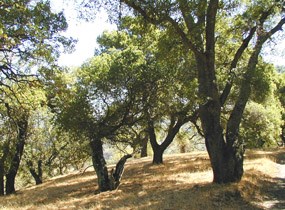
NPS photo |
 |
|
Last updated: February 28, 2015