
|
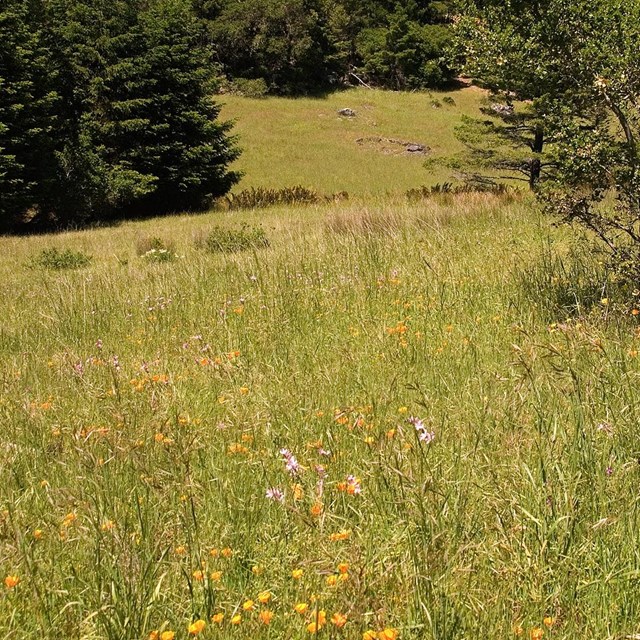
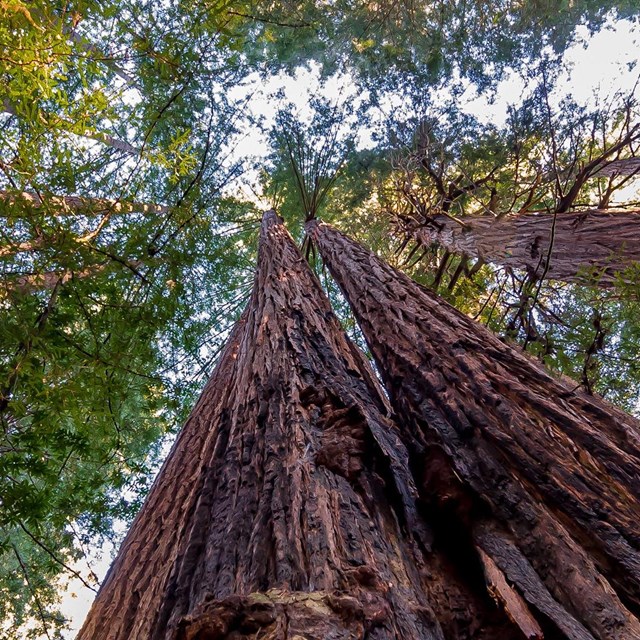
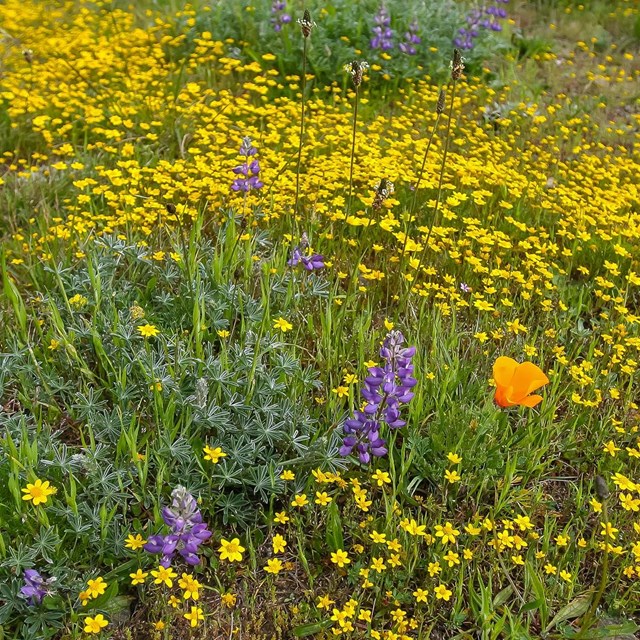
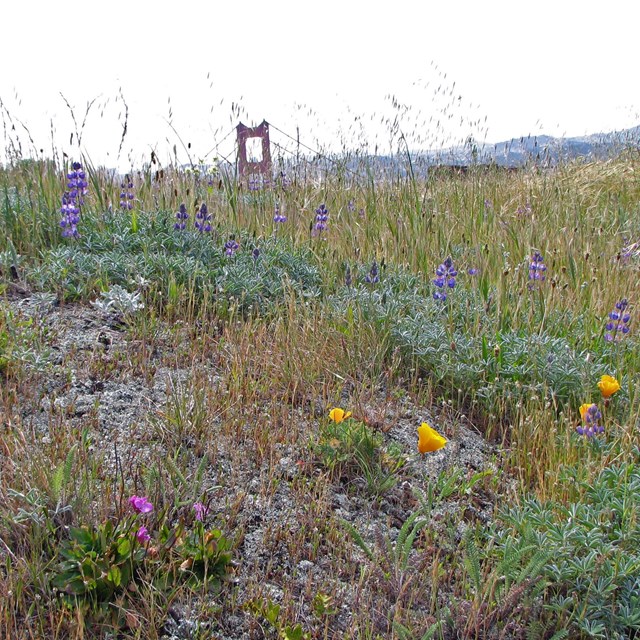
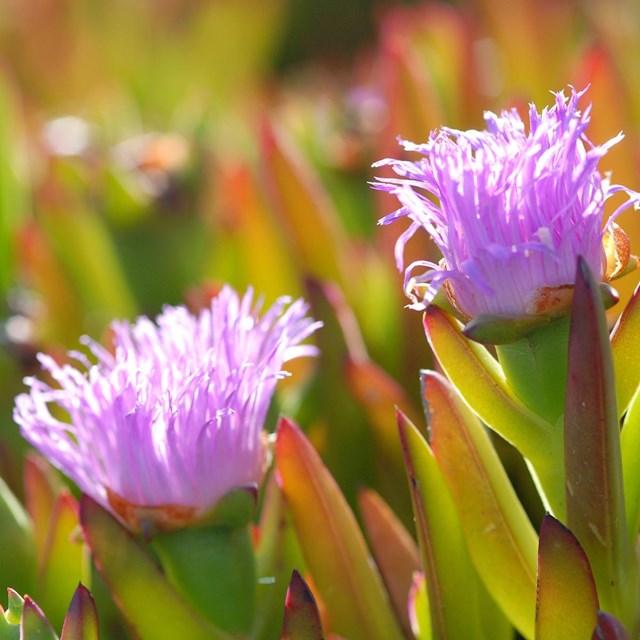
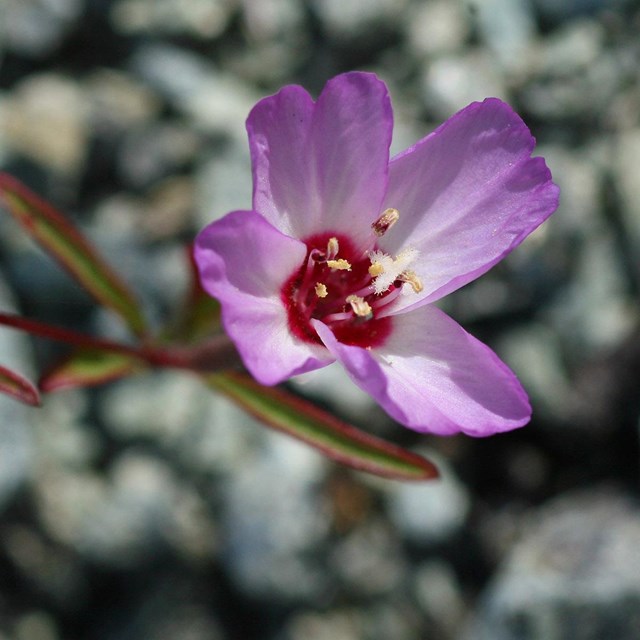
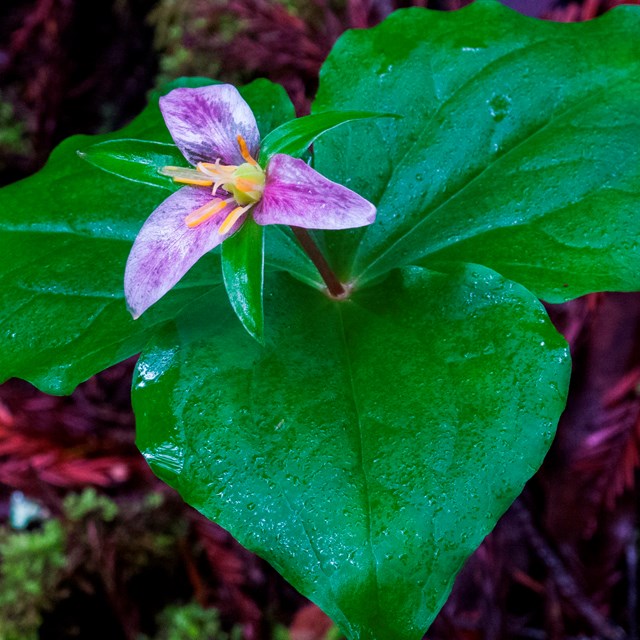
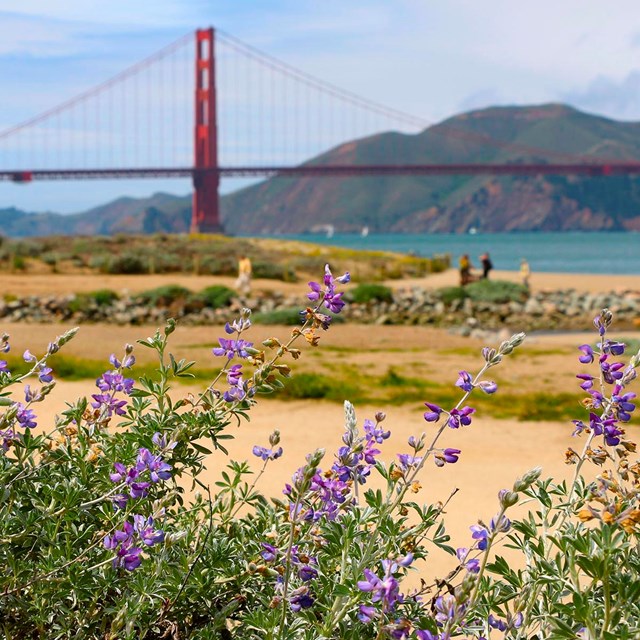
Evolving in a harsh coastal area, the plants of the Golden Gate National Recreation Area are a hardy bunch. The park's Mediterranean climate-with mild, wet winters and extended, dry summers-encourage plants to adapt to long seasons without rain. Golden Gate is located in the center of the California Floristic Province, one of only five regions in the world with this kind of Mediterranean climate, which are home to high floral diversity and unique assemblages rivaled only by the equatorial rainforests. Golden Gate's habitats are dominated by evergreen shrubs and patchy grasslands (commonly referred to as coastal scrub and coastal prairie). Coastal scrub plants are usually low-growing, thick-leaved shrubs with a variety of adaptations for temperature regulation and water retention. Coastal species are also able to tolerate wind pruning, salt spray, and thin soils. In addition to coastal scrub and prairie, Golden Gate National Recreation Area supports wetland habitat and several forest types including redwood and mixed evergreen forest, oak woodlands and riparian forests. Urban development and the stresses of habitat destruction and introduced species have pushed a number of the region's plants to the brink of extinction. Golden Gate National Recreation Area serves as a refuge for over forty-five rare or special status plant species, with at least ten of those listed as federally threatened or endangered. These protected lands are often the last chance to prevent the extinction of these species. Park scientists have been monitoring these plants for over a decade, providing valuable baseline information for species on the brink. Listed species are counted and mapped every one to three years. The resulting data gives insight into the shifts in distribution and population size of these special plants. Explore Plant life at Golden Gate
|
 |
|
Last updated: April 29, 2019