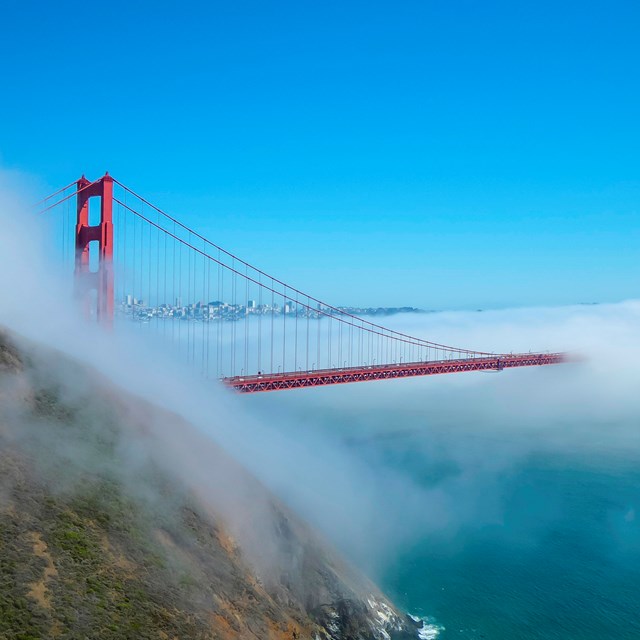
• View of the Golden Gate Bridge, taken from the Marin Headlands, looking across the bay back towards San Francisco, seen in the distance.

    Golden Gate

    National Recreation Area California

  • Current Conditions & Advisories

    Find out more about construction projects, delays, detours, and events in GGNRA. More »

Hawk Hill

Find out more about recent work on the multi-use Coastal Trail at Hawk Hill from the Conservancy's Projects Page


Information on visitor opportunities is available. If you have project questions, please call 415-561-3054, or email trailsforever@parksconservancy.org.

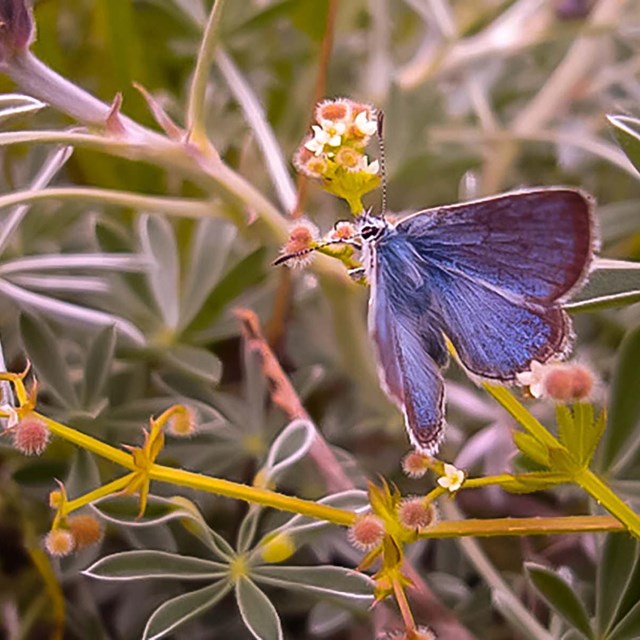
Although Hawk Hill is primarily known for migrating raptors, the wings of a much smaller creature known as the Mission blue butterfly are what keeps restoration ecologists coming back to the site. One of the first invertebrates to be protected under the Endangered Species Act, this small butterfly is an important component of area grasslands even though they fly for only 6-8 weeks in the spring. Amazingly, these butterflies emerge, travel to locate their foodplants, mate, and die within a week. Mission blue numbers took a plummet in the mid-90s after a fungal pathogen attacked their host lupines. But in the last decade the park has undertaken a number of grassland restoration projects and butterfly numbers are rebounding.

The most interaction that some folk have ever had with grasses is mowing their lawn. Did you know that grasses are flowering plants? Or that grasses can live longer than some trees? Or that grasslands can absorb as much or more carbon than forests? When observing the expanse of natural areas at Golden Gate, nearly half of our park’s acreage is covered by this unobtrusive yet ecologically rich habitat type. Getting to know park resources better may mean taking some time to sit in the grass. Coastal prairie, the most species rich grassland type in North America, is composed of perennial bunch grasses. These tough grasses can live for over a century and form extensive underground root systems that help them survive the summer drought. Then as the winter rains arrive, the hillsides quickly green up and an abundance of wildflowers appear.

 
Picture after

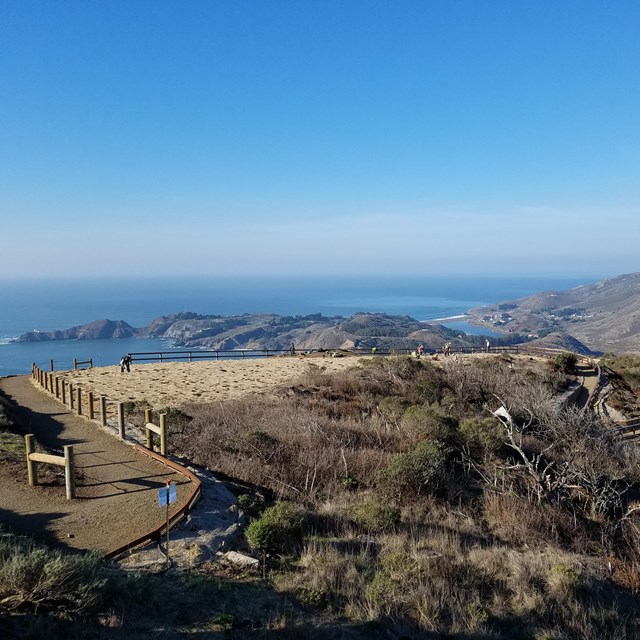
Depiction of restored Hawk Hill

Mission blues lay their eggs on three species of lupine that are the sole food source for their caterpillars. These lupines grow scattered among fields of coastal prairie and scrub, but because they thrive at recently disturbed sites, good lupine habitat is continuously shifting. Mission blue butterflies need to be able to follow this natural host plant movement, but they typically only travel 50 meters (164 feet) from the patch of lupine where they first emerged. Because they are such weak fliers, roads, trails, and dense stands of trees can pose enough of a barrier to prevent them from finding additional lupines, nectar plants, and mates.

Over the past 30 years, non-native Monterey pine trees have spread into these grasslands—likely arriving as hitchhikers in soil the military brought in to create their fortifications. These trees are now so abundant that they act as just such a barrier between areas of lupine on either side of the ridgeline between the Rifle Range and Conzelman Road. Removing the trees, and then restoring these seven acres will help these two butterfly populations to merge into a more robust group, while also permitting them to follow natural shifts in lupines across the landscape. The Hawk Hill project mitigates impacts from road and trail construction in the Marin Headlands Fort Baker Transportation Management Plan (Project Headlands) starting in 2010. The combined actions will create a vibrant coastal prairie and connect two fragmented mission blue populations into a single large and healthy one.

 
undefined

Battery 129 during the Nike missile era

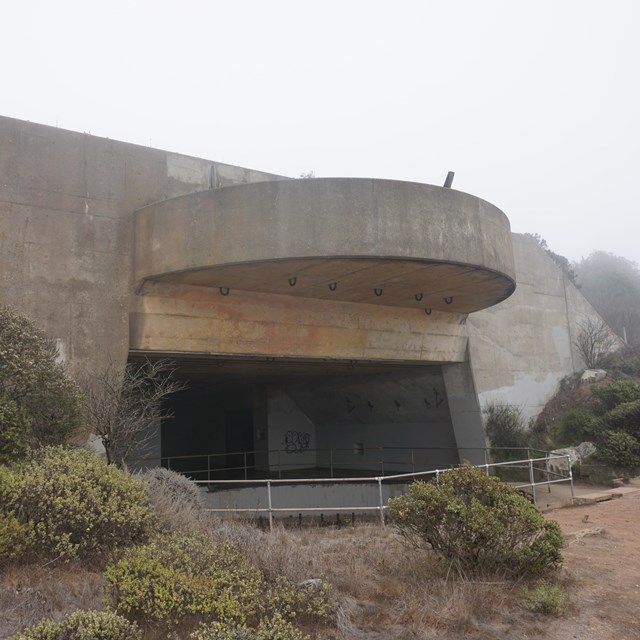
Former Battery 129, also known as Hawk Hill, has been a silent witness to the ecological and cultural changes in and around the San Francisco Bay for eons. It is the story of soldiers waiting for an enemy that never came. Although most of the World War II fortifications built in the park were intended to keep the newest battleships from reaching striking range, the war was fought and ultimately won from the air. Built into the highest point at the Golden Gate, Battery 129 had two large guns mounted under thick concrete shields covered with native vegetation for camouflage and virtually invisible from above. It features tunnels that connect the two gunpits, magazines, and storage rooms. After Pearl Harbor, the entire Western Defense Command was placed on high alert. Anti-aircraft guns were installed, and radar stations were developed. Even before the war ended, defending the San Francisco Bay against ships became superfluous, and heavy artillery soldiers were transferred to anti-aircraft duties.

During the Cold War, the Nike Defense system was put into place in the Bay Area and other urban areas throughout the U.S. Antiaircraft missiles were at ready from the Korean War all the way through the Strategic Arms Limitation Treaty of 1972. Guided by a complex system of radars and tracking computers, they had ranges of up to 87 miles and could shoot down planes traveling two to three times the speed of sound. The radar station buildings at Battery 129 have been removed. During the Cold War, the Nike Missile radar station required visual connection to the missile launching area at Fort Cronkhite (currently the Marine Mammal Center). Again, this technology was never used and a global nuclear missile crisis was averted.

Tree removal will also protect Battery 129 from damage caused by root growth. In the first phase of work historic structures will be stabilized. A new trail will loop around the base of the hill, connecting the two tunnels, and allowing access to the historic gun pits and the Coastal Trail. Paths at the radar sites will be improved, and wayfinding and directional signage will be installed. There will later be an addition of a restroom and the creation of a large-group gathering area.

Did You Know?

International peace symbol for the Campaign for Nuclear Disarmament

The international peace symbol was designed in 1958 as the logo for the Campaign for Nuclear Disarmament (CND) and has deliberately never been copyrighted.