

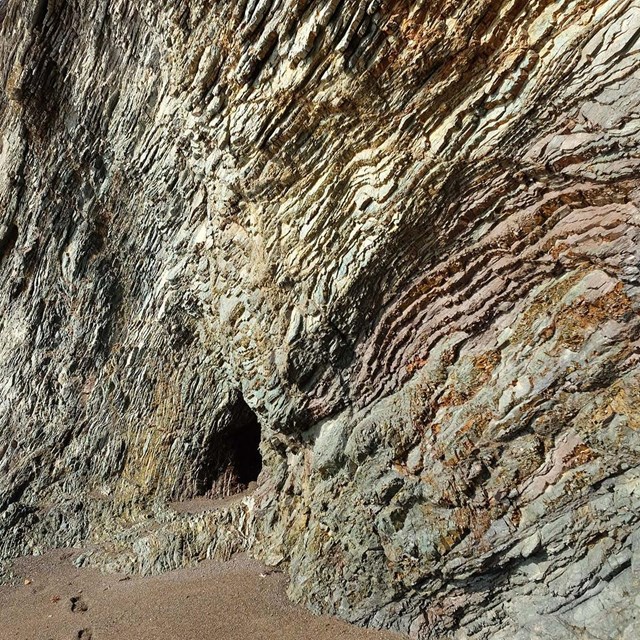
NPS photo Located where the North American and Pacific tectonic plates meet, Golden Gate National Recreation Area is truly a park on the edge. The park is situated along the San Andreas fault, where the two tectonic plates slide past each other to produce earthquakes and actively moving landforms. It also lies above an ancient subduction zone where planetary crust was both added to the continental margin and consumed by the mantle to be recycled into new geologic materials. Golden Gate contains a wide array of geologic features, from the Franciscan Complex, which represents subduction-related tectonic events that took place over a hundred million years ago, to the Merced Formation, which records glacier-driven sea level changes over the last 3 million years, to modern dune sands formed from bits of the Sierra Nevada Mountains transported to the coast by the Sacramento River. Whether formed from deep within the ocean crust or mantle under extreme heat and pressure, like serpentinite, or built by millions of microscopic sea creatures over eons, like radiolarian chert, the Recreation Area is a rock lover's paradise. These rocks also provide the substrate for the plants and animals that make the park their home. Climatic shifts and geologic processes continue to shape this environment as they have for millennia. Most recently, human-caused factors such as air, noise, light, and water pollution, climate change, and the introduction of invasive species are having a large impact on natural resources here. The Recreation Area strives to keep a healthy and resilient natural environment where wildlife and world-weary humans alike can find refuge.
|
 |
|


Last updated: September 26, 2018