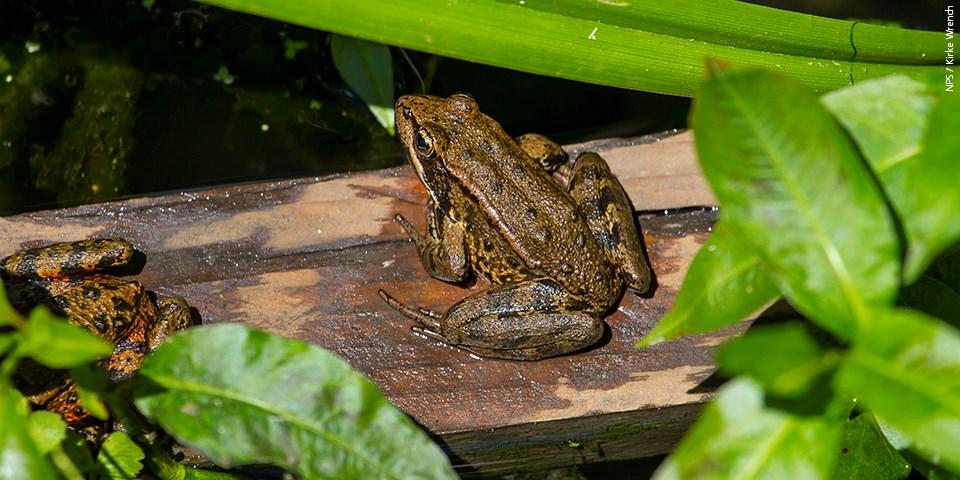
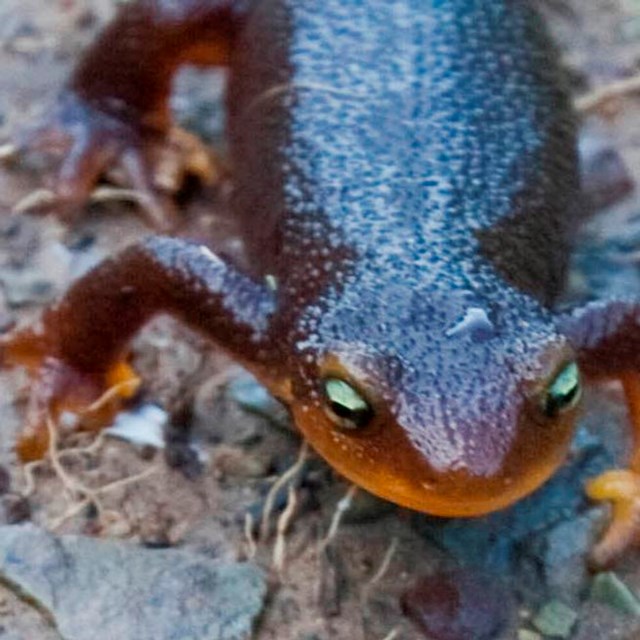
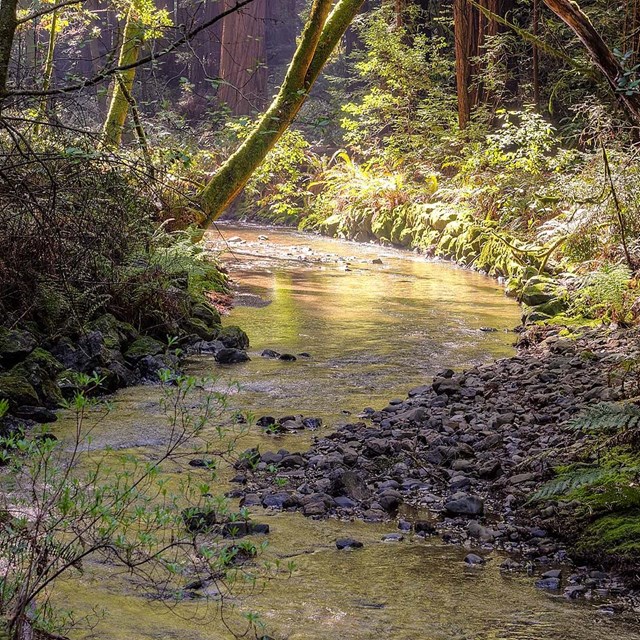
Often hidden under logs or in dense vegetation, amphibians are among the least seen wildlife of the park. Moist areas near creeks and marshes are good places to find adult frogs, toads and salamanders, and at ponds in places like Big Lagoon near Muir Beach and Mori Point, you may see soft clear balls of amphibian eggs attached to sticks or vegetation in the water. You may also hear male Pacific chorus frogs chirping to protect their territory or attract potential mates. In forested areas, a peek under fallen logs will most likely turn up slender salamanders.
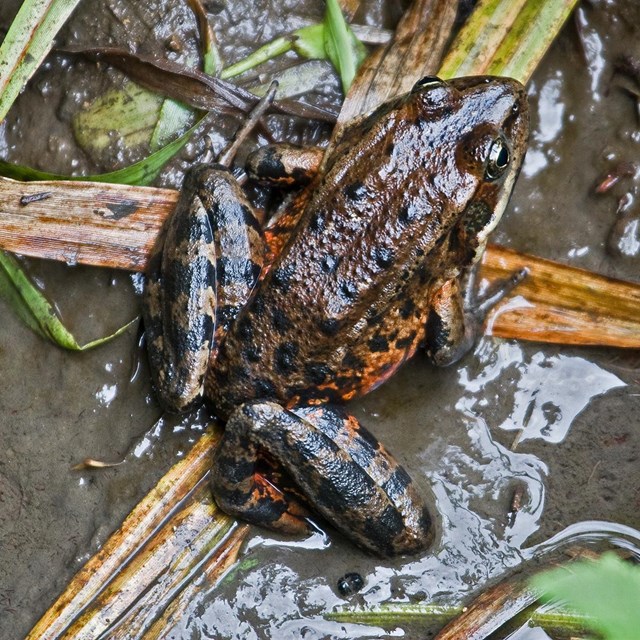
One amphibian of special concern in the park is the California red-legged frog (Rana draytonii). Once abundant in ponds and wetlands from Mendocino County to Baja California, it has vanished from 70 percent of its former range. Threats to these frogs include habitat loss from urban encroachment, agriculture, construction of reservoirs, and water diversions. They have also been hit hard by the introduction of non-native predators and competitors such as the bullfrog.
Dwindling numbers of red-legged frogs led the U.S. Fish and Wildlife Service to list it as a "threatened" species under the Endangered Species Act in 1996. Golden Gate is trying to help in the recovery of this species by improving red-legged frog habitat at several sites, including Muir Beach, Marin Headlands, and Mori Point.