




Were does serpentinite form? Serpentinite is a metamorphic rock that forms at tectonic plate boundaries deep within the Earth. In the Franciscan Complex, it formed when ocean water carried down with subducting ocean crust was heated and moved through upper mantle and basal ocean crust rocks, hydrating their magnesium- and iron-rich minerals, like olivine and pyroxene, to form magnesium-rich serpentine minerals. What makes serpentinite look and feel the way it does? Serpentinite rocks are almost exclusively made of serpentine minerals. The most common serpentine mineral in Franciscan rocks is antigorite. This mineral gives the serpentinite its characteristic light to dark green color. Serpentine minerals are made of tiny sheets of silica tetrahedrons that are loosely held together. The weak bonds between these sheets gives serpentine its greasy or scaly look, and slippery feel (like a snake skin). Serpentinite often contains many veins, some of which may be filled with the fibrous mineral chrysotile (a form of asbestos). Chrysotile is a serpentine mineral in which the silica sheets are rolled into tiny tubes to form hollow fibers. Loose asbestos fibers cause lung disease if you inhale them. Pay attention to serpentinite – if you see fibrous asbestos, don’t handle the rock. How does serpentinite get to the Earth’s surface? Scientists do not fully understand how serpentinite makes its way from deep in the Earth, where it often forms, to the surface of the Earth. In the process of formation, serpentinite rock actually becomes less dense (more buoyant) as water is added. Thus it essentially floats upwards, buoyed up by the denser rock around it. Serpentinite is also a very plastic and greasy rock that can be easily squeezed into and even lubricate the many faults at plate boundaries. It then may get dragged or “squirted” to the surface along the faults. How can water molecules become part of a rock? Hot water forced through tiny fractures and pores in the mantle rock dissolves some silica from the rock into it. This silica-rich water then chemically reacts with mantle rock minerals like olivine to produce serpentine minerals by the formula below: 3Mg2SiO4 (olivine) + SiO2 + 2H2O converts to 2Mg3Si2O5(OH)4 (serpentine) In this chemical reaction, the water is converted to hydroxyl groups (OH) that are part of the serpentine minerals. 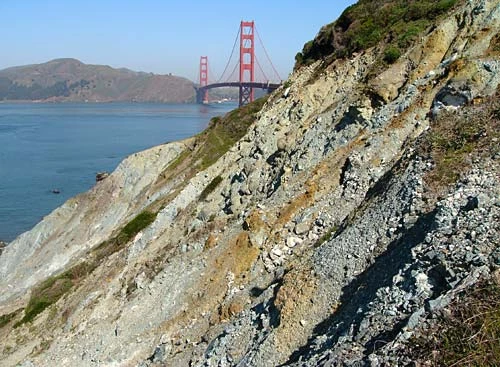
|
Last updated: February 26, 2025