Spotting wildlife from cruise ships
binoculars will help you see wildlife The best way to find wildlife is to learn about their habits. Ask a Park Ranger what habitats support wildlife in Glacier Bay.
On land, scan over suitable habitat with your binoculars, watching for movement or obvious silhouettes. On the water, use just your eyes first. Watch for any movement or unusual shapes on the surface, then use the binoculars to take a closer look. Patience and determination are often rewarded and binoculars help magnify the experience.
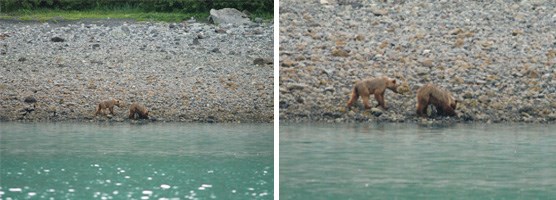
Bear often forage on the beach or in meadows near the shore. Scan these areas with your binoculars, particularly when the tide is low.
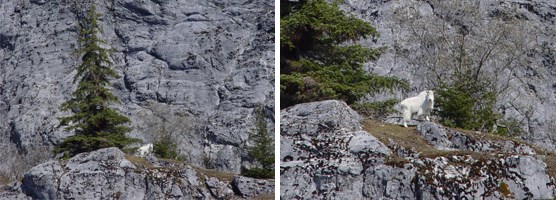
Mountain goats prefer steep, precarious cliff sides. Look for their distinctive white coat standing out from the rocks behind them.
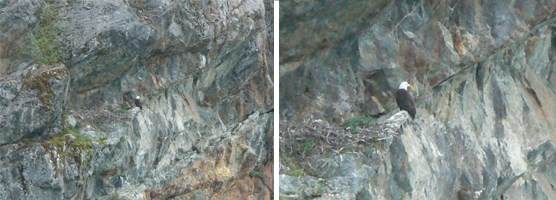
Bald Eagles are a common sight in Alaska. Watch for white golfball- sized dots in trees and on cliff's edges. Binoculars make it possible to see more of this grand bird's features.
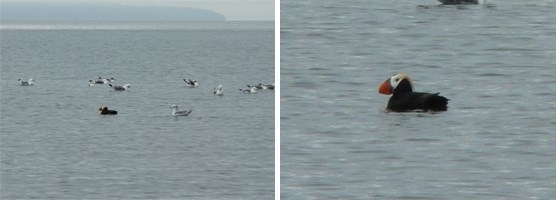
When searching for wildlife on the water, use your eyes alone. Once you have spotted the intriguing black dot on the water, use your binoculars to bring the Tufted Puffin closer.
Humpback whale Helpful Links: Wildlife Viewing Animals of Glacier Bay Bird Checklist Mammal Checklist Alaska Wildlife Notebook Series Southeast Alaska Wildlife Viewing Calendar |
Did You Know?
It was the inspiration of one man, Dr. William S. Cooper, an ecologist studying how plant life returns to land freshly revealed from beneath retreated glaciers, that lead to the establishment of Glacier Bay as a National Monument in 1925.