
|
Glacier's vertical, glacier-scoured banded mountains, pristine turquoise lakes and streams, and dense ancient forests are a relatively-undisturbed example of what the Rocky Mountain region has been like over thousands of years. Located at approximately 49° north latitude with an elevation gradient extending from 1000 m to over 3000 m, (3,000 to 10,000 ft MSL), park habitats encompass several ecotones and exhibit a wide variety of macro and micro habitats. Glacier National Park has glaciers, of course. A few can be seen from roads, tucked into cirque amphitheaters. Their blue ice and crevasses distinguish them from the hundreds of snowfields above timberline. Getting behind the scenery requires hiking some of the 734 miles (1,181 km) of park trails (or exploring these pages). The deeper we walk into Glacier, both literally and figuratively, the more interesting and fascinating it becomes. 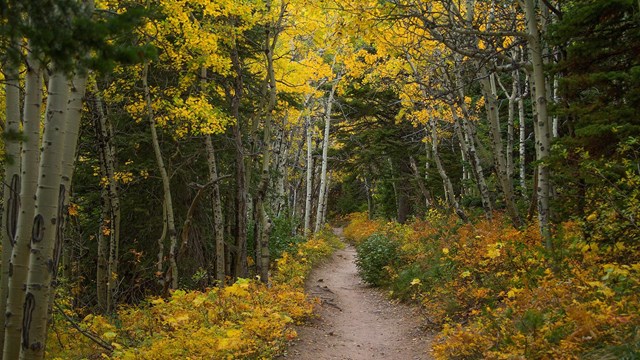
Forests
There are different types of forest in different parts of the park. 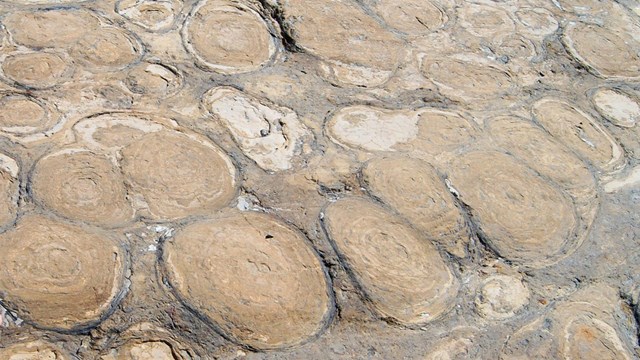
Fossils
Learn what Glacier and the Bahamas have in common. 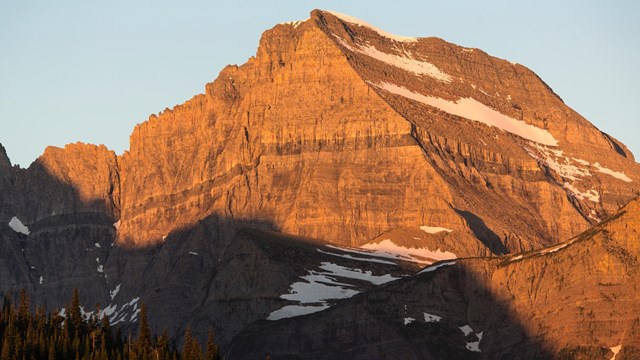
Geologic Formations
Glacier's sedimentary rock banding represents many ages. 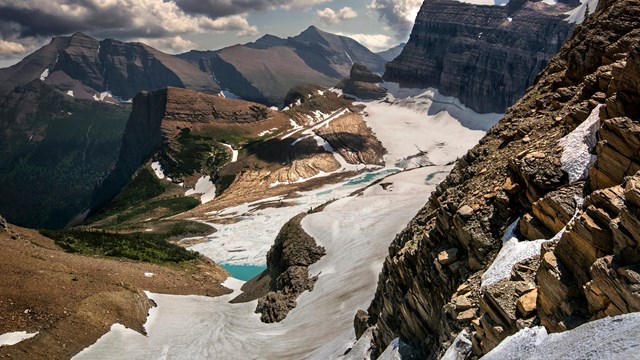
Glaciers / Glacial Features
The park's namesake feature tells us about the past and helps us predict the future. 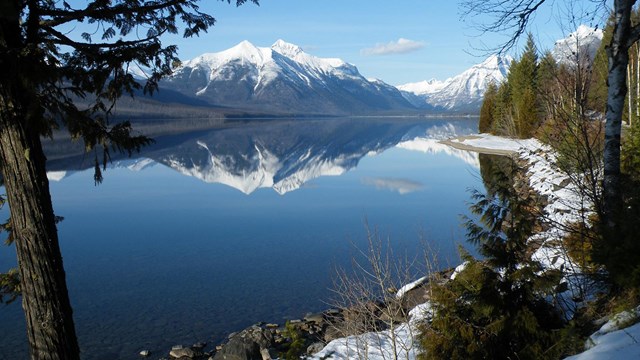
Lakes and Ponds
There are over 700 bodies of water scattered throughout the park. 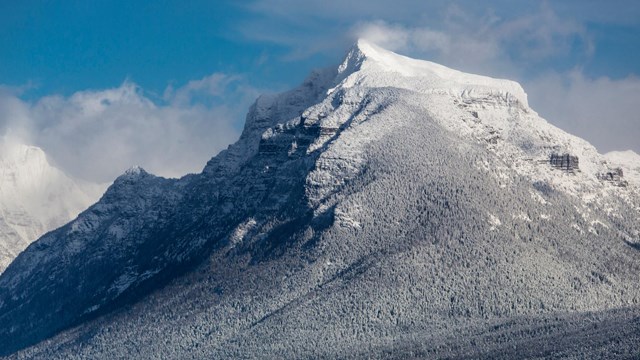
Mountains
Glacier's impressive mountains are a story of pressure, folding, uplift, and erosion 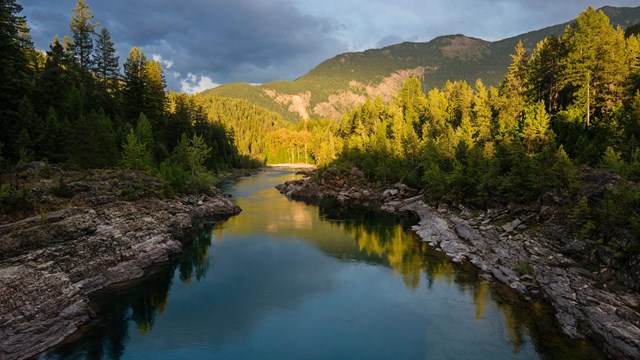
Rivers and Streams
Meltwater feeds Glacier's 1,557 miles of streams 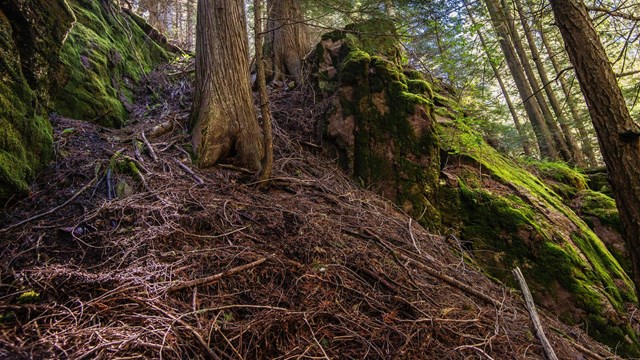
Soils
Though often stepped on, soils cannot be overlooked as a basic component of life on earth 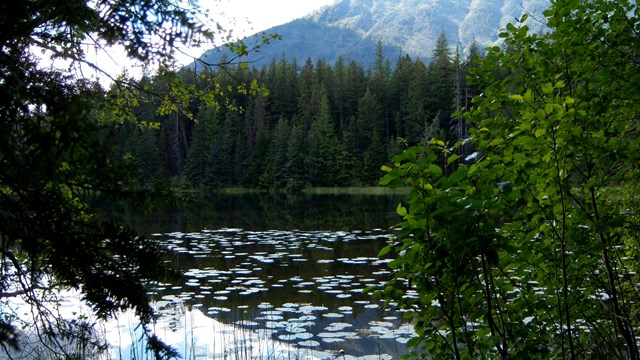
Wetlands, Marshes, and Swamps
Wetlands are a small portion of the park, but harbor a large number of rare plants and animals |
Last updated: April 1, 2020