
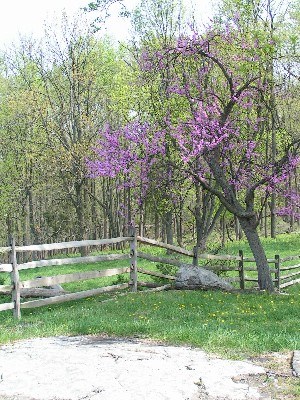
(C. Davis, National Park Service) Settlers cleared most of the original forest of the Gettysburg area for farming in the 18th and 19th centuries. Today wooded areas are in patches scattered across agricultural land. Penn State University surveyed six woodlots for species composition and community structure.Typical tree species of the forest include oaks, hickory, and poplar, which are common to the Appalachian area. The predominant overstory species of the wooded areas are white oak, white ash, and northern red oak. Common seedlings and saplings include spicebush, black cherry, and white ash. Also the state endangered shrub, the Missouri gooseberry, occurs through the northern section of the park. |
Last updated: February 26, 2015