
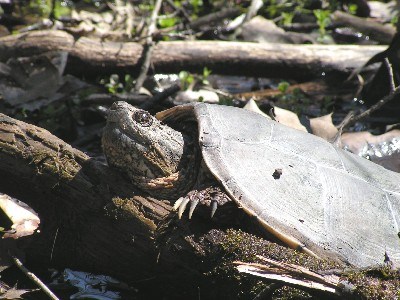
(C. Davis, National Park Service)
Seventeen species of reptiles including nine snakes, six turtles and two skinks are found within Gettysburg National Military Park. Visitors touring some of the parks wetland habitat may often spot wetland turtle species such as the painted turtle basking on a log or the head of a snapping turtle peeking up through some water grasses. It is also common to cross paths with the slow-moving terrestrial Eastern box turtle.
The large population of small mammals in the park provides adequate prey for the nine species of snakes within the park. Most of the snakes such as the common garter snake and black rat snake are nonvenomous, however the park does contain two species of venomous snakes, the copperhead and timber rattlesnake. The Northern water snake is not venomous and is common in the streams of the park. Its dark color and stout body often cause it to be mistakenly identified with the venomous water moccasin, which is not found in the park. |
Last updated: February 26, 2015