Fire In-Depth
Fire In-Depth is design for students who want to learn more about fire.
- Cultural Interpretations
- Different Ecosystems
- Fire Behavior
- Fire and Ecosystems
- Fire Classifications
- Fire Ecology
- Fire Effects Monitoring
- Fire Engines
- Fire Management Personnel
- Fire Monitors
- Fire Spread
- Fire Suppression
- Fire Triangle
- Fire Watches & Warnings
- Fireline Construction
- Hazardous Fuel Reduction
- Historic Fires
- Human Uses of Fire
- Incident Command System (ICS)
- Incident Command System Levels
- Preparedness Levels
- Prescribed Fire
- Prevention History
- The Effects of Fire
- Understanding Fire Danger
- Wildfire Causes
- Wildland Fire Evaluation
Hazardous Fuel Reduction
Fuel reduction projects and vegetation treatments have been proven as a means of mitigating wildfire hazards, to lessen catastrophic fire and its threat to public and firefighter safety, and damage to property. The objective is to remove enough fuel so that when a wildfire burns, it is less severe and can be more easily suppressed.
When fuels accumulate, they allow fires to burn hotter, faster and with higher flame lengths. When fire encounters areas of continuous brush or small trees it can burn these “ladder fuels” and may quickly move from a ground fire into a crown fire.
Hazardous fuel reduction generally requires the reduction of surface and ladder fuels. It may also require thinning out dense tree stands, preserving mature sized trees in some instances. It can be accomplished using fire, biological methods, and mechanical treatments to remove or modify fuels in forested areas. Thinning trees, removing underbrush, and limbing trees are done using hand crews or machines. Cut material is ground into chips or piled and burned during the winter. Biological methods include grazing and are usually not used in national parks.
Before and after hazard fuels reduction treatment at Mount Rushmore National Memorial. The project involved mechanically removing most Ponderosa pine trees 5-inches in diameter and smaller with chainsaws.
Prescribed Fire
Fire can be used to meet management goals, either by setting prescribed fires or using natural lightning ignitions. Before fire can be utilized, each park must have an approved fire management plan and the fire must meet established criteria. Using fire to reduce high fuel hazards is prohibited in many areas. In these instances treatments, generally mechanical, are used to prepare an area so that prescribed fire can be utilized safely.
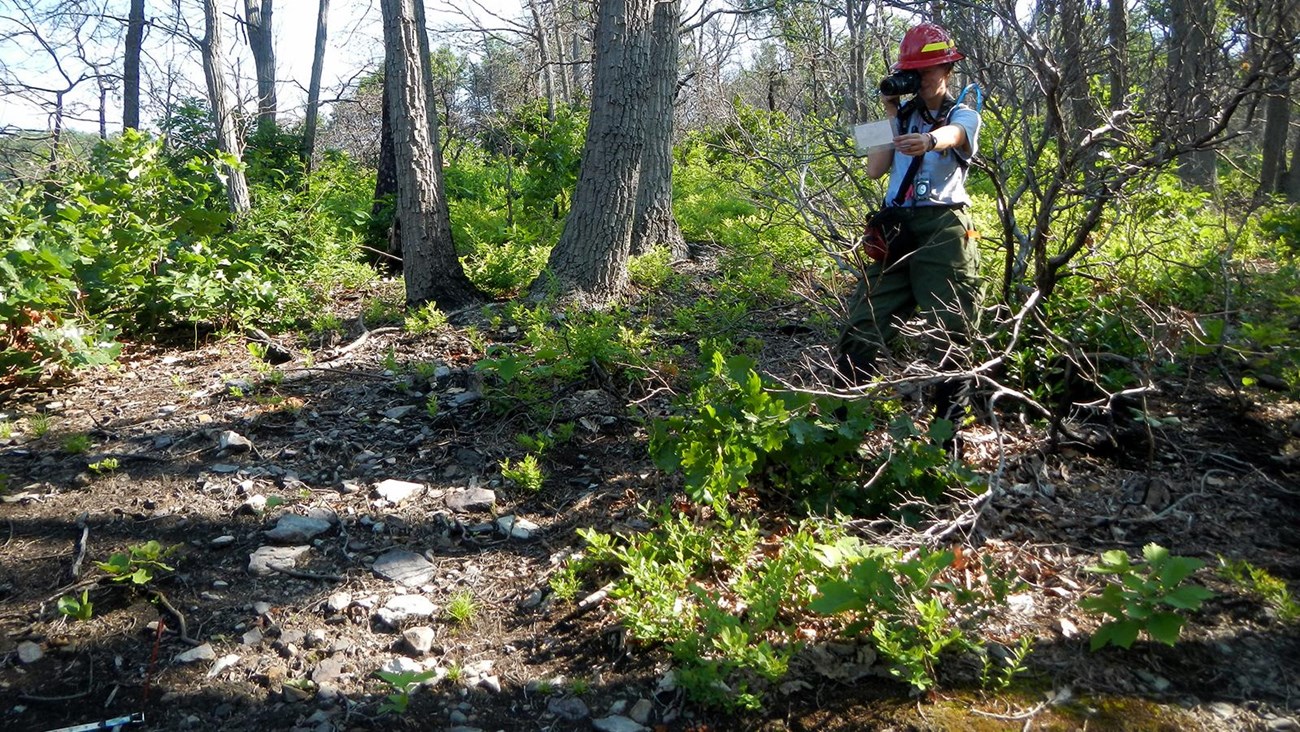
Pre-burn and post-burn photo points in the Bill’s Hill burn unit at Canaveral National Seashore. NPS photos by Shanna Ramsey.
Wildland Urban Interface (WUI)
Much of the effort in fuels reduction is focused in and around Wildland Urban Interface (WUI) developments both inside and outside of parks. Effective fuels mitigation treatments are implemented across jurisdictional boundaries, on adjoining private lands, or within the respective communities with coordination, collaboration, and partnering of these projects. Projects of this type include fuel breaks, thinning, pruning, landscape modifications, etc.
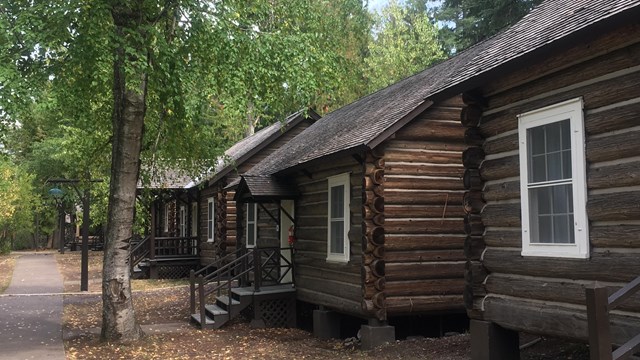
Before and after mechanical fuels reduction around Colter Bay Cabins at Grand Teton National Park.