Fire In-Depth
Fire In-Depth is design for students who want to learn more about fire.
- Cultural Interpretations
- Different Ecosystems
- Fire Behavior
- Fire and Ecosystems
- Fire Classifications
- Fire Ecology
- Fire Effects Monitoring
- Fire Engines
- Fire Management Personnel
- Fire Monitors
- Fire Spread
- Fire Suppression
- Fire Triangle
- Fire Watches & Warnings
- Fireline Construction
- Hazardous Fuel Reduction
- Historic Fires
- Human Uses of Fire
- Incident Command System (ICS)
- Incident Command System Levels
- Preparedness Levels
- Prescribed Fire
- Prevention History
- The Effects of Fire
- Understanding Fire Danger
- Wildfire Causes
- Wildland Fire Evaluation
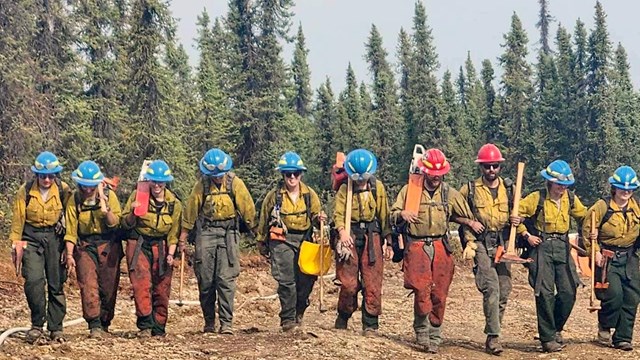
Firefighters use handtools to scrape away vegetation and reach mineral soil to build a fireline.
Fireline Construction
Fireline is a break in fuel, made by cutting, scraping or digging. It can be done by mechanized equipment such as bulldozers, but in most parks, it is done using handtools.
Getting Down to Mineral Soil
In building fireline, all fuels are removed and the surface scraped to mineral soil between 6 inches and 3 feet wide depending upon the fuel and slope. It needs to be wide enough to prevent smoldering, burning or spotting by embers blowing or rolling across the line. If it is safe, firelines should be wider at the head of the fire than along the flanks. Firelines can also be made or enlarged by back burns where fuels between the advancing fire and the line are burned out to slow or stop the fire.
Containment
Eventually the firefighters do prevail. Often a break in the weather is the factor that allows the workers to encircle and contain the fire. Once the fire is “contained”, the hard, dirty work of mop up goes into full swing to bring the fire under control. Each ember will be painstakingly sought and put out. The entire fire perimeter, and sometimes the entire fire area is felt with bare hands (cold trailed) to be sure there is no longer any heat left to allow the fire to escape. During mop up, firefighters also begin rehabilitating firelines by raking back the soil and placing water bars to minimize erosion.
Demobilization (Demob)
Just as resources were pumped into the control effort, they are released (demobilized or demobed) as it is determined that they are no longer needed. Eventually the fire will be put into the patrol phase and the fire report completed. The firefighters will refurbish their gear and ready themselves for the next call.