Fire In-Depth
Fire In-Depth is design for students who want to learn more about fire.
- Cultural Interpretations
- Different Ecosystems
- Fire Behavior
- Fire and Ecosystems
- Fire Classifications
- Fire Ecology
- Fire Effects Monitoring
- Fire Engines
- Fire Management Personnel
- Fire Monitors
- Fire Spread
- Fire Suppression
- Fire Triangle
- Fire Watches & Warnings
- Fireline Construction
- Hazardous Fuel Reduction
- Historic Fires
- Human Uses of Fire
- Incident Command System (ICS)
- Incident Command System Levels
- Preparedness Levels
- Prescribed Fire
- Prevention History
- The Effects of Fire
- Understanding Fire Danger
- Wildfire Causes
- Wildland Fire Evaluation
Indiana Dunes National Lakeshore
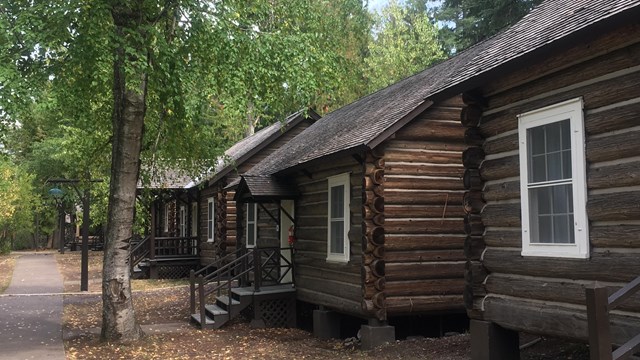
Wood, dead leaves, and even structures can be considered fuel for a fire. From top: Fire Triangle, Crater Lake National Park, and Dinosaur National Monument
The Fire Triangle
Fire is a chemical reaction, called combustion. This involves the rapid oxidation of combustible materials—any substance which will ignite and burn—accompanied by a release of energy in the form of heat and light. An external source of heat generally is needed to start a fire.
The three-sided fire triangle shows that oxygen, heat and fuel in the proper proportions are necessary to create a fire. If any one of these three elements is removed, a fire cannot exist. Air supporting a fire must be at least 16 percent oxygen. The air that surrounds us contains about 21 percent oxygen. Heat and temperature are closely related. Heat is a type of energy in disorder, whereas temperature is a measure of the degree of that disorder.
The final component of the fire triangle is fuel. Fuel is considered any material capable of burning. This would include living vegetation, branches, needles, standing dead snags, leaves, human-built wooden structures, etc.