Fire In-Depth
Fire In-Depth is designed for students who want to learn more about fire.
- Cultural Interpretations
- Different Ecosystems
- Fire Behavior
- Fire and Ecosystems
- Fire Classifications
- Fire Ecology
- Fire Effects Monitoring
- Fire Engines
- Fire Management Personnel
- Fire Monitors
- Fire Spread
- Fire Suppression
- Fire Triangle
- Fire Watches & Warnings
- Fireline Construction
- Hazardous Fuel Reduction
- Historic Fires
- Human Uses of Fire
- Incident Command System (ICS)
- Incident Command System Levels
- Preparedness Levels
- Prescribed Fire
- Prevention History
- The Effects of Fire
- Understanding Fire Danger
- Wildfire Causes
- Wildland Fire Evaluation
Fire monitors may also observe fires from the air. Denali National Park.
Fire Monitors
After a park receives report of a fire, fire monitors are sent to investigate.
First, monitors determine whether the cause of the fire is human-caused or natural.
Fires caused by human activity are suppressed but natural fires may be allowed to burn as long as they do not threaten people, property or resource values. After determining that a fire start is natural, monitors collect information that will allow wildland fire managers to predict the fire’s behavior.
For the Record
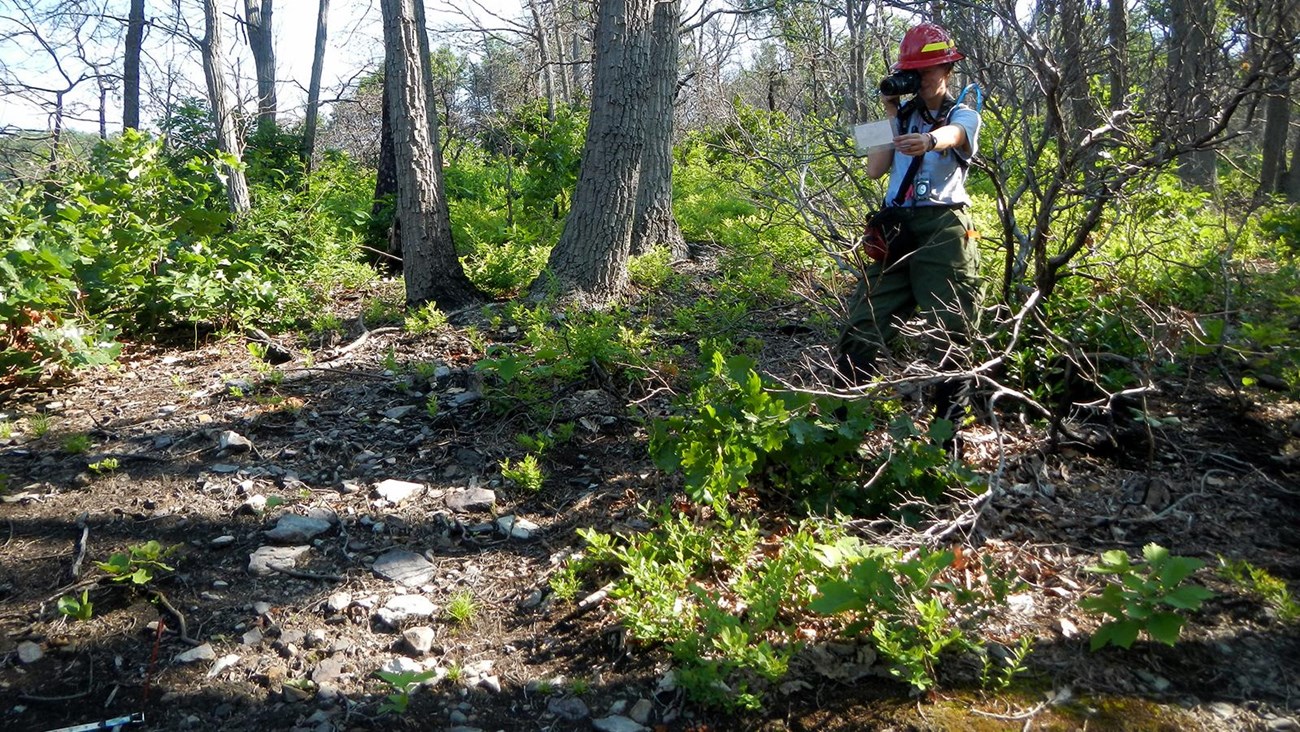
Monitors record important information like:
- Location
- Current weather
- Site vegetation
- Slope-aspect
- Fuel loading
- Flame length
- Rate of spread
- Photographic records
A fire monitor calls in current fire information from the fireline at Yosemite National Park.
They map the perimeter of the fire and assess the fuels at the head. This information is radioed to the local or area Fire Dispatch Office. Monitors also collect fuel samples, which may include foliage, herbaceous vegetation, forest floor litter, and dead logs in various size classes. The fuel samples are weighed, dried in an oven and re-weighed. The resulting figures indicate the amount of moisture in the fuel that allows fire managers to anticipate how intensely and quickly a fire will spread. Fire monitors may stay on a small, smoldering fire for only an hour or so every few days. They may also camp out for days or weeks on larger fires with more potential to spread, continuing to collect information on fire behavior, fuels and weather.
Fire monitors also collect daily weather information for stations around the park. Monitors measure temperature, precipitation, relative humidity, dew point, winds and fuel moisture. The information is used to assess fire danger and to predict the behavior of wildland fires.