|
|
 |
 |
 |
 |
 |
|
Burned Area Emergency Response (BAER) Case Study - Text Version
|
 |
|
Narrator: Wildfires are a part of nature that can often be managed to help the environment remain healthy.

On-Screen Text: Human-caused fires are always put out. |
 |
|
Narrator: But there are fires that cause damage.

On-screen text: Wildfires that threaten human life and property are extinguished. |
 |
|
Narrator: Not only in what is burned, but what is left behind.
 |
 |
|
Narrator: A severe fire burns too many plants and roots that protects soil and prevents erosion.
On-screen text: Vegetation helps stabilize the soil and prevent erosion. |
 |
|
Narrator: Furthermore, high intensity fires can bake plants and roots that protects soil and prevents erosion.

On-screen text: This hydrophobic soil will not absorb water, leading to dangerous erosion and flooding. |
 |
|
Narrator: These conditions are as destructive as the fires that caused them.
|
 |
|
Narrator: With the ground left unable to absorb water, rain collects into a flood, loaded with burnt trees, sediment and boulders.
On-screen text: This type of flood acts like a bulldozer, tearing the forest as it moves through. |
 |
|
Narrator: Which will surge through the land devouring roads, building and polluting essential water reservoirs.
On-screen text: This type of flooding can cause more damage than the fire itself. |
 |
|
Narrator: To prevent this crisis, a team of specialists is requested.
On-screen text: Burned Area Emergency Response |
 |
|
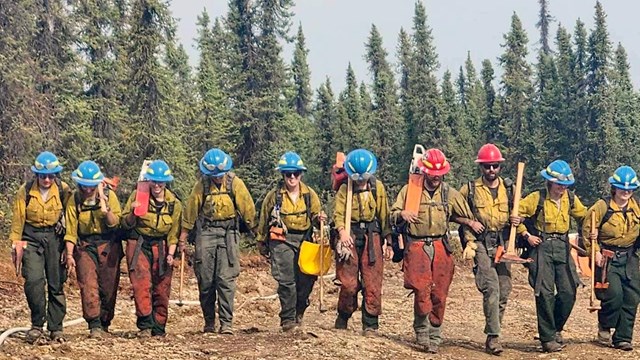
Narrator: A BAER team will start before the fire is out stabilizing the burned area to prevent further damage or loss of life from erosion or flooding.

On-screen text: A BAER team includes biologists, archeologists, soil scientists, and as needed stat or tribal representatives. |
 |
|
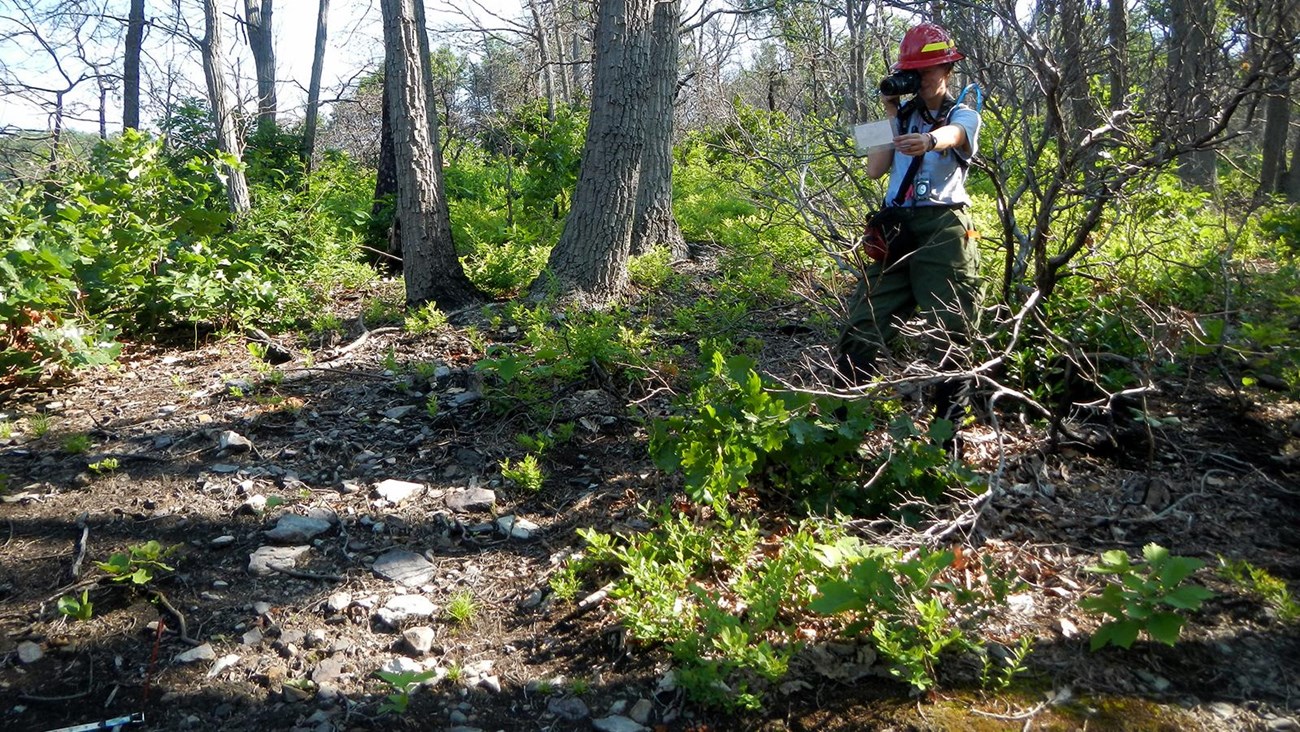
Narrator: And will continue for months afterwards to assess and repair the destruction.

On-screen text: Satellite photos, on-ground surveys are used to determine the risks of flooding and minimize further damage. |
 |
|
Narrator: One of the first treatments is restoring areas that were cleared during construction of firelines.
On-screen text: During a fire, firelines are cut by firefighters to help contain the fire. |
 |
|
Narrator: And to prevent further erosion, logs may be laid across slopes to slow the flow of water and trap sediments.
On-screen text: Flexible straw tubes called 'wattles' may also be in place of logs. |
 |
|
Narrator: Metal fences are constructed to catch damaging debris and protect roads.

On-screen text: These metal fences stop damage from occurring further downstream of the flood. |
 |
|
Narrator: The water repelling soil is raked, allowing the soil to absorb water and begin plant growth.
On-screen text: Vegetation in raked soil recovers more quickly than in unraked soil. |
 |
|
Narrator: Straw is spread to protect the soil from rain, hold moisture, restore bacteria and break-down water tight soils.
On-screen text: Straw can be applied to the fore floor by aircraft. |
 |
|
Narrator: Native vegetation is seeded to return the area back to normal.
On-screen text: Only native species or annual plants that are compatible to the environment are seeded. |
 |
|
Narrator: Any threats to life and property are handled through meetings with landowners.

On-screen text: These meetings include information on hazard avoidance and progress towards recovery. |
 |
|
Narrator: And residential areas prone to flash flooding are provided with an early warning system.

On-screen text: Rain gauges measure rainfall and sound alarms if a community is threatened by flash floods. |
 |
|
Narrator: BAER gives nature and communities a head start in recovering from a massive fire.

|
 |
|
Narrator: While a natural recovery from fire is best, a BAER team can help the speed of the restoration from more intense wildfires. |
 |
|
 |
 |
 |
 |
|
|