|
|
 |
 |
 |
 |
 |
|
Fire Effects Monitoring Program
|
 |
|
Fire is a powerful and enduring force that has had, and will continue to have, a profound influence on National Park Service (NPS) lands. Restoring and maintaining this natural process are both important management goals for many NPS areas. Therefore, information about the use and effect of prescribed fire on park resources is critical to sound, scientifically based management decisions. Using results from a high quality monitoring program to evaluate a park's prescribed fire management program is the key to successful adaptive management. By using monitoring results to determine whether management objectives are being met, managers can verify that the program is on track, or conversely, provide clues as to what may not be working as planned so that appropriate changes can be made.
|
 |
|

|
 |
|
The fire monitoring program allows the National Park Service to document basic information, to detect trends, and to ensure that parks meet their fire and resource management objectives. From identified trends, park staff can articulate specific concerns, develop hypotheses, and identify specific research projects to develop solutions to problems.
|
 |
|
The goals of the program are to:
|
 |
|
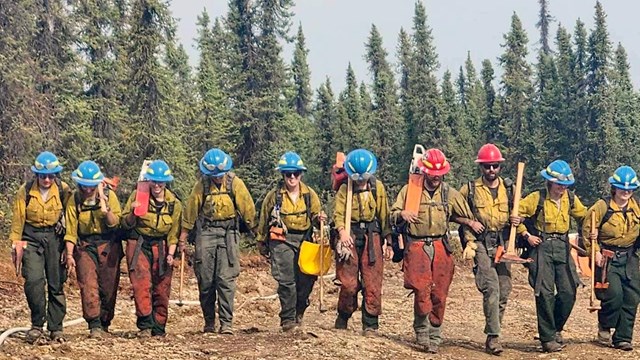
Monitoring the effects of fire on park ecosystems is an important part of the Wildland Fire Program. Fire managers need to accurately predict fire behavior under varying weather conditions, and predict how fire will affect fuel loads, plant populations, and tree regeneration. The Fire effects crew monitors prescribed fires and hazard fuel treatment areas to ensure that management objectives are met and that harmful effects are not occurring. The crew also studies natural ignitions to better understand the role of lightning-caused fire and how management may balance the natural fire regime with visitor safety and resource protection. All parks with prescribed fire programs use the same protocols.
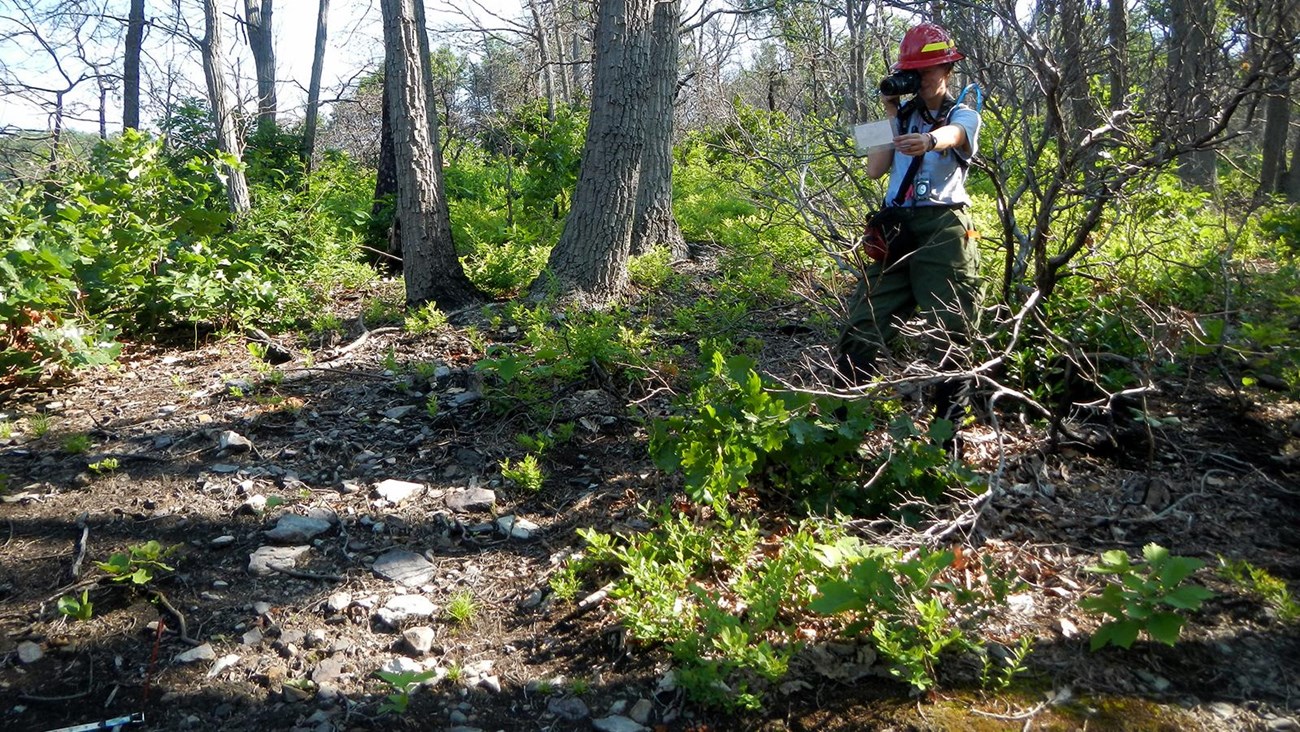
In forested prescribed burn areas the NPS fire effects monitoring protocol calls for standardized 50 x 20 meter plots to be installed prior to ignition.
|
 |
|
Data is collected on:
|
 |
|
Vegetation is sampled prior to burning or mechanical treatment, immediately after, and at 1,2,5 and 10 year intervals. After collection, the data are entered into a database and stored for analysis. The data allow resource managers and scientists at Yellowstone and other agencies to compare pre- and post-burn vegetation composition and fuel loadings and assess whether burn objectives were met, and to track long-term ecosystem changes due to fire.
|
 |
|
 |
 |
 |
 |
|
|