During the summer season, most of the stories that we hear about wildfires are related to its destructive nature and the hardships faced by people in its path. While indeed, some wildfires are destructive and certainly warrant media attention for the human interest stories, numerous other wildfires that are successfully managed to provide benefits for our natural resources and help protect communities are overlooked by the press. A good example of one of these resource benefit fires was Zion National Park’s Horse Fire in July/August 2009.
The Horse Fire began on July 4 from a lightning storm that passed through the area. It was located on Horse Pasture Plateau, an area in the northern section of the park that receives a limited number of visitors.
Zion’s 2005 Fire Management Plan allows the park to manage naturally caused fires under a wide range of objectives, from full suppression to minimal interference. The choice of these options are based on many factors such as weather and fuel conditions, location of the fire, values at risk, natural resources benefits or concerns, availability of firefighting resources, cost and most importantly, firefighter and public safety. Fire and resource managers look closely at each naturally caused fire and decide the best method to manage the fire.
With the Horse Fire, many factors led to fire and resource managers deciding to manage the fire for resource benefit objectives. These included the fire's location in an isolated area, no immediate threats to firefighter/public safety, natural or cultural resources, values at risk including private lands and structures, minimal issues from smoke impacts, forecasted weather conditions and the positive benefits to the fire-adapted ecosystem. Another key factor in the decision was the fact that the fire was surrounded on the critical downwind side by the park’s recently successful Three Finger Mesa Prescribed Burn in 2008 and the remaining sides by previous wildfires and cliff bands. These previously treated areas served their purpose as fuel buffer zones to the Horse Fire because of reduced amounts of fuels and lessened the chance that the fire would exceed management capabilities. Because of all these factors, it was decided to manage the fire for its resource benefits. This management strategy allowed the park to let the fire perform its natural role in the ponderosa pine forest.
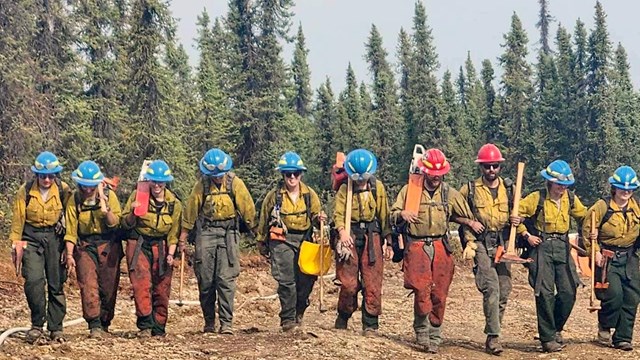
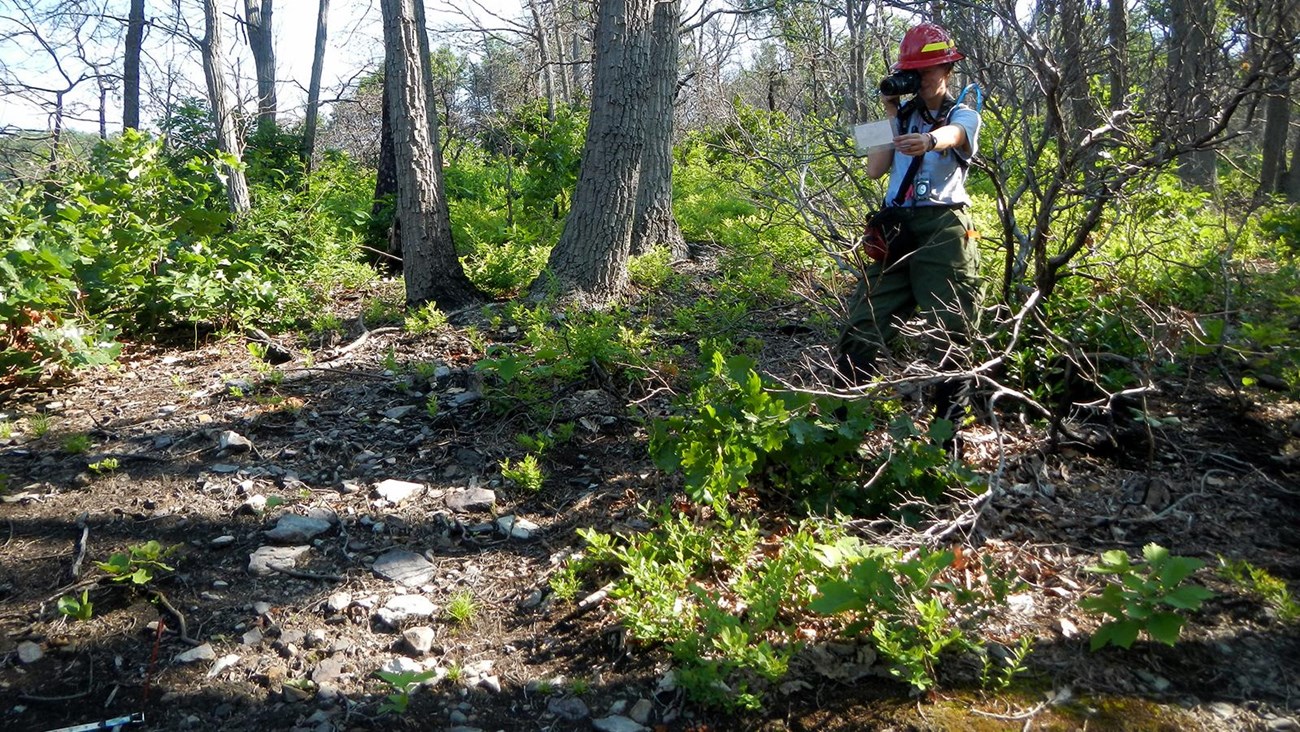
The fire was managed under a local Type III Incident Command organization, utilizing incident commanders from both the park and Dixie National Forest. At various times during the fire’s history, different groups of firefighters were brought in to help in its management. This included Wildland Fire Modules, Hot Shot Crews, park staff and other local firefighting and management resources. Some of the management actions that firefighters conducted included burning out along the West Rim Trail to strengthen the main holding line and constructing firelines to contain the fire to its pre-determined management area. The fire was also monitored daily by the park’s resource and fire management staff to ensure that resource objectives were being met.
The management strategy of the fire was to keep it to the east side of the West Rim Trail and let the fire burn into the Three Finger Mesa Prescribed Fire and into areas of the Wildcat Fire from 1996 where the fuel loading was reduced. The main objective of the fire though was to allow it to perform its natural role in the ponderosa pine fire-adapted ecosystem by reducing fuel loadings and clearing out understory vegetation and brushfields. This area of the park, as well as most of the western United States, has a long history of fire suppression which has allowed fuels to accumulate and successional changes which would have not occurred in the absence of fire suppression. By allowing the Horse Fire to burn under natural conditions during the time of year when it normally would, meant that the fire met objectives and produced the type of resource benefits that park managers were looking for.

The Horse Fire eventually burned over 2,100 acres until it was officially declared out on September 25, 2009. Fire behavior ranged from moderate to light, depending on the weather conditions and the fuels encountered by the fire. On a few of the active fire days, smoke columns could be seen from quite a distance from the park. Isolated smokes from the fire were visible for weeks from the Lava Point area but impacts to park visitors and local residents were very minimal.
Information and education played an important role in the successful management of the fire. Fire updates were sent out on a daily basis to the media as well as to other interested parties. The park’s website and the National Park Service’s NPS Fire and Aviation website were also used to post daily information, photos and maps. The fire could easily be seen from Lava Point, a viewpoint in the park that many visitors, as well as local residents, frequent. An information bulletin board was set up there and updated daily. During times of active fire behavior and during most weekends, information officers were at the viewpoint to talk to the public and also serve as fire monitors. This served as a perfect opportunity for the visitors to safely view a fire and to be educated as to the reasons why Zion fire managers chose the management option they did.
While many wildfires are still considered by the public to be detrimental to resources, the Horse Fire is a good example of one that was viewed as fire managers making the right decision to utilize it for its resource benefits. Land management agencies should take advantage of all opportunities to educate and inform the public about the benefit of these types of fires. It may be a slow process to undo all of the years of the “suppression mentality” and switch to a more open policy regarding fire management, but in the long run it will be better for our public lands and those who enjoy them.

By actively managing fire such as the Horse Fire and conducting prescribed burns such as the Three Finger Mesa, land management agencies, including the National Park Service, are taking proactive steps to reduce the risk to the public and firefighters as well as properly managing lands in their care. These activities still involve risk as well as inconvenience to some, but these factors are reduced as much as possible by fire managers. Typically these management activities are overlooked by the public and media unless there is a bad outcome which brings scrutiny. This makes it all the more important to highlight the enormous amount of successes that continually happen around the country.
Contact: David Eaker, Fire Communication and Education Specialist
Phone: (435) 772-7811 |