Two hundred feet above the banks of the Chitina River in Wrangell-St. Elias National Park, a helicopter flies over sections of forest and drops thousands of chemical-filled plastic spheres, more informally called, “ping pong balls.” As the balls hit the ground they create a line of small fires that sends up wispy plumes of smoke.
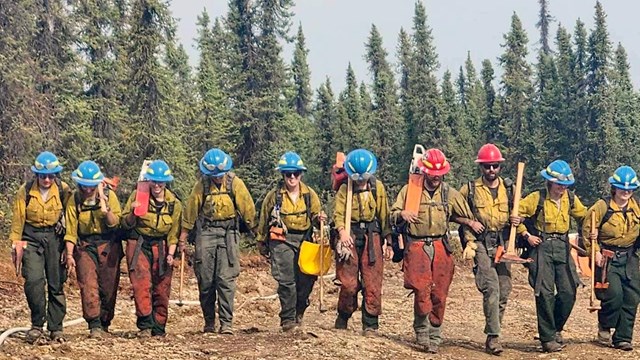
Intentionally set fires are an effective firefighting tool and are ignited in the path of a wildfire to deprive it of fuel. These “firing operations” are often done by fire crews on the ground with hand torches, but using helicopters allows fire fighters to set fires over larger areas and in a shorter amount of time. That is where the ping pong balls come in.
It takes a specially trained helicopter crew to conduct a ping pong ball firing operation. The helicopter is equipped with a "plastic sphere dispenser" that hangs out the door and injects glycol into plastic spheres containing potassium permanganate, a chemical commonly used in water treatment systems. The combination of glycol and potassium permanganate takes about 30 seconds to generate enough heat to ignite the ping pong ball—enough time to drop the ball out of the helicopter and into the area to be burned.

Once on the ground, the flaming ping pong balls start small fires that burn together and consume unburned fuels in their way. These targeted burns can be used to direct wildfires away from sensitive areas, decrease fire intensity, reduce the potential for spot fires and create buffer zones. Ping pong balls work best in locations with continuous fuels and where a patchwork of lightly and more heavily burned areas is desired to preserve biodiversity.
In Wrangell-St. Elias National Park, ping pong balls have been used on the Chakina Fire to target pockets of unburned fuels and create a buffer along the Chitina River. The intentionally burned areas deprive the fire of fuel and reduce the possibility of it jumping the Chitina River and threatening communities and property along the McCarthy Road.

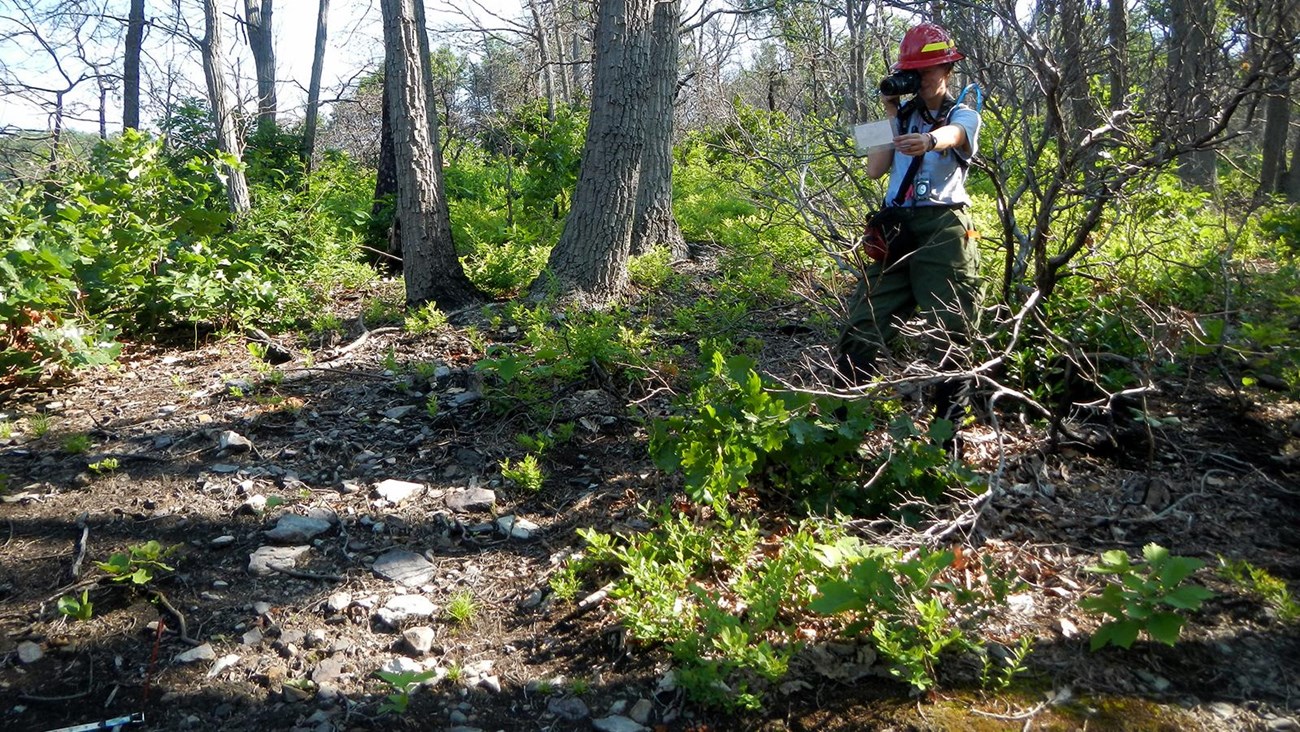
The mosaic of lightly and more heavily burned sections will provide a variety of habitat types for migratory and resident wildlife and encourage the growth of forage important for moose. It will also reduce the severity of future fires in the vicinity.
Contact: Mark Keogh, Public Information Officer
Phone: (907) 822-7223 |