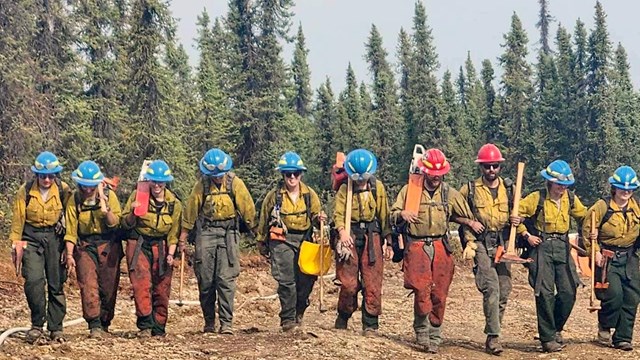
Fire Management staff at Great Smoky Mountains National Park
recently implemented a planned hazardous fuel reduction project in
the heavily visited Cades Cove area of the park. The primary
objective of this burn was to reduce the accumulation of hazardous
fuels from the Stony and Arbutus creek drainages. Numerous
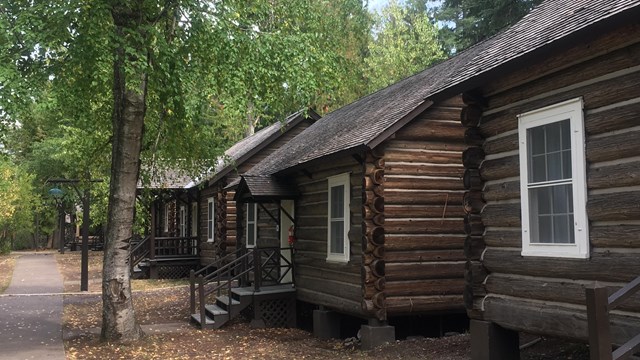
significant cultural sites and popular trails adjoin or were
encompassed by the burn units. These cultural values were at threat
from wildfire due to the accumulation of forest fuels.
A secondary objective for this prescribed fire was to provide a
second entry fire into the drainages in an effort to reduce the
hardwood crowding of pine stands. The area has seen a general
absence of fire and fire susceptible hardwoods have been succeeding
the more fire tolerant pines. In order to achieve these different
objectives, fire managers embraced the concept of pyro-diversity.
Ignition crews took advantage of the varied topography to set a
variety of fire types ranging from slow moving backing fires to
moderate flanking fires and fast moving, intense head fires. This
pyro-diversity resulted in a mosaic of fire effects within the burn
unit and should lead to a healthy, biologically diverse forest stand.
In all, over 1500 acres were burned over a six hour period.
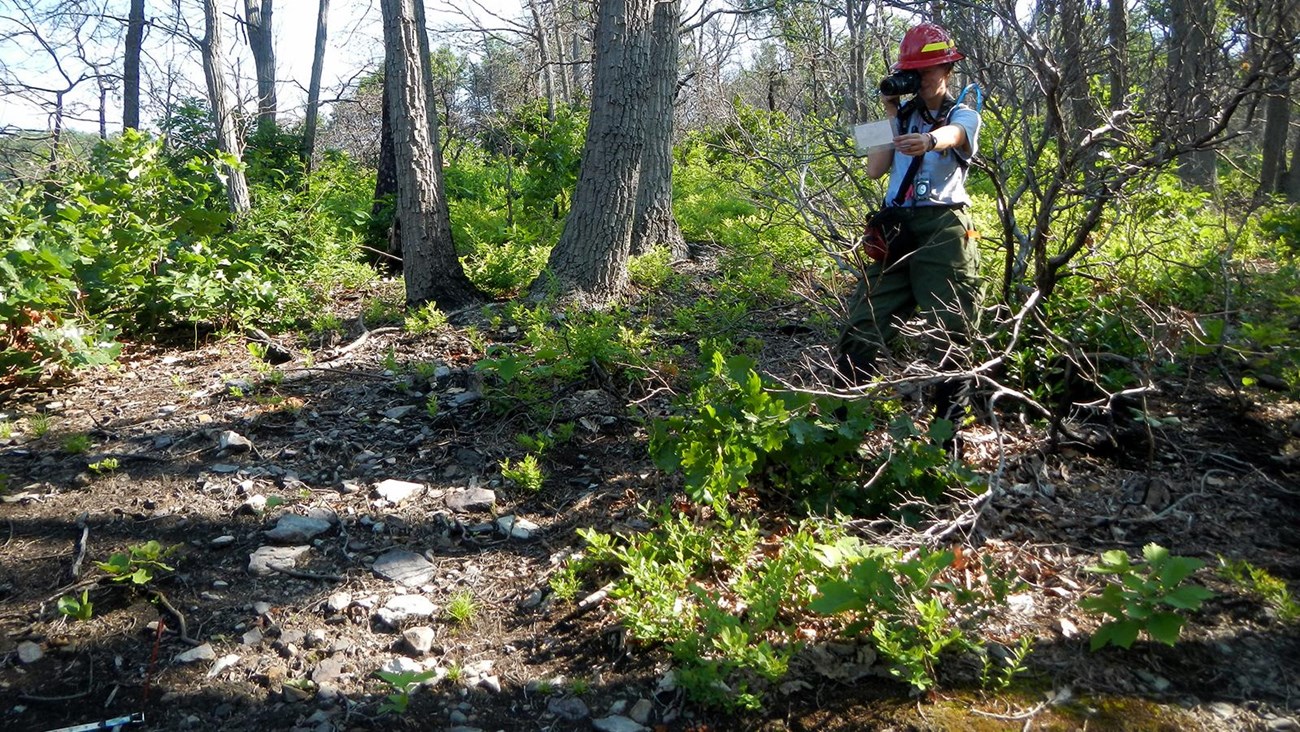
Fire effects monitors are currently evaluating numerous permanent
monitoring plots to assess the effectiveness to the prescribed fire.
The plots will be revisited on a recurring basis to track species
composition and relative abundance over time. Managers plan on
implementing further fuel reduction burns in and around Cades
Cove as conditions permit.
Contact: David Loveland, Great Smoky Mountains Fire Use
Module
Phone: (865) 436-1711
*This story supports the National Fire Plan |