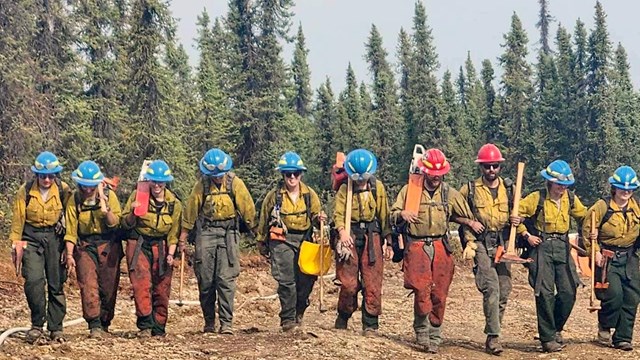
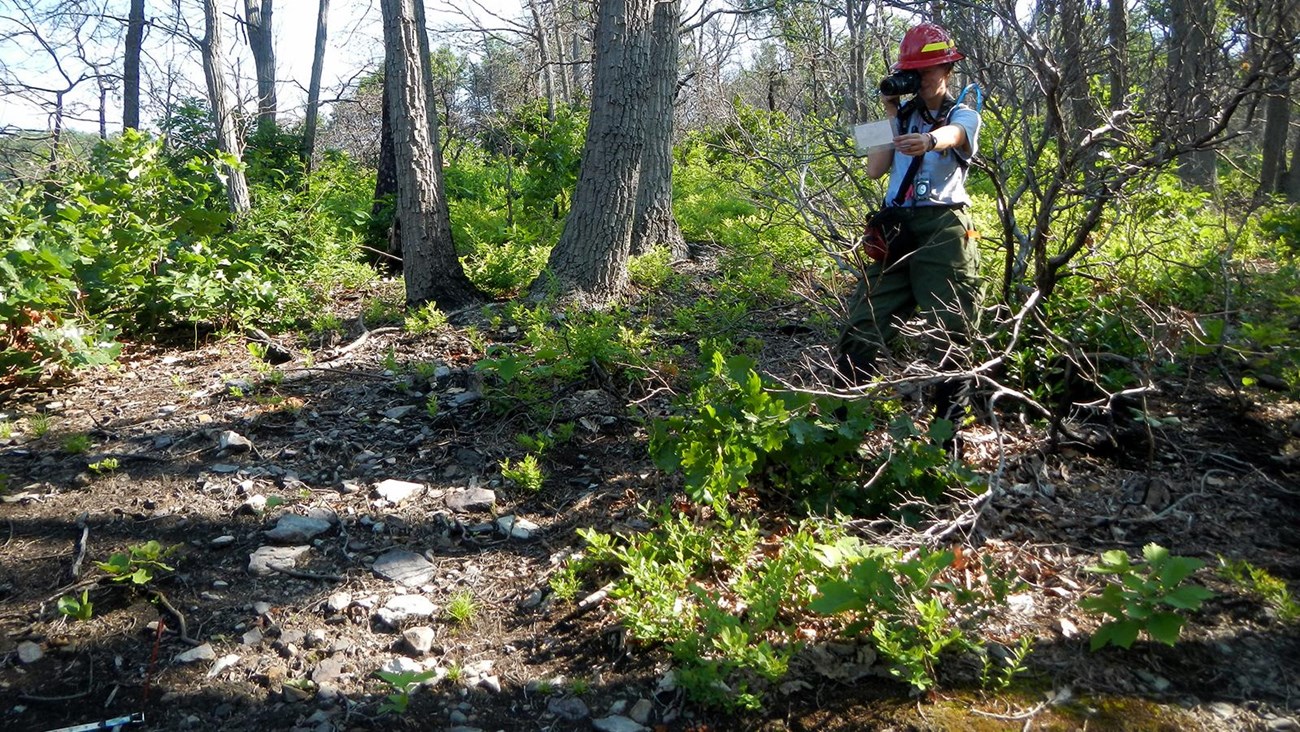
Along the Natchez Trace Parkway, there are several thousand acres of unleased agricultural fields that are becoming invaded with woody species. In order to maintain an early successional state, the Fire Management Office at the parkway has been reintroducing fire into the agricultural fields. Burning is occurring during late winter in order to minimize the disruption to nesting wildlife and to reduce the amount of time winter plant cover is removed. To date, approximately 170 acres have been treated.
The use of prescribed fire over bushhogging to maintain these openings is beneficial for logistical and ecological reasons. Burning can be a cost-effective way to reduce fuel load on acres that a tractor may not be able to access. In addition, prescribed fire increases nutrient availability, stimulates herbaceous growth, and perpetuates native warm season grasses. Conversely, bushhogging tends to result in an increase of the litter layer (thatch). This can be undesirable because thick thatch layers inhibit germination of some plant species. Furthermore, thatch buildup decreases the ability of small wildlife such as quail, rabbits, sparrows, and young turkeys to travel through the area to find food, thereby potentially affecting population size. Burning creates the open structure at ground level that is needed by many plant and wildlife species. Because many acres of the Parkway are mowed, having burned grass fields also increases the general diversity of habitat available for wildlife.
Contact:Lisa McInnis, Fire Ecologist Phone: (662) 840-7572