NPS Fire Management Program
Fire Program Education Public and Media Career Development Employment
Public and Media, Fire Stories Fire Stories Public and Media
Home
About the Fire & Aviation Program
Contact Us
Search NPS Fire
2009
2008
2007
2006
2005
2004
2003
2002

2006

Natchez Trace Parkway
Where's the Prairie?
During 2005, a remnant of a rare prairie plant community was identified along the Natchez Trace Parkway, within the city of Tupelo, Mississippi. Due to fire suppression, the area was heavily encroached with small-diameter eastern red cedar (Juniperus virginiana) (Figure 1). The situation was undesirable because of the increased fuel load and threat of wildfire, and because the prairie was disappearing due to the shade of the cedar trees.

Before hazard fuel reduction project the area was choked with red cedar trees.

This prairie plant community is found on the unique and chalky soils of the Black Belt region of Mississippi. The species that dominate this prairie include indiangrass (Sorghastrum nutans), little bluestem (Schizachyrium scoparium) white prairie clover (Dalea candida), scaly blazingstar (Liatris squarrosa) and prairie rosinweed (Silphium terebinthinaceum).

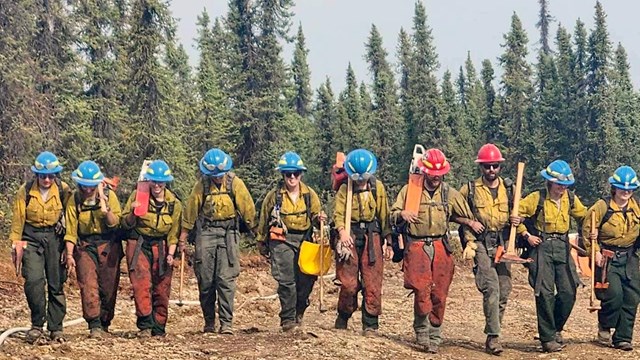
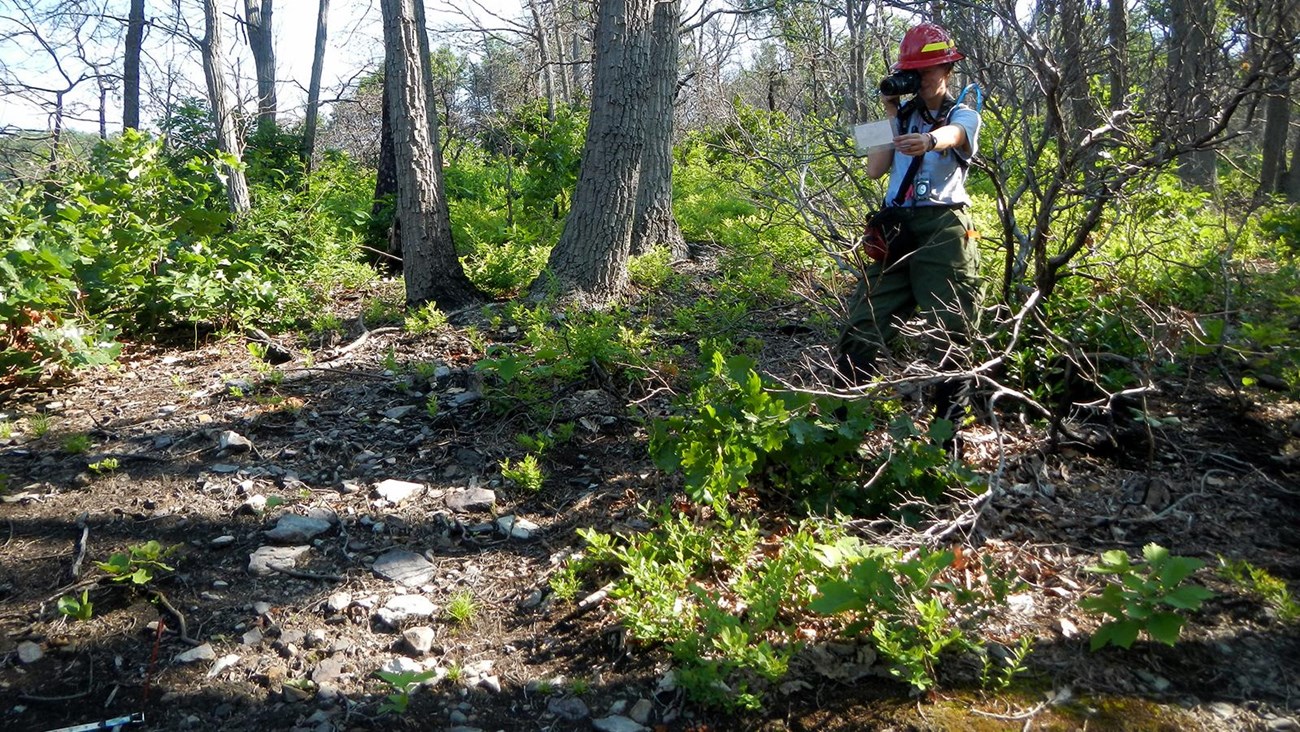
In order to reduce fuel loading and to promote the health of the plant community, it was necessary to carefully remove the cedar trees. Removal was done by the Natchez Trace Parkway fire suppression and fire effects crews using chainsaws. Work was performed during the spring and summer of 2006 (Figure 2). The cedars were moved in small bunches to a chipper. Trees were then chipped and the resulting wood chips were moved offsite. Although this process was time-consuming and demanding, it was decided that limiting the use of mechanized equipment within the site would result in minimum impact to the fragile ecosystem. Moving the chips offsite, as opposed to disbursing them, promoted regrowth of the prairie species (Figure 3).

Firefighters uses tools to remove trees.

Small plants are growing in the newly cleared area.

During fiscal year 2008, this site will be burned and fire effects crews will continue to monitor the site. Because more of this prairie habitat has been identified in the area, future plans include thinning and burning of additional acres. This project was one of the first thinning and burning restoration projects for the Parkway in recent history.

Contact: Lisa McInnis, Fire Ecologist
Phone: (662) 840-7572

Mallard's nest with eggs near prescribed fire.

Knife River Indian Villages NHS
by John Moeykens

Natchez Trace Parkway
Park profile pages
visit website

utility links
Home page. National Park Service Fire ResourcesInformation TechnologyNational Interagency Fire CenterPrivacy PolicyDisclaimer USA.govInsideNPS Fire